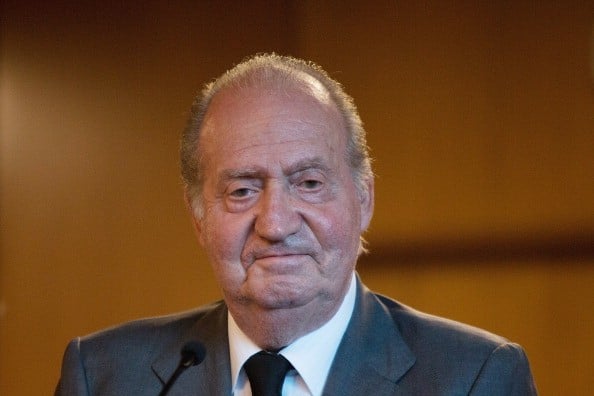
What Is Juan Carlos I's Net Worth?
Juan Carlos I is a former King of Spain who has a combined net worth of $50 million with his wife, Queen SofÃa. Juan Carlos served as king from November 1975 until his abdication in June 2014. He is widely credited with playing a central role in Spain's transition from Francisco Franco's dictatorship to a constitutional democracy, particularly through his support for political reform and his televised intervention during an attempted military coup in 1981.
For much of his reign, Juan Carlos was one of Europe's most popular monarchs. He represented Spain internationally, cultivated relationships with political and business leaders, and became an important diplomatic figure in Latin America and the Middle East. His reputation declined sharply during the final years of his reign, however, amid a corruption investigation involving his son-in-law, controversy over an elephant-hunting trip during Spain's financial crisis, and questions about his own offshore financial arrangements.
Juan Carlos abdicated in favor of his son, Felipe VI, in 2014. He withdrew from public duties in 2019 and moved to Abu Dhabi in 2020 while prosecutors examined his finances. Although the major investigations were eventually closed without criminal charges, disclosures about foreign accounts, gifts, and tax payments permanently altered his public image.
Net Worth Analysis
Juan Carlos and Queen SofÃa's $50 million combined net worth is an estimate because neither has released a complete personal financial statement. The estimate excludes the Royal Palace of Madrid, Zarzuela Palace, royal artworks, and other properties administered by the Spanish state. Those assets are available for official use but are not the couple's private property.
Juan Carlos had little significant personal wealth when he became king. Over the following decades, he received gifts and developed close relationships with wealthy foreign rulers and businesspeople. His finances became the subject of international scrutiny after investigators uncovered offshore accounts and foundations connected to him.
In 2008, $100 million from Saudi Arabia's King Abdullah was deposited into a Swiss account controlled through a Panamanian foundation whose beneficial owner was Juan Carlos. He later transferred roughly €65 million to his former companion Corinna Larsen. Juan Carlos characterized the original payment and the transfer to Larsen as personal gifts. Investigators did not establish that the Saudi payment was an illegal commission related to a Spanish high-speed rail contract.
Juan Carlos also made tax regularization payments totaling more than €5 million after Spanish authorities began examining previously undeclared income and benefits. These payments reduced the amount of wealth he retained.
Some publications have attributed billions of dollars to the Spanish royal family by including palaces, collections, and other state-controlled assets. Those estimates do not reflect Juan Carlos's personal net worth. The $50 million figure represents a conservative estimate of the private assets retained by Juan Carlos and SofÃa after gifts, transfers, taxes, and expenses.
Early Life
Juan Carlos Alfonso VÃctor MarÃa de Borbón y Borbón-Dos Sicilias was born on January 5, 1938, in Rome, Italy. His parents were Infante Juan, Count of Barcelona, and Princess MarÃa de las Mercedes of Bourbon-Two Sicilies.
The Spanish royal family was living in exile because Juan Carlos's grandfather, King Alfonso XIII, had left Spain following the establishment of the Second Spanish Republic in 1931. After spending his early childhood in Italy and Switzerland, Juan Carlos lived with his family in Estoril, Portugal.
His father considered himself the rightful heir to the Spanish throne. However, Francisco Franco, who ruled Spain following the Civil War, intended to control the monarchy's eventual restoration. In 1948, Franco and Infante Juan agreed that Juan Carlos would move to Spain to receive his education under the regime's supervision.
Juan Carlos attended schools in Spain before completing military training at the General Military Academy in Zaragoza, the Naval Military Academy in MarÃn, and the General Air Academy in San Javier. He later studied law, economics, public finance, and political science at the Complutense University of Madrid.
Chosen as Franco's Successor
Franco formally designated Juan Carlos as his successor in 1969, bypassing Juan Carlos's father. Juan Carlos accepted the title Prince of Spain and swore loyalty to Franco's political system.
The decision created lasting tension between Juan Carlos and his father, who had expected to inherit the crown. Juan Carlos maintained publicly that he would preserve Franco's institutions, but he also developed relationships with politicians who favored gradual democratic reform.
When Franco died on November 20, 1975, Juan Carlos was proclaimed king two days later. Spain had not had a reigning monarch since Alfonso XIII left the country 44 years earlier.
Spain's Transition to Democracy
Although Franco had selected him to continue the existing system, Juan Carlos instead supported Spain's transition toward parliamentary democracy. He appointed Adolfo Suárez as prime minister in 1976 and backed legislation dismantling the Francoist political structure.
Spain held its first democratic national election since the 1930s in June 1977. The new parliament drafted a constitution establishing Spain as a parliamentary monarchy in which the king served as head of state but exercised limited political power. The Constitution was approved by referendum in December 1978.
Juan Carlos's most celebrated moment came during the attempted coup of February 23, 1981. Armed Civil Guard officers seized the Congress of Deputies while military units attempted to challenge the elected government. Juan Carlos appeared on television in his military uniform and ordered the armed forces to remain loyal to the Constitution. The coup collapsed, strengthening both the monarchy and Spain's young democracy.

Pablo Blazquez Dominguez/Getty Images
Reign and International Role
As a constitutional monarch, Juan Carlos did not personally set government policy. His official responsibilities included appointing prime ministers following parliamentary votes, signing legislation, receiving foreign leaders, serving as commander-in-chief of the armed forces, and representing Spain abroad.
He became particularly active in strengthening Spain's relationships with Latin America, Europe, the United States, and the Arab world. Spain joined NATO in 1982 and the European Economic Community in 1986, milestones that reinforced its integration into Western political and economic institutions.
Juan Carlos also helped Spanish companies expand internationally. His access to foreign rulers and business leaders made him a useful diplomatic intermediary, especially in the Middle East. Those relationships later became part of the controversy surrounding his personal finances.
Marriage and Family
Juan Carlos married Princess SofÃa of Greece and Denmark in Athens on May 14, 1962. SofÃa later became Queen SofÃa when her husband ascended to the throne.
They have three children. Their eldest daughter, Infanta Elena, was born in 1963. Their second daughter, Infanta Cristina, was born in 1965. Their only son, Felipe, was born in 1968.
The couple has eight grandchildren. Juan Carlos and SofÃa retained the honorary titles King and Queen following his abdication, although Felipe VI and Queen Letizia became Spain's reigning monarchs.
Declining Popularity and the Botswana Trip
Juan Carlos's popularity began to deteriorate during the final years of his reign. The Spanish economy was suffering from high unemployment and government austerity when he traveled to Botswana for an elephant-hunting trip in April 2012.
The trip became public only after Juan Carlos fractured his hip and had to be flown back to Spain for surgery. Photographs of him posing beside a dead elephant intensified the criticism. He issued an unusual public apology after leaving the hospital, saying that he had made a mistake and that it would not happen again.
At roughly the same time, Cristina's husband, Iñaki Urdangarin, was being investigated for diverting public funds through the nonprofit Nóos Institute. The scandal raised broader questions about royal privilege and financial transparency.
Abdication
Juan Carlos announced his decision to abdicate in June 2014. The decision followed declining public support, repeated health problems, the Botswana controversy, and the continuing Nóos investigation.
Parliament approved legislation allowing the abdication to take effect, and Felipe VI became king on June 19, 2014. Juan Carlos initially continued attending selected official events but formally retired from public duties in June 2019.
His abdication did not eliminate his legal status entirely. He retained the honorary title of king and received limited legal protection for actions connected to his former official role.
Move to Abu Dhabi and Financial Investigations
In March 2020, Felipe VI ended Juan Carlos's annual Royal Household allowance and announced that he would renounce any inheritance connected to offshore structures associated with his father.
Juan Carlos left Spain in August 2020 and settled in Abu Dhabi in the United Arab Emirates. In a letter to Felipe, he said his departure was intended to make it easier for his son to perform his duties amid growing scrutiny of the former king's finances.
Spanish prosecutors investigated several matters, including the Saudi transfer, alleged undeclared gifts, and possible tax offenses. The investigations were closed in 2022 because of insufficient evidence, expiration of legal deadlines, Juan Carlos's constitutional immunity during his reign, and the tax payments he had voluntarily made before being formally charged.
Swiss prosecutors separately closed their money-laundering investigation after concluding that they could not prove a connection between the Saudi funds and the rail contract. A civil harassment case brought by Larsen in London was dismissed because the British courts lacked jurisdiction.
Later Years
Juan Carlos has continued living primarily in Abu Dhabi while making periodic private visits to Spain, including trips connected to sailing competitions and family events.
His memoir, "Reconciliation," was published in 2025. In the book, he discussed his upbringing, his relationship with Franco, Spain's democratic transition, his family, his abdication, and the controversies that shaped his later life.
Juan Carlos remains one of the most consequential and divisive figures in modern Spanish history. His support for democracy helped reshape the country after Franco's death, while the financial disclosures of his later years severely damaged the institution he had helped restore.
/2014/07/GettyImages-522816488.jpg)
/2014/08/GettyImages-475754614.jpg)
/2014/07/Princess-Letizia.jpg)
/2014/07/King-Carl-XVI-Gustaf.png)
/2014/07/King-Felipe-VI.jpg)
/2009/11/George-Clooney.jpg)
/2019/11/GettyImages-1094653148.jpg)
/2017/02/GettyImages-528215436.jpg)
/2018/03/GettyImages-821622848.jpg)
:strip_exif()/2015/09/GettyImages-476575299.jpg)
/2019/10/denzel-washington-1.jpg)
/2020/04/Megan-Fox.jpg)
/2009/09/Jennifer-Aniston.jpg)
/2020/06/taylor.png)
:strip_exif()/2009/09/P-Diddy.jpg)
/2020/02/Angelina-Jolie.png)
/2014/09/Juan-Carlos.jpg)
/2014/07/King-Felipe-VI.jpg)
/2020/10/GettyImages-490874188.jpg)
/2014/07/King-Carl-XVI-Gustaf.png)
/2009/12/King-Hassan-II.png)
/2025/08/Sheikh-Mohamed-bin-Zayed-Al-Nahyan.jpg)
/2009/11/Sheikh-Khalifa-Bin-Zayed-Al-Nahayan.jpg)
/2009/09/Cristiano-Ronaldo.jpg)
/2009/09/Brad-Pitt.jpg)
/2019/04/rr.jpg)
/2020/01/lopez3.jpg)