








What is Teodoro Nguema Obiang's Net Worth?
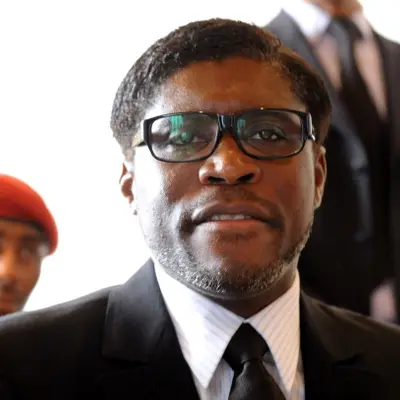
Teodoro Nguema Obiang is an Equatoguinean politician, businessman, and political heir who has a net worth of $400 million. His fortune has attracted international scrutiny because of the extraordinary disparity between his official government salary and his documented spending on real estate, private jets, yachts, luxury automobiles, and collectibles. In 2014, the U.S. Department of Justice alleged that he had accumulated more than $300 million in assets through corruption and money laundering. Since then, authorities in several countries have confiscated or forced the sale of assets worth hundreds of millions of dollars, complicating efforts to determine the value of his remaining holdings.
Teodoro Nguema Obiang Mangue, widely known as "Teodorín," is the son of Teodoro Obiang Nguema Mbasogo, who has ruled the oil-rich Central African nation of Equatorial Guinea since 1979. The younger Obiang served as agriculture and forestry minister for approximately 15 years before becoming second vice president in 2012 and first vice president in 2016. His responsibilities include national defense and state security, and he has long been regarded as his father's likely successor.
Obiang became internationally notorious for his lavish lifestyle, particularly a Malibu mansion purchased for approximately $30 million, a Paris residence valued at more than $100 million, and a collection of extremely rare sports cars. His possessions have included a Gulfstream private jet, multiple superyachts, and an extensive collection of Michael Jackson memorabilia. His spending attracted attention partly because his official salary as a government minister was reportedly just $5,000 per month.
International investigations eventually led to a major U.S. forfeiture settlement, a money-laundering conviction in France, asset seizures in Switzerland, and British financial sanctions. Despite these proceedings, Obiang has remained a central figure in Equatorial Guinea's government and political leadership.
Early Life
Teodoro Nguema Obiang Mangue was born on June 25, 1968, in the territory that became Equatorial Guinea later that year when it gained independence from Spain. His father, Teodoro Obiang Nguema Mbasogo, was a military officer who seized power in an August 1979 coup, overthrowing his uncle, President Francisco Macías Nguema. His mother, Constancia Mangue Nsue Okomo, became Equatorial Guinea's first lady.
Growing up as the president's son placed Obiang within the country's ruling family during a period of significant political and economic change. He received part of his education abroad, including studies in France, and attended a short, nondegree English-language program associated with Pepperdine University in Malibu, California, in the early 1990s.
His time in Southern California introduced him to an area where he would eventually acquire one of Malibu's most expensive private estates. He subsequently returned to Equatorial Guinea and entered his father's government.
Rise Through Equatorial Guinea's Government
Obiang began his political career as an adviser to the presidency during the 1990s. In 1997, his father appointed him minister of agriculture and forestry, giving him responsibility for an industry that remained economically important even as petroleum production transformed the country.
Equatorial Guinea experienced an enormous economic expansion following major offshore oil discoveries during the 1990s. Petroleum revenues eventually reached billions of dollars annually, producing unusually high economic output for a country with a small population. However, international organizations and human rights groups repeatedly criticized the government's management of public resources, while much of the population continued to experience poverty and inadequate public services.
Obiang remained agriculture and forestry minister until 2012, when he was appointed second vice president with responsibility for defense and security. His father elevated him to first vice president in June 2016, making him one of the most powerful officials in the country and strengthening expectations that he would eventually inherit the presidency.
He has also held senior military responsibilities and became involved in overseeing the country's national anticorruption commission, established in 2022. His political influence has survived years of international investigations and financial sanctions.
Business Interests and the Source of His Wealth
Although Obiang's official government salary was reportedly just $60,000 annually during part of his ministerial career, he controlled or held interests in businesses operating within Equatorial Guinea's economy. These included companies connected to the forestry industry, where government licensing and access to timber exports provided significant commercial opportunities.
One important company was Somagui Forestal, which became a focus of corruption investigations in France. French prosecutors alleged that corporate accounts associated with Obiang were used to channel funds into luxury purchases and foreign investments, rather than reflecting ordinary commercial activity.
A 2010 U.S. Senate investigation found that Obiang had used American lawyers, bankers, real estate professionals, and other intermediaries to move more than $110 million in suspicious funds into the United States between 2004 and 2008. The investigation examined the financial structures supporting his American purchases and raised serious questions about the relationship between his government responsibilities and private business interests.
In May 2025, the International Consortium of Investigative Journalists published another investigation based on leaked corporate documents. The reporting revealed that Portuguese construction company Zagope, a subsidiary of Brazilian engineering group Andrade Gutierrez, paid more than $86 million to Obiang's Somagui company between 2014 and 2018. The payments were connected to a broader network of construction and infrastructure contracts in Equatorial Guinea.
The investigation highlighted how companies linked to the country's political leadership benefited from major public construction projects. Obiang and the Equatorial Guinean government did not respond to the journalists' detailed questions.

ABDELHAK SENNA/AFP/GettyImages
The $30 Million Malibu Mansion
One of Obiang's most extraordinary purchases was a sprawling Malibu estate acquired in 2006 through a company called Sweetwater Malibu LLC. The U.S. Justice Department and subsequent property records identified the purchase price as $30 million, although contemporary reports, including a November 2006 Reuters article, placed the price as high as $35 million.
The estate was situated on a bluff above the Malibu Pier, offering panoramic views of the Pacific Ocean, Malibu Lagoon, and the Southern California coastline. The Mediterranean-style main residence encompassed approximately 15,000 square feet, with six bedrooms and eight bathrooms. The grounds included a swimming pool, landscaped ponds, a tennis court, additional buildings, and a private three-hole golf course.
The property's security arrangements were nearly as unusual as its amenities. Local reporting described the compound as being guarded by personnel from Equatorial Guinea carrying automatic weapons, an arrangement that attracted attention from Malibu residents and local law enforcement.
The purchase became an international story because Obiang's official government salary was reportedly just $5,000 per month. At that salary, he would have needed 500 years of gross government earnings to accumulate the $30 million purchase price, without spending a dollar.
Anticorruption organization Global Witness called on American authorities to investigate the source of the money. The property ultimately became one of the most prominent assets involved in the Justice Department's investigation.
The Malibu Mansion's $69.9 Million Resale
In October 2014, the Justice Department announced that Obiang had agreed to relinquish more than $30 million in assets as part of a settlement resolving civil forfeiture proceedings. The agreement required him to sell the Malibu mansion, a Ferrari, and certain pieces of Michael Jackson memorabilia, with the proceeds directed toward programs benefiting the people of Equatorial Guinea.
The mansion eventually sold in June 2016 for $33.5 million to an investment group connected to developer Mauricio Oberfeld, contractor Matthew Dugally, and luxury real estate broker Mauricio Umansky, founder of The Agency.
The investors undertook a substantial renovation of the property. Public records showed a $26 million construction trust deed associated with the estate, indicating the scale of financing involved in the project.
On March 31, 2017, the renovated mansion sold for an astonishing $69.9 million, more than double the price the investors had paid less than a year earlier. The purchaser was identified as Malibu LaMalibu, a company registered in the British Virgin Islands.
Although the mansion had become dramatically more valuable, Obiang did not receive the profits from that subsequent transaction. His ownership had already ended as a result of the federal settlement, and the $69.9 million sale represented a separate deal involving the investors who acquired and renovated the estate.
The $100 Million Paris Mansion
Obiang's European real estate holdings were similarly extravagant. His most famous French property was a massive mansion at 42 Avenue Foch in Paris's prestigious 16th arrondissement, one of the most expensive residential neighborhoods in the French capital.
The residence contained more than 100 rooms and was valued at well over $100 million. Its amenities reportedly included a private cinema, nightclub, Turkish bath, and elaborate entertaining spaces, while investigators discovered expensive artwork, furniture, clothing, and other luxury possessions connected to the property.
French investigators examined the financing of the mansion as part of a wider investigation into assets allegedly acquired with misappropriated public funds. Authorities seized the property in 2012, and its ownership and diplomatic status subsequently became the subject of lengthy legal proceedings.
Equatorial Guinea argued that the building qualified as diplomatic premises and should therefore be protected from confiscation. In 2020, the International Court of Justice rejected its claim that the mansion had acquired the protected status of an embassy, and in September 2025, the court rejected a separate emergency request to block France from selling the property.
French authorities have pursued the confiscation and eventual sale of the residence, with the proceeds intended to benefit the people of Equatorial Guinea. The dispute continued through additional court proceedings in 2026.
Luxury Cars, Private Jets, and Superyachts
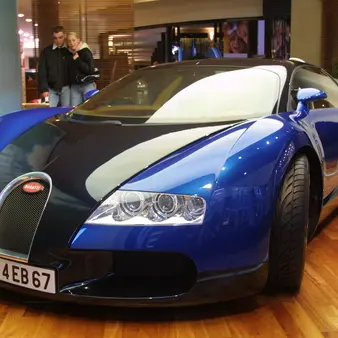
Obiang's collection of luxury vehicles became one of the defining features of his public image. Over the years, he acquired rare automobiles from manufacturers including Bugatti, Ferrari, Lamborghini, Bentley, Rolls-Royce, Koenigsegg, and McLaren, frequently purchasing models produced in extremely limited numbers.
His possessions also included a Gulfstream G-V private jet purchased for approximately $38 million. The aircraft became the subject of American forfeiture proceedings, although the 2014 settlement did not require its immediate surrender. Instead, the agreement provided for potential seizure if the aircraft were brought into the United States.
Swiss authorities seized a collection of 25 luxury automobiles during a money-laundering investigation that began in 2016. After prosecutors reached an agreement closing the investigation, the vehicles were sold at a Bonhams auction in September 2019 for approximately $27 million.
Among the most expensive vehicles was a white Lamborghini Veneno Roadster, which sold for approximately $8.3 million. A Koenigsegg One:1 fetched approximately $4.6 million, while the auction also included multiple Ferraris, Bentleys, and other collectible supercars.
Obiang has also been associated with enormous luxury yachts, including the "Ebony Shine," a vessel valued in legal proceedings at approximately $120 million. The yacht was detained in the Netherlands during the Swiss investigation before being released in 2019. Lawyers representing Equatorial Guinea maintained that its corporate owner belonged to the country's Ministry of Defense, illustrating the difficulty of distinguishing Obiang's personal possessions from assets claimed by the state.
Michael Jackson Memorabilia
One of the more unusual aspects of Obiang's spending was his fascination with Michael Jackson. He assembled a collection of costumes, performance memorabilia, statues, and other items associated with the late singer, reportedly spending millions of dollars on the collection.
Among the purchases was a crystal-covered glove worn by Jackson during the "Bad" era, which reportedly cost $275,000. The collection also included elaborate life-size statues and other pieces connected to Jackson's career.
Some of the memorabilia became part of the U.S. forfeiture proceedings. Under the 2014 settlement, Obiang agreed to surrender specified items and make an additional $1 million payment representing the value of memorabilia that had already been removed from the United States.
The settlement did not strip him of his entire collection. He was permitted to retain certain possessions, including some particularly valuable Jackson-related items, while other pieces were relinquished as part of the agreement.
French Money-Laundering Conviction
In October 2017, a Paris court convicted Obiang of money-laundering offenses connected to the misuse of corporate assets, misappropriation of public funds, and breach of trust. He received a three-year suspended prison sentence and a €30 million suspended fine, while the court ordered the confiscation of his seized French assets.
Obiang appealed the ruling. In February 2020, a French appeals court upheld the principal money-laundering convictions, the suspended prison sentence, and the asset confiscations, while making the €30 million fine payable rather than suspended. The court also overturned the portion of the conviction relating specifically to laundering the proceeds of corruption because it found insufficient proof of that underlying offense.
In July 2021, France's highest appeals court upheld the judgment, making the conviction final under French law. The confiscated French property and possessions were valued at approximately €150 million.
Obiang has consistently disputed allegations that his wealth was illegally obtained and has challenged the proceedings through various legal avenues. In January 2026, the European Court of Human Rights communicated a decision rejecting his challenge to the fairness and legal basis of the French proceedings.
U.S. Settlement and British Sanctions
The American investigation produced a separate civil forfeiture settlement in 2014. Under its terms, Obiang was required to surrender or sell assets worth more than $30 million, including the Malibu estate and specified luxury possessions.
The agreement directed substantial proceeds toward programs intended to benefit Equatorial Guinea's population. In September 2021, the Justice Department announced that $26.6 million associated with the settlement would be used to purchase COVID-19 vaccines, medicines, and other medical supplies for the country.
In July 2021, the United Kingdom imposed financial sanctions on Obiang under its Global Anti-Corruption sanctions regime. British authorities alleged that he had engaged in corrupt contracting arrangements and solicited bribes to finance spending far beyond his official earnings.
The British government stated that investigations and reporting indicated Obiang had spent more than $500 million since becoming a government minister, citing mansions, aircraft, yachts, automobiles, and Michael Jackson memorabilia. The sanctions imposed asset-freezing measures and restrictions on his access to British financial resources.
South African Properties and Legal Dispute
Obiang also acquired expensive real estate in South Africa, including properties in the Cape Town area. His ownership became entangled in litigation brought by South African businessman Daniel Janse van Rensburg, who alleged that he had been unlawfully imprisoned and mistreated in Equatorial Guinea.
In 2021, a South African court awarded Janse van Rensburg nearly 40 million rand in damages. Efforts to enforce the judgment led to the attachment of property associated with Obiang, including Cape Town residences and the luxury yacht "Blue Shadow."
Obiang challenged various court orders and enforcement proceedings. In March 2025, South Africa's Supreme Court of Appeal dismissed one of his appeals involving the service of legal documents, allowing the relevant judgment to stand.
The South African proceedings added another dimension to the international litigation surrounding Obiang's assets, extending beyond corruption investigations into efforts to enforce a civil damages award.
Public Image and Political Influence
Obiang has frequently displayed elements of his luxurious lifestyle on social media, sharing photographs and videos of exotic vacations, sports cars, expensive watches, designer clothing, and private aircraft. His public image has been unusually celebrity-oriented for a senior government official, with much of the international coverage of his life focusing on expensive possessions rather than government policy.
At the same time, his continued position within Equatorial Guinea's political leadership has made him a significant figure in the country's future. As the son of a president who has remained in power for decades, Obiang has maintained substantial political influence despite the loss of high-value foreign assets and the legal judgments entered against him.
His financial history remains unusual even among wealthy political families. Few government officials have been linked to such a large international collection of mansions, yachts, aircraft, automobiles, and collectibles while also becoming the subject of multiple major asset-recovery proceedings. The documented scale of his purchases, business interests, and confiscated holdings continues to make his personal fortune a subject of significant scrutiny.