












What Is Luiz Inácio Lula da Silva's Net Worth and Salary?
Luiz Inácio Lula da Silva is a Brazilian politician, former trade union leader, and former metalworker who has a net worth of $1 million.
Luiz Inácio Lula da Silva, widely known as Lula, rose from factory work and labor organizing to become one of the most influential political figures in Brazilian history. A founding member of the Workers' Party, he served two presidential terms from 2003 to 2010, returned to office in 2023, and won election to a fourth term in 2026. His early administrations combined economic growth and expanding consumer credit with increases in the minimum wage and social programs that helped reduce poverty.
Lula also expanded Brazil's international role through regional diplomacy, the BRICS grouping, and negotiations on trade and climate change. His career included three unsuccessful presidential campaigns before his first victory, a prison sentence on corruption convictions later annulled by the Supreme Federal Court, and a return to the presidency after defeating Jair Bolsonaro in 2022. His personal finances have included government salaries, retirement investments, property, and a speaking business established after his second presidential term, with his 2026 election filing listing R$4.78 million in assets.
Early Life
Lula was born Luiz Inácio da Silva on October 27, 1945, in Caetés, then part of Garanhuns, Pernambuco, Brazil. He was the seventh of eight children born to Aristides Inácio da Silva and Eurídice Ferreira de Mello. His parents were poor agricultural workers, and his early childhood was marked by limited schooling and financial hardship.
In 1952, his mother took the family south to São Paulo state, making a journey of nearly two weeks by truck. They initially settled in the coastal community of Vicente de Carvalho before moving to the city of São Paulo. Lula worked as a shoeshine boy, office messenger, and laundry employee while still young.
As a teenager, he trained as a lathe operator through Brazil's National Service for Industrial Training, known as SENAI. In 1964, he lost the little finger on his left hand in a factory accident. He subsequently worked at several industrial companies, including Indústrias Villares in São Bernardo do Campo, part of the manufacturing region known as the ABC Paulista.
Union Leadership
Lula became involved in organized labor through his older brother José Ferreira da Silva, known as Frei Chico. He entered the leadership structure of the metalworkers' union in São Bernardo do Campo and Diadema in 1969 and became its president in 1975. The position made him a representative of workers in one of Brazil's most important industrial centers.
Between 1978 and 1980, Lula helped lead major strikes over wages and working conditions. The stoppages challenged both employers and the military government, which had ruled Brazil since 1964. His ability to address large crowds and negotiate with management made him a nationally recognized labor leader.
During the 1980 strike, authorities intervened in the union and arrested Lula under the National Security Law. He spent 31 days in detention. The confrontation strengthened his conviction that workers needed their own political organization in addition to collective bargaining through unions.
Founding the Workers' Party
In 1980, Lula helped establish the Workers' Party, or Partido dos Trabalhadores, alongside other union leaders, intellectuals, religious activists, and social movements. The party sought to give organized labor and lower-income Brazilians an independent presence in national politics. Lula became its first president and its most recognizable public figure.
He ran unsuccessfully for governor of São Paulo in 1982, the year he formally added his nickname, Lula, to his legal name. He also helped establish the Central Única dos Trabalhadores labor federation in 1983. During the campaign for democratic reform, he became a prominent supporter of the Diretas Já movement demanding direct presidential elections.
Lula won election to the Chamber of Deputies in 1986 with more votes than any other federal deputy in that election. He served in the assembly that drafted Brazil's 1988 Constitution. His congressional career gave him a national platform as Brazil completed its transition from military rule to civilian democracy.
Presidential Campaigns and the 2002 Victory
Lula first ran for president in 1989, reaching the runoff before losing to Fernando Collor de Mello. He ran again in 1994 and 1998, losing both elections to Fernando Henrique Cardoso. Those defeats prompted a gradual expansion of his coalition beyond the Workers' Party's original labor and left-wing base.
For the 2002 campaign, Lula adopted a more moderate economic message and selected businessman José Alencar as his running mate. He reassured investors that his government would respect contracts and financial obligations while pursuing policies to reduce hunger and inequality. The combination broadened his appeal among voters who wanted social change without a sharp break in economic policy.
Lula defeated José Serra in the October 2002 runoff with 61.3% of the vote. He took office on January 1, 2003, becoming Brazil's first president to emerge directly from the industrial labor movement. His inauguration brought a former metalworker to the leadership of Latin America's largest economy.

Foto Oficial do Presidente Lula
First Two Presidential Terms
Lula initially preserved key elements of the economic framework established under Cardoso, including inflation targeting and fiscal discipline. At the same time, his government expanded social spending and increased the minimum wage. Strong demand for Brazilian commodities, rising employment, and greater access to credit supported economic growth during much of his first eight years in office.
One of his signature initiatives was Bolsa Família, which consolidated and expanded existing cash-transfer programs. It provided payments to qualifying low-income households linked to requirements such as school attendance and basic health care. By September 2010, the program reached 12.7 million families, according to figures cited by the World Bank.
His administration also pursued the Fome Zero campaign against hunger, expanded access to higher education, and increased investment in infrastructure and housing. Supporters credited these policies with improving living standards and strengthening the purchasing power of poorer Brazilians. Critics questioned the efficiency of public spending and the government's reliance on alliances with established political parties.
Lula's first term was damaged by the Mensalão scandal, which involved payments to legislators and led to criminal convictions of senior political figures, including his former chief of staff. Lula denied knowing about the scheme and was not a defendant in that trial. He nevertheless won reelection in 2006, defeating Geraldo Alckmin with more than 60% of the runoff vote.
During his second term, the government responded to the global financial crisis with measures intended to support domestic consumption and employment. Brazil experienced a brief contraction in 2009 before a strong rebound in 2010. Lula completed his second term with substantial public support and backed Dilma Rousseff, his former chief of staff, who won the 2010 presidential election.
International Diplomacy
Lula sought a larger international role for Brazil and closer cooperation among developing countries. His government expanded ties with Africa, strengthened relations with China, and participated in the formation of the BRIC grouping of Brazil, Russia, India, and China, later expanded to include South Africa as BRICS. He also advocated changes to global institutions to give emerging economies more influence.
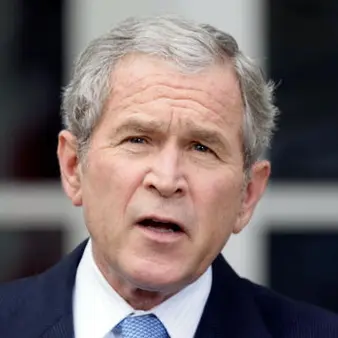
His diplomacy included working relationships with U.S. presidents George W. Bush and Barack Obama, alongside close ties to regional left-wing leaders such as Venezuela's Hugo Chávez. Brazil took an active role in international trade and climate negotiations. Lula also participated in the campaign that secured the 2016 Summer Olympics for Rio de Janeiro, the first South American city selected to host the Games.
Speaking Career and Business Interests
After leaving office in 2011, Lula entered the paid speaking circuit and established L.I.L.S. Palestras, Eventos e Publicações. His engagements included appearances for companies such as LG and Microsoft, business organizations, and international institutions. The company handled commercial speaking work, while the Instituto Lula continued his political and public-policy activities.
In 2015, Brazilian reporting based on financial-intelligence records put the speaking company's receipts at R$27 million during the years following his departure from office. A subsequent report released by his team listed 72 paid corporate speeches for 45 clients between 2011 and 2015. His team also said he gave hundreds of unpaid talks to unions, social movements, and nonprofit organizations during that period.
Lula's 2026 asset declaration listed a 98% interest in L.I.L.S. with a declared value of R$49,000. The remaining 2% belonged to Paulo Okamotto, a longtime associate and former president of the Instituto Lula.
Corruption Cases, Imprisonment, and Annulments
Lula became a central figure in the political controversy surrounding Operation Car Wash, an investigation into corruption involving Petrobras, construction companies, and public officials. In 2017, judge Sergio Moro convicted him of corruption and money laundering in a case involving alleged benefits connected to a beachfront apartment in Guarujá. Lula denied wrongdoing and said the prosecution was politically motivated.
An appeals court upheld the conviction in 2018, and Lula began serving a prison sentence that April. He was barred from contesting the presidential election later that year, and Fernando Haddad replaced him as the Workers' Party candidate. Lula spent 580 days in custody before his release in November 2019 following a Supreme Court ruling concerning imprisonment before the exhaustion of appeals.
In 2021, the Supreme Federal Court annulled his convictions because the court in Curitiba lacked jurisdiction over the cases. In a separate ruling, the Supreme Court found that Moro had acted with bias in the Guarujá apartment case. The annulments restored Lula's eligibility to run for office and opened the way for his return to presidential politics.
Return to the Presidency
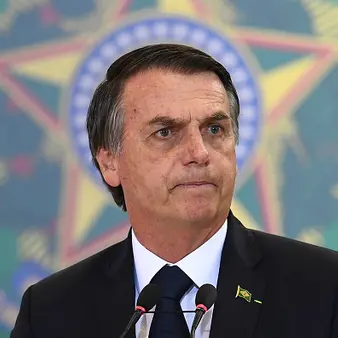
Lula ran for president again in 2022, choosing former rival Geraldo Alckmin as his vice-presidential candidate. The alliance brought together the Workers' Party and a broader coalition opposed to Bolsonaro. Lula won the October 30 runoff with 50.90% of valid votes and began his third term on January 1, 2023.
One week after his inauguration, Bolsonaro supporters attacked Congress, the Supreme Federal Court, and the presidential palace in Brasília. Lula's government responded with a federal security intervention, and the attacks became the subject of extensive criminal investigations. The episode underscored the political divisions confronting his new administration.
His third-term agenda included restoring Bolsa Família under that name, strengthening environmental enforcement, and negotiating changes to Brazil's tax system. Congress approved a major constitutional overhaul of consumption taxes in 2023, followed by implementing legislation. His government also faced pressure over public debt, interest rates, and how to fund its spending commitments.