
/2009/12/Hu-Jintao.png)
/2014/08/GettyImages-163615763.jpg)
/2022/05/Boris-Yeltsin.jpg)
/2014/10/GettyImages-92485812.jpg)
/2011/03/angela.jpg)
/2015/11/Xi-Jinping-1.jpg)
/2020/02/Angelina-Jolie.png)
:strip_exif()/2015/09/GettyImages-476575299.jpg)
/2020/06/taylor.png)
/2009/11/George-Clooney.jpg)
/2020/01/lopez3.jpg)
/2019/11/GettyImages-1094653148.jpg)
/2017/02/GettyImages-528215436.jpg)
:strip_exif()/2009/09/P-Diddy.jpg)
/2009/09/Cristiano-Ronaldo.jpg)
/2018/03/GettyImages-821622848.jpg)
/2019/04/rr.jpg)
What is Hu Jintao's Net Worth?
Hu Jintao is a Chinese politician and former engineer who has a net worth of $800 thousand. Hu Jintao was the president of China from 2003 to 2013, and was also the general secretary of the Chinese Communist Party from 2002 to 2012 and the chairman of the Central Military Commission. During his leadership, Hu oversaw consistent economic growth and development in China, although he also caused unrest due to his government's persecution of ethnic minorities and repression of free speech.
Early Life and Education
Hu Jintao was born on December 21, 1942 in Taizhou, Jiangsu, China, which at the time was under Japanese occupation. He is a direct descendant of Hu Zongxian, a Ming dynasty general known for battling Japanese pirates. Hu grew up in a relatively poor family, and he was raised by his aunt after his mother passed away when he was seven. For his higher education, he attended Tsinghua University, where he studied hydraulic engineering. Hu graduated in 1964, the same year he joined the Chinese Communist Party.
Career Beginnings as Engineer
After working at his alma mater Tsinghua University as a political counselor, Hu began working as an engineer in 1965. Later in the decade, during the Third Front Construction, he worked on the construction of Liujiaxia Hydroelectric Station in Gansu. From 1969 to 1974, Hu worked for the engineering bureau of Sinohydro. During that time, he became a secretary for the Construction Department in Gansu. Hu was eventually promoted to a deputy senior party secretary, and then to deputy head.
Rise in Politics
In 1982, Hu assumed leadership of Gansu's Communist Youth League of China branch, and also of the All-China Youth Federation. He subsequently joined the CYLC in Beijing, eventually becoming its leader. In 1985, Hu was transferred to Guizhou as a party committee secretary of the CCP. A few years later, he was transferred to the Tibet Autonomous Region and was made political commissar of the local People's Liberation Army units. As leader of Tibet, Hu orchestrated a violent repression of dissent. His political stature kept rising after that, and in 1992 he became a leading member of the CCP Central Secretariat. In 1998, Hu became the vice president of China under CCP general secretary Jiang Zemin.
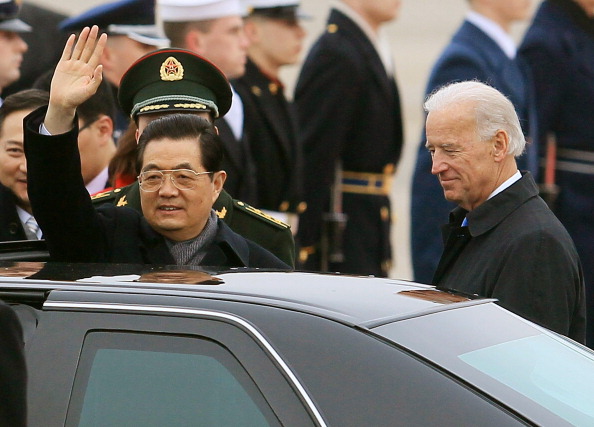
Mark Wilson/Getty Images
Leader of China
In late 2002, Hu succeeded Jiang as the CCP general secretary and the paramount leader of China. He became president the next year, and in 2004 became chairman of the Central Military Commission. Hu remained the paramount leader of China until 2012 and president until 2013. His leadership tenure was noted for being reserved and mostly conservative on political reforms. Early in his tenure, Hu oversaw the response to the SARS outbreak and worked to increase healthcare coverage. He introduced the Scientific Outlook on Development, a political doctrine intended to foster a "Socialist Harmonious Society" by eliminating socioeconomic inequality and strife. However, to do this, Hu orchestrated the repression of ethnic minorities and dissidents, and oversaw the passing of the Anti-Secession Law to give China more power over Taiwan. His administration's persecution of ethnic minorities caused serious unrest, leading to the Tibetan uprising in 2008 and other mass protests.
In matters of foreign policy, Hu promoted China's peaceful rise on the world stage, using soft power in international relations and taking a corporate tack to diplomacy. During his tenure, China increased its influence in Africa, Latin America, and various developing regions, although it also sowed tension with many of its neighbors. Hu oversaw close to a decade of consistent economic growth and development in China, helping to modernize its infrastructure and cement its status as a major global power. However, many critics of Hu felt his government was overly aggressive in demonstrating its power. His administration also elicited pushback for its repression of the freedom of speech and press. Although he proved to be controversial during his tenure, Hu was widely praised for voluntarily stepping down from all of his leadership positions. He was succeeded as paramount leader by Xi Jinping in 2013.
Personal Life
In 1970, Hu married Liu Yongqing, whom he had first met when they were both students at Tsinghua University. They have two children, Haifeng and Haiqing.
/2009/12/Hu-Jintao.png)
/2014/08/GettyImages-163615763.jpg)
/2015/11/Xi-Jinping-1.jpg)
/2022/05/Boris-Yeltsin.jpg)
/2014/10/GettyImages-92485812.jpg)
/2020/01/Fidel-Castro.jpg)
/2011/03/angela.jpg)
/2009/09/Jennifer-Aniston.jpg)
/2009/09/Brad-Pitt.jpg)
/2020/04/Megan-Fox.jpg)