










What Is Yoko Ono's Net Worth?
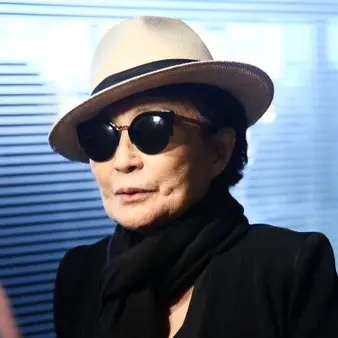
Yoko Ono is a Japanese artist, musician, filmmaker, author, and peace activist who has a net worth of $700 million. It goes without saying that Yoko's enormous wealth is a result of her inheriting the majority of John Lennon's estate. Contemporary accounts pegged John Lennon's net worth at $200-250 million at the time of his death in 1980. That's the same as $800 million to $1.1 billion in today's dollars.
Ono was already an established international avant-garde artist before she met John. She pioneered forms of instructional, participatory, and conceptual art that became increasingly influential, particularly through works such as "Cut Piece" and her 1964 book "Grapefruit." Ono and Lennon married in 1969 and spent the next 11 years collaborating on music, films, political activism, and experimental art. Following his death, Ono became the central steward of his musical and financial legacy, overseeing valuable royalty streams, licensing agreements, archives, artwork, and Beatles-related business interests. John had a net worth of $200 million when he died, equivalent to $810 million in today's dollars. Ono continued building her own artistic career while managing assets that generated millions of dollars annually. Her work has been exhibited at major institutions including the Museum of Modern Art, Tate Modern, and The Broad. In later years, her son Sean Ono Lennon assumed increasing responsibility for managing the family's musical legacy.
John Lennon's Estate
John Lennon's estate is the most important component of Yoko Ono's fortune. However, the financial arrangements following his death were more complicated than the frequently repeated claim that Yoko simply inherited everything.
Lennon signed his final will on November 12, 1979, just over a year before his murder. The document provided for a substantial direct inheritance to Yoko under a formula tied to the estate's value and federal estate-tax marital deduction rules. It then directed the remaining assets into a separate trust established that same day, with Yoko and attorney Eli Garber serving as trustees. Yoko was also named executor of the will.
The will did not publicly disclose how the assets in that separate trust would ultimately be distributed among its beneficiaries. Those details were governed by a private trust agreement, whose complete terms have not been made public.
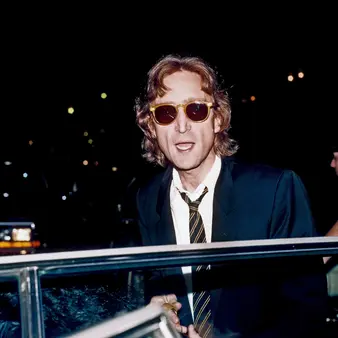
At the time of Lennon's death, his fortune included songwriting royalties, publishing interests, recording income, investments, real estate, artwork, and other business holdings. Contemporary accounts placed his worldwide net worth between $150 million and $250 million. Celebrity Net Worth uses $200 million as its estimate of his wealth at death, equivalent to $810 million in today's dollars.
There were smaller figures in the official probate proceedings. A Manhattan filing valued the portion of Lennon's estate being administered in New York at $30 million, while British filings disclosed another $5.5 million in England and Wales. Those figures represented assets covered by particular probate proceedings rather than a comprehensive valuation of his worldwide fortune.
Based on a $200 million fortune, the marital-share formula in Lennon's will provides a reasonable basis for modeling Yoko's inheritance at around $100 million in 1980. However, the exact amount she received outright cannot be established from the public will alone because the calculation also accounted for assets passing to her outside the will. She additionally exercised substantial control over the financial and creative legacy through her role as executor and trustee.
A major part of Lennon's wealth came from his music, although the distinction between songwriting royalties and ownership of publishing copyrights is important. By the time John died, he and Paul McCartney had already lost control of Northern Songs, the company that owned the publishing rights to many of their classic Beatles compositions. The two musicians sold their remaining shares in 1969.
Nevertheless, Lennon's estate continued receiving valuable songwriter royalties, recording income, licensing revenue, and other payments associated with his compositions. Yoko also became responsible for managing important rights connected to his solo recordings, image, likeness, artwork, archives, and his economic interests in Beatles-related businesses.
John Lennon's Posthumous Earnings
John Lennon's recordings and musical legacy became an enormous continuing business following his death.
His music generates income through streaming, physical record sales, songwriting royalties, licensing, merchandise, documentaries, books, archival releases, and the commercial use of his name and image. These sources of revenue have continued for more than four decades, supporting the value of the assets inherited and managed by his surviving family.
In 2005 alone, Lennon's estate generated an estimated $22 million. It produced another $12 million in 2011 and $14 million in 2019. Forbes subsequently calculated $17 million in posthumous earnings for 2024 and $12 million for 2025. These individual years demonstrate the substantial commercial value of Lennon's music long after his death.
One of the most important assets associated with the Lennon family is its interest in Apple Corps, the company responsible for managing major aspects of the Beatles' business, including licensing, film projects, merchandise, and other commercial uses of the band's identity.
Apple Corps is divided among four Beatles shareholder groups associated with McCartney, Ringo Starr, the Harrison family, and the Lennon family. Yoko has represented the Lennon family's 25% interest for decades.
The company's financial statements provide a rare public glimpse into the money generated by the Beatles' continuing popularity. For the 11 months ending December 2025, Apple Corps recorded £44 million in revenue and £6 million in pretax profit. Its accounts showed dividends of £900,000 to each of the four shareholder groups, alongside millions of pounds in payments connected to promotional services and name and likeness rights.
Yoko also maintains identifiable interests in British companies associated with Lennon and McCartney's music. Corporate filings list her as a person with significant control of Maclen (Music) Limited, with ownership of more than 25% but no more than 50% of its shares and voting rights. She also holds at least 75% of the voting rights in Lensolo Limited, another company connected to the Lennon family's musical interests.
For decades, Ono personally supervised Lennon's archives, approved licensing arrangements, and participated in decisions involving new releases and Beatles-related ventures. In October 2020, Sean Lennon became a director of several British companies associated with the family, including Apple Corps and Maclen Music.
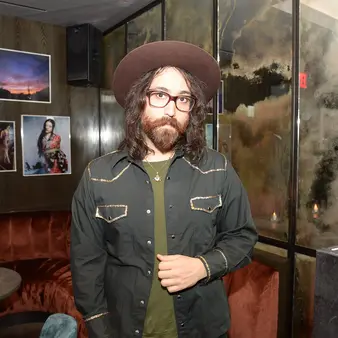
Sean subsequently assumed much of the responsibility for archival releases, documentaries, and new mixes of his father's recordings. His projects have included the expanded "Mind Games" collection, which won a Grammy Award in 2025, and work connected to the documentary "One to One: John & Yoko."
Although Sean has become a leading figure in managing the family business, significant ownership interests remain associated with Yoko herself. His management responsibilities are separate from the assets he personally inherited from his father or may eventually receive from his mother.
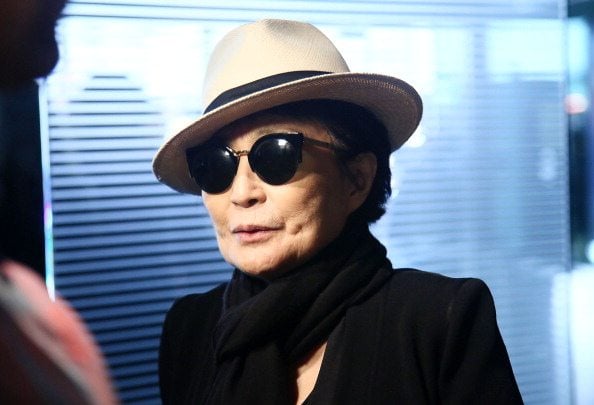
Astrid Stawiarz/Getty Images
Sean and Julian Lennon's Inheritance
The distribution of John's estate also became a source of controversy involving his two sons, Sean Lennon and Julian Lennon.
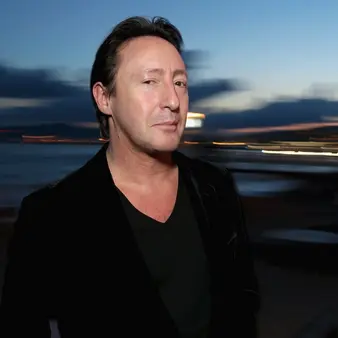
Julian was John's son from his first marriage to Cynthia Lennon, while Sean was the son of John and Yoko. Following John's death, Julian became involved in a prolonged dispute over the handling of his father's estate. The dispute eventually ended in a confidential settlement in 1996.
Numerous publications claimed Julian received £20 million, but the figure was never officially confirmed. In a 1998 interview with "Salon," Julian challenged that amount, saying the actual settlement was substantially smaller than the number being widely reported.
Part of the confusion surrounding the inheritance comes from two different trust arrangements. The first was established during John and Cynthia's 1968 divorce. Under that settlement, John created a £100,000 trust for Julian that included provisions for future children. When Sean was born in 1975, Julian's entitlement under that arrangement became £50,000, with Sean entitled to the other portion.
That relatively modest divorce-settlement trust was separate from the much larger estate trust established under John's 1979 will.
In October 2026, Sean publicly challenged the popular narrative that he inherited a vastly larger portion of his father's estate than Julian.
Responding to a social media post claiming that Julian had been largely excluded from the inheritance, Sean wrote:
Julian and I inherited the same amount from our dad. Our trusts were equal. Although his was slightly more, but negligibly so.
Sean's statement offered an important firsthand perspective on the family's financial history. According to his account, the brothers' trust inheritances were essentially equal, with Julian receiving a marginally larger amount. The precise value of those trusts and their eventual distributions have not been publicly established.
Both brothers also acquired valuable interests in their father's music. Certain copyright renewal rights passed to Yoko, Julian, and Sean under U.S. copyright law, independently of the ordinary estate arrangements. In 1998, all three were registered as copyright renewal claimants for "Imagine."
In 2007, Julian sold a substantial portion of his financial interest in Beatles songwriting royalties to Primary Wave Music Publishing. The transaction involved part of his economic interest in his father's Beatles compositions, not ownership of the entire publishing catalog. The purchase price was not disclosed.
Yoko's financial position was fundamentally different from that of either son. She received a substantial inheritance in her own right and spent decades managing, investing, and developing the assets associated with John's legacy. Her personal fortune also includes income and assets from her own artistic career.
Sean may eventually inherit additional assets from Yoko, but any such inheritance would be separate from what he received from John in 1980. Yoko also has a daughter, Kyoko Ono Cox, from an earlier marriage, and the terms of her own estate plan are private.
Despite the lengthy disputes surrounding John's estate, Sean and Julian have maintained a close relationship. Sean has spoken affectionately about his older brother, describing Julian as a childhood hero who helped teach him guitar. He has also emphasized that disagreements between Julian and Yoko did not prevent the brothers from remaining close.
Early Life
Yoko Ono was born on February 18, 1933, in Tokyo, Japan. Her father, Eisuke Ono, was a banker and classically trained pianist, while her mother, Isoko Yasuda, came from the wealthy Yasuda banking family.
Her father's banking career caused the family to move repeatedly between Japan and the United States during Yoko's childhood. She received classical training in piano, singing, and composition and attended Gakushuin, one of Japan's most prestigious educational institutions.
World War II radically changed the family's circumstances. Ono was in Tokyo during the devastating American firebombing of the city in 1945. Her family survived and later evacuated to the countryside, where food shortages became severe enough that they exchanged household possessions for necessities. The experience helped shape her lifelong opposition to war.
After the war, Ono returned to Gakushuin and entered its university philosophy program, becoming the first woman admitted to the course. She later left Japan and moved to the United States, where her family had relocated.
Ono enrolled at Sarah Lawrence College in New York, studying music and poetry while becoming increasingly involved with the city's experimental arts community. She eventually left college to pursue her artistic ambitions.
Avant-Garde Art Career
Ono's artistic career began years before she met John Lennon. During the late 1950s and early 1960s, she became a prominent figure in New York's experimental art and music scene, establishing relationships with avant-garde composers and artists including John Cage, La Monte Young, and Fluxus founder George Maciunas.
Her Chambers Street loft hosted a series of influential performances and artistic gatherings. These events helped establish Ono's reputation among musicians, poets, filmmakers, and visual artists interested in moving beyond traditional forms of artistic expression.
Ono became especially interested in what she called "instruction pieces," works in which an artist supplied a written direction or concept that the audience completed through imagination or participation. Rather than treating art as a finished object, she encouraged viewers to become part of its creation.
She collected many of these pieces in her 1964 book "Grapefruit." The book consisted of short instructions inviting readers to imagine or perform unusual actions, creating artworks that could exist entirely in the mind.
One of Ono's most famous works was "Cut Piece," first performed in Kyoto in 1964. During the performance, Ono sat silently onstage while audience members approached with scissors and cut away portions of her clothing. The work explored vulnerability, power, participation, and the relationship between performers and their audiences.
Other important early works included "Painting to Be Stepped On," "Bag Piece," "Apple," and "Half-A-Room." Her experimental films included "Film No. 4," also known as "Bottoms," which consisted of a series of close-up images of people walking.
Ono's work initially attracted greater recognition within experimental art circles than among mainstream audiences. Over subsequent decades, however, many of her early concepts came to be recognized as important contributions to conceptual, performance, and feminist art.
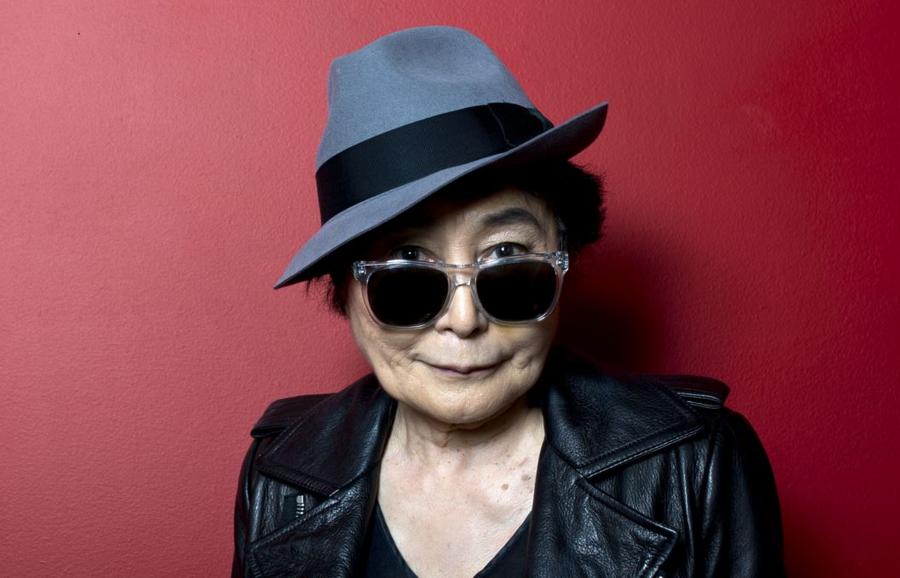
Getty
Meeting John Lennon
Ono met John Lennon in November 1966 while preparing an exhibition at London's Indica Gallery. At the time, Lennon was still a member of the Beatles and married to his first wife, Cynthia.
According to the story both later told, Lennon became intrigued by one of Ono's conceptual pieces involving a ladder, a magnifying glass, and the word "YES" written on the ceiling. He climbed the ladder and used the magnifying glass to discover the tiny affirmative message.
Their friendship developed into a romantic and artistic relationship. Ono was also married at the time, to American filmmaker Anthony Cox, with whom she had a daughter.
By 1968, Lennon and Ono were working together extensively. Their first collaborative album, "Unfinished Music No. 1: Two Virgins," became notorious for its cover photograph showing the couple nude. The experimental recording established the unconventional approach that would characterize many of their subsequent projects.
Lennon divorced Cynthia in 1968, and he and Ono married in Gibraltar on March 20, 1969. Their partnership quickly expanded beyond music to include filmmaking, conceptual art, political activism, and international peace campaigns.
Peace Activism and the Plastic Ono Band
John and Yoko turned their marriage into part of their artistic and political work. During their honeymoon, they staged a "Bed-In for Peace" at the Amsterdam Hilton, inviting journalists into their hotel room while advocating nonviolence and protesting the Vietnam War.
A second Bed-In took place at the Queen Elizabeth Hotel in Montreal, where they recorded "Give Peace a Chance" with a roomful of guests. The song became one of the defining anthems of the antiwar movement.
Later in 1969, Lennon and Ono launched the "WAR IS OVER! If You Want It" campaign, placing billboards and posters in major cities around the world. The message became a lasting symbol of their shared philosophy and eventually inspired the holiday song "Happy Xmas (War Is Over)."
The couple also formed the Plastic Ono Band, a flexible musical collective whose participants included major figures from rock and experimental music. Their collaborations blurred the distinctions among concerts, happenings, political demonstrations, and performance art.
Ono's presence during the final years of the Beatles made her a target of intense criticism from fans who blamed her for the band's breakup. However, the group had already been dealing with serious management disputes, financial disagreements, creative tensions, and increasingly different personal ambitions. The breakup resulted from numerous factors involving all four members rather than a single individual.
Music Career
Ono released "Yoko Ono/Plastic Ono Band" in 1970 alongside Lennon's similarly titled solo album. The record featured her unconventional vocal performances and experimental compositions, drawing inspiration from avant-garde music, free jazz, and performance art.
She followed it with "Fly" in 1971 and "Approximately Infinite Universe" in 1973. Her confrontational style initially attracted harsh criticism from mainstream listeners, but later generations of alternative, punk, indie, and experimental musicians came to recognize her influence.
Ono's songwriting became more accessible on subsequent recordings. "Walking on Thin Ice," which she and Lennon had been working on immediately before his death, was released in 1981 and earned her a Grammy nomination for Best Female Rock Vocal Performance.
Her 1981 album "Season of Glass" became her highest-charting solo album on the Billboard 200. The record addressed her grief following Lennon's murder and featured a cover photograph of his bloodstained glasses beside a glass of water.
Later albums included "It's Alright (I See Rainbows)," "Starpeace," "Rising," "Blueprint for a Sunrise," "Between My Head and the Sky," and "Take Me to the Land of Hell."
Beginning in the 2000s, Ono experienced an unexpected second commercial chapter through dance remixes. New versions of her songs repeatedly reached #1 on Billboard's Dance Club chart, introducing her music to a new generation of listeners.
Her influence also extended to younger artists who embraced her unconventional approach to composition and performance. Musicians from the alternative rock, electronic, and experimental scenes collaborated with Ono, sampled her work, and helped bring renewed attention to her recordings.
Marriage, Separation, and Sean Lennon
John and Yoko moved permanently to New York in 1971 and became closely associated with Manhattan's downtown artistic and political communities. They collaborated on recordings, films, and political projects while maintaining an increasingly complicated personal relationship.
Their marriage went through a lengthy separation beginning in 1973, during a period Lennon later called his "Lost Weekend." He spent much of that time living in Los Angeles with May Pang, who had previously worked as an assistant to the couple. John and Yoko reconciled in 1975.
Their son Sean was born on October 9, 1975, John's 35th birthday. Lennon subsequently stepped away from the music industry for five years and focused heavily on raising Sean, while Ono assumed increasing responsibility for managing the family's investments, real estate, and business affairs.
The couple returned to recording together in 1980 with "Double Fantasy." The album alternated between songs performed by John and Yoko and was released just weeks before Lennon's murder. It went on to win the Grammy Award for Album of the Year in 1982.
John Lennon's Death
On December 8, 1980, John and Yoko returned to the Dakota after a recording session at the Record Plant studio in Manhattan.
As they approached the building, Mark David Chapman shot Lennon four times. Ono was with him when the attack occurred. Lennon was rushed to Roosevelt Hospital and pronounced dead at age 40.
Ono asked that the announcement of his death briefly be withheld so she could tell five-year-old Sean herself. She subsequently arranged for Lennon to be cremated rather than holding a conventional funeral.
Instead, Ono asked people around the world to observe ten minutes of silence in his memory. Massive crowds gathered in New York, Liverpool, and other cities, transforming the occasion into an international public memorial.
Lennon's death permanently altered Ono's personal life and placed her in charge of preserving one of the most commercially valuable musical legacies in history. She continued releasing her own art and music while supervising the business affairs and intellectual property associated with his work.
Strawberry Fields
One of Ono's most visible tributes to Lennon is Strawberry Fields, the landscaped memorial in Central Park directly across from the Dakota apartment building.
Ono worked with the Central Park Conservancy and the city of New York to develop the site, which was dedicated on what would have been Lennon's 45th birthday in October 1985.
At its center is the famous "Imagine" mosaic, a gift from the city of Naples, Italy. The memorial has since become a gathering place for Beatles fans from around the world, particularly on anniversaries connected to Lennon's life and death.
Ono has remained involved with the memorial and other projects commemorating her husband's contributions to music and peace activism.
Later Art Career
Ono continued making conceptual and participatory art long after Lennon's death. Her "Wish Tree" installations invite visitors to write wishes on pieces of paper and attach them to tree branches, with the collected messages contributing to her continuing peace projects.
Other important works have included "Arising," "Skylanding," "Add Color (Refugee Boat)," and the Imagine Peace Tower in Iceland. The tower, inaugurated in 2007, projects a powerful column of light into the night sky and serves as a tribute to Lennon and the couple's shared commitment to peace.
Recognition of Ono's contributions to modern art expanded significantly over time. In 2015, New York's Museum of Modern Art presented "Yoko Ono: One Woman Show, 1960–1971," examining her pioneering work in conceptual art, performance, experimental film, and audience participation.
Tate Modern presented "Yoko Ono: Music of the Mind" in 2024, bringing together more than seven decades of her work. The exhibition subsequently traveled internationally, including presentations in Düsseldorf, Berlin, Chicago, and Los Angeles.
In 2026, The Broad in Los Angeles hosted "Yoko Ono: Music of the Mind," marking her first solo museum exhibition in Southern California. The retrospective featured more than 200 artworks and emphasized the continuing relevance of her instructional and participatory art.
These exhibitions helped establish Ono's artistic reputation independently of her marriage to Lennon, bringing renewed attention to work she began creating before the Beatles became internationally famous.
Personal Life and Children
Ono married Japanese composer Toshi Ichiyanagi in 1956. The marriage ended in the early 1960s, during the period when she was becoming increasingly involved with the avant-garde art community.
She subsequently married American filmmaker Anthony Cox. Their daughter, Kyoko Chan Cox, was born in 1963. The marriage deteriorated, and the couple became involved in a bitter custody dispute.
Cox eventually disappeared with Kyoko, keeping her separated from her mother for years. Ono did not reestablish contact with her daughter until Kyoko was an adult. Mother and daughter eventually reconciled.
Ono married John Lennon in 1969 and remained married to him until his death in 1980. Their son Sean followed his parents into music, becoming a composer, producer, recording artist, and major steward of their artistic archives.
Sean also became a father in 2026 when he and longtime partner Charlotte Kemp Muhl welcomed a son named Aurelius, making Ono a grandmother.
Ono is also stepmother to Lennon's older son, Julian Lennon. Their relationship was strained for years, particularly over John's estate and the management of his legacy. Despite those disagreements, Julian and Sean maintained a close relationship, and Sean has repeatedly spoken about his affection and admiration for his older brother.
Real Estate
John Lennon and Yoko Ono accumulated an unusual real estate portfolio in New York and elsewhere, including Manhattan apartments, rural property, and luxury residences.
Their most famous home was the Dakota at 1 West 72nd Street in Manhattan. John and Yoko moved into the historic apartment building in 1973 and eventually controlled several units there. Lennon was murdered outside the Dakota in December 1980, but Ono continued living in the building for more than four decades.
The couple's first jointly owned New York property was a two-story building at 496 Broome Street in SoHo, purchased in 1971. Built in 1885, the approximately 3,800-square-foot structure served as an early New York residence and creative workspace, with a large loft area and recording studio. Ono and the family retained control of the property for more than 50 years.
In May 2024, Yoko and Sean listed the Broome Street building for $5.5 million. The property sold in October 2024 for the full $5.5 million asking price to Azabu Building K.K., ending the family's ownership of one of John and Yoko's earliest Manhattan properties.
In 1978, John and Yoko paid $178,000 for a roughly 600-acre farm near Franklin in upstate New York. The property was originally used to raise Holstein dairy cattle and became one of several rural retreats associated with the family's real estate and agricultural investments.
Decades later, Ono made the Franklin farm her primary residence after spending most of her adult life in Manhattan. She began spending more time there during the COVID-19 pandemic and eventually made the move permanent.
The couple also owned El Solano, a historic oceanfront mansion in Palm Beach, Florida. John and Yoko purchased the Mediterranean-style property in 1980, shortly before his death. The estate was originally designed by architect Addison Mizner and featured seven bedrooms, ornate interiors, expansive grounds, and direct access to the ocean.
Ono completed renovations to El Solano after Lennon's death and sold the mansion in 1986 for $3.15 million. The property subsequently changed hands multiple times, eventually selling for $36 million in 2020.
Along with her Dakota apartments, country property, investments, artwork, and valuable music-related businesses, those real estate holdings have been an important component of Ono's personal fortune.
Net Worth Unpacked Yoko Ono
Explore the figures, comparisons, and money moments in this profile.
Read the text version 9 cards
Yoko Ono's art-and-Beatles fortune
She was an established artist before she met John Lennon and later became a steward of his musical legacy.
CNW estimated net worth at death (1980) $700M
CNW snapshot: 2026-11-06
SourcesThe fortune John Lennon left behind
CNW estimated worldwide net worth at death, 1980 $200M
John's will put Yoko in charge of his estate
His 1979 will provided for a direct inheritance, named her executor and made her a trustee. The separate trust's terms remain private.
Sean says his and Julian's trusts were nearly equal
In 2026, Sean said Julian's trust from John was slightly larger. The amounts remain private.
Yoko, Sean and Julian: three separate fortunes
Yoko Ono and John Lennon's two sons
- Yoko OnoCNW estimated net worth at death (1980)$700M
- Sean Lennon$60M
- Julian Lennon$50M
CNW snapshot: 2026-11-06
John and Yoko's first New York property sold
Yoko and Sean sold the SoHo building that John and Yoko bought in 1971.
Broome Street building sale, October 2024 $5.5M
SourcesJohn Lennon's music kept earning for decades
Estimated annual posthumous earnings, USD
- 2005$22M
- 2011$12M
- 2019$14M
- 2024$17M
- 2025$12M
CNW snapshot: 2026-11-06
SourcesYoko represents the Lennon stake in Apple Corps
The company handles major Beatles licensing, films and merchandise.
Lennon-family interest in the Beatles' Apple Corps 25%
The Lennon family's Apple Corps dividend
Apple Corps reported £44 million in revenue over the same period.
Dividend to each Beatles shareholder group, 11 months ending December 2025 £900,000
Sources