
/2015/10/sonny-barger-1.jpg)
/2015/09/Khun-Sa.png)
/2019/11/Frank-Costello2.png)
/2025/10/Tony-Yayo.png)
/2015/10/hunter-s-thompson.jpg)
/2019/10/chuck-zito.jpg)
:strip_exif()/2015/09/GettyImages-476575299.jpg)
/2020/04/Megan-Fox.jpg)
/2009/09/Cristiano-Ronaldo.jpg)
/2009/09/Brad-Pitt.jpg)
/2020/06/taylor.png)
/2020/01/lopez3.jpg)
/2009/11/George-Clooney.jpg)
/2019/11/GettyImages-1094653148.jpg)
/2018/03/GettyImages-821622848.jpg)
/2009/09/Jennifer-Aniston.jpg)
/2020/02/Angelina-Jolie.png)
What was Sonny Barger's net worth?
Sonny Barger was an American author, actor, and biker who had a net worth of $500 thousand at the time of his death in June 2022.
Sonny Barger was an American outlaw biker, author, businessman, and cultural lightning rod best known as the longtime public face and de facto leader of the Hells Angels Motorcycle Club. Emerging from postwar Oakland, Barger transformed a loose network of motorcycle clubs into one of the most notorious and recognizable outlaw organizations in the world. To admirers, he was a straight-talking anti-establishment icon who embodied a raw, working-class version of American freedom. To critics and law enforcement, he was the symbolic head of a violent criminal enterprise. Few figures of the 20th century counterculture inspired as much fascination, fear, or mythology.
By the mid-1960s, Barger had become inseparable from the image of the Hells Angels themselves. Writers, filmmakers, musicians, and journalists gravitated toward him, drawn by his discipline, media savvy, and ability to impose order on an organization that thrived on chaos. While he consistently denied directing criminal activity, his leadership coincided with the Angels' rise as both a cultural phenomenon and a primary target of federal law enforcement. Arrested dozens of times, imprisoned twice, and battling serious illness later in life, Barger remained defiant and unapologetic. Through books, licensing deals, and film appearances, he also became one of the few outlaw figures to successfully monetize his infamy, cementing a legacy that blurred the line between rebellion, crime, and American folklore.
Early Life
Sonny Barger was born Ralph Hubert Barger Jr. on October 8, 1938, in Modesto, California. His mother abandoned the family when he was an infant, leaving him and his sister to be raised by their father, a dockworker who moved the family to Oakland. Barger grew up around bars, pool halls, and waterfront taverns, absorbing a rough-and-tumble worldview from an early age.
A poor student with a quick temper, Barger frequently got into fights and dropped out of school after the 10th grade. In 1955, he enlisted in the U.S. Army but was discharged after just over a year when it was discovered he had falsified his birth certificate to enlist early. Back in Oakland, he drifted between jobs and social circles, gravitating toward other disaffected veterans who shared his love of motorcycles, drinking, and confrontation.
Founding the Hells Angels
On April 1, 1957, Barger and a group of like-minded bikers formed what would become the Oakland chapter of the Hells Angels Motorcycle Club. At the time, multiple groups used the same name, but Barger quickly moved to consolidate them. He shifted the organization's center of gravity to Oakland and positioned his chapter as the dominant force within a growing network.
Barger's greatest early contribution was structure. He incorporated the Hells Angels, issued shares, created a governing board, and trademarked the club's name and insignia. These moves allowed him to exert control over chapters while also generating income. The decision to treat the club as both a brotherhood and a brand would define its future.
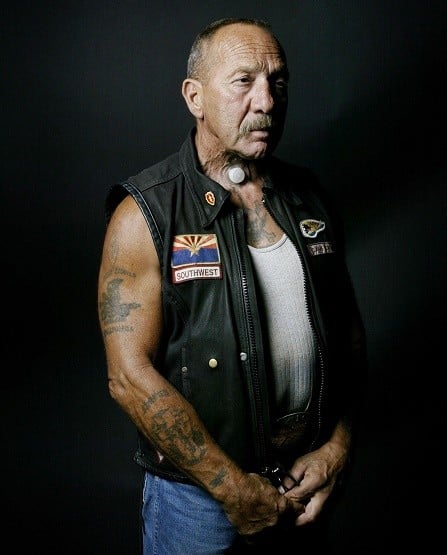
Scott Olson/Getty Images
Rise to National Notoriety
By the early 1960s, the Hells Angels were notorious across California, frequently clashing with rival clubs, police, and antiwar protesters. Barger became their most visible spokesman, granting interviews and holding press conferences that mixed bravado, defiance, and sharp media instincts. Writers such as Hunter S. Thompson helped mythologize the group, portraying Barger as a cool-headed leader amid chaos.
The Angels' infamy peaked during the counterculture era. Though Barger was not present during the 1965 Berkeley attacks on Vietnam War protesters or the violence at the 1969 Altamont Speedway concert, he publicly defended club members and framed the incidents as self-defense. Altamont, where an audience member was stabbed to death by an Angel during a Rolling Stones concert, became a defining moment that permanently linked the Hells Angels to the darker side of the 1960s.
Legal Troubles and Prison
Barger's life was marked by near-constant legal battles. Beginning in the early 1960s, he was arrested almost annually on charges ranging from assault to weapons and narcotics violations. For years, he avoided long-term imprisonment, but that changed in the 1970s.
In 1973, Barger was sentenced to 10 years to life for drug and weapons charges and sent to Folsom State Prison. Even behind bars, he continued to exert influence over the Hells Angels. Released in 1977, he returned to public life only to be imprisoned again in 1988 for conspiring to attack members of a rival motorcycle club. He was released in 1992.
Illness and Elder Statesman Era
In 1982, Barger was diagnosed with throat cancer, leading doctors to remove his vocal cords. He spoke thereafter in a hoarse whisper through a stoma in his throat, an affliction that paradoxically enhanced his mystique. By the 1990s, he had become an elder statesman of the outlaw biker world, less involved in day-to-day operations but still a powerful symbolic figure.
During this period, Barger reframed his public image. He emphasized discipline, loyalty, and personal responsibility, even as he made provocative statements about prison being a normal part of life. He claimed to have abandoned drugs, took up yoga, and encouraged young people not to smoke.
Business Ventures and Media Career
Barger was unusually successful at monetizing his reputation. He consulted on biker films, licensed the Hells Angels name, and aggressively defended its trademark, suing unauthorized users including Marvel Comics and filmmaker Roger Corman. He also licensed his own name to merchandise, including clothing, alcohol, and food products.
He authored six books, including his autobiography, "Hell's Angel: The Life and Times of Sonny Barger and the Hell's Angels Motorcycle Club," which became a "New York Times" bestseller. In later years, he appeared as himself on the television series "Sons of Anarchy," further embedding his image in popular culture.
Later Life and Death
Barger stepped back from leadership in the Hells Angels in 1998 and relocated to Arizona, later returning to the Bay Area. He spent his final years alternating between relative privacy and periodic media appearances. He remained unapologetic about his life choices, repeatedly stating that he had become exactly what he wanted to be.
Sonny Barger died on June 29, 2022, at the age of 83, from liver cancer.
Legacy
Sonny Barger's legacy is inseparable from the Hells Angels themselves. He was neither a folk hero nor merely a criminal caricature, but a complex figure who fused outlaw identity, corporate discipline, and cultural timing. He turned a motorcycle club into a global symbol, for better or worse, and left behind a blueprint for how rebellion can be organized, commodified, and mythologized. Few figures better captured the contradictions of postwar American counterculture than Sonny Barger.
/2015/10/sonny-barger-1.jpg)
/2019/10/chuck-zito.jpg)
/2019/11/Frank-Costello2.png)
/2025/10/Tony-Yayo.png)
/2015/09/Khun-Sa.png)
/2019/07/CNW-Man-3.png)
/2021/02/gotti.jpg)
/2019/10/denzel-washington-1.jpg)
/2019/04/rr.jpg)
:strip_exif()/2009/09/P-Diddy.jpg)
/2017/02/GettyImages-528215436.jpg)