
/2009/12/Willie-Nelson1.jpg)
/2014/11/pc2.jpg)
/2012/09/156417962.jpg)
/2022/01/Randy-Travis.jpg)
/2020/06/johnny-cash.jpg)
/2010/04/MERLE-HAGGARD.jpg)
/2020/04/Megan-Fox.jpg)
/2019/11/GettyImages-1094653148.jpg)
/2009/11/George-Clooney.jpg)
/2017/02/GettyImages-528215436.jpg)
/2018/03/GettyImages-821622848.jpg)
:strip_exif()/2009/09/P-Diddy.jpg)
/2009/09/Cristiano-Ronaldo.jpg)
/2020/02/Angelina-Jolie.png)
/2019/10/denzel-washington-1.jpg)
:strip_exif()/2015/09/GettyImages-476575299.jpg)
/2009/09/Brad-Pitt.jpg)
What is Willie Nelson's Net Worth?
Willie Nelson is an American country music singer-songwriter, author, poet, actor, activist, and national treasure who has a net worth of $25 million. Willie Nelson Willie Nelson, an iconic figure in American music, is celebrated for his pivotal role in the outlaw country movement, which challenged the polished Nashville sound in the 1970s. With a career spanning several decades, Nelson's distinctive voice and narrative-driven songwriting have made him a legend in country music. His breakthrough album, "Shotgun Willie" (1973), followed by "Red Headed Stranger" (1975) and "Stardust" (1978), showcased his versatility and ability to cross genres, blending country with jazz, pop, and blues. Nelson is known for hits like "On the Road Again," "Always on My Mind," and "Blue Eyes Crying in the Rain." Beyond music, he's a staunch advocate for farm aid and marijuana legalization. Nelson's contributions to music have earned him numerous awards, including multiple Grammys, and he's recognized as a pivotal figure in American music history.
Financial Issues
In 1990, the IRS claimed that Nelson owed $32 million in back taxes and seized his assets. Nelson was a bit cash-strapped after a number of bad investments he made in the 1980s, so in 1992, he released the double album "The IRS Tapes: Who'll Buy My Memories," the sales of which, along with the auction of his property, paid his IRS debt.
Early Life
Willie Hugh Nelson was born on April 29, 1933, in Abbott, Texas. He is the son of Myrle and Ira Nelson. His cousin Mildred named him Willie and chose his middle name of Hugh in honor of her younger brother, who had passed shortly before Willie was born. His parents moved to Texas from Arkansas in 1929 in search of work. His father was a mechanic, and his grandfather was a blacksmith. His mom left the family not long after he was born. His father remarried and moved away, and then Nelson and his sister Bobbie stayed behind and were raised by their grandparents. His grandfather bought him a guitar when he was six and taught him a few chords. His grandparents taught singing and started Willie and Bobbie on their path in music. Nelson and his sister Bobbie sang gospel songs in the church choir with their grandfather. Willie wrote his first song at seven and when he was nine, he played guitar in a local band called Bohemian Polka.
Willie went to Abbott High School, where he was very active in sports. He was on the football, basketball, and baseball teams. He also was a member of the Future Farmers of America, which he raised pigs for. During high school, he was in the band The Texans, formed by his sister's husband, Bud Fletcher. Willie sang and played the guitar in the band. The Texans played in honky-tonks and had a Sunday morning radio show. Nelson graduated from Abbott High School in 1952. He was in the Air Force for a short time and then enrolled at Baylor University to study agriculture. He was a member of the Tau Kappa Epsilon fraternity. Nelson dropped out of college after two years to pursue a career in music. While getting his music career off the ground, Nelson worked as a saddle maker, tree trimmer, bouncer, and at an auto parts shop.
Career
Nelson got a job as a DJ at KBOP and moved to Pleasanton, Texas. In 1955, he recorded his first two singles: "The Storm Has Just Begun" and "When I've Sung My Last Hillbilly Song," using the equipment at the radio station. He sent the demos to a local record label and was rejected. Nelson went on to work for a number of radio stations in Texas and played in nightclubs. He ended up in Portland, where his mother lived. During this period, he worked as a DJ at a number of radio stations in Portland, Oregon, and Vancouver, Washington. This was when he wrote a number of the songs that would become not only some of his biggest hits but country standards, including "Funny How Time Slips Away" and "Crazy" (1961) which became a smash hit for Patsy Cline.
Nelson moved to Nashville in 1960 and signed a publishing contract. He recorded his first album in 1962, "…And Then I Wrote." The album was a success. He signed with RCA Victor in 1964 and joined the Grand Ole Opry in 1965.
Nelson is one of the most successful and prolific musicians of the country subgenre of outlaw country. Nelson had enormous success with 1973's "Shotgun Willie," 1975's "Red Headed Stranger," and 1978's "Stardust." In the mid-1980s, Nelson recorded the iconic hit songs "On the Road Again" and "To All the Girls I've Loved Before." He also formed the country supergroup The Highwaymen with Johnny Cash, Kris Kristofferson, and Waylon Jennings.
In 2020, Nelson live-streamed benefit concerts following the coronavirus pandemic that raised $700,000 over the first two shows for people who'd suffered financial loss due to the lockdown and the economy. The third show, titled "Come and Toke It," was cannabis themed, and some of the proceeds went to support The Last Prisoner Project. For his releases of "The Willie Nelson Family" in 2021 and "A Beautiful Time" in 2022, Nelson received four Grammy Award nominations, winning Best Country Solo Performance and Best Country Album. In March 2023, he released the album "I Don't Know a Thing About Love." Willie Nelson was inducted into the Rock and Roll Hall of Fame in 2023.
In addition to his musical engagements, Nelson has starred in more than 30 films, co-authored several books, and has been involved in activism for the use of biofuels and the legalization of marijuana.
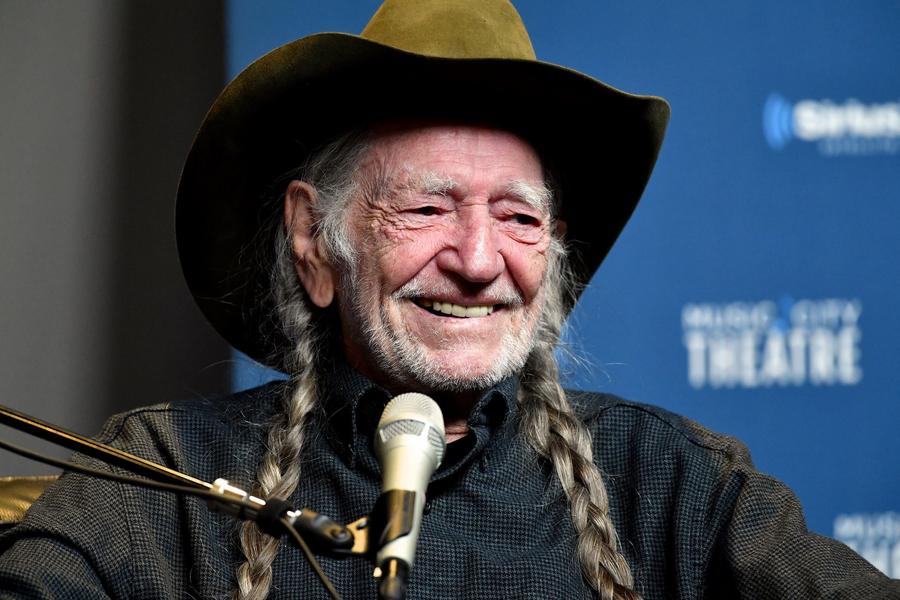
Jason Davis/Getty Images
Legal Issues
Over the years, Nelson has been arrested numerous times for possession of marijuana. The first time that happened was in Dallas in 1974. A notable time was in 1977 after a tour when Nelson went to the Bahamas. A customs officer found marijuana in the pocket of his jeans, and he was arrested and thrown in jail. He was released a few hours later, and charges were eventually dropped, however, Nelson was banned from the Bahamas.
In 1994, police found marijuana in Nelson's car near Waco, Texas. In 2006, while traveling to former Texas Governor Ann Richards' funeral, Nelson was arrested in Louisiana and charged with possession of marijuana and hallucinogenic mushrooms. Nelson received six months of probation. Nelson was arrested in Sierra Blanca, Texas, in November 2010 for possession of marijuana found in his tour bus while traveling from Los Angeles back to Texas. He was released after paying a bail of $2,500.
Personal Life
Willie Nelson has been married four times and has eight children. He was married to Martha Matthews from 1952 to 1962. They had three children, Lana, Susie, and Wilie "Billy" Hugh, Jr. Martha assaulted Willie Sr. several times. At one point, she sewed him into bedsheets and beat him with a broomstick. Their son Billy committed suicide in 1991. Nelson was married to Shirley Collie from 1963 to 1971. They divorced after Shirley found a bill from the maternity ward and discovered that Willie had a daughter, Paula Carlene Nelson, with Connie Koepke. In 1971, Nelson married Koepke and had another daughter, Amy Lee Nelson. They divorced in 1988. He married Annie D'Angelo in 1991 and had two sons, Lukas Autry Nelson and Jacob Micah Nelson. In 2012, Nelson learned that he fathered a daughter with his friend Mary Haney. Lukas Nelson is a celebrated country artist like his father, with an emphasis on rock with his band Lukas Nelson and Promise of the Real.
Nelson's lung collapsed in 1981 while swimming in Hawaii. He was taken to Maui Memorial Hospital. In 2015, he underwent stem-cell therapy to improve the state of his lungs. In 2004, Nelson underwent surgery for carpal tunnel syndrome, as he had damaged his wrists by continuously playing the guitar.
Nelson is a second-degree black belt in taekwondo. In 2014, Willie earned a fifth-degree black belt in GongKwon Yusul.
Real Estate
Nelson's longtime home in Spicewood, Texas, is currently valued at $3.9 million. He owns a golf club just 10 minutes away called The Pedernales Country Club. Willie bought a home in Maui, Hawaii, in 1983 for $450,000. He has several celebrity neighbors there.
Only four minutes away from his Spicewood ranch, Nelson owns a Texas ranch he calls "Lucky Ranch." It consists of 700 acres of land, most of which is dedicated to over 70 horses rescued from slaughterhouses who live and roam freely on the property.
/2009/12/Willie-Nelson1.jpg)
/2010/04/MERLE-HAGGARD.jpg)
/2011/04/waylon-jennings.jpg)
/2021/06/kris.jpg)
/2023/10/mel-tillis.jpg)
/2017/06/june-carter-cash.png)
/2014/10/GettyImages-518927666.jpg)
/2023/11/charlie-daniels.jpg)
/2009/09/Jennifer-Aniston.jpg)
/2020/06/taylor.png)