
/2012/11/Peabo-Bryson.jpg)
/2012/11/51482250-e1547837685102.jpg)
/2022/11/walter.jpg)
/2022/04/warnes.jpg)
/2014/08/GettyImages-826811750.jpg)
/2009/09/Celine-Dion-1.jpg)
/2019/10/denzel-washington-1.jpg)
/2019/11/GettyImages-1094653148.jpg)
:strip_exif()/2015/09/GettyImages-476575299.jpg)
/2020/04/Megan-Fox.jpg)
/2020/01/lopez3.jpg)
/2009/09/Jennifer-Aniston.jpg)
/2017/02/GettyImages-528215436.jpg)
/2018/03/GettyImages-821622848.jpg)
/2009/09/Cristiano-Ronaldo.jpg)
/2009/11/George-Clooney.jpg)
/2020/02/Angelina-Jolie.png)
What is Peabo Bryson's Net Worth?
Peabo Bryson is an American singer and songwriter who has a net worth of $2.5 million. Peabo Bryson is known for his romantic soul ballads, many of them duets with female artists. Among his biggest hits is 1983's "Tonight, I Celebrate My Love," a duet with Roberta Flack. Bryson is also known for his soundtrack contributions to the Disney animated films "Beauty and the Beast" and "Aladdin," for which he won a pair of Grammy Awards. Unfortunately, as we detail towards the end of this article, later in his career Peabo experienced some issues with the Internal Revenue Service which ultimately resulted in many of possessions – including his Grammies and an Atlanta mansion – being seized to cover $1.2 million worth of back taxes and debts.
Early Life
Peabo Bryson was born as Robert Peapo Bryson on April 13, 1951 in Greenville, South Carolina. Much of his childhood was spent on his grandfather's farm in Mauldin. Bryson developed a passion for music early on in life thanks to his mother, who frequently took the family to concerts by African-American musicians.
Career Beginnings
At the age of 14, Bryson had his first professional music gig, singing backup for the local Greenville group Al Freeman and the Upsetters. A couple of years after that, he went on tour with a different local band, Moses Dillard and the Tex-Town Display. While recording with the group at Atlanta's Bang Records, Bryson caught the attention of the label's general manager Eddie Biscoe. Subsequently, Biscoe signed him to the label as a writer, producer, and arranger. Bryson went on to work with various local bands through Bang.
Studio Albums
In 1976, Bryson launched his recording career on the Bang label and released his debut album, "Peabo." The following year, he signed to Capitol Records and released the album "Reaching for the Sky," which featured the hit R&B singles "Feel the Fire" and the title track. Bryson's third album, "Crosswinds," came out in 1978. He followed that with his first duet album, "We're the Best of Friends," which was recorded with Natalie Cole. Subsequent albums were "Paradise," "Turn the Hands of Time," "I Am Love," and "Don't Play with Fire." In 1983, Bryson had one of his greatest successes with "Born to Love," a duet album with Roberta Flack. Reaching number 25 on the Billboard 200, it spawned the hit romantic ballad "Tonight, I Celebrate My Love." Bryson had another hit single in 1984 with "If Ever You're in My Arms Again," from his album "Straight from the Heart."
Throughout the latter half of the 80s, Bryson released the albums "Take No Prisoners," "Quiet Storm," "Positive," and "All My Love." In 1991, he had his biggest hit in years with "Can You Stop the Rain," which launched the eponymous single. Bryson's other studio albums during the decade were "Through the Fire," "Peace on Earth," and "Unconditional Love." He didn't release another studio album until 2007's "Missing You," which became his highest-charting album in 16 years. Following another long break, this one over a decade in length, Bryson released "Stand for Love" in 2018.
Disney Songs
Bryson earned some of his greatest plaudits for his contributions to the soundtracks of the Disney animated films "Beauty and the Beast" and "Aladdin." For the former film, he sang the titular theme song with Celine Dion, and for the latter film sang "A Whole New World" with Regina Belle. Both songs were enormous hits, earning Academy Awards for Best Original Song in 1991 and 1992, respectively. For his vocal contributions to both, Bryson won a pair of Grammy Awards alongside his duet partners.
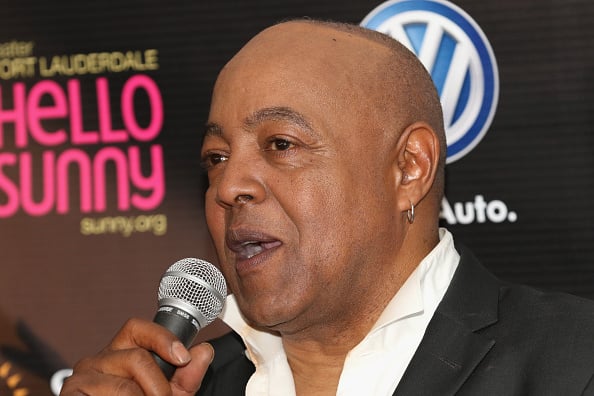
Aaron Davidson/Getty Images
Other Notable Duets
Bryson has gained recognition for numerous other romantic duets over the years. Some of his notable credits beyond his hit collaborations with Roberta Flack have included "What You Won't Do for Love," with Natalie Cole; "Here We Go," with Minnie Riperton; "Without You," with Regina Belle; "By the Time This Night is Over," with Kenny G; and "The Best Part," with Nadia Gifford. Bryson also scored a success singing "I Have Dreamed," the theme to the musical "The King and I," with Lea Salonga.
Tax Troubles
Bryson ran into legal trouble in 2003 due to his history of tax evasion. Reported to owe over $1.2 million in taxes, he had many possessions from his home in Atlanta, Georgia seized by the IRS, including his grand piano and both of his Grammy Awards. Some of his friends won the bids for the Grammys and gave the awards back to Peabo.
Personal Life
Earlier in his life, Bryson was engaged a number of different times, with his fiancées having included Juanita Leonard and Angela Thigpen. He eventually got married to former singer Tanya Boniface of the English girl group the 411. Together, they have a young son named Robert. Peabo also has a daughter named Linda from a previous relationship.
/2012/11/Peabo-Bryson.jpg)
/2012/11/51482250-e1547837685102.jpg)
/2022/04/warnes.jpg)
/2022/11/walter.jpg)
/2021/01/natalie-cole.jpg)
/2014/08/GettyImages-826811750.jpg)
/2009/11/Lionel-Richie.jpg)
:strip_exif()/2009/09/P-Diddy.jpg)
/2020/06/taylor.png)
/2009/09/Brad-Pitt.jpg)