














What Was Michael Jackson's Net Worth?
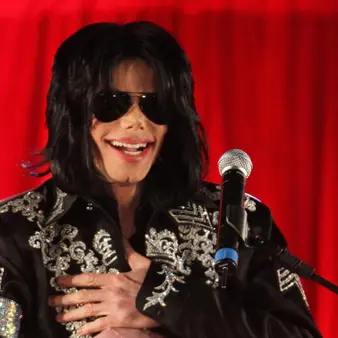
Michael Jackson was an American singer, songwriter, dancer, actor, and music industry entrepreneur who had a net worth of negative $500 million at the time of his death in 2009.
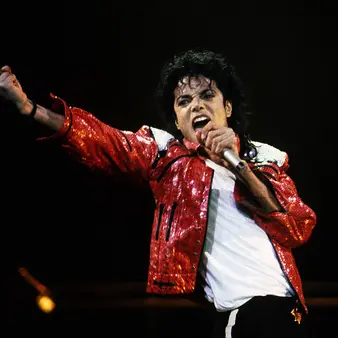
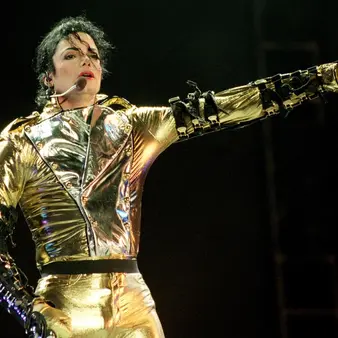
That's equivalent to approximately negative $781 million in 2026 dollars after adjusting for inflation. Michael Jackson was one of the most commercially successful entertainers in history, selling hundreds of millions of records and generating extraordinary revenues from concert tours, merchandise, endorsements, and music publishing. At the height of his career in the late 1980s, he was earning more than $100 million annually. His 1982 album "Thriller" became the bestselling album of all time, while subsequent releases including "Bad," "Dangerous," and "HIStory" cemented his status as the King of Pop.
Jackson was also a remarkably successful investor in music publishing. His most famous business decision came in 1985 when he paid $47.5 million for ATV Music Publishing, a company that controlled most of The Beatles' most valuable songs. Ten years later, he received approximately $100 million to merge ATV with Sony's publishing operation, retaining half of the enlarged business. However, his extraordinary spending eventually overwhelmed his income. By his death in June 2009, he was burdened by more than $500 million in loans and creditor claims.
What happened afterward was one of the most remarkable financial recoveries in entertainment history. Through music catalog sales, recording agreements, licensing, theatrical productions, and film projects, the estate's earnings have exceeded $3.5 billion. In 2026 alone, the estate generated an estimated $140 million, boosted by the extraordinary success of the biographical film "Michael," which grossed more than $1 billion worldwide.
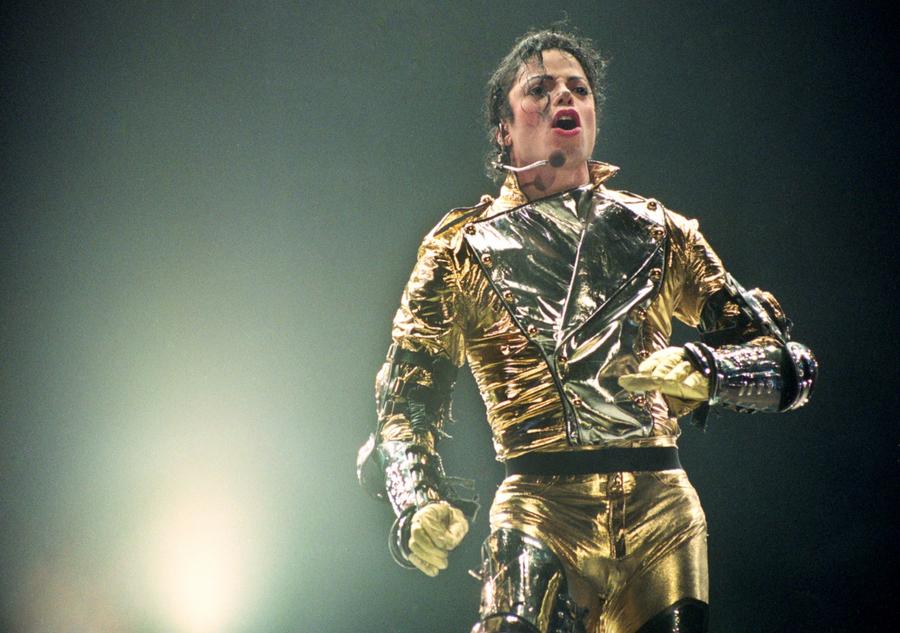
(Photo by Phil Walter/Getty Images)
Michael Jackson's Net Worth at Death
Michael Jackson's financial situation at the time of his death was extraordinarily complicated. Although he owned some of the most valuable music copyrights in the world, he had accumulated hundreds of millions of dollars in debt and was facing severe liquidity problems. Many of his assets had been pledged as collateral for loans, and several creditors were threatening legal action or foreclosure.
In June 2024, court documents filed by the estate's executors confirmed that Jackson's most significant assets were subject to more than $500 million in debt and creditor claims when he died. Some obligations were already in default, while others carried extremely high interest rates. The estate also faced more than 65 creditor claims, outstanding litigation, and approximately $40 million in obligations associated with the canceled "This Is It" concert residency.
The negative $500 million net-worth estimate reflects the enormous debt burden and financial distress surrounding Jackson's final years. Determining a precise balance-sheet net worth is more complicated because his music catalogs retained substantial value even while heavily leveraged. In fact, contemporary estimates of his assets differed sharply, and the value of his estate became the subject of years of litigation with the Internal Revenue Service.
In 2021, the U.S. Tax Court valued three particularly important disputed asset interests at approximately $111.5 million for estate-tax purposes. The court assigned approximately $107.3 million to his Mijac publishing interest, $4.15 million to his image and likeness rights, and no net value to his Sony/ATV interest after accounting for the applicable debts and restrictions.
The ruling did not represent a comprehensive independent valuation of every asset and liability Jackson owned. It did, however, demonstrate how aggressively his most important holdings had been leveraged. His executors ultimately preserved those assets long enough to generate enormous revenue rather than being forced to liquidate them during the financial crisis.
Early Life and Music Career
Michael Joseph Jackson was born on August 29, 1958, in Gary, Indiana. He was the eighth of ten children born to Joseph and Katherine Jackson. His father worked in the steel industry while managing the family's early musical activities, and his mother encouraged the children's singing and performing.
Michael began performing professionally as a young child alongside his brothers Jackie, Tito, Jermaine, and Marlon. Their group, the Jackson 5, signed with Motown Records in 1968 and achieved four consecutive #1 singles beginning with "I Want You Back." By the early 1970s, Michael had become the group's central attraction and was developing a successful solo recording career.
His transformation into an international superstar accelerated with the 1979 album "Off the Wall," produced by Quincy Jones. The album produced major hits including "Don't Stop 'Til You Get Enough" and "Rock with You," establishing Jackson as a solo artist capable of reaching audiences far beyond his family's original fan base.
In November 1982, he released "Thriller," which became the bestselling album in recording history. The album has been certified for 34 million units in the United States and is estimated to have sold more than 67 million copies worldwide. Its seven Top 10 American singles included "Billie Jean," "Beat It," and "Thriller," while its elaborate music videos transformed the medium into a major commercial and artistic platform.
Jackson followed that success with "Bad" (1987), "Dangerous" (1991), "HIStory" (1995), and "Invincible" (2001). His albums, music videos, and concert tours made him one of the most famous people in the world, but his growing wealth also created opportunities for increasingly expensive business decisions and personal spending.
Career Earnings and Endorsements
Over his lifetime, Jackson earned well over $500 million from recordings, touring, publishing royalties, endorsements, and licensing. During his commercial peak, his annual earnings rivaled those of the world's wealthiest professional athletes and business executives.
According to historical Forbes reporting, Jackson earned approximately $86 million in 1988, largely from his enormously successful "Bad" world tour, merchandise, publishing, and endorsements. Forbes estimated that he earned another $125 million in 1989, making him one of the highest-paid entertainers in the world.
His earnings were supplemented by major corporate sponsorships, including a relationship with Pepsi that began in the 1980s. By 1991, he had negotiated a recording agreement with Sony valued at approximately $65 million, including substantial advances and exceptionally favorable royalties.
Michael's ability to generate money extended well beyond the sale of his own records. His ownership of music copyrights provided income whenever those compositions were recorded, performed, broadcast, or licensed for commercial use. That publishing business would eventually become the most valuable part of his financial holdings.
Extraordinary Spending and Debt
Jackson's fundamental financial problem was that his expenses frequently matched or exceeded his enormous income. Maintaining his homes, employees, travel arrangements, entertainment activities, and personal lifestyle reportedly cost between $30 million and $50 million annually during his most extravagant years.
His financial obligations also included substantial spending on elaborate music videos, legal disputes, and projects that never generated meaningful returns. Some estimates placed his spending on ambitious film and video productions at approximately $65 million, including work connected to the elaborate short film "Ghosts," which he developed with writer Stephen King.
Among his most significant expenses and financial commitments were:
- $19.5 million to acquire Neverland Ranch, followed by millions spent on improvements, employees, animals, and maintenance.
- Approximately $20 million in connection with a 1994 civil settlement resolving allegations of child sexual abuse, which Jackson denied.
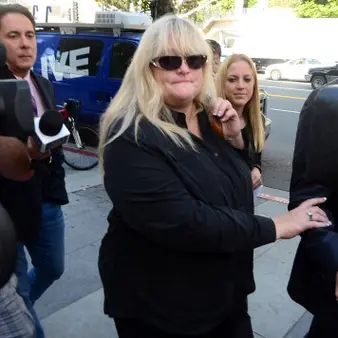
- $8.5 million in a divorce settlement with Debbie Rowe, according to court records.
- An estimated $65 million associated with expensive video and film projects.
- Millions annually in interest payments on loans secured by his publishing assets.
- Substantial expenditures on artwork, antiques, luxury vehicles, clothing, jewelry, exotic animals, and collectibles.
As his expenses grew, Jackson increasingly borrowed against his music catalogs. The loans secured by his Sony/ATV and Mijac interests eventually represented hundreds of millions of dollars, including obligations totaling roughly $380 million against those publishing assets.
At various points, his financing arrangements involved Bank of America, Fortress Investment Group, and other lenders. By the mid-2000s, negotiations to refinance the loans had become increasingly urgent, with interest rates on certain obligations reportedly reaching approximately 20% annually.
In addition to the enormous catalog-backed loans, Jackson accumulated roughly $120 million in other obligations and creditor claims. His financial position became increasingly precarious despite the continuing commercial value of his recordings and publishing holdings.
By early 2009, his planned "This Is It" residency at London's O2 Arena represented an opportunity to generate substantial income and rehabilitate his professional career. The concerts were also an important part of the effort to stabilize his finances, but Jackson died before the opening performance.
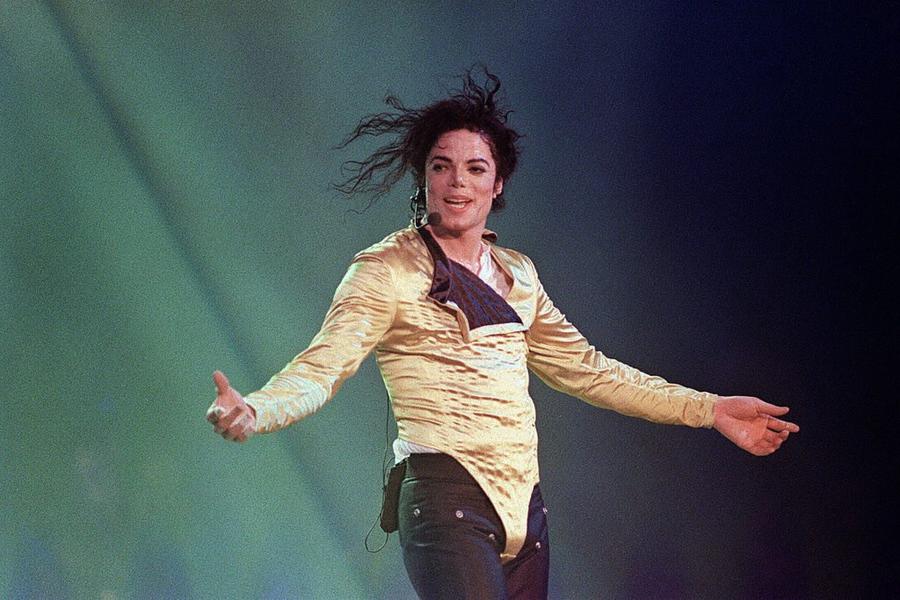
Michael Jackson Net Worth / FRANCIS Sylvain/AFP/Getty Images
Michael Jackson's Music Catalog
Jackson's most valuable financial investments were concentrated in two separate music publishing businesses: Mijac Music and Sony/ATV Music Publishing.
Mijac controlled the publishing rights to many of Jackson's own compositions, along with songs acquired from other artists and songwriters. Its catalog included works associated with Sly and the Family Stone, Ray Charles, Jerry Lee Lewis, Curtis Mayfield, and Jackie Wilson.
These assets generated publishing income from radio, television, recordings, film soundtracks, public performances, and commercial licensing. Unlike concert revenue, which depended on Jackson continuing to perform, publishing royalties could keep generating money for decades.
His second major music investment was his ownership stake in Sony/ATV Music Publishing. That business originated with his acquisition of the ATV catalog in 1985, one of the most celebrated purchases in music industry history.
Buying The Beatles Catalog
In 1984, Australian businessman Robert Holmes à Court began exploring the sale of ATV Music Publishing, a company that controlled thousands of songs, including approximately 251 compositions written by John Lennon and Paul McCartney.
Because of publishing agreements signed earlier in their careers, The Beatles no longer controlled the publishing rights to many of their most famous compositions. Although Paul McCartney and Yoko Ono, representing John Lennon's interests, were aware of the opportunity, neither successfully acquired the catalog.
Michael Jackson had already become interested in music publishing after discussing its financial potential with McCartney during their collaborations in the early 1980s. Fresh from the success of "Thriller," he possessed both the resources and the ambition to pursue a much larger music-rights investment.
When Jackson's attorney John Branca learned that ATV was available, he began negotiating on Michael's behalf. The discussions continued for months, involving competing bidders, extensive due diligence, and disagreements over the company's valuation.
Jackson ultimately purchased ATV Music in August 1985 for a reported $47.5 million. Sony later described the effective net acquisition cost as approximately $41.5 million after adjustments.
The deal gave Jackson ownership of a catalog containing thousands of songs, including most of The Beatles' biggest hits. Among the compositions were "Yesterday," "Let It Be," "Help!," "Hey Jude," and "The Long and Winding Road."
Jackson's purchase was particularly controversial because McCartney had previously encouraged him to invest in publishing. Their friendship subsequently deteriorated, although the transaction became an extraordinary financial success for Jackson.
The profitability of owning publishing rights became evident in 1987 when Nike licensed The Beatles' song "Revolution" for an advertising campaign. The company paid approximately $500,000 to obtain the required music rights, including publishing rights controlled by Jackson and recording rights administered through EMI-Capitol.
The commercial generated objections from members of The Beatles and eventually became the subject of litigation. For Jackson, however, the deal demonstrated how a valuable music catalog could produce substantial licensing income without requiring its owner to record or perform anything.
For more background on the acquisition, see how Michael Jackson acquired The Beatles catalog and transformed it into a billion-dollar publishing business.
The $100 Million Sony Merger
In November 1995, Jackson completed another major business transaction, combining ATV Music Publishing with Sony's music publishing operations.
Sony agreed to pay Jackson approximately $100 million in exchange for acquiring a 50% interest in ATV. The companies then created Sony/ATV Music Publishing, with Jackson and Sony each controlling half of the enlarged business.
The arrangement allowed Jackson to recover approximately twice his original investment while retaining an ownership interest in a substantially larger company. Instead of relying entirely on The Beatles catalog, he now benefited from a diversified publishing operation containing music from many different artists and genres.
Crucially, Jackson retained his separate Mijac publishing business, which included his own compositions and other acquired catalogs. As a result, he maintained two distinct sources of publishing income: his 50% Sony/ATV interest and his independently controlled Mijac assets.
Sony/ATV expanded rapidly through further acquisitions and publishing agreements. By the early 2010s, the operation owned or administered more than two million copyrights, including works associated with The Beatles, Bob Dylan, Willie Nelson, Lady Gaga, Taylor Swift, and numerous other artists.
In 2016, seven years after Jackson's death, his estate sold its remaining 50% Sony/ATV ownership stake to Sony for $750 million. The transaction included approximately $733 million in immediate cash consideration, along with previously committed distributions and other adjustments.
The sale completed the financial journey that began with Jackson's $47.5 million acquisition of ATV in 1985. It remains one of the most successful music publishing investments ever made by an individual artist.
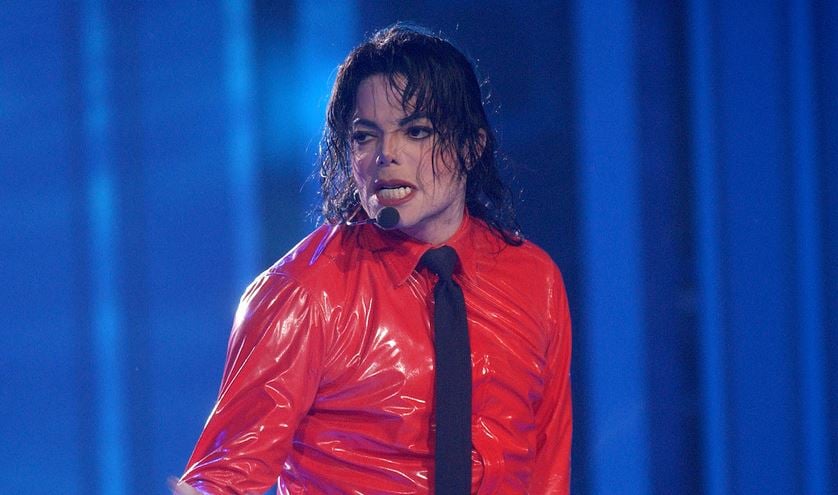
Getty
Who Inherited Michael Jackson's Estate?
Michael Jackson's 2002 will directed his assets into the Michael Jackson Family Trust, which was established to benefit his mother, his three children, and charitable organizations.
According to the trust's reported provisions, the beneficial interests were allocated as follows:
- 40% to his three children, divided equally among Prince, Paris, and Bigi Jackson.
- 40% to his mother, Katherine Jackson, through a lifetime beneficial interest.
- 20% to charitable organizations benefiting children.
Under this structure, each of Jackson's children initially held a beneficial interest corresponding to approximately 13.3% of the estate. Upon Katherine's death, the remaining assets associated with her share are designated to pass to the children, potentially increasing each child's eventual beneficial interest to approximately 26.7%.
Jackson's father, Joe Jackson, and his siblings were excluded from the inheritance. His former wife, Debbie Rowe, was also not a beneficiary.
The beneficiaries' interests are administered through trusts and estate arrangements rather than representing unrestricted personal ownership of the underlying music catalogs. The executors have continued managing the estate's assets, paying expenses, resolving legal matters, and making distributions or expenditures on behalf of the beneficiaries.
The Estate's $3.5 Billion Financial Comeback
Following Jackson's death, his estate was placed under the management of longtime entertainment attorney John Branca and music executive John McClain.
Their first priority was preserving the singer's valuable music assets while addressing hundreds of millions of dollars in debt. Rather than immediately selling the catalogs, they sought to generate new revenue through recordings, licensing, film, merchandise, and entertainment productions.
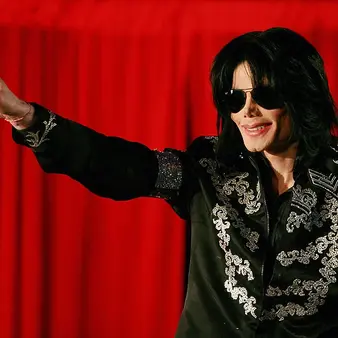
One of the estate's earliest successes was "Michael Jackson's This Is It," the documentary assembled from footage of rehearsals for his planned London residency. Released in October 2009, the film grossed approximately $268 million worldwide and generated additional revenue through home entertainment, soundtracks, and merchandise.
In March 2010, the estate negotiated an enormous recording agreement with Sony Music Entertainment. The seven-year agreement covered ten projects, including previously unreleased recordings and repackaged material, with $200 million guaranteed and a potential value of $250 million if certain conditions were met.
The estate subsequently expanded its commercial operations through major entertainment ventures, including the Cirque du Soleil productions "Michael Jackson: The Immortal World Tour" and "Michael Jackson ONE." The latter opened at Mandalay Bay in Las Vegas in 2013 and became one of the most enduring music-themed productions on the Strip.
Jackson's music also inspired the Broadway production "MJ," which opened in 2022 and expanded into international productions. Together with merchandise licensing, streaming royalties, and ongoing record sales, these ventures created a diversified business that no longer depended on Michael personally performing.
$750 Million, $287.5 Million, and $600 Million Catalog Sales
Three major transactions played a central role in the estate's financial recovery.
The first occurred in 2016, when Sony paid $750 million to acquire the estate's remaining 50% interest in Sony/ATV Music Publishing.
In July 2018, the estate completed another significant transaction, selling its 25.1% interest in an investment vehicle associated with EMI Music Publishing for $287.5 million. The sale helped Sony consolidate its ownership of EMI and provided the Jackson estate with additional liquidity.
The third major sale occurred in 2024, when Sony acquired a 50% interest in a portfolio of Jackson's own recorded music and publishing rights for approximately $600 million.
The 2024 transaction included interests in Jackson's master recordings and compositions, along with publishing assets associated with Mijac Music. The portfolio included not only Jackson's own songs but also valuable compositions associated with artists such as Sly and the Family Stone, Ray Charles, and Curtis Mayfield.
The agreement valued the underlying music rights at more than $1.2 billion. The estate retained a substantial economic interest in the assets, while Primary Wave Music continued holding a separate interest in certain publishing rights.
The three transactions together represented more than $1.63 billion in announced consideration. They helped the estate eliminate its original debt burden while preserving interests in valuable music and entertainment businesses.
According to Forbes, the Jackson estate generated more than $3.5 billion in earnings between 2009 and 2025, placing it among the most commercially successful celebrity estates in history.
The $1 Billion Michael Jackson Biopic
One of the estate's biggest commercial successes arrived in April 2026 with the release of "Michael," a biographical film directed by Antoine Fuqua and produced by Graham King.
The film starred Jackson's nephew Jaafar Jackson as the King of Pop, alongside Colman Domingo, Nia Long, and Miles Teller. It followed Michael's childhood in the Jackson 5 through his emergence as a global superstar during the 1980s.
The production was extraordinarily expensive for a music biopic, with an initial budget of approximately $150 million and substantial additional costs associated with reshoots. Forbes estimated that the estate contributed more than $25 million toward those additional production expenses.
Despite the enormous cost and controversy surrounding the production, the film became a global blockbuster. It grossed more than $1 billion worldwide, becoming the first biographical film to cross that threshold.
According to Forbes, the estate negotiated an interest in the film's profits and could ultimately receive more than $50 million in profit participation, distributed over several years.
The movie also produced renewed demand for Jackson's music, increasing streaming activity and supporting ticket sales for theatrical productions based on his career.
Forbes estimated that the estate generated approximately $140 million during the 12 months ending in September 2026, placing Michael second on its annual list of highest-paid deceased celebrities.
Estate Distributions and Legal Disputes
The estate's financial success has not eliminated disagreements over the management of its assets.
In October 2025, court filings revealed that Paris Jackson had received approximately $65 million in financial benefits since her father's death. The amount included distributions, living expenses, and payments made on her behalf, rather than representing a single cash inheritance.
Additional probate filings disclosed substantial annual expenditures for the other beneficiaries. During 2024, the estate attributed approximately $6.4 million in benefits to Prince, $6.3 million to Paris, and $3.1 million to Bigi, including taxes, property expenses, and other payments.
Meanwhile, Paris challenged certain legal fees and compensation arrangements associated with the estate's administration. In April 2026, a court-appointed referee ordered the return of $625,000 in inadequately justified attorney bonuses that had been paid in 2018.
The dispute expanded in October 2026 when Paris challenged approximately $109.2 million in combined compensation associated with the estate's management and attorneys for 2023 and 2024.
She sought a reduction in the management-fee rate from 15% to 10% of gross entertainment-related income, citing allegedly incomplete accounting records. The estate disputed her allegations and defended its compensation arrangements, arguing that the managers had generated extraordinary financial returns for the beneficiaries.
The legal proceedings illustrated the complexity of administering a music and entertainment business worth billions of dollars while balancing the interests of family members, charitable beneficiaries, attorneys, and business partners.
Neverland Ranch
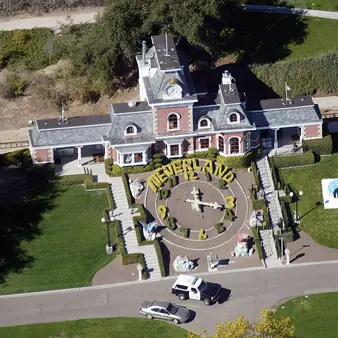
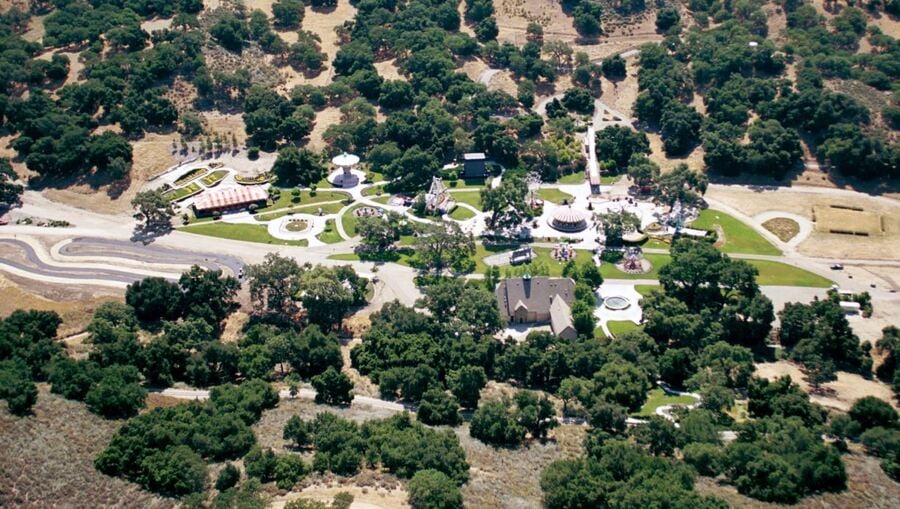
One of Michael Jackson's most famous possessions was Neverland Ranch, the sprawling property he transformed into a private amusement park in California's Santa Ynez Valley.
Located near Los Olivos in Santa Barbara County, the approximately 2,700-acre estate became one of the most recognizable celebrity homes in the world.
Jackson purchased the property in 1988 for approximately $19.5 million. Originally known as Sycamore Valley Ranch, the estate was subsequently renamed Neverland after the fictional island in J.M. Barrie's "Peter Pan."
Jackson transformed the property into an elaborate private retreat featuring amusement park rides, exotic animals, a miniature railroad, a movie theater, and an extensive collection of landscaped gardens and recreational facilities.
The improvements reportedly cost tens of millions of dollars. The estate eventually included a private amusement park with rides and attractions, a zoo, a train station, and accommodations for staff and guests.
Getty
Jackson frequently entertained friends, family members, and other guests at the ranch. Elizabeth Taylor held her wedding to Larry Fortensky there in 1991, while Kim Kardashian celebrated her 14th birthday at the property in 1994 through her family's connections to Jackson.
The main residence was a roughly 12,600-square-foot French Normandy-style mansion featuring five bedrooms, eight bathrooms, formal entertaining spaces, and distinctive architectural details.
Other amenities included a 50-seat movie theater, dance studio, a four-acre lake, tennis courts, basketball facilities, barns, animal enclosures, and multiple guest and staff residences. In total, the property contained approximately 22 structures.
Maintaining Neverland became enormously expensive. The ranch required extensive staffing, security, landscaping, maintenance, and animal care, with annual operating expenses sometimes estimated at more than $1 million.
Following the child sexual abuse allegations made against Jackson in the 1990s and the criminal charges brought in 2003, the property became the focus of extensive media attention. Jackson was acquitted of all charges in his 2005 criminal trial, but he subsequently stopped using Neverland as his primary residence.
His declining finances made the property increasingly difficult to maintain. By 2008, Jackson was facing foreclosure after defaulting on approximately $25 million in debt associated with the ranch.
A private equity firm, Colony Capital, acquired the outstanding loan for approximately $23 million and entered into an arrangement with Jackson involving ownership and management of the property.
After Jackson died in 2009, Colony spent additional money maintaining and improving the ranch, with plans to sell it.
The property was eventually marketed under its original name, Sycamore Valley Ranch, and listed for $100 million. Despite its fame, the asking price proved difficult to justify in the luxury real estate market.
The price was subsequently reduced to $67 million in 2017, with additional reductions in later years. Potential buyers faced not only the estate's enormous size and maintenance costs but also the controversy surrounding its former owner.
In December 2020, billionaire investor Ron Burkle purchased Neverland Ranch for $22 million.
The sale ended years of efforts to find a buyer for one of America's most famous private estates. Burkle, who had known Jackson personally, described the acquisition as a long-term land investment.
Here is a rare drone video tour of Neverland:
Death
Michael Jackson died on June 25, 2009, at age 50, while preparing for his planned "This Is It" concert residency in London. The Los Angeles County coroner determined that his death resulted from acute propofol intoxication, with other sedatives contributing. His personal physician, Conrad Murray, was convicted of involuntary manslaughter in 2011.
Jackson's death occurred at a moment when his finances were under enormous pressure, but his intellectual property remained extraordinarily valuable. The subsequent financial recovery of his estate demonstrated the enduring commercial power of his recordings, publishing investments, and global celebrity.
Net Worth Unpacked Michael Jackson
Explore the figures, comparisons, and money moments in this profile.
Read the text version 12 cards
Michael Jackson died in debt. His catalog lived on.
CNW estimated net worth at death (2009) -$500M
CNW snapshot: 2026-11-05
SourcesHis estimated earnings climbed past $100 million in 1989
Forbes estimated annual earnings, 1988–89
- 1988$86M
- 1989$125M
CNW snapshot: 2026-11-05
SourcesHe bought ATV Music—and rights to Beatles hits
The catalog included publishing rights to more than 250 Lennon–McCartney songs.
Reported price for ATV Music Publishing, 1985 $47.5M
Sony paid Jackson for half of ATV Music
He kept a 50% stake in the combined publishing business and retained Mijac separately.
Approx. payment to Jackson in the 1995 Sony/ATV merger $100M
SourcesJackson borrowed against his publishing holdings
Approx. loans secured by Sony/ATV and Mijac interests $380M
SourcesHis canceled tour became a box-office hit
The film was assembled from rehearsals for Jackson’s planned London concerts.
Approx. worldwide gross, This Is It documentary (2009) $268M
His estate secured a 10-project Sony recording deal
Guaranteed under the seven-year agreement, 2010 $200M
SourcesThen came three major estate asset sales
Total · Announced prices for separate estate asset interests, 2016–24 $1.64B
Announced prices for separate estate asset interests, 2016–24
- 2016: 50% Sony/ATV stake$750M
- 2018: 25.1% EMI-linked interest$287.5M
- 2024: approx. 50% music-rights interest$600M
CNW snapshot: 2026-11-05
Jackson’s will named his mother, children and charity
Katherine’s remaining interest is designated to pass to the children after her death.
Reported beneficial shares under Jackson’s 2002 will
- Katherine Jackson: lifetime interest40%
- Three children: combined40%
- Children’s charities20%
CNW snapshot: 2026-11-05
His three children share the same CNW estimate
Paris, Prince and Bigi Jackson · estimated personal net worth
- Paris Jackson$150M
- Prince Michael Jackson$150M
- Blanket Jackson$150M
CNW snapshot: 2026-11-05
His nephew starred in a billion-dollar biopic
Jaafar Jackson played his uncle in the film.
Worldwide box office, Michael (2026), more than $1B
SourcesEven before the biopic, the estate had earned billions
Reported Michael Jackson estate earnings, 2009–25 >$3.5B
Sources