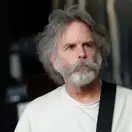











What Was John Perry Barlow's Net Worth?
John Perry Barlow was an American lyricist, essayist, cattle rancher, political activist, and internet-freedom advocate who had a net worth of $4 million at the time of his death in 2018.
John Perry Barlow lived an unusually varied life that placed him at the intersection of the Grateful Dead, Wyoming ranching, American politics, and the birth of the modern internet. Beginning in the early 1970s, he became one of the Grateful Dead's principal outside lyricists, writing roughly 30 songs, primarily with his longtime friend Bob Weir. His credits included "Cassidy," "Estimated Prophet," "The Music Never Stopped," "Mexicali Blues," "Black-Throated Wind," "I Need a Miracle," "Hell in a Bucket," and "Throwing Stones."
At the same time, Barlow spent 17 years running his family's Wyoming cattle ranch. After selling the ranch in the late 1980s, he became one of the most influential early thinkers about online freedom. He co-founded the Electronic Frontier Foundation in 1990 and later helped establish the Freedom of the Press Foundation. His 1996 essay "A Declaration of the Independence of Cyberspace" became one of the defining manifestos of the early internet era. Barlow was inducted into the Internet Hall of Fame in 2013.
Early Life
John Perry Barlow was born on October 3, 1947, in Sublette County, Wyoming, near the town of Pinedale. He was the only child of Norman Barlow, a rancher and Republican state legislator, and Miriam Jenkins Barlow.
Barlow grew up on his family's sprawling Bar Cross cattle ranch, which had been established by a great-uncle in the early 20th century. His childhood was extraordinarily isolated by modern standards. He attended a one-room elementary school, and the family's nearest neighbors lived miles away.
He was raised in the Mormon faith and later described his upbringing as deeply conservative and traditional despite the highly unconventional life he would eventually lead.
As a teenager, Barlow was sent to Fountain Valley School in Colorado. There he met another student named Bob Weir. The two became lifelong friends, and Weir would soon move to San Francisco and become a founding member of the Grateful Dead.
Barlow enrolled at Wesleyan University in Connecticut, where he studied comparative religion. During his college years, he became immersed in the counterculture and spent time at psychologist Timothy Leary's psychedelic community in Millbrook, New York.
He graduated from Wesleyan in 1969. Although he had an opportunity to attend Harvard Law School, Barlow instead traveled extensively, including to India, while attempting to write a novel that was never published.
The Grateful Dead
Barlow's connection to the Grateful Dead originated with his friendship with Bob Weir, but it evolved into one of the most important songwriting partnerships in the band's history.
By the early 1970s, Jerry Garcia had formed a celebrated songwriting partnership with lyricist Robert Hunter. Weir needed a collaborator of his own, and Barlow gradually filled that role.
One of Barlow and Weir's earliest collaborations was "Mexicali Blues," which appeared on Weir's 1972 solo album "Ace." Much of that record was effectively performed by the Grateful Dead and eventually became part of the band's live repertoire.
Barlow went on to co-write some of Weir's most enduring songs, including "Black-Throated Wind," "Looks Like Rain," "Cassidy," "The Music Never Stopped," "Estimated Prophet," "I Need a Miracle," "Lost Sailor," "Saint of Circumstance," "Hell in a Bucket," and "Throwing Stones."
Unlike the members of the band, Barlow generally remained far from the touring circus. Much of his writing was done while living and working on his family's ranch in Wyoming. Weir would sometimes visit the ranch, where the two could work on songs away from San Francisco.
Barlow ultimately contributed lyrics to roughly 30 Grateful Dead songs, working not only with Weir but occasionally with keyboardists Brent Mydland and Vince Welnick.
Those songwriting credits also became one of the most important financial assets of his life. Songs such as "Estimated Prophet," "Cassidy," and "The Music Never Stopped" continued generating publishing royalties through albums, live recordings, radio, licensing, and the enormous archival business surrounding the Grateful Dead long after their original releases.

Getty
Bar Cross Ranch
Barlow's musical career unfolded alongside a completely different occupation.
After his father became ill and died in the early 1970s, Barlow returned to Wyoming and took responsibility for the family's Bar Cross Land & Livestock Company near Cora.
For the next 17 years, he managed the cattle operation while continuing to write lyrics for the Grateful Dead.
Ranching was financially difficult. Barlow inherited an operation carrying substantial debt, and he later admitted that he had spent years trying to convince himself that he was suited to running it.
The isolation of ranch life also shaped the worldview he would later bring to the internet. Barlow was fascinated by open spaces, loosely governed communities, self-reliance, and the ability of individuals to define themselves away from centralized institutions.
One unusual chapter occurred in 1978 when John F. Kennedy Jr., then a teenager, spent part of the summer working as a ranch hand at Bar Cross. Barlow had agreed to look after him as a favor to Jacqueline Kennedy Onassis. Barlow and Kennedy remained friends for years afterward.
Barlow finally sold the ranch in 1988, ending nearly two decades as a full-time cattleman.
Politics
Barlow's political life was almost as unconventional as his professional one.
While living in Wyoming, he served for a time as chairman of the Sublette County Republican Party. He also worked on Dick Cheney's successful 1978 campaign for Congress.
Barlow later ran as a Republican candidate for the Wyoming State Senate and lost by a single vote.
Over time, his political views moved away from conventional Republican politics. He increasingly identified with civil libertarian ideas, particularly skepticism toward government restrictions on speech, privacy, and individual autonomy.
Those concerns would eventually become central to his work on internet policy.
The WELL and Early Internet
Barlow's fascination with computers began during the 1980s, initially for practical reasons. He used a computer to help manage the finances of his ranch.
In 1986, he joined the WELL, short for Whole Earth 'Lectronic Link, one of the earliest influential online communities. The service attracted technologists, writers, musicians, publishers, hackers, and members of the Grateful Dead community.
Barlow quickly became one of its most prominent participants.
The experience convinced him that computer networks represented something more significant than tools for exchanging information. To Barlow, they constituted a new kind of social space in which people could establish identities, form communities, conduct business, argue, collaborate, and create relationships regardless of geography.
Science-fiction writer William Gibson had already coined the word "cyberspace," but Barlow helped popularize its use to describe the real-world social environment emerging through connected computer networks.
The connection between the Grateful Dead and the early internet was not entirely accidental. Deadheads had long created decentralized communities for trading concert tapes and information, and the band's unusually permissive attitude toward audience recording anticipated many of the arguments Barlow would later make about information sharing online.
Electronic Frontier Foundation
In 1990, Barlow joined software entrepreneur Mitchell Kapor and technologist John Gilmore in establishing the Electronic Frontier Foundation, better known as the EFF.
The organization was created as lawmakers, law-enforcement agencies, corporations, and courts were beginning to confront legal questions raised by personal computers and digital networks.
Barlow believed that traditional institutions were attempting to impose rules developed for the physical world onto a fundamentally different environment.
EFF became one of the leading organizations advocating for digital privacy, encryption, free speech, and civil liberties online. Its lawyers became involved in important disputes concerning electronic communications, software, surveillance, censorship, and the application of constitutional protections to digital activity.
Barlow served for years as the organization's vice chairman and remained involved with EFF until his death.
He was not a programmer, engineer, or lawyer. His importance came instead from his ability to articulate the social and philosophical stakes of new technology at a moment when relatively few people outside technical communities understood where networked computing was heading.
"The Economy of Ideas"
Barlow became a frequent writer and speaker on internet culture during the 1990s.
One of his most influential essays was "The Economy of Ideas," published by "Wired" in 1994. The essay examined the growing conflict between traditional copyright law and digital information.
Barlow argued that information behaves differently from physical property because it can be reproduced and distributed at virtually no marginal cost. He questioned whether legal frameworks built around scarcity could function effectively in a world where identical digital copies could move instantly across networks.
The essay became widely discussed in technology and legal circles and was later taught in law schools.
Barlow wrote for "Wired," "The New York Times," and numerous other publications and became a sought-after lecturer and consultant on internet culture, intellectual property, privacy, and digital civil liberties.
"A Declaration of the Independence of Cyberspace"
Barlow's most famous piece of writing outside the Grateful Dead arrived in 1996.
While attending the World Economic Forum in Davos, Switzerland, he wrote "A Declaration of the Independence of Cyberspace."
Addressed to the world's governments, the manifesto argued that cyberspace constituted a social environment fundamentally different from the geographic territories governments traditionally controlled.
The document spread rapidly across the early web and became one of the best-known expressions of the techno-libertarian optimism associated with the internet's first mass-adoption era.
Barlow envisioned a network where people could communicate without being constrained by geography, social status, government boundaries, or entrenched institutions.
As the internet evolved, critics challenged some of the assumptions underlying that vision. The rise of enormous technology companies, online surveillance, misinformation, harassment, and centralized platforms demonstrated that digital spaces could reproduce many of the same power imbalances Barlow hoped they might escape.
Barlow himself became more nuanced about technology over time, occasionally expressing frustration with the constant interruptions and low-quality discussion that networked life could create.
Harvard and Internet Hall of Fame
Barlow's ideas eventually moved from counterculture circles into major academic institutions.
In 1998, he became the inaugural fellow at Harvard Law School's Berkman Center for Internet & Society. He later became a fellow emeritus.
The position allowed him to work with legal scholars studying many of the questions he had spent years raising publicly: how copyright, privacy, free speech, government authority, and individual rights should operate online.
In 2013, Barlow was inducted into the Internet Hall of Fame as an Innovator in recognition of his role in establishing the Electronic Frontier Foundation and shaping early thinking about digital civil liberties.
Freedom of the Press Foundation
Barlow extended his internet-freedom activism into journalism when he helped found the Freedom of the Press Foundation in 2012.
The organization was created to support independent journalism, protect reporters and whistleblowers, and develop technological tools allowing journalists to communicate securely with confidential sources.
Its board and leadership have included journalists, technologists, activists, and NSA whistleblower Edward Snowden.
Barlow served on the foundation's board until his death.
His involvement reflected an evolution of the same principles he had articulated since the early internet era: information networks could empower individuals, but only if people were able to communicate without unreasonable surveillance or censorship.
Famous Friends and an Unusual Life
Barlow's social circle extended far beyond music and technology.
Through the Grateful Dead, academia, politics, the counterculture, and Silicon Valley, he encountered an extraordinary collection of prominent people. His friends and acquaintances included Timothy Leary, Steve Jobs, Jacqueline Kennedy Onassis, John F. Kennedy Jr., members of the Grateful Dead, internet entrepreneurs, hackers, academics, and political figures.
Barlow's posthumous memoir recounts episodes including spending time at Andy Warhol's Factory, traveling with counterculture figures, mentoring JFK Jr., and accidentally shooting Bob Weir in the face with a firearm shortly before Barlow's own wedding. Weir survived with relatively minor injuries.
The sheer variety of these stories became part of Barlow's reputation. He could move between cattle auctions in Wyoming, Grateful Dead concerts, Silicon Valley gatherings, Harvard seminars, and international policy conferences without appearing entirely at home—or entirely out of place—in any of them.
Personal Life
Barlow married Elaine Parker in 1977. The marriage later ended in divorce.
He had three daughters: Amelia, Anna, and Leah.
In the early 1990s, Barlow became engaged to Dr. Cynthia Horner. She died unexpectedly in 1994 shortly before her 30th birthday, a loss that had a profound impact on him.
Barlow frequently wrote and spoke about mortality, responsibility, relationships, and personal ethics. When he turned 30, he began compiling what eventually became his "Principles of Adult Behavior," a list of 25 rules he tried to follow.
Among the principles were instructions to tolerate ambiguity, admit mistakes quickly, concern oneself with what is right rather than who is right, and avoid making the pursuit of happiness a goal in itself.
Death and "Mother American Night"
Barlow suffered a serious heart attack in 2015 and experienced significant health problems during the final years of his life.
John Perry Barlow died at his home in San Francisco on February 7, 2018, at the age of 70. The Electronic Frontier Foundation confirmed his death but did not announce a specific cause.
Several months later, his memoir, "Mother American Night: My Life in Crazy Times," was published posthumously. Written with journalist and author Robert Greenfield, the book traced Barlow's path from isolated Wyoming ranch life through the Grateful Dead, psychedelic counterculture, politics, Silicon Valley, and the development of the internet.
Few people could plausibly claim careers as a cattle rancher, Grateful Dead lyricist, Republican county chairman, Harvard fellow, and internet-rights pioneer. For Barlow, those identities were not separate lives. They were interconnected chapters in a decades-long fascination with open spaces, individual freedom, communities, and the rules societies create to govern them.