













What Is Jimmy Webb's Net Worth?
Jimmy Webb is an American songwriter, composer, pianist, singer, and author who has a net worth of $10 million.
Jimmy Webb is one of the most accomplished songwriters in American popular music history, responsible for a remarkable collection of hits that have generated royalties for more than half a century. His compositions include "Wichita Lineman," "By the Time I Get to Phoenix," "Galveston," "MacArthur Park," "Up, Up and Away," "The Worst That Could Happen," and "Highwayman." His songs have been recorded by some of the biggest names in music, including Glen Campbell, Frank Sinatra, Donna Summer, Art Garfunkel, Linda Ronstadt, and Johnny Cash.
Webb achieved extraordinary success at a remarkably young age. By 21, he had won a Grammy Award and accumulated $1 million, an enormous fortune for a songwriter in the 1960s. He went on to win three Grammy Awards, become the youngest person inducted into the Songwriters Hall of Fame, and establish himself as an influential advocate for musicians' publishing rights. Unlike performers whose careers depend on continued record sales, Webb benefits from having written the underlying compositions, which can generate royalties whenever they are recorded, performed, broadcast, streamed, or licensed.
In February 2025, Webb signed a publishing administration and marketing agreement with Primary Wave Music covering some of his most valuable compositions. His career continued with the October 2026 release of "Yours for the Taking: The Found Songs of Jimmy Webb" and a PBS "Great Performances" special celebrating his music.
Early Life
Jimmy Layne Webb was born on August 15, 1946, in Elk City, Oklahoma. His father, Robert Lee Webb, was a Baptist minister who moved his family between communities in Oklahoma and Texas. Jimmy grew up in a deeply religious household where church music played an important role in everyday life.
His mother encouraged his musical development, arranging piano lessons and pushing him to practice. By age 12, Webb was playing piano and organ at his father's church, and he began writing original songs during his teenage years. Although his parents emphasized gospel music, Webb secretly listened to rock and roll and became fascinated by the songwriting and arrangements he heard on the radio.
One of his earliest musical inspirations was Glen Campbell, whose recording of "Turn Around, Look at Me" Webb heard while working on a farm in Oklahoma. He was so impressed by Campbell's voice that he imagined writing songs for him someday.
In 1964, the Webb family relocated to Southern California, where his father became pastor of a church in Colton. Jimmy attended San Bernardino Valley College to study music but left after his first year to pursue professional songwriting in Los Angeles. His mother died before he achieved commercial success, something Webb later described as a particularly painful loss because she never heard his music on the radio.
Early Career and First Major Hits
Webb began his professional career in the mid-1960s, working with music publishers and securing a position with Jobete Music, the publishing operation associated with Motown Records. One of his earliest professional recordings was "My Christmas Tree," which appeared on the Supremes' 1965 holiday album.
In 1966, singer and producer Johnny Rivers signed Webb to a publishing contract. Rivers recorded an early version of Webb's "By the Time I Get to Phoenix," but the song became a much bigger success when Glen Campbell released his version in 1967.
Campbell's recording reached #2 on the Billboard country chart and #26 on the Hot 100, selling more than one million copies. The song became one of the defining recordings of Campbell's career and established Webb as an unusually gifted songwriter capable of blending country storytelling with sophisticated pop arrangements.
Around the same time, Webb wrote "Up, Up and Away" for the 5th Dimension. Released in 1967, the single became a major crossover hit and earned multiple Grammy Awards, including Song of the Year for Webb. Its sweeping orchestration and optimistic lyrics helped establish the polished pop sound that made him one of the most sought-after composers of the era.
Glen Campbell and "Wichita Lineman"
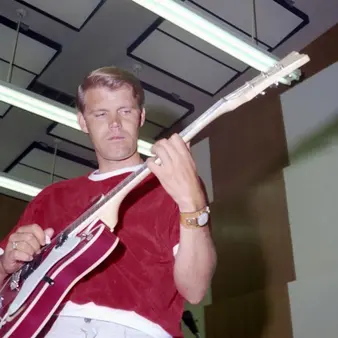
The creative partnership between Jimmy Webb and Glen Campbell produced some of the most enduring recordings of the late 1960s. After the success of "By the Time I Get to Phoenix," Campbell asked Webb to write another song with a geographical theme.
Webb remembered seeing a solitary telephone lineman working high above a stretch of empty Oklahoma countryside. The image inspired "Wichita Lineman," a haunting song about a working man whose thoughts remain consumed by someone he loves.
Webb initially considered the composition unfinished and intended to add another verse. However, Campbell and producer Al De Lory recorded the song with an instrumental passage filling the space Webb had left open. When Webb later explained that the song wasn't finished, Campbell told him that it was now.
Released in 1968, "Wichita Lineman" reached #3 on the Billboard Hot 100 and topped the country chart. It became one of Campbell's signature recordings and was later inducted into the National Recording Registry by the Library of Congress.
The partnership continued with "Galveston," released in 1969. The song reached #4 on the Hot 100 and #1 on the country chart. Although Campbell's energetic recording was widely embraced as a patriotic anthem, Webb had written it from the perspective of a soldier longing for home during wartime.
Other Webb compositions recorded by Campbell included "Where's the Playground, Susie," "Honey Come Back," and "Still Within the Sound of My Voice." Their partnership remained one of the most important songwriter-performer relationships in modern country and pop music.

Getty
"MacArthur Park" and Donna Summer
Another of Webb's defining achievements was "MacArthur Park," an unusually ambitious composition that combined several musical movements, dramatic orchestration, and surreal imagery.
Webb wrote the song after the breakup of a relationship with Susan Horton, whom he had frequently met near MacArthur Park in Los Angeles. The song's famous image of a cake being left in the rain became one of the most discussed lyrics in popular music.
The original composition was offered to the Association, but the group declined to record it. Webb subsequently collaborated with Irish actor Richard Harris, who recorded the song for his 1968 album "A Tramp Shining."
Despite running more than seven minutes, an extraordinary length for a pop single at the time, Harris' recording reached #2 on the Billboard Hot 100. Webb won the Grammy Award for Best Arrangement Accompanying Vocalist(s) for his work on the recording.
A decade later, Donna Summer transformed "MacArthur Park" into a disco anthem. Her 1978 recording reached #1 on the Billboard Hot 100, giving Webb his first composition to top the American pop singles chart.
The song's success across two dramatically different musical eras helped demonstrate the lasting commercial potential of Webb's catalog.
"Highwayman" and Other Famous Songs
Webb continued writing successful compositions throughout the 1970s and 1980s, including "All I Know," which became a hit for Art Garfunkel in 1973. His songs were also recorded by Frank Sinatra, Barbra Streisand, Tony Bennett, Joe Cocker, and Linda Ronstadt.
In 1985, Webb enjoyed another major success when the country supergroup the Highwaymen recorded his song "Highwayman." The group featured Johnny Cash, Willie Nelson, Waylon Jennings, and Kris Kristofferson.
The song tells the story of a soul reincarnated through several different lives, including a highway robber, sailor, construction worker, and space traveler. Its dramatic narrative provided an ideal showcase for the four singers' contrasting voices.
"Highwayman" reached #1 on the Billboard country chart and won Webb the 1986 Grammy Award for Best Country Song. Its success demonstrated his ability to write across generations and genres, long after his initial commercial breakthrough.
Songwriting Royalties and Publishing Income
The most valuable financial asset associated with Jimmy Webb's career is his songwriting catalog. His compositions have been recorded by hundreds of artists and have appeared on albums that collectively sold millions of copies.
Unlike the owner of a particular sound recording, a songwriter can earn publishing royalties from many different recordings of the same composition. Webb's work has generated opportunities for mechanical royalties from record sales and streaming, performance royalties from radio and public performances, and licensing income from television, movies, advertising, and other commercial uses.
His earliest success was exceptionally lucrative. A 1993 "Los Angeles Times" profile noted that Webb had already accumulated $1 million by age 21. That financial achievement came during a period when he was responsible for several of the most popular songs in the United States.
An example of his catalog's continuing commercial relevance came in 2024 when Kendrick Lamar's song "TV Off" incorporated material from a recording of Webb's "MacArthur Park" by jazz musician Monk Higgins. Webb received a composition credit on the track, which won the Grammy Award for Best Rap Song in 2026.
In February 2025, publishing company Primary Wave Music announced an agreement to administer and market Webb's songwriting catalog. The arrangement covered major compositions including "Wichita Lineman," "MacArthur Park," and "Up, Up and Away."
Under the agreement, Primary Wave undertook to represent Webb's music publishing interests while pursuing additional marketing, branding, and synchronization opportunities. The transaction was described publicly as a publishing administration and marketing partnership rather than an outright catalog sale, and no financial terms were disclosed.
Solo Recording Career and Film Music
Although Webb earned his greatest commercial success writing songs for other performers, he also developed an extensive career as a recording artist. His first album, "Jim Webb Sings Jim Webb," appeared in 1968, followed by "Words and Music" in 1970, "And So: On" in 1971, and "Letters" in 1972.
These albums emphasized his personal interpretations of his compositions, often featuring more introspective arrangements than the versions made famous by other singers. He subsequently released "Land's End" in 1974, "El Mirage" in 1977, and "Angel Heart" in 1982.
Webb also worked as a producer and arranger, including producing the Supremes' 1972 album "The Supremes Produced and Arranged by Jimmy Webb."
His film music included the score and songs for the 1982 animated fantasy "The Last Unicorn." The soundtrack featured performances by the band America and became particularly popular among fans of the film.
Later solo releases included "Suspending Disbelief," "Ten Easy Pieces," "Twilight of the Renegades," and "Just Across the River." His 2019 album "SlipCover" featured instrumental piano interpretations of songs by writers including Billy Joel, Randy Newman, and Paul Simon.
Books and Writing
Webb has written extensively about songwriting and his experiences in the music industry. In 1998, he published "Tunesmith: Inside the Art of Songwriting," a detailed examination of composition, lyrics, melody, harmony, and the professional music business.
The book became an influential resource for aspiring songwriters, drawing on Webb's decades of experience writing for prominent recording artists.
In 2017, he published "The Cake and the Rain," a memoir examining his extraordinary rise during the 1960s and 1970s. The book recounts his experiences with celebrities including Frank Sinatra, Elvis Presley, Richard Harris, and Harry Nilsson, while also exploring his struggles with the pressures of fame, alcohol, and drugs.
Webb has spoken openly about the excesses of his earlier career and has said that he stopped drinking in 2002.
Later Career and 2026 Projects
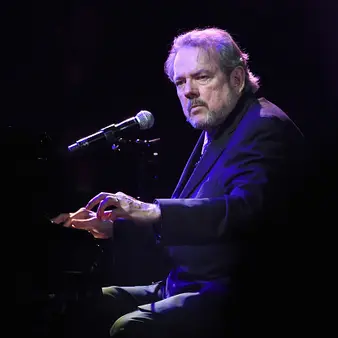
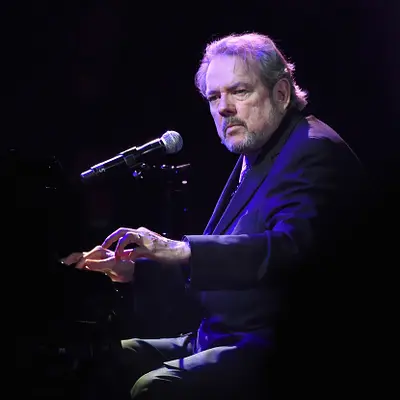
Webb continued performing and recording into his eighth decade, frequently appearing in intimate concert settings where he combined piano performances with stories about the creation of his best-known songs.
In October 2026, Sun Records released "Yours for the Taking: The Found Songs of Jimmy Webb," a collection of previously unreleased compositions written over several decades. The project featured newly recorded material alongside original demos, with guest appearances by Graham Nash, Michael McDonald, Amy Grant, Marc Cohn, and other musicians.
The album included "Winter Clothes," a song Webb had originally written with Frank Sinatra in mind, and "I Miss the Mistakes," which had been intended for Dolly Parton. Many of the compositions had remained unfinished or unreleased for decades before Webb returned to them.
On October 30, 2026, PBS premiered "Jimmy Webb: American Songwriter" as part of its "Great Performances" series. The concert special featured Webb performing and discussing his songs alongside Vince Gill, Lyle Lovett, Ashley Campbell, Sheléa, and Ryan Shaw.
Awards and Recognition
Jimmy Webb has received three Grammy Awards, including Song of the Year for "Up, Up and Away," Best Arrangement Accompanying Vocalist(s) for "MacArthur Park," and Best Country Song for "Highwayman."
He was inducted into the Songwriters Hall of Fame in 1986, becoming its youngest inductee at the time, and entered the Nashville Songwriters Hall of Fame in 1990.
In 1993, he received the National Academy of Songwriters' Lifetime Achievement Award. He was inducted into the Oklahoma Hall of Fame in 1999 and received the Songwriters Hall of Fame's prestigious Johnny Mercer Award in 2003.
Other honors include ASCAP's Voice of Music Award, the Ivor Novello Special International Award, and the Academy of Country Music's Poet's Award. Webb also served as chairman of the Songwriters Hall of Fame and has been an outspoken advocate for protecting songwriters' intellectual property and royalty income.
Personal Life
Webb married model Patricia "Patsy" Sullivan in 1974. Sullivan was the daughter of actor Barry Sullivan and actress and model Gita Hall. They had six children together and divorced in 1996.
Their relationship attracted renewed attention in 2017 when Sullivan publicly criticized Webb's memoir for omitting her and their children. She described meeting Webb when she was 12 and he was 22, and said their relationship began the following year. Sullivan also stated that she was 16 when she gave birth to their first child.
Three of their sons, Christiaan, Justin, and James, pursued music professionally. Christiaan and Justin formed the Webb Brothers, an alternative rock band that later included James. The family also collaborated on a musical project titled "Cottonwood Farm."
In 2004, Webb married television producer and PBS personality Laura Savini. The couple have lived on Long Island, New York, where Webb has maintained a recording and writing career while continuing to perform internationally.
Beyond music, Webb enjoys maritime history and model building. Despite having written songs performed by some of the most famous singers in history, he has continued to emphasize the importance of songwriting itself, particularly the rights of composers to benefit from the lasting commercial success of their work.