
/2021/01/dw.jpg)
/2025/03/Carly-Pearce-.jpg)
/2013/01/lorrie-morgan.png)
/2022/03/tammy.jpg)
/2020/03/kenny-rogers.jpg)
/2022/06/Barbara-Mandrell.png)
/2019/10/denzel-washington-1.jpg)
/2009/09/Brad-Pitt.jpg)
/2009/09/Cristiano-Ronaldo.jpg)
:strip_exif()/2015/09/GettyImages-476575299.jpg)
/2020/01/lopez3.jpg)
/2019/04/rr.jpg)
/2019/11/GettyImages-1094653148.jpg)
/2009/11/George-Clooney.jpg)
/2017/02/GettyImages-528215436.jpg)
/2020/04/Megan-Fox.jpg)
/2018/03/GettyImages-821622848.jpg)
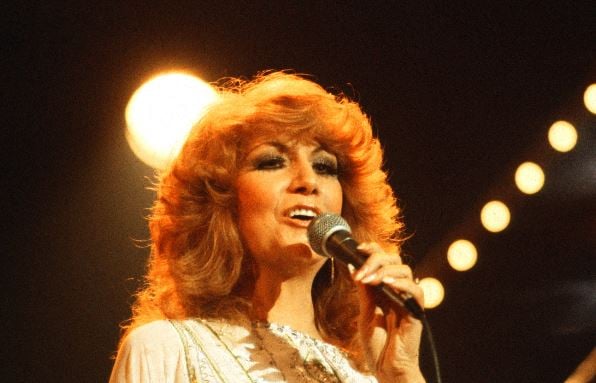
What was Dottie West's Net Worth?
Dottie West was an American country singer-songwriter who had a net worth of $200 thousand at the time of her death in 1991. That's the same as around $500 thousand in today's dollars after adjusting for inflation. Unfortunately, as we detail in the next section, Dottie experienced some financial problems toward the end of her life. A year before her death, she declared bankruptcy.
Dottie West rose to fame in the 1960s with such hit songs as "Here Comes My Baby," "Paper Mansions," and "Rings of Gold," and she reached her commercial peak in the 1970s with songs including "Country Sunshine" and the Kenny Rogers duet "Every Time Two Fools Collide." She also acted, appearing in some television films and in the 1986 science-fiction film "The Aurora Encounter."
Financial Hardships and Bankruptcy
The late 1980s brought a perfect storm of personal and professional challenges that culminated in a devastating financial crisis for West. Despite the massive success of her duet years and solo career earlier in the decade, her extravagant lifestyle—characterized by expensive stage productions, custom tour buses, and a lavish designer wardrobe—became unsustainable as country music shifted toward a new generation of artists and her radio hits declined. Coupled with a costly divorce from her third husband, Al Winters, in 1990, West found herself facing an insurmountable IRS tax lien of approximately $1 million.
In August of 1990, West filed for Chapter 11 bankruptcy. This was initially a strategic move to reorganize her finances, hoping to keep creditors at bay while she continued touring to pay off her debts. However, it soon became apparent that her incoming revenue was not enough to sustain the court-mandated repayment plan. Consequently, her case was converted to Chapter 7 bankruptcy, resulting in a total liquidation of her estate.
The ensuing seizure and public auction in June of 1991 were incredibly thorough and heartbreakingly public. The court seized and sold her sprawling Nashville colonial mansion and her vehicles to satisfy the IRS and her creditors. The liquidation went far beyond real estate; West lost the publishing rights to her extensive catalog of music, as well as her iconic stage costumes, instruments, awards, and personal memorabilia. In a bittersweet display of industry solidarity, several of her friends and fellow country artists quietly sent representatives to the auction to purchase her prized possessions and musical equipment in order to return them to her.
Early Life and Education
Dottie West was born Dorothy Marie Marsh on October 11, 1932 in Frog Pond, Tennessee as the eldest of ten children of Pelina and William. The family was indigent, living in various dilapidated homes in Tennessee. William was an alcoholic and frequently abused his children; West was repeatedly molested by him growing up, and had a miscarriage at the age of 15. During this time, she attended Central High School in McMinnville. When her father threatened to remove her from school to move to Detroit with him, West told her teachers about how he abused her, leading to her father's arrest on rape and incest charges. He was eventually found guilty and sentenced to 40 years in prison. West moved back in with her mother and waited tables to make ends meet. In school, she sang and played guitar in a band called the Coonskins. For her higher education, West attended Tennessee Polytechnic Institute on a music scholarship.
Career Beginnings
After getting married, West moved with her husband to Cleveland, Ohio and began appearing on regional television. She landed a five-year contract on the country music show "Landmark Jamboree," where she sang with Kathy Dee in the singing duo the Kay-Dots. After failing to get signed in Nashville, West signed with Starday Records. She had little success there, leading her to officially move with her husband to Nashville in 1961. There, West became acquainted with a number of country artists, including Patsy Cline, Hank Cochran, Willie Nelson, and Red Lane. She toured with various Grand Ole Opry performers and went on to sign with Atlantic Records in 1962.
Rise to Fame in the 1960s
In 1963, West moved to RCA Victor and released the singles "Touch Me" and "Let Me off at the Corner," the latter of which became her first song to crack the country music chart. She then released "Love is No Excuse," a duet with Jim Reeves that charted in the top 10. West had her breakthrough in 1964 with "Here Comes My Baby," which won the inaugural Grammy Award for Best Female Country Vocal Performance. In the process, West became the first female country singer ever to win a Grammy. "Here Comes My Baby" was included on West's debut studio album of the same name, released in 1965. Later that year, she released her second album, "Dottie West Sings." West continued her success with such singles as "No Sign of Living" and "Before the Ring on Your Finger Turns Green."
In 1966, West had her highest-charting album yet with "Suffer Time," which peaked at number three on the country chart and spawned the hit single "Would You Hold it Against Me." She went on to release four studio albums in 1967: "With All My Heart and Soul," "Dottie West Sings Sacred Ballads," "I'll Help You Forget Her," and "The Sound of Country Music," the last of which included her touring band the Heartaches. Successful singles from these albums included "Paper Mansions" and "Like a Fool." West released three more albums in 1968: "What I'm Cut Out to Be," "Country Girl," and "Feminine Fancy." Closing out the decade, she released "Dottie and Don," a collaboration with Don Gibson and her final album produced by Chet Atkins. The album launched the country hit single "Rings of Gold." West and Gibson had another hit song with "There's a Story (Goin' 'Round)."
Getty
Success in the 1970s
West continued to be commercially successful in the 1970s. Early in the decade, she released an album of duets with Jimmy Dean entitled "Country Boy & Country Girl," and the pair performed in Las Vegas. West also had solo hits with such songs as "Careless Hands," "Lonely Is," and "Forever Yours." In 1973, she had success with the singles "If It's All Right with You" and "Country Sunshine," the latter of which was used as a commercial jingle for Coca-Cola. Due to the popularity of the commercial, the song became a crossover hit and peaked at number 49 on the Billboard Hot 100. West subsequently released an album of the same name, which made it to number 17 on the country albums chart. She had one of her last hit RCA singles with "Last Time I Saw Him," which came out in 1974. The following year, West released her final RCA album, "Carolina Cousins."
After leaving RCA, West signed with United Artists Records in 1976. Her first release on the label was the single "When It's Just You and Me," which was included on her 1977 album of the same name. That album also featured the songs "Every Word I Write" and "Tonight You Belong to Me." In 1978, West had her first US country number-one single with "Every Time Two Fools Collide," a duet with Kenny Rogers. The duo released an album of the same name, followed by another album of duets called "Classics" that came out in 1979. Both albums were big commercial successes, sparking a career resurgence for West. She and Rogers had further hit singles with "Anyone Who Isn't Me Tonight," "All I Ever Need is You," and "Til I Can Make it on My Own." West subsequently enjoyed success with her 1979 solo album "Special Delivery."
Music Career in the 1980s
At the beginning of the 1980s, West achieved her first solo number-one single on the country chart with "A Lesson in Leavin'." She continued headlining concerts and even had her own Showtime television specials, and in 1981 had another hit album with "Wild West," which yielded her second solo number-one single, "Are You Happy Baby?" West subsequently reunited with Kenny Rogers for the duet "What Are We Doin' in Love," which was another number-one hit on the country chart as well as a crossover hit, reaching number 14 on the Billboard Hot 100. Among West's final hit singles were "You're Not Easy to Forget," "She Can't Get My Love off the Bed," and "Tulsa Ballroom." She finished her music career at Permian Records, where she released the final album of her lifetime, "Just Dottie," in 1984.
Film and Television Appearances
In the 1960s, West appeared as herself in the musical films "Second Fiddle to a Steel Guitar" and "The Road to Nashville." She later acted in the television film "Skinflint: A Country Christmas Carol" (1979) and lent her voice to the animated special "The Raccoons and the Lost Star" (1983). In 1986, West played Irene Rutherford in the low-budget science-fiction film "The Aurora Encounter."
Personal Life and Death
West was married and divorced three times. She married her first husband, fellow Tennessee Tech student and musician Bill West, in 1953. The pair had four children: Morris, Kerry, Shelly, and Dale. They divorced in 1972, and West subsequently married her band's drummer, Byron Metcalf. The couple divorced in 1981 on account of Metcalf's infidelity and drinking problems. West married her third and final husband, sound engineer Al Winters, in 1983. They divorced in early 1990 on account of irreconcilable differences and alleged abuse.
In July of 1991, West lost control of the car she was driving and smashed into a concrete wall. A month later, on August 30, 1991, she hitched a ride with her neighbor George Thackston when her own car stalled on the road en route to the Grand Ole Opry. Thackston lost control of his car and hit an embankment on the Opryland highway exit ramp, injuring both him and West. He survived, but West was in critical condition. Following two surgeries, she passed away on September 4, 1991.
/2021/01/dw.jpg)
/2022/06/Barbara-Mandrell.png)
/2025/03/Carly-Pearce-.jpg)
/2013/01/lorrie-morgan.png)
/2022/03/tammy.jpg)
/2014/11/pc2.jpg)
/2010/08/Ronnie-Dunn-1.jpg)
/2017/06/june-carter-cash.png)
/2009/09/Jennifer-Aniston.jpg)
:strip_exif()/2009/09/P-Diddy.jpg)
/2020/06/taylor.png)
/2020/02/Angelina-Jolie.png)