
/2014/12/david.jpg)
/2009/12/Willie-Nelson1.jpg)
/2021/02/Glen-Campbell.jpg)
/2012/09/156417962.jpg)
/2014/09/John-Hiatt1.jpg)
/2011/04/waylon-jennings.jpg)
/2020/06/taylor.png)
:strip_exif()/2015/09/GettyImages-476575299.jpg)
/2020/01/lopez3.jpg)
/2018/03/GettyImages-821622848.jpg)
/2017/02/GettyImages-528215436.jpg)
/2009/11/George-Clooney.jpg)
/2009/09/Cristiano-Ronaldo.jpg)
/2020/04/Megan-Fox.jpg)
/2019/11/GettyImages-1094653148.jpg)
/2009/09/Brad-Pitt.jpg)
:strip_exif()/2009/09/P-Diddy.jpg)
What was David Allen Coe's Net Worth?
David Allan Coe was an American country singer, songwriter, and performer who had a net worth of $500 thousand at the time of his death.
David Allan Coe embodied the rebellious spirit of the outlaw country movement more completely than perhaps any of his peers. Rising to prominence in the 1970s alongside figures like Willie Nelson and Waylon Jennings, Coe built a reputation as a fearless and controversial artist whose life story often blurred the line between myth and reality. Known for his deep baritone voice and uncompromising persona, he scored hits with songs like "You Never Even Called Me by My Name," "The Ride," and "Mona Lisa Lost Her Smile." Beyond his own recordings, he achieved major success as a songwriter, penning classics like "Take This Job and Shove It" for Johnny Paycheck and "Would You Lay With Me (In a Field of Stone)" for Tanya Tucker. At his peak, Coe was both a chart presence and a prolific touring act, but his career was frequently overshadowed by controversy, including explicit material and an outlaw image rooted in his criminal past. David Allan Coe died on April 29, 2026, at the age of 86, leaving behind a legacy that remains both influential and deeply polarizing.
Bankruptcy & Lost Catalog
Much like fellow musicians Jerry Lee Lewis and Willie Nelson, David Allan Coe spent decades battling the IRS, and those struggles ultimately reshaped his financial life in devastating ways.
In 2003, Coe revealed that all of his songs written prior to 1984 were sold in a bankruptcy proceeding for just $25,000. This was not a minor catalog. It included what could be considered the crown jewels of his career, including the publishing rights to "Take This Job and Shove It" and "Would You Lay With Me (In a Field of Stone)," two songs that generated millions of dollars in royalties over time. Selling a catalog with assets of that magnitude for $25,000 represents an extraordinary fire sale, likely driven by a bankruptcy trustee seeking to quickly liquidate assets to satisfy creditors.
Coe claimed he was never informed that the sale was taking place and therefore had no opportunity to bid:
"All of my songs up to 1984 were sold in a bankruptcy proceeding for, like, $25,000 from the bankruptcy court, because nobody told me they'd been put up for sale! Basically the IRS claimed I owed them $100,000. I was living at a place and we had a flood and everything was destroyed. They knew I didn't have any records – any proof of what I did have and what I didn't have. So I just filed bankruptcy. Nelson chose to deal with them. I chose not to. I'm totally straight with them now. The only income I have is the money I make on the road performing and from my new songs that I own."
The flood he referenced played a critical role. When his financial records were destroyed, he lost the ability to prove his income and deductions to the IRS. In tax disputes, the burden of proof falls entirely on the taxpayer. Unable to contest the IRS's claim that he owed roughly $100,000 and unable to pay the debt, bankruptcy became his only option.
He also confirmed that the sale included his controversial material:
"All the songs on the X-rated albums were sold. I don't own that stuff anymore. I have nothing to do with that stuff. They have to give me credit as the songwriter, but I don't make one cent."
Despite stating in 2003 that he was "totally straight" with the IRS, Coe once again ran into serious legal trouble more than a decade later.
In 2015, at the age of 76, he pleaded guilty to impeding and obstructing the IRS. Federal authorities revealed that between 2008 and 2013, Coe performed extensively, often playing more than 100 shows per year, but failed to pay taxes on his earnings. He owed $466,564.86 in back taxes.
According to prosecutors, Coe attempted to hide his income by demanding that concert promoters pay him entirely in cash. He even refused to accept $50 bills, claiming they were bad luck. Rather than paying his tax obligations, he spent money on gambling and other expenses.
In 2016, he was sentenced to three years of probation and ordered to pay nearly $1 million in restitution, back taxes, and penalties. He avoided prison time but remained financially burdened well into his later years.
The combined effect of these events defined the final decades of his life. Without royalty income, Coe continued performing relentlessly into his late 70s and 80s, often playing smaller venues, biker rallies, and clubs.
Early Life
David Allan Coe was born on September 6, 1939, in Akron, Ohio. His childhood was marked by instability, including his parents' divorce and a difficult relationship with his stepmother. By the age of nine, he had been placed in reform school, beginning a long period in and out of juvenile facilities.
As a teenager and young adult, Coe continued to run afoul of the law. He spent much of his early life incarcerated, including time at the Ohio State Penitentiary in the 1960s. During these years, he claimed to have begun writing songs and developing his musical identity, often citing influences from rhythm and blues artists as well as country performers. His prison experiences would later become a central part of his outlaw persona, whether exaggerated or not.
Breakthrough and Outlaw Country Success
After his release from prison in 1967, Coe moved to Nashville determined to build a music career. In the early days, he lived in a hearse parked near the Ryman Auditorium and busked for money. His persistence eventually paid off when he secured a publishing deal and began recording.
His breakthrough came in the mid-1970s with "You Never Even Called Me by My Name," a humorous take on country music clichés that became a Top 10 hit. Around the same time, he released "Longhaired Redneck," which captured his outsider identity and willingness to challenge genre norms.
Coe also gained recognition as a songwriter. "Would You Lay With Me (In a Field of Stone)" became a No. 1 hit for Tanya Tucker, and "Take This Job and Shove It" became a cultural anthem for Johnny Paycheck, later inspiring a feature film. These successes established Coe as a major creative force even beyond his own recordings.
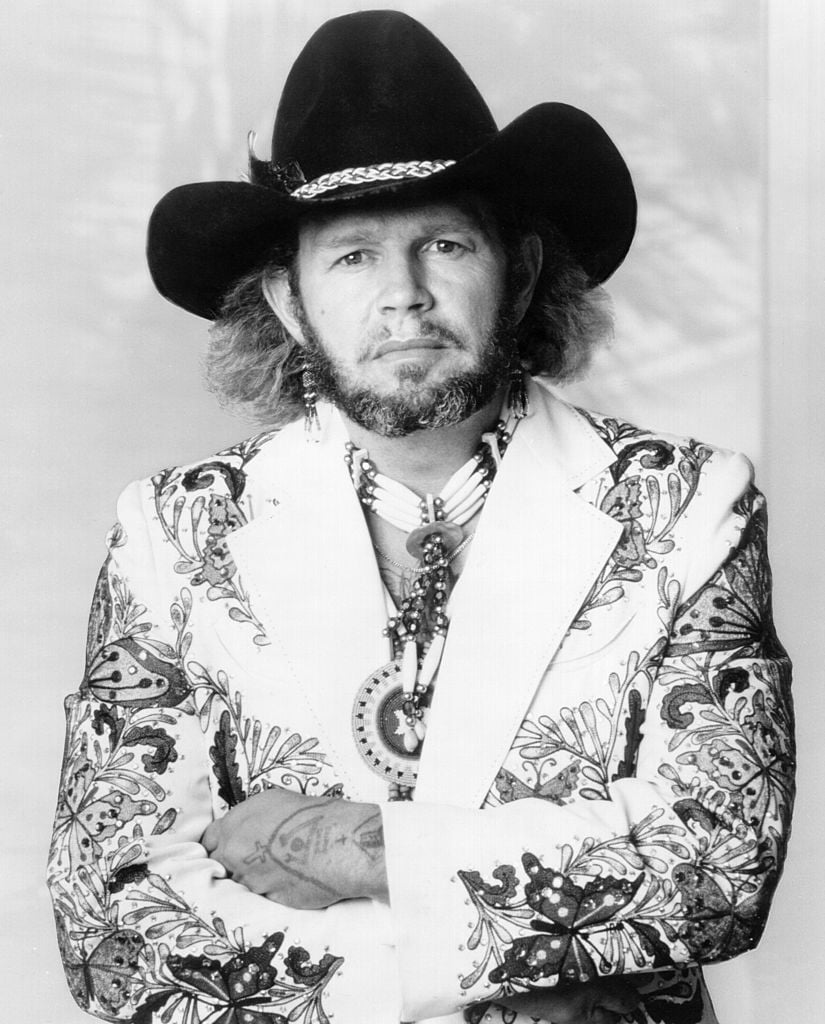
Michael Ochs Archives/Getty Images
Peak Years and Musical Style
Coe reached his commercial peak in the early 1980s. Songs like "The Ride," an homage to Hank Williams, and "Mona Lisa Lost Her Smile" both became Top 10 country hits and remain among his most enduring works.
His musical style blended traditional country with rock, blues, and a distinctly rebellious attitude. He often performed in rhinestone suits or biker attire, leaning into a larger-than-life image that set him apart from Nashville's more polished acts. His outlaw identity was not just marketing. It was central to how audiences understood him.
Throughout his career, Coe also wrote for a wide range of artists, including Johnny Cash, and even crossed into other genres, collaborating with musicians outside the country world.
Controversy and X-Rated Material
While Coe enjoyed mainstream success, his career was repeatedly derailed by controversy. In the late 1970s and early 1980s, he recorded a series of explicit albums, including "Nothing Sacred" and "Underground Album," which were later compiled as "18 X-Rated Hits."
These recordings contained material widely criticized as racist, misogynistic, and offensive. The backlash significantly damaged his reputation and limited his mainstream appeal. Although Coe later attempted to distance himself from these works, they remained a defining and controversial part of his legacy.
His broader outlaw persona also included claims of being a member of a motorcycle gang and stories about his criminal past, some of which were later disputed or exaggerated. Over time, the mythology surrounding Coe often overshadowed his musical accomplishments.
Later Career
By the late 1980s, Coe was no longer a major presence on the country charts, but he remained a consistent touring act with a devoted fan base. He continued recording music and exploring collaborations across genres.
In the 2000s, he worked with artists like Kid Rock and recorded "Rebel Meets Rebel" with members of the heavy metal band Pantera. He also made occasional film appearances, including a role in "Beer for My Horses."
Despite reduced commercial visibility, Coe maintained a reputation as a cult figure within country music, particularly among fans drawn to the outlaw tradition.
/2014/12/david.jpg)
/2011/04/waylon-jennings.jpg)
/2021/09/Gregg-Allman.jpg)
/2021/01/dw.jpg)
/2022/12/Isaac-Hayes.png)
/2010/09/Tanya-Tucker.jpg)
/2010/01/GettyImages-455838800.jpg)
/2013/05/GettyImages-120073445.jpg)
/2009/09/Jennifer-Aniston.jpg)
/2020/02/Angelina-Jolie.png)