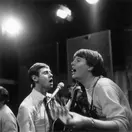











What Is Alan Price's Net Worth?
Alan Price is an English musician, singer, songwriter, and composer who has a net worth of $4 million.
Alan Price is best known as the original keyboardist and a founding member of the Animals, the British rock band whose 1964 recording of "The House of the Rising Sun" became an international number-one hit. His distinctive organ playing helped define the group's blues-influenced sound, and his arrangement credit on "The House of the Rising Sun" became an unusually valuable source of songwriting royalties. After leaving the Animals in 1965, Price established a successful solo career, scoring British hits with "I Put a Spell on You," "Simon Smith and the Amazing Dancing Bear," "The House That Jack Built," and "Jarrow Song." He also collaborated with Georgie Fame and introduced several compositions by Randy Newman to mainstream British audiences.
Beyond recording and performing, Price developed a successful career composing music for film, television, and theater. His soundtrack for director Lindsay Anderson's 1973 film "O Lucky Man!" earned him a BAFTA Award and a Golden Globe nomination. He subsequently wrote music for "Britannia Hospital," "The Whales of August," and the stage musical "Andy Capp." Inducted into the Rock and Roll Hall of Fame with the Animals in 1994, Price continued performing live into his eighties, maintaining a career spanning more than six decades.
Early Life
Alan Price was born on April 19, 1942, in Fatfield, Washington, County Durham, England. His parents were John George Price and Elizabeth Gowen. His father worked at a British Oxygen plant and was killed in an industrial accident in February 1948, when Alan was five years old.
Following his father's death, the family moved to Jarrow, an industrial town in northeastern England, where they lived with his maternal grandparents. Price attended Jarrow Grammar School and developed an early interest in music, teaching himself to play piano and organ.
Although music became his primary passion, Price initially pursued a conventional career, working for Britain's Inland Revenue. He played in local bands during his spare time and gradually became involved in Newcastle's thriving rhythm and blues scene.
In the early 1960s, he formed the Alan Price Rhythm and Blues Combo, a group that became popular at local clubs. The band eventually recruited singer Eric Burdon and adopted the name the Animals, setting the stage for one of the most successful British rock groups of the decade.
The Animals
Price was a founding member of the Animals alongside singer Eric Burdon, guitarist Hilton Valentine, bassist Chas Chandler, and drummer John Steel.
The group developed a powerful sound combining American blues, rhythm and blues, and British rock. Price's Hammond organ playing became central to their identity, providing atmospheric accompaniment to Burdon's forceful vocals and Valentine's distinctive guitar work.
In 1964, the Animals moved to London and began working with producer Mickie Most. Their breakthrough came with "The House of the Rising Sun," a traditional folk song that the band transformed into a dramatic electric blues performance.
Released in June 1964, the recording reached number one in both Britain and the United States, making the Animals one of the defining acts of the British Invasion. Price's haunting organ accompaniment became one of the recording's most recognizable features.
The Animals followed the breakthrough with additional hits including "I'm Crying," "Don't Let Me Be Misunderstood," and "Bring It On Home to Me."
Despite the band's enormous success, tensions developed among its members. Price disliked the demands of constant international touring, particularly air travel, and also experienced musical and personal disagreements with his bandmates.
He left the Animals in May 1965, shortly before the group recorded several more major hits, including "We Gotta Get Out of This Place" and "It's My Life."
His departure was discussed during Bob Dylan's 1965 British tour and was captured in D. A. Pennebaker's documentary "Dont Look Back," released in 1967.

Getty Images
"House of the Rising Sun" Royalties
One of the most financially significant aspects of Alan Price's career involves the songwriting and arrangement credits for the Animals' recording of "The House of the Rising Sun."
Because the song was a traditional folk composition, its original lyrics and melody were not protected by a modern songwriting copyright. However, a distinctive arrangement of a public-domain song could generate its own publishing royalties.
When the Animals released their version in 1964, the record credited the arrangement exclusively to Alan Price. That designation became enormously valuable after the recording topped the charts internationally.
The arrangement credit also caused a longstanding dispute among the band's members. Guitarist Hilton Valentine and drummer John Steel later stated that all five musicians had contributed to the recording's distinctive arrangement and had expected the resulting royalties to be shared.
According to Valentine, the band's manager, Mike Jeffery, explained that there was insufficient space on the record label to credit everyone, so Price's name was used with the understanding that the income would be divided.
Instead, Price retained the sole credited arrangement, allowing him to collect songwriting royalties that the other members did not receive. Eric Burdon subsequently expressed frustration about the arrangement, saying that although he had performed the famous lead vocal, he received no songwriting royalties from the record.
The precise amount Price has earned from "The House of the Rising Sun" has never been publicly disclosed. However, the recording has remained commercially important through decades of radio play, reissues, compilations, and licensing.
The arrangement credit gave Price an enduring financial interest in one of the most recognizable recordings of the 1960s, separate from the income he earned as a performing member of the Animals.
The Alan Price Set and Solo Success
After leaving the Animals, Price formed the Alan Price Set and began developing a musical identity that extended beyond the blues-oriented sound of his former band.
His first major solo success came in 1966 with a recording of Screamin' Jay Hawkins' "I Put a Spell on You." The single reached number nine on the British charts, establishing Price as a commercially successful performer in his own right.
He followed it with "Hi-Lili, Hi-Lo," which reached number 11, and "Simon Smith and the Amazing Dancing Bear," which climbed to number four in 1967.
The latter song was written by Randy Newman, who was still relatively unknown to mainstream audiences. Price became an early champion of Newman's songwriting, helping introduce his unusual mixture of humor, satire, and theatrical storytelling to British pop listeners.
Later in 1967, Price released "The House That Jack Built," a song he wrote, arranged, and produced himself. It also reached number four in Britain, demonstrating his ability to generate hits through original compositions rather than covers.
His recordings during this period appeared on albums including "The Price to Play" and "A Price on His Head."
By the end of the 1960s, Price had established himself as a versatile singer, pianist, songwriter, and bandleader. His musical style increasingly incorporated jazz, music hall, traditional British entertainment, and theatrical pop.
Georgie Fame and 1970s Music Career
In the late 1960s, Price began collaborating with fellow British singer and keyboardist Georgie Fame. The two shared an interest in jazz, blues, and American rhythm and blues, and their musical partnership developed into recording, touring, and television projects.
They appeared together in BBC television programs under titles including "The Price of Fame" and "Fame at Any Price." The shows combined live musical performances with comedy and featured writing by Terry Jones, who later became internationally famous as a member of Monty Python.
In 1971, Price and Fame scored a major hit with "Rosetta," which reached number 11 in Britain and topped the charts in Belgium. Their collaboration also produced the album "Fame & Price, Price & Fame, Together."
Price enjoyed another important period of solo success during the 1970s. In 1974, he released the autobiographical concept album "Between Today and Yesterday," which explored his working-class upbringing in northeastern England.
The album was divided into two distinct musical sections. The first featured songs inspired by traditional northern English working-class life, while the second explored more contemporary themes.
"Between Today and Yesterday" reached number nine on the British albums chart, becoming Price's only Top 10 album as a solo artist.
Its best-known single, "Jarrow Song," reached number six in Britain. Written by Price, the song reflected the history and struggles of his hometown, including the legacy of the 1936 Jarrow March, when unemployed workers walked to London to protest economic conditions.
The album became one of Price's most critically acclaimed recordings and demonstrated his development from a blues keyboardist into an accomplished songwriter.
Film Scores and Acting Career
Price's most important work outside popular music began through his collaboration with British filmmaker Lindsay Anderson.
In 1973, Price composed and performed the soundtrack for Anderson's satirical film "O Lucky Man!," starring Malcolm McDowell.
Rather than providing conventional background music, Price's songs served as commentary on the film's events and themes. He also appeared on screen with his musicians, performing songs that contributed to the movie's surreal atmosphere.
The soundtrack included compositions such as "O Lucky Man!," "Poor People," and "Look Over Your Shoulder."
Price's work earned him the 1974 BAFTA Award for Best Film Music, officially presented as the Anthony Asquith Memorial Award. He also received a Golden Globe nomination for Best Original Score, competing against composers including Bob Dylan and Taj Mahal.
The success of "O Lucky Man!" opened additional opportunities in film and theater. In 1975, Price starred as Alfie Elkins in "Alfie Darling," a sequel to the 1966 film "Alfie." He also composed the movie's music.
He subsequently scored Anderson's 1982 film "Britannia Hospital" and the 1987 drama "The Whales of August," starring Bette Davis and Lillian Gish.
His other soundtrack work included the song "Time and Tide" for the 1982 animated film "The Plague Dogs."
Price also composed music for theatrical productions, including Anderson's productions of "Home," "The Farm," and "What the Butler Saw."
In 1981, he wrote the music for the stage musical "Andy Capp," based on the popular British comic strip character. He collaborated on the lyrics with actor Trevor Peacock, and the production featured Tom Courtenay in the title role.
Later Career and Animals Reunions
Price periodically reunited with the original Animals lineup after leaving the group in 1965.
The five founding members recorded the reunion album "Before We Were So Rudely Interrupted," released in 1977. They reunited again in 1983 to record "Ark" and undertake an international tour, which was documented on the live album "Rip It to Shreds."
In 1994, Price was inducted into the Rock and Roll Hall of Fame alongside the Animals' original members, recognizing the group's contributions to British rock and the American blues revival.
Outside the reunions, Price continued recording and performing independently. His later albums included "Metropolitan Man," "Shouts Across the Street," and "Based on a True Story."
In 2016, Omnivore Recordings released "Savaloy Dip," an album Price had originally recorded in 1974. The project had been withdrawn before its intended commercial release, although a small number of eight-track copies had accidentally reached stores. Its eventual release brought a long-lost recording from Price's peak creative period to a broader audience.
Price remained active as a live performer for decades, frequently appearing with the Alan Price Band at clubs and theaters throughout Britain. He continued performing in London into 2026, including appearances at the Bull's Head in Barnes.
Personal Life
Alan Price has been married twice. He married Maureen Donneky in 1971, and the couple had a daughter, Elizabeth, before eventually divorcing.
In 1990, he married singer Alison Thomas. The couple have a daughter together, and Price has generally kept his family life separate from his public musical career.
Despite spending much of his adult life in London, Price has remained closely associated with northeastern England. His upbringing in Jarrow influenced his songwriting, particularly the autobiographical material on "Between Today and Yesterday."
He is also a supporter of Sunderland AFC and has participated in charitable activities connected with the football club's community programs.