













What Was Randy Meisner's Net Worth?
Randy Meisner was an American musician and songwriter who had a net worth of $15 million at the time of his death in 2023.
Randy Meisner was best known as a founding member of the Eagles, one of the most commercially successful rock bands in history. He played bass and sang with the group from 1971 to 1977, contributing to its first five studio albums, including "One of These Nights" and "Hotel California." His signature achievement was co-writing and singing lead vocals on "Take It to the Limit," which reached #4 on the Billboard Hot 100 and became one of the Eagles' most beloved songs.
Before joining the Eagles, Meisner helped form the pioneering country-rock band Poco and performed with Rick Nelson's Stone Canyon Band. In 1971, he joined Linda Ronstadt's backing band alongside the musicians who would become the Eagles. After leaving the group in 1977, he pursued a solo career that produced several hits, including "Hearts on Fire" and "Deep Inside My Heart."
Although Meisner never rejoined the Eagles for their enormously successful reunion tours, he continued receiving royalties from his work with the band. His financial arrangements were complicated by a 1981 divorce settlement that transferred 40% of his Eagles royalties and other earnings from earlier recordings to his first wife. He remained involved in music for decades before health problems curtailed his career. Meisner died in July 2023 at the age of 77.
Eagles Royalties and Divorce Settlement
A significant portion of Randy Meisner's wealth came from royalties associated with his recordings and songwriting contributions to the Eagles. Although he left the group in 1977, he continued receiving income from the music he helped create during the band's most commercially successful period.
In 1978, Meisner entered into a termination agreement with the Eagles under which he transferred certain intellectual property rights, including copyrights and licenses relating to the band's recordings, back to the group. In exchange, he received a contractual right to royalties from sales of certain Eagles recordings.
Three years later, his divorce from his first wife, Jennifer Lee Barton, resulted in a major division of those future earnings. Under their 1981 property settlement agreement, Jennifer received 40% of all future earnings, royalties, and income from work Randy had performed or completed before October 1, 1981. This included his Eagles royalties, songwriting royalties, and income from earlier recordings.
The arrangement was permanent. Jennifer's 40% interest was paid directly to her by the relevant royalty-paying companies, and the agreement specifically provided that her ownership would survive the deaths of both former spouses. Randy retained the remaining 60% of the affected royalty interests.
The details became public through a federal tax dispute that eventually reached the United States Court of Appeals for the Eighth Circuit. Jennifer had sought refunds of income taxes paid on her royalties, arguing that the payments should have been taxed to Randy rather than to her. In January 1998, the appeals court upheld a ruling against her, finding that Randy had permanently transferred ownership of the royalty interest and no longer exercised control over it.
The continuing commercial success of the Eagles' recordings helps explain the value of these royalty arrangements. In January 2026, the band's 1976 compilation "Their Greatest Hits (1971–1975)" became the first album in American history to achieve RIAA certification of 40 million units. The compilation includes "Take It to the Limit" and remains the best-selling album in U.S. history. The Eagles' "Hotel California," on which Meisner also performed, has been certified 28 times Platinum in the United States.
Early Life
Randall Herman Meisner was born on March 8, 1946, in Scottsbluff, Nebraska. He was the second child and only son of Herman and Emilie Meisner, who worked as farmers growing corn, beans, alfalfa, and sugar beets. His older sister was named Carol, and all four of his grandparents were Volga German immigrants.
Meisner grew up helping his parents on their farm and developed an interest in music at a young age. His mother frequently sang around the house, and his maternal grandfather was a violin teacher. Randy began learning guitar during his childhood and was particularly inspired by Elvis Presley, Conway Twitty, and the rhythm-and-blues and Motown music he heard on the radio.
While attending Scottsbluff High School, one of his teachers suggested that he learn to play bass guitar. Meisner discovered that he had a natural talent for the instrument and was soon able to improvise bass lines while accompanying other musicians.
Early Career
Meisner was part of the local band the Dynamics from 1961 until 1965. The group played at venues throughout Nebraska and released a four-song EP in 1962 featuring Meisner on lead vocals. In 1965, the Dynamics signed a recording contract with Sully Records, based in Amarillo, Texas.
Meisner eventually left Nebraska and moved to California, where he joined a band called the Soul Survivors, later renamed the Poor. The group released several singles in the mid-to-late 1960s but struggled financially. They experienced a promising opportunity when they were booked for two weeks at the Salvation Club in New York City, opening for the Jimi Hendrix Experience. However, the engagement failed to generate the success they had hoped for, and the musicians had to negotiate with their management to obtain enough money for plane tickets back to Los Angeles.
In 1968, Meisner became an original member of Poco, the country-rock group formed by Richie Furay and Jim Messina following the breakup of Buffalo Springfield. He recorded with the group but departed in 1969 before its debut album was released. He was replaced by Timothy B. Schmit, who would later succeed him in the Eagles as well.
Meisner subsequently joined Rick Nelson's Stone Canyon Band, performing and recording with the former teenage television star. After touring Europe with the group in 1970, Randy returned to Nebraska, where he briefly worked at a tractor dealership. However, he was eventually persuaded to return to Los Angeles to resume his music career.

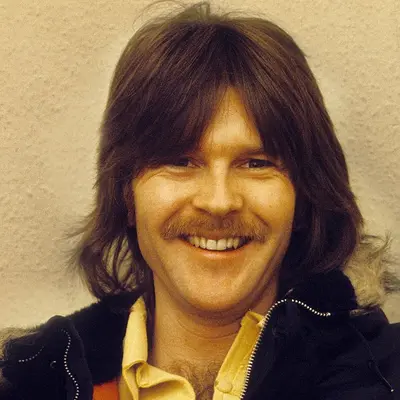
(Photo by Gijsbert Hanekroot/Redferns)
The Eagles
Meisner's decision to return to California proved pivotal. In 1971, he joined Linda Ronstadt's backing band alongside Don Henley, Glenn Frey, and Bernie Leadon. In September of that year, the four musicians formed the Eagles and signed with David Geffen's Asylum Records.
Meisner's primary role in the band was bass player and backing vocalist, although he also wrote, co-wrote, and sang lead on songs throughout the group's first five albums: "Eagles" (1972), "Desperado" (1973), "On the Border" (1974), "One of These Nights" (1975), and "Hotel California" (1976).
His songwriting contributions included "Take the Devil," "Tryin'," "Certain Kind of Fool," "Is It True?," and "Try and Love Again." He also co-wrote "Take It to the Limit" with Frey and Henley, providing the song's soaring lead vocal performance. Released as a single in 1975, the song became a major hit in early 1976 and reached #4 on the Billboard Hot 100.
The Eagles became one of the defining American rock bands of the 1970s, blending country, folk, and rock into a sound that appealed to an enormous audience. Over their career, they produced six #1 albums and won six Grammy Awards and five American Music Awards. Their best-known songs include "Take It Easy," "Desperado," "One of These Nights," "Lyin' Eyes," "Take It to the Limit," and "Hotel California."
Despite the band's success, Meisner increasingly struggled with the demands of touring and tensions among its members. He missed spending time with his family and grew uncomfortable with the pressure to perform "Take It to the Limit" every night, particularly because the song required him to hit exceptionally high notes.
The situation came to a head during the "Hotel California" tour in 1977. After a concert in Knoxville, Tennessee, Meisner declined to return to the stage for an encore, saying he was ill. Glenn Frey confronted him backstage, and the disagreement escalated into a physical altercation. Meisner had also been suffering from exhaustion and an ulcer, and the incident helped convince him that he needed to leave.
He formally departed the Eagles in September 1977 and was replaced by Timothy B. Schmit. Explaining his decision in a 1981 interview with "People," Randy said, "When it got to the point of sanity or money … I thought I'd rather have sanity."

Getty
Solo Career and Later Musical Projects
After leaving the Eagles, Meisner pursued a solo career, releasing his self-titled debut album in 1978. His second album, "One More Song," followed in 1980 and became his most successful solo release, reaching #50 on the Billboard 200.
The album produced two Top 40 singles. "Deep Inside My Heart," a duet with Kim Carnes, reached #22 on the Billboard Hot 100, while "Hearts on Fire" reached #19 in 1981, becoming his highest-charting solo single. In 1982, he released a third solo album, also titled "Randy Meisner," which produced the Top 30 single "Never Been in Love."
Meisner continued performing with various groups throughout the 1980s. He formed Randy Meisner & the Silverados, toured with the band, and joined the country-rock supergroup Black Tie in 1985. He also reunited with Poco's original lineup in 1989, contributing to the album "Legacy," which became the band's first Gold-certified studio album since the 1970s.
In later years, Meisner performed with the World Classic Rockers and contributed to recordings by other musicians, including Joe Walsh, Richard Marx, Dan Fogelberg, and James Taylor.
Meisner did not participate in the Eagles' highly lucrative 1994 reunion tour, "Hell Freezes Over," a decision that disappointed him. However, he reunited with the band's past and present members when the Eagles were inducted into the Rock and Roll Hall of Fame in 1998. He was later invited to participate in the band's "History of the Eagles" world tour in 2013 but declined due to health problems.
Personal Life
Meisner was married twice. In 1963, he married his high school girlfriend, Jennifer Lee Barton. They welcomed their first child, Dana, that same year, followed by twins Heather and Eric in 1970. After nearly two decades of marriage, the couple divorced in 1981.
Meisner later began a relationship with Lana Rae Graham. After approximately 12 years together, they married in November 1996 and remained married until Lana's death in 2016.
Throughout his career, Meisner struggled with alcoholism and other substance abuse problems. His physical and mental health deteriorated in later years, and he experienced several hospitalizations. These difficulties eventually led to legal disputes over his care and control of his finances.
Lana Rae's Death and Conservatorship
During the final years of their marriage, Randy and Lana Rae became the subjects of competing claims concerning his health, well-being, and financial affairs. In 2015, longtime friend James Newton sought a court-supervised conservatorship, alleging that Meisner was unable to care for himself and was vulnerable to outside influence.
Newton and his representatives also accused Lana of enabling Meisner's substance abuse and interfering with his care. Those allegations were contested by Lana, her family, and Meisner himself. A judge appointed a temporary conservator and ordered additional supervision, but the disagreements over who should oversee Meisner's affairs continued.
On March 6, 2016, Lana Rae Meisner died after accidentally shooting herself at the couple's Studio City home. According to the Los Angeles Police Department, she was moving a rifle stored in a case inside a closet when another object shifted and struck the trigger, causing the weapon to discharge.
Investigators reviewed evidence from the scene, including security footage, and determined that her death was accidental. Randy was in another part of the house at the time and cooperated with the investigation. In the immediate aftermath, he was placed on a psychiatric hold after expressing suicidal thoughts.
Following Lana's death, Meisner's attorney filed a petition requesting assistance with his personal care and finances. In November 2016, the competing parties reached a settlement allowing Meisner's longtime friend Arthur Ford to oversee his personal and medical needs, while accountant Thomas DeLong was appointed to oversee his financial affairs. The arrangement was intended to provide ongoing supervision and protection as Meisner's health continued to decline.
Real Estate
For approximately 40 years, Randy Meisner lived in a hillside home in the Studio City neighborhood of Los Angeles. Located on Eureka Drive, the property was built in 1953 and occupied a 1.21-acre lot overlooking Universal City.
The single-story residence measured approximately 2,495 square feet and included four bedrooms, two bathrooms, a swimming pool, spa, koi pond, and panoramic views. Property records show that the house had previously sold in October 1983 for $385,000, around the time Meisner moved into the residence.
In August 2025, two years after his death, the property was listed for $2,499,900. It sold on September 9, 2025, for $2,325,000.
Death
On July 27, 2023, the Eagles announced that Randy Meisner had died in Los Angeles at the age of 77 from complications of chronic obstructive pulmonary disease (COPD).
In a statement mourning their former bandmate, the Eagles described Meisner as an integral part of the group's early success and praised the extraordinary vocal range he displayed on "Take It to the Limit."
Meisner was survived by his three children, Dana, Heather, and Eric, along with seven grandchildren and seven great-grandchildren. His remains were cremated, and a memorial service was held in his hometown of Scottsbluff, Nebraska, in September 2023.