














What is Phish's Net Worth?
Phish is an American rock band that has a net worth of $200 million.
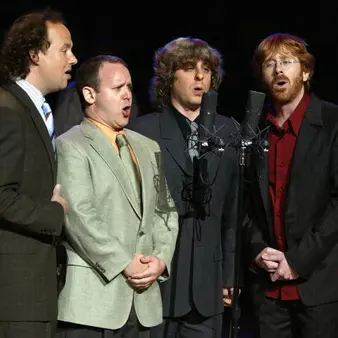
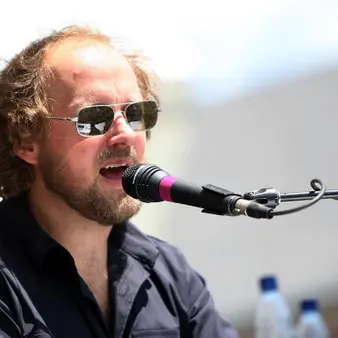
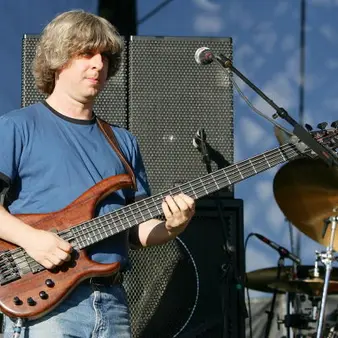
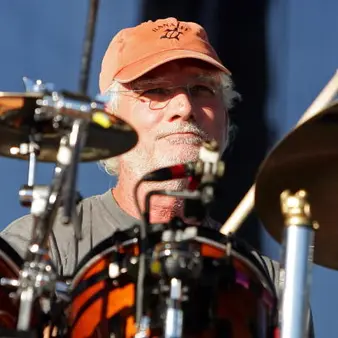
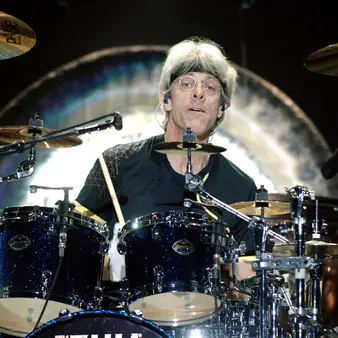
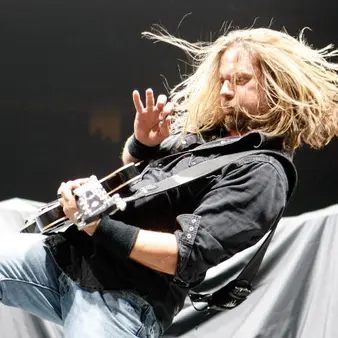
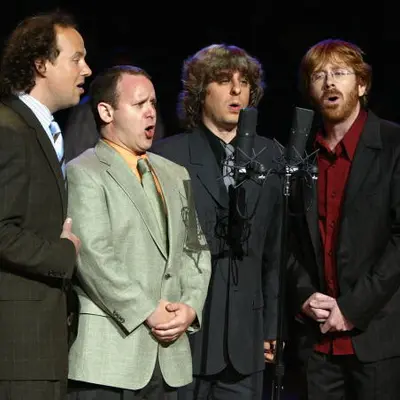
Phish is known for extended improvisation, constantly changing set lists, and a devoted audience that follows the group from show to show. The quartet consists of Trey Anastasio on guitar and vocals, Mike Gordon on bass and vocals, Jon Fishman on drums and vocals, and Page McConnell on keyboards and vocals. Its music combines rock with jazz, funk, bluegrass, and intricate composed passages, often turning a familiar song into a performance that bears little resemblance to the previous night's version.
The band developed its following through touring rather than a string of mainstream hits, although singles such as "Free," "Heavy Things," and "The Connection" reached radio audiences. Phish has sold more than 8 million albums and DVDs in the United States, released a large catalog of live recordings, and staged its own destination festivals. Its four concerts at the Las Vegas Sphere in April 2024 generated $13.4 million in ticket sales, according to Pollstar.
Formation and the First Albums
Phish formed at the University of Vermont in 1983, initially bringing together Anastasio, Gordon, Fishman, and guitarist Jeff Holdsworth. McConnell joined in 1985, and Holdsworth's departure in 1986 left the four-member lineup associated with the band's subsequent success. Early performances in Burlington clubs helped the musicians develop both their repertoire and their rapport with an audience willing to follow unusual musical turns.
Phish self-released "Junta" on cassette in 1989. Recorded the previous year, it included "You Enjoy Myself," "Divided Sky," and "Fluffhead," songs that became enduring parts of the concert repertoire. "Lawn Boy" followed in 1990, and the band signed with Elektra in late 1991.
The Elektra period brought "A Picture of Nectar," "Rift," and "Hoist," as the group moved from a regional following into larger venues. Rather than simply reproduce the studio recordings onstage, Phish used its songs as starting points for improvisation. The double live album "A Live One," released in 1995, gave record buyers a substantial introduction to that side of the band, including an extended version of "Tweezer."
Festivals and the Rise of a Touring Institution
In 1996, Phish released "Billy Breathes," produced with Steve Lillywhite and featuring "Free," "Character Zero," and "Waste." The album emphasized the band's songwriting alongside the instrumental exploration that had made its concerts famous. Later studio releases included "The Story of the Ghost" and "Farmhouse."
The band's ambitions also expanded beyond conventional tours. Its two-day "The Clifford Ball" festival at a former Air Force base in Plattsburgh, New York, attracted more than 70,000 fans in August 1996. Phish followed it with events including "The Great Went" and "Lemonwheel," creating temporary communities centered on multiple sets by the same band.
For the millennium celebrations, Phish staged "Big Cypress" on a Seminole reservation in Florida. The New Year's Eve performance continued from before midnight until after sunrise, becoming one of the defining events in the group's history. Such gatherings helped establish festivals as a central part of the Phish experience rather than an occasional addition to its touring schedule.
Hiatus, Breakup, and Reunion
Phish took a hiatus in 2000 and returned to performing together in late 2002. That reunion produced another touring period and the studio albums "Round Room" and "Undermind." In May 2004, however, Anastasio announced that the group would break up after its summer concerts, explicitly distinguishing the decision from the earlier hiatus.
The "Coventry" festival in Vermont became the band's farewell in August 2004. All four members later attended the 2008 Jammy Awards to accept a Lifetime Achievement Award. Phish returned to the stage for three concerts at Hampton Coliseum in Virginia in March 2009, beginning a renewed period of recording and touring.
The post-reunion studio catalog includes "Joy," "Fuego," "Big Boat," and "Sigma Oasis." In July 2024, Phish released its 16th studio album, "Evolve," produced by Vance Powell and Bryce Goggin. The album was recorded at The Barn in Vermont, with songs selected from arrangements the musicians had developed through live performance.
Madison Square Garden and Sphere
Phish's relationship with Madison Square Garden produced a particularly ambitious undertaking in 2017. For "The Baker's Dozen," the band played 13 shows over 17 nights, performing 237 different songs without repeating one. The recordings subsequently became a complete 36-CD box set as well as smaller selections on CD and vinyl.
The group brought the same emphasis on variety to its four-night Sphere engagement in April 2024. Pollstar recorded 65,665 tickets sold and a gross of $13.4 million for those performances. That figure represents concert ticket revenue, rather than the musicians' personal take-home earnings.
In October 2026, Phish announced another four-show New Year's run at Madison Square Garden, scheduled for December 30, 2026, through January 2, 2027. The final concert was announced as the band's 100th performance at the venue.
Recordings, Merchandise, and WaterWheel
Beyond touring, Phish operates its own JEMP Records label and sells recordings and merchandise through Phish Dry Goods. LivePhish provides official concert audio, downloads, and streaming access, extending the life of performances beyond the people in the room. In July 2026, the band introduced LivePhish With, a subscription plan that added video livestreams to its lossless-audio archive and a curated video library.
Phish also has a long-running connection with Ben & Jerry's through the "Phish Food" ice cream flavor. The WaterWheel Foundation launched alongside the flavor in March 1997, allowing the band to direct its ice cream royalties toward environmental work benefiting Lake Champlain. WaterWheel subsequently expanded its fundraising to nonprofits in communities visited on tour.
In December 2022, the band said WaterWheel had raised more than $9 million and supported more than 500 nonprofit organizations over its first 25 years. Its activities made philanthropy a recurring part of Phish concerts, alongside the recordings, merchandise, and elaborate live productions that support the group's wider operation.