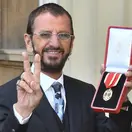












What Is Paul McCartney's Net Worth?
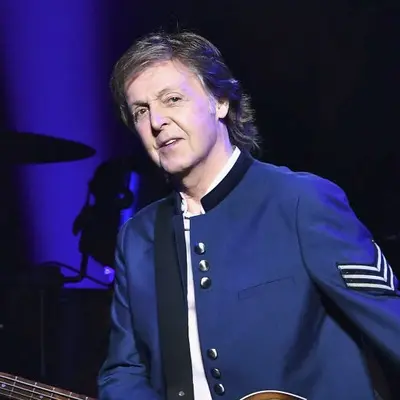
Paul McCartney is a British singer, songwriter, musician, and businessman who has a net worth of $1.2 billion.
Paul McCartney is best known as a member of the Beatles, the most commercially successful band in popular music history, and for his subsequent career as a solo artist and founder of Wings. One of the most successful songwriters of all time, McCartney has written or co-written 32 songs that reached number one on the Billboard Hot 100 and has won 19 Grammy Awards. His compositions include "Yesterday," "Hey Jude," "Let It Be," "Eleanor Rigby," and "Blackbird," while his post-Beatles hits include "Band on the Run," "Live and Let Die," "Maybe I'm Amazed," and "Silly Love Songs." He was inducted into the Rock and Roll Hall of Fame with the Beatles in 1988 and as a solo artist in 1999. McCartney was knighted in 1997 for his contributions to music and has remained an active recording and touring artist for more than six decades.
Paul McCartney's fortune comes from far more than Beatles royalties and concert performances. His most important business asset is MPL Communications, a music publishing company he established in 1969 that owns or administers thousands of compositions, including songs by Buddy Holly, Carl Perkins, and some of America's most successful Broadway and Christmas songwriters. The company's catalog has been valued at more than $250 million. McCartney also owns a 25% interest in the Beatles' Apple Corps company, an asset valued at more than $150 million, while his recovered interests in Beatles songwriting copyrights have been valued at more than $200 million. Combined with decades of touring income, his solo music catalog, real estate, and a substantial art collection, these holdings have made him one of the wealthiest musicians and celebrities in the world.
Early Life
James Paul McCartney was born on June 18, 1942, in Liverpool, England. His father, Jim, worked as a cotton salesman and played trumpet and piano, while his mother, Mary, was a nurse and midwife. The family lived modestly, and McCartney grew up conscious of the financial pressures experienced by working-class households in postwar Britain.
McCartney has recalled deciding at a young age that he wanted to earn enough money to escape the financial worries he saw affecting adults around him. Music became both his creative passion and, eventually, the means by which he would achieve that ambition.
His mother died of breast cancer in 1956 when he was 14, a devastating loss that later helped him bond with John Lennon, whose mother also died when he was young. McCartney learned music largely by ear, developing his abilities on guitar and the family's upright piano. He wrote "I Lost My Little Girl" as a teenager and developed an early version of "When I'm Sixty-Four."
American rock and roll, rhythm and blues, and performers such as Little Richard shaped his singing, while the standards and music-hall songs favored by his father broadened his songwriting influences.
The Beatles
McCartney met John Lennon at a Liverpool church fête in July 1957 and joined Lennon's group, the Quarrymen. George Harrison subsequently joined, and the evolving band became the Beatles in 1960. Early lineups included bassist Stuart Sutcliffe and drummer Pete Best. McCartney eventually took over bass, and Ringo Starr replaced Best in 1962.
Performances in Liverpool and Hamburg sharpened the band's repertoire and stagecraft. Under manager Brian Epstein, the Beatles signed with EMI and began working with producer George Martin. "Love Me Do," "Please Please Me," and subsequent hits established them in Britain before their 1964 arrival in the United States turned Beatlemania into an international phenomenon.
Lennon and McCartney shared songwriting credit even as their individual styles became more distinct. McCartney's work ranged from the intimate "Yesterday" and "Blackbird" to the orchestral storytelling of "Eleanor Rigby," the exuberance of "Penny Lane," and the force of "Helter Skelter." His increasingly melodic bass playing also became an important element of the group's sound.
McCartney helped drive the concept behind "Sgt. Pepper's Lonely Hearts Club Band," took an active role in arrangements, and encouraged experiments with orchestration and studio techniques. His interest in classical music, traditional pop, and avant-garde sounds helped give the Beatles' catalog its extraordinary variety.
The Beatles stopped conventional touring in 1966 and concentrated on increasingly ambitious recordings, including "Revolver," "Sgt. Pepper's Lonely Hearts Club Band," the self-titled "White Album," and "Abbey Road." Their final public performance was the Apple rooftop concert in January 1969.
Business disagreements and personal tensions contributed to the breakup. McCartney publicly acknowledged the split in April 1970 and filed proceedings to dissolve the Beatles' partnership that December. The group remains the best-selling band in popular music history, with more than 183 million certified album units in the United States and widely cited worldwide sales reaching 600 million records.

"The Beatles" pose for a portrait in 1963. (Photo by Michael Ochs Archives/Getty Images)
Solo Career and Wings
McCartney released his first solo album, "McCartney," in 1970, playing most of the instruments himself. Its homemade character contrasted with the Beatles' elaborate later productions, while "Maybe I'm Amazed" demonstrated that his songwriting remained commercially and artistically potent outside the group. "Ram," credited to Paul and Linda McCartney, followed in 1971.
He then formed Wings with Linda McCartney and guitarist Denny Laine. After an uneven beginning, Wings became a major commercial force through "Band on the Run," "Venus and Mars," "Wings at the Speed of Sound," and the live album "Wings over America."
"Band on the Run" was recorded largely in Lagos after two members left Wings shortly before the sessions. Paul, Linda, and Laine completed the album as a trio, and its success helped dispel the idea that McCartney could only flourish within the Beatles.
The band also recorded "Live and Let Die" for the James Bond film of the same name and scored an enormous British hit with "Mull of Kintyre." Wings underwent several personnel changes before ending in 1981, having established McCartney as one of the few musicians capable of leading two internationally successful bands.
His subsequent solo albums included "Tug of War," "Pipes of Peace," "Flowers in the Dirt," "Flaming Pie," and "Chaos and Creation in the Backyard." Collaborations ranged from "Ebony and Ivory" with Stevie Wonder to "The Girl Is Mine" and "Say Say Say" with Michael Jackson. He also explored classical music through projects such as "Liverpool Oratorio" and electronic experimentation as the Fireman.
Later Recordings, The Boys of Dungeon Lane, and Documentaries
McCartney continued releasing new music through albums including "New," "Egypt Station," and "McCartney III," the last of which returned to his tradition of largely self-performed recordings. His later collaborations included "FourFiveSeconds" with Rihanna and Kanye West.
The Beatles' 2023 single "Now and Then" reunited contributions from all four members using a Lennon demo, earlier Harrison guitar recordings, and new work by McCartney and Starr. Audio-separation technology made Lennon's recorded voice usable without generating a new artificial vocal performance. The recording won the Grammy Award for Best Rock Performance in 2025.
In May 2026, McCartney released "The Boys of Dungeon Lane," produced with Andrew Watt. The album drew heavily on memories of his childhood in Liverpool and his experiences with Lennon and Harrison before the Beatles became famous. It also featured "Home to Us," a collaboration with Ringo Starr.
The album reached number one in the United Kingdom, becoming McCartney's 24th chart-topping album across his work with the Beatles, Wings, and as a solo artist. It was also shortlisted for the 2026 Mercury Prize, the first solo McCartney album to receive that distinction. An expanded edition featuring additional recordings followed in October 2026.
McCartney's post-Beatles career also received renewed attention through the documentary "Paul McCartney: Man on the Run," directed by Morgan Neville and released in February 2026. The film examined his creative reinvention after the Beatles' breakup, particularly his relationship with Linda and the formation of Wings.
The documentary accompanied the book "Wings: The Story of a Band on the Run" and a major retrospective of the group's recordings. An exhibition devoted to McCartney and Wings also opened at the Rock and Roll Hall of Fame in 2026.
Beyond recording, McCartney has published books including "The Lyrics," a collection of reflections on his songwriting, and "1964: Eyes of the Storm," which featured photographs he took during the Beatles' rise to international fame.

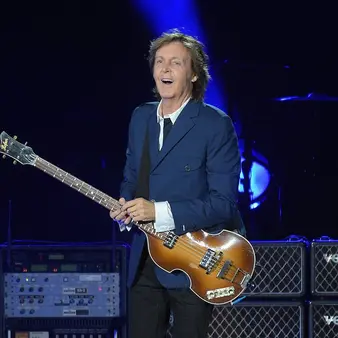
(Photo by Kevin Winter/Getty Images)
Early Beatles Contracts and Northern Songs
One of the most consequential financial episodes in McCartney's career involved the loss of control over the Beatles' songwriting catalog.
During the group's early years, the musicians signed recording and publishing contracts that gave them relatively small shares of the money their music generated. McCartney later complained that their agreements were structured so poorly that the Beatles received little financial benefit from the enormous commercial success they created.
In 1963, manager Brian Epstein helped establish Northern Songs with publisher Dick James and his business partner Charles Silver. James and Silver initially held 50%, Lennon and McCartney held 20% each, and Epstein's interest was 10%.
Northern Songs controlled publishing rights to the compositions, while Lennon and McCartney remained entitled to royalties under their songwriting agreements. Their contracts also required them to deliver a minimum number of new songs annually.
When Northern Songs went public on the London Stock Exchange in 1965, Lennon and McCartney's ownership stakes were diluted to approximately 15% each. The public offering gave investors an opportunity to buy shares in the Beatles' songwriting business, even as the group's music was transforming popular culture.
In 1969, James and Silver sold their controlling interest to ATV for £1.525 million without first giving Lennon and McCartney the opportunity to purchase it. ATV subsequently won the contest for control of Northern Songs, and Lennon and McCartney sold their remaining shares later that year in a transaction valued at approximately $5.7 million.
Selling their shares meant relinquishing their ownership interests in the publishing company. It did not eliminate their contractual entitlements to songwriter royalties, but it left them without control over many of their most valuable compositions.
Michael Jackson and the Beatles Catalog
The financial consequences of losing Northern Songs became especially clear during the 1980s.
McCartney had developed an interest in music publishing as an investment and discussed the business with his friend and collaborator Michael Jackson. He explained that owning other people's songs could provide a steady stream of royalty income without requiring the owner to write or record new material.
Jackson took the lesson seriously. In 1985, he purchased ATV Music Publishing for $47.5 million, acquiring a large catalog that included the publishing rights to many Beatles compositions.
The purchase was particularly painful for McCartney because Jackson's investment included songs that McCartney had helped create. McCartney later recalled that he had previously explored an opportunity to purchase Northern Songs for approximately $20 million, potentially sharing the cost with representatives of John Lennon. Those negotiations failed, and Jackson eventually acquired the catalog at a much higher price.
In 1995, Jackson merged ATV's publishing interests with Sony to create Sony/ATV Music Publishing. The business continued expanding and eventually became one of the world's largest music publishers.
In 2016, Sony purchased the Jackson estate's remaining 50% interest in Sony/ATV for $750 million. The transaction demonstrated how dramatically the value of music publishing assets had increased since Jackson's original purchase three decades earlier.
The growth of Jackson's publishing investment involved thousands of compositions beyond the Beatles catalog, but Lennon-McCartney songs remained among its most valuable assets.
Recovering His Beatles Songwriting Copyrights
McCartney spent years pursuing the recovery of his Beatles songwriting rights, eventually using provisions in United States copyright law that allow authors to terminate certain older copyright grants.
For qualifying works, the provisions can allow writers to reclaim previously transferred U.S. rights after a statutory period. The process does not automatically return ownership of recordings or international publishing rights.
McCartney began preparing termination notices covering compositions written during the early years of the Beatles. In January 2017, he filed a lawsuit against Sony/ATV seeking judicial confirmation of his termination rights.
The parties reached a confidential settlement in June 2017, shortly before the first relevant termination dates. Although the precise terms were never publicly disclosed, the agreement paved the way for McCartney to regain control of his U.S. publishing interests in the compositions he had written.
The financial significance of that recovery is substantial. His interests in the Beatles songwriting catalog have been valued at at least $200 million, with estimated annual royalty income of $10 million or more.
Unlike his stake in the Beatles' recordings business, these publishing rights are directly tied to the underlying songs he helped write. They can generate royalties when those compositions are streamed, performed, covered by other artists, or licensed for commercial use.
MPL Communications: His $250 Million Publishing Business
In 1969, as the Beatles approached their breakup, McCartney established MPL Communications to manage his own creative and business interests. Initially a relatively small operation, the company gradually became one of the world's largest privately controlled music publishing businesses.
The company gave McCartney greater control over his post-Beatles songwriting and allowed him to acquire the work of other composers. With guidance from his father-in-law, entertainment attorney Lee Eastman, and brother-in-law John Eastman, he began purchasing valuable publishing catalogs.
One of his most important early acquisitions involved the songs of Buddy Holly. McCartney admired Holly as a songwriter and performer, but he also recognized the enduring financial value of compositions that could be recorded and performed by generations of musicians.
MPL subsequently acquired ownership or administrative rights to songs associated with Carl Perkins, Frank Loesser, Jerry Herman, Meredith Willson, and numerous other composers. Its repertoire includes "Blue Suede Shoes," "Hello, Dolly!," "Luck Be a Lady," "Unchained Melody," and "The Christmas Song."
The company also controls publishing interests associated with the musical "Grease." That means McCartney's business can receive income when the show's songs are performed in licensed theatrical productions, including school and community theater performances. The financial value of those rights extends far beyond the original Broadway production or the successful 1978 film adaptation.
MPL's catalog contains thousands of songs and has been valued at at least $250 million. Its annual publishing revenue is believed to reach tens of millions of dollars, although the company's detailed financial statements are not publicly available.
The business generates income through mechanical royalties, public performances, streaming, synchronization licenses, theatrical productions, and other uses of its compositions. Because many of these songs remain popular decades after they were written, MPL can collect royalties regardless of whether McCartney releases a new album or goes on tour.
McCartney has described purchasing music publishing rights as one of the most important business decisions of his career. His investment strategy anticipated the enormous expansion in music catalog valuations that later attracted private equity firms, investment funds, and major financial institutions to the industry.
Paul McCartney's Christmas Song Empire
One of the most surprising aspects of McCartney's publishing business is its extensive collection of Christmas music. Through MPL Communications, he owns or administers rights to dozens of holiday standards that generate renewed income every December.
Among the best-known songs in the catalog are "It's Beginning to Look a Lot Like Christmas," "The Christmas Song (Chestnuts Roasting on an Open Fire)," "Blue Christmas," and "Baby, It's Cold Outside." These compositions have been recorded by generations of performers and remain fixtures of holiday radio programming, retail playlists, streaming services, films, and television specials.
McCartney did not write those standards. "It's Beginning to Look a Lot Like Christmas" was written by Meredith Willson, "The Christmas Song" by Mel Tormé and Bob Wells, "Blue Christmas" by Billy Hayes and Jay W. Johnson, and "Baby, It's Cold Outside" by Frank Loesser. Their inclusion in MPL's catalog reflects McCartney's acquisitions of other songwriters' publishing rights.
He also has his own Christmas classic, "Wonderful Christmastime," which he wrote, recorded, and released in November 1979. Unlike the older holiday standards he acquired through publishing deals, "Wonderful Christmastime" originated as one of his own compositions.
The song has become an annual source of royalty income. In 2010, music industry sources estimated that it generated between $400,000 and $600,000 annually for McCartney, although updated royalty figures have not been publicly disclosed.
Christmas music is particularly valuable to publishers because familiar songs return to widespread commercial use every year. A successful holiday standard can generate income for decades through new recordings, seasonal radio airplay, streaming, advertising, and licensing.
For McCartney, those recurring royalties represent another substantial business independent of his Beatles recordings or live concert performances.
Apple Corps and Beatles Royalty Income
In addition to his personal songwriting interests, McCartney owns a 25% stake in Apple Corps, the Beatles' company that oversees important aspects of the group's commercial activities.
The other ownership interests belong to Ringo Starr and the estates of John Lennon and George Harrison, each holding approximately 25%.
Apple Corps participates in revenue associated with Beatles music streaming, physical record sales, merchandise, and other commercial uses of the group's brand. Its income has continued as the Beatles' catalog has reached new audiences through digital platforms, anniversary editions, documentaries, and archival releases.
The company reportedly generates more than $50 million in annual revenue. McCartney's 25% ownership interest has been valued at more than $150 million.
That $50 million represents revenue associated with the company as a whole rather than McCartney's personal annual income. Nevertheless, his ownership stake provides an additional continuing financial interest in the Beatles' commercial legacy.
Combined with the recovered publishing rights to his own Beatles compositions, McCartney holds substantial assets associated with both the recordings and underlying songs that made him famous.
Touring and Career Earnings
McCartney's concert tours have generated enormous revenue throughout his solo career. During particularly successful touring years, his personal earnings have been estimated at $50 million to $70 million, while publishing, royalties, and other business interests continue producing substantial income between tours.
His 2002 tour generated approximately $126 million in ticket sales, while his touring gross in 2010 reached $93 million. During the June 2015 through June 2016 reporting period, his concerts averaged nearly $4 million in ticket sales per city.
Forbes estimated his annual earnings at $71 million in 2014, $56.5 million in 2016, and $54 million in 2017. Those figures represented estimates of his overall annual earnings rather than ticket sales alone.
His commercial performance has placed him alongside younger touring superstars including Jennifer Lopez, Beyoncé, and Jay-Z.
The "Got Back" tour, which began in 2022, included 79 performances through 2025 across North America, Europe, Australia, and South America. By the later stages of the tour, McCartney was averaging more than $5 million in ticket sales per engagement.
His live performances typically feature lengthy sets combining Beatles classics, Wings hits, and solo recordings. Songs such as "Hey Jude," "Let It Be," "Live and Let Die," and "Band on the Run" remain central attractions.
Major appearances throughout his career have also included Live Aid, the 2005 Super Bowl halftime show, Glastonbury, and Austin City Limits.
Art Collection and Other Investments
Beyond music publishing and touring, McCartney has accumulated a substantial collection of fine art, including works attributed to Pablo Picasso and René Magritte. He has also been a serious amateur painter for decades, exhibiting his own work at galleries and museums.
His investments in art, musical instruments, and other collectibles represent another component of his financial portfolio. Unlike music royalties, these assets can appreciate in value without producing regular operating income.
The extent of his collection became partly visible during his divorce proceedings with Heather Mills. Financial disclosures submitted to the court in 2008 valued his personally created paintings, purchased works of art, musical instruments, jewelry, furniture, vehicles, and other possessions at a combined £32.3 million.
That figure covered multiple categories of assets rather than fine art alone, but it demonstrated the considerable value McCartney had accumulated outside his primary music businesses.
His holdings also include substantial residential real estate and land investments in Britain and the United States.

Kevin Winter/Getty Images
Marriage, Family, and Heather Mills Divorce Settlement
McCartney married photographer Linda Eastman in March 1969. He adopted her daughter Heather, and they had three more children together: Mary, Stella, and James.
Linda became his musical collaborator and partner in vegetarian and animal-welfare advocacy. She performed alongside him in Wings and accompanied him through some of the most commercially successful years of his solo career. They remained married until her death from breast cancer in 1998.
McCartney married Heather Mills in 2002, and their daughter Beatrice was born the following year. Their marriage ended in separation in 2006, followed by an acrimonious divorce that produced an unusually detailed public examination of McCartney's wealth.
In March 2008, a British High Court judge found that McCartney's total fortune amounted to approximately £400 million, equivalent to roughly $800 million at the exchange rates of the period.
McCartney's financial disclosures valued his business interests at £240.9 million, real estate at approximately £34 million, and investments at £34.3 million. He also reported £15.2 million in bank accounts, £36.3 million in pension assets, and £32.3 million in art, musical instruments, and other personal property.
His disclosed net assets totaled £387 million after liabilities. The judgment also revealed that McCartney's total expenditure during 2005 was approximately £4.27 million, including £1.79 million in property maintenance and operating expenses.
Mills sought approximately £125 million in the divorce proceedings. The judge ordered McCartney to pay her a £16.5 million lump sum, which, together with approximately £7.8 million in assets she already held, left her with a total settlement package valued at £24.3 million, equivalent to approximately $48.6 million at the time.
The judgment also provided for £35,000 in annual child maintenance, with McCartney agreeing to pay additional school and nanny expenses. The widely reported £24.3 million settlement figure therefore included assets already belonging to Mills rather than representing an entirely new cash payment.
McCartney married American businesswoman Nancy Shevell in October 2011. He has remained active in vegetarian causes, including the Meat Free Monday campaign founded with Mary and Stella. His advocacy has also extended to landmine removal and animal protection.

Getty
Personal Experiences and John Lennon
The Beatles encountered cannabis through Bob Dylan in 1964, and McCartney later spoke openly about his experiences with drugs. His marijuana arrests had professional consequences, most notably a detention in Japan in 1980 that forced the cancellation of Wings concerts. He subsequently supported changes to cannabis laws.
His relationship with John Lennon included close collaboration, rivalry, and a painful public rupture around the Beatles' breakup. The two resumed contact during the 1970s, although they never formally reunited as a songwriting team. McCartney has said their final telephone conversation was friendly, a memory that became especially important after Lennon's murder in December 1980.
Despite the disputes that ended the Beatles, McCartney has frequently spoken about the importance of his songwriting partnership with Lennon. He has also continued celebrating the musical contributions of George Harrison and Ringo Starr through archival releases, interviews, and occasional collaborations.

Gustavo Caballero/Getty Images
Real Estate
McCartney's international property holdings have been valued at $100 million to $150 million. They include residences, farms, and substantial landholdings in Britain and the United States, acquired over several decades.
In 1984, he purchased a New York townhouse overlooking the Museum of Modern Art for $1.88 million. In 1998, he acquired an East Hampton property for $495,000, establishing a residential presence in one of Long Island's most desirable communities.
In 2001, McCartney paid $4 million for Courtney Love's Beverly Hills estate. His American real estate portfolio has also included a 190-acre ranch outside Tucson, Arizona, associated with his life with Linda.
One notable transaction involved a luxury Manhattan apartment purchased with Nancy Shevell in 2015. The couple paid $15.5 million for a penthouse overlooking Central Park, with monthly maintenance charges reportedly reaching $13,000.
The apartment was sold in 2022 for $8.5 million, representing a $7 million decline from the original purchase price before expenses. The property had remained largely unfinished during their ownership.
McCartney's British holdings have included at least six properties, among them a longstanding London residence near Abbey Road, a 1,500-acre estate in East Sussex, and substantial landholdings on Scotland's Kintyre peninsula.
High Park Farm, which he acquired in 1966, became particularly important after the Beatles' breakup. McCartney and Linda spent extended periods at the secluded Scottish property, and it inspired aspects of their family life and music. He subsequently expanded his landholdings in the surrounding area.
Two different Liverpool childhood homes associated with McCartney are sometimes confused. The property at 72 Western Avenue sold at auction in 2015 for £150,000, equivalent to approximately $231,000 at the time, exceeding its guide price by £50,000.
The more famous childhood home at 20 Forthlin Road is owned by the National Trust, which acquired it in 1995. McCartney and Lennon worked on several early Beatles compositions at the property, which is now preserved as a historic site open to visitors:

Getty
Net Worth Unpacked Paul McCartney
Explore the figures, comparisons, and money moments in this profile.
Read the text version 16 cards
Paul McCartney's fortune goes far beyond the Beatles
CNW estimated net worth $1.2B
CNW snapshot: 2026-11-15
SourcesThe four Beatles, across different eras
The Beatles · CNW estimated net worth; historical basis shown
- Paul McCartney$1.2B
- John LennonCNW estimated net worth at death (1980)$200M
- George HarrisonCNW estimated net worth at death (2001)$300M
- Ringo Starr$400M
CNW snapshot: 2026-11-15
Paul's stake in the Beatles' publisher shrank
Paul's ownership of Northern Songs; post-IPO stake approximate
- At founding, 196320%
- After public offering, 196515%
CNW snapshot: 2026-11-15
Lennon and McCartney sold their remaining shares
Approximate value of their combined Northern Songs share sale, 1969 $5.7M
Who bought the publisher holding many Beatles songs in 1985?
His friend and collaborator Michael Jackson
Price Jackson paid for ATV Music Publishing, 1985 $47.5M
Paul regained U.S. interests in his Beatles songs
A confidential 2017 settlement with Sony/ATV paved the way for qualifying U.S. publishing rights to revert.
Estimated value of his Beatles songwriting interests $200M+
He built a publishing business beyond Beatles songs
Its publishing interests span Buddy Holly songs, Broadway musicals and Christmas standards.
Estimated value of MPL Communications' song catalog $250M+
Sources“Wonderful Christmastime” had its own royalty stream
Estimated annual income from the song, 2010 $400K–$600K
SourcesPaul still owns a quarter of the Beatles' company
Estimated value of his 25% stake in Apple Corps $150M+
SourcesTouring and music businesses kept the earnings coming
Forbes estimated annual earnings, selected years
- 2014$71M
- 2016$56.5M
- 2017$54M
CNW snapshot: 2026-11-15
SourcesGot Back was still selling millions in tickets per show
Average ticket sales per engagement in the tour's later stages, through 2025 $5M+
SourcesPaul's June 18 birthday has billionaire company
of 66 CNW profiles #2
CNW profiles born on June 18
- #1 · Eduardo Hochschild$2.2B
- #2 · Paul McCartney$1.2B
- #3 · Scooter Braun$1B
CNW profiles born on June 18
Population: 66 covered profiles.
CNW snapshot: 2026-11-15
The richest with a June 18 birthday
CNW estimates · June 18 birthdays
- #1 · Eduardo Hochschild$2.2B
- #2 · Paul McCartney$1.2B
- #3 · Scooter Braun$1B
- #4 · Barbara Broccoli$400M
- #5 · Jay RockefellerCNW estimated net worth at death (2026)$200M
CNW snapshot: 2026-11-15
A Beatle tops CNW's rock-star fortunes
of 1,145 CNW profiles #1
CNW profiles in Rock Stars
- #1 · Paul McCartney$1.2B
- #2 · Jimmy BuffettCNW estimated net worth at death (2023)$1B
CNW profiles in Rock Stars
Population: 1,145 covered profiles.
CNW snapshot: 2026-11-15
Top five · Rock Stars
CNW estimates · Rock Stars
- #1 · Paul McCartney$1.2B
- #2 · Jimmy BuffettCNW estimated net worth at death (2023)$1B
- Tied #3 · Bruce Springsteen$750M
- Tied #3 · Patti Scialfa$750M
- #5 · Bono$700M
CNW snapshot: 2026-11-15