
/2009/11/Lars-Ulrich.jpg)
/2013/01/james.jpg)
/2009/11/Kirk-Hammett.jpg)
/2015/06/cb.jpg)
/2010/05/GettyImages-73530722.jpg)
/2021/10/robert.png)
:strip_exif()/2009/09/P-Diddy.jpg)
/2019/04/rr.jpg)
/2009/09/Jennifer-Aniston.jpg)
/2019/10/denzel-washington-1.jpg)
/2009/09/Cristiano-Ronaldo.jpg)
:strip_exif()/2015/09/GettyImages-476575299.jpg)
/2020/01/lopez3.jpg)
/2019/11/GettyImages-1094653148.jpg)
/2020/02/Angelina-Jolie.png)
/2020/04/Megan-Fox.jpg)
/2018/03/GettyImages-821622848.jpg)
What is Lars Ulrich's net worth?
Lars Ulrich is a Danish musician, producer, and songwriter who has a net worth of $400 million. That net worth makes Lars Ulrich the richest member of Metallica. He is richer than his fellow band founder, James Hetfield, mainly due to James's divorce but also thanks to savvy real estate and art investments. Lars is one of the richest drummers in the world, and he was the first Dane to be inducted into the Rock and Roll Hall of Fame when Metallica received that honor in 2009. To date, Metallica has sold more than 125 million albums worldwide. Even more than 30 years after their peak success, Metallica is still one of the highest-earning bands in the world. In a given year when the band is touring, they can easily gross more than $100 million from ticket sales, merchandise, royalties and more.
Ulrich played a central role in shaping the band's aggressive, fast-paced sound, helping pioneer thrash metal with early albums like "Kill 'Em All," "Ride the Lightning," and "Master of Puppets." Throughout the 1980s, Metallica built a devoted following through relentless touring and increasingly ambitious songwriting. Their 1991 self-titled release, often called "The Black Album," transformed them into global superstars, driven by hits such as "Enter Sandman" and "Nothing Else Matters." The album sold tens of millions of copies worldwide and remains one of the best-selling albums of all time.
Beyond drumming, Ulrich has long been involved in the band's business and strategic decisions. He was a vocal advocate for artists' rights during the early 2000s battle against Napster, becoming a prominent and controversial figure in the debate over digital music piracy. Over the decades, Metallica has won multiple Grammy Awards, headlined major festivals, and maintained a reputation as one of rock's premier live acts. Ulrich's career spans more than four decades, during which he has helped steer Metallica from underground metal act to enduring global institution.
Early Life
Lars Ulrich was born on December 26, 1963, in Gentofte, Denmark, into an upper-middle-class family that blended athletics, art, and culture. His father, Torben Ulrich, was an acclaimed professional tennis player whose career stretched from the late 1940s into the early 1980s. Torben was also deeply involved in the jazz world, performing as a musician and associating with legends such as Stan Getz, Miles Davis, and saxophonist Dexter Gordon, who was Lars' godfather. Music and international travel were constant presences in the Ulrich household.
Despite that artistic exposure, Lars' early life revolved primarily around tennis. He trained seriously and was considered one of Denmark's top junior players. For years, the expectation was that he would follow in his father's footsteps and pursue a professional career on the court. However, a pivotal moment arrived when Lars was nine years old. His father bought tickets to see Deep Purple perform at a Copenhagen stadium. When one of Torben's friends dropped out at the last minute, Lars went instead. The experience was transformative. Mesmerized by the volume, energy, and spectacle of the show, he immediately purchased the band's album "Fireball" and played it obsessively. At age 12, he received his first drum kit, marking the beginning of a new obsession.
Though he formally announced at 16 that he intended to focus on music rather than tennis, he continued competing at a high level. In 1980, at age 17, he moved to Newport Beach, California, hoping to elevate his tennis career. Instead, he struggled to stand out and failed to make the local high school team. That disappointment effectively ended his serious tennis ambitions and pushed him fully toward music.
Soon after relocating to the Los Angeles area, Ulrich immersed himself in the burgeoning heavy metal scene. He placed an ad in a local classified paper called The Recycler that read: "Drummer looking for other metal musicians to jam with Tygers of Pan Tang, Diamond Head and Iron Maiden." The ad connected him with guitarist James Hetfield. Five months later, on October 28, 1981, the two officially formed Metallica, launching one of the most consequential careers in rock history.
Formation of Metallica and Early Albums
Metallica's early lineup went through several changes before stabilizing with bassist Cliff Burton and guitarist Kirk Hammett. Metallica's original lead guitarist, Dave Mustaine, was fired for substance abuse issues on April 11, 1982. He was replaced by Kirk Hammett, who nailed his audition earlier in the day on April 11. The band released its debut album, "Kill 'Em All," in 1983. The record introduced a faster, more aggressive style that helped define thrash metal.
Their follow-up albums, "Ride the Lightning" in 1984 and "Master of Puppets" in 1986, expanded their musical complexity and lyrical depth. "Master of Puppets" in particular is widely regarded as one of the greatest heavy metal albums ever recorded. Ulrich's drumming during this era was characterized by speed, double-bass intensity, and intricate arrangements that complemented the band's evolving sound.
In 1986, tragedy struck when bassist Cliff Burton was killed in a tour bus accident in Sweden. The band continued with new bassist Jason Newsted, releasing "…And Justice for All" in 1988. The album featured longer compositions and more progressive structures, further cementing Metallica's reputation as a serious musical force. Newsted remained with the band through 2001. He was replaced by Robert Trujillo.

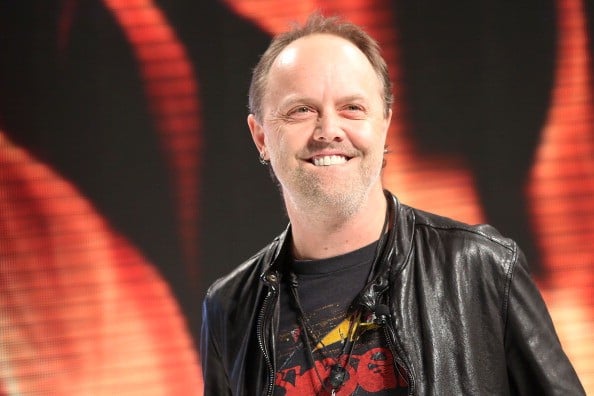
(Photo by Gareth Cattermole/Getty Images)
Global Breakthrough: "The Black Album"
Metallica's 1991 self-titled album marked a turning point. Often referred to as "The Black Album," it featured a more streamlined, radio-friendly sound while retaining heavy riffs and intensity. Singles such as "Enter Sandman," "The Unforgiven," and "Nothing Else Matters" propelled the band into mainstream superstardom.
The album debuted at number one on the Billboard 200 and went on to sell more than 16 million copies in the United States alone. Worldwide sales have surpassed 30 million copies, making it one of the best-selling albums in music history. Ulrich's playing on the record emphasized groove and power over sheer speed, demonstrating his adaptability as a drummer.
Evolution in the 1990s and 2000s
Following "The Black Album," Metallica experimented with different styles on "Load" in 1996 and "Reload" in 1997. These albums incorporated blues and hard rock influences, dividing some longtime fans but expanding their commercial reach.
In 2003, the band released "St. Anger," a raw, stripped-down record created during a period of internal conflict and therapy. The creative tensions were documented in the film "Metallica: Some Kind of Monster," which offered an unfiltered look at Ulrich's role within the band. The documentary revealed both his business acumen and his sometimes volatile personality.
Metallica returned to a more classic thrash sound with "Death Magnetic" in 2008 and later released "Hardwired… to Self-Destruct" in 2016 and "72 Seasons" in 2023. Through each phase, Ulrich remained deeply involved in songwriting, production decisions, and overall strategy.
Napster Controversy
In 2000, Ulrich became the public face of Metallica's legal battle against Napster, a peer-to-peer file-sharing service that allowed users to download music for free. He testified before Congress and filed a lawsuit alleging copyright infringement.
The move made him a polarizing figure. Critics accused him of attacking fans, while supporters argued he was defending artists' rights in a rapidly changing digital landscape. In hindsight, the dispute foreshadowed the broader transformation of the music industry and the shift toward streaming platforms.
Business Ventures and Investments
Ulrich has long been involved in Metallica's business operations. The band controls much of its own branding, touring, and licensing through its management company and has structured its career to maximize long-term revenue.
Metallica's touring machine is one of the most profitable in music. Their "WorldWired Tour" and subsequent global runs have generated hundreds of millions of dollars in ticket sales. Ulrich's business instincts have helped position the band as both a creative and financial powerhouse.
Outside of music, Ulrich has invested in art and collectibles, becoming known as a serious contemporary art collector. He has also participated in film projects and philanthropic initiatives, including Metallica's All Within My Hands Foundation, which supports workforce education and disaster relief.
Spencer Platt/Getty Images
Drumming Style
Lars Ulrich has changed his drumming style many times throughout his career. In the early 80s, he was known for his fast, aggressive and, more or less, basic thrash beats. He would often utilize the double bass technique, which has become highly popular among heavy metal drummers today. Many of Metallica's early songs, such as "Metal Militia" from Kill 'Em All, "Fight Fire with Fire" from Ride the Lightning, "Battery" from Master of Puppets, and "Dyers Eve" from …And Justice for All, contain Ulrich's style of fast thrash drum beats. Ulrich uses groove in his drum style, including clean and fast double bass beats in many songs and heavy drum fills. He also likes to play in sync with the rhythm guitar played by Hetfield. The simplification in Metallica's overall musical style during the 90s and early 2000s made him change his musical style to a simpler drumming style. However, on Death Magnetic, Metallica's ninth album release, he went back to his old style from the 1980s, in which he played more complex and fast rhythms. Lars has said that fellow heavy metal drummers Ian Paice and Bill Ward were big influences on his playing. Ulrich endorses Tama Drums, he also has a full signature drum kit as well as a signature lacquer finish, Zildjian Cymbals, and Remo Drumheads.
Personal Life
Ulrich has been married three times. His first marriage was to a British woman named Debbie Jones whom he met while on tour. They divorced in 1990. He was married to Skylar Satenstein from 1997 to 2004. They have two children. Lars dated Danish actress Connie Nielsen from 2004 to 2012. They share a son who was born in 2007. He is currently married to fashion model Jessica Miller.
Real Estate
In 1993, Lars Ulrich bought a large mansion in Tiburon, California (north of San Francisco, in Marin County), for $6 million. The sale also included the home next door. That's the equivalent of spending around $12 million today after adjusting for inflation. At some point, Lars acquired the home on the other side of the main house to combine what became a 2-acre property. At 13,000 square feet, the main house is one of the largest in Marin County and sits on the highest part of Tiburon overlooking San Francisco Bay and the Golden Gate Bridge. He listed all three properties for sale in October 2019 for $12 million:
Lars also owns 140 undeveloped acres of land in a different part of Marin County where he had been planning to build an enormous modern home for over a decade. After growing tired of fighting with local officials, he listed the property for sale in 2015 for $39 million. In May 2021 the land was scheduled to be auctioned, with a reserve price of $25 million, but the listing was ultimately removed. It is still for sale as of this writing:
Art Collection
Lars Ulrich is an avid art collector. His collection once featured several works from Jean Michel Basquiat. He sold one of his Basquiats at auction in 2002 for $5.5 million. At the same auction, which was filmed in the Metallica documentary "Some Kind of Monster", Lars sold other paintings from his collection for a total haul north of $12 million. He sold a different Basquiat at auction in 2008 for $13.5 million.
/2009/11/Lars-Ulrich.jpg)
/2013/01/james.jpg)
/2019/11/marinthumb.jpg)
/2009/11/Kirk-Hammett.jpg)
/2015/06/cb.jpg)
/2010/05/GettyImages-73530722.jpg)
/2021/10/robert.png)
/2011/01/Steve-Harris-1.jpg)