
/2010/12/Jon-Anderson.jpg)
/2016/09/Rick-Wakeman-1.jpg)
/2018/03/Bill-Bruford.png)
/2014/08/tony-banks.png)
/2016/11/greg-lake.jpg)
/2015/06/Chris-Squire1.jpg)
/2020/06/taylor.png)
/2019/04/rr.jpg)
/2009/09/Brad-Pitt.jpg)
/2020/02/Angelina-Jolie.png)
/2019/11/GettyImages-1094653148.jpg)
/2020/01/lopez3.jpg)
/2019/10/denzel-washington-1.jpg)
/2009/11/George-Clooney.jpg)
/2009/09/Cristiano-Ronaldo.jpg)
/2017/02/GettyImages-528215436.jpg)
/2018/03/GettyImages-821622848.jpg)
What is Jon Anderson's net worth?
Jon Anderson is an English singer-songwriter and musician who has a net worth of $12 million. John Anderson is best known as the co-founder and longtime lead vocalist of the progressive rock band "Yes." Widely recognized for his distinctive high tenor voice, spiritual lyricism, and melodic instincts, Anderson helped shape one of the most ambitious and influential catalogs in rock history. From the late 1960s through multiple decades of reinvention, his work with Yes expanded the boundaries of popular music, blending classical structure, jazz complexity, and symphonic scale with accessible melodies.
As the creative and philosophical heart of Yes, Anderson was instrumental in defining the band's identity during its most celebrated era. Albums such as "Fragile," "Close to the Edge," and "Tales from Topographic Oceans" established Yes as a cornerstone of progressive rock and elevated Anderson to global prominence. Beyond Yes, his career included a prolific solo output and numerous collaborations that emphasized melody, atmosphere, and spiritual exploration. Anderson's influence reaches far beyond his own recordings, shaping generations of vocalists and songwriters drawn to ambitious, exploratory music.
Early Life
John Roy Anderson was born on October 25, 1944, in Accrington, Lancashire, England. He grew up in a large working-class family and was immersed in music from an early age. Anderson sang in church and developed an appreciation for harmony, melody, and devotional themes that later became hallmarks of his songwriting.
After leaving school, he worked a series of jobs while pursuing music, including time spent as a singer in local bands. His early experiences performing pop and soul material sharpened his sense of melody and stage presence, laying the foundation for his later success.
Formation of Yes
In 1968, Anderson co-founded Yes in London alongside bassist Chris Squire. The original lineup also included guitarist Peter Banks, drummer Bill Bruford, and keyboardist Tony Kaye. From the beginning, Anderson envisioned a band that fused technical virtuosity with uplifting themes and strong vocal harmonies.
Yes quickly distinguished itself on the British club circuit and signed a recording contract, releasing its self-titled debut album in 1969. While early releases showed promise, the band's true creative breakthrough came with key lineup changes in the early 1970s.
Classic Yes Era
The arrival of guitarist Steve Howe in 1970 and keyboardist Rick Wakeman in 1971 coincided with Yes's ascent to international stardom. Alongside Anderson and Squire, and later drummer Alan White, the band entered its most influential period.
Albums such as "The Yes Album," "Fragile," "Close to the Edge," and "Tales from Topographic Oceans" showcased Anderson's soaring vocals and abstract, spiritually oriented lyrics. Songs like "Roundabout," "And You and I," and "Heart of the Sunrise" became defining works of the genre. Anderson's voice functioned as an instrument within the band's dense arrangements, floating above complex time signatures and extended compositions with clarity and emotional resonance.
During this era, Yes became one of the world's premier live acts, selling millions of albums and headlining major tours across North America and Europe.
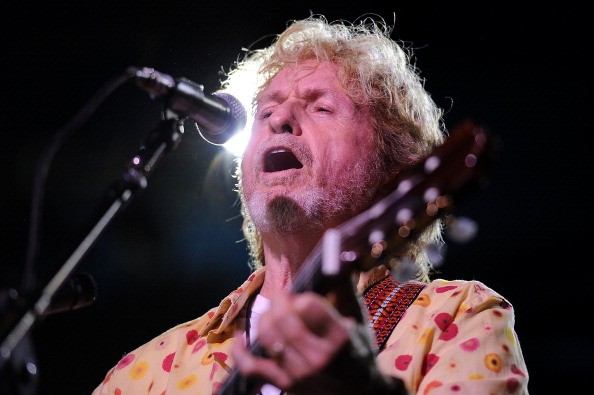
(Photo by Matt Roberts/Getty Images)
Solo Career and Collaborations
Alongside his work with Yes, Anderson pursued a solo career that allowed him to explore more personal and experimental ideas. His early solo albums emphasized atmosphere, texture, and spiritual reflection, often incorporating world music influences and electronic elements.
Anderson was also a prolific collaborator. His partnership with Greek composer Vangelis produced a series of albums under the name Jon and Vangelis, blending electronic soundscapes with melodic songwriting. These projects expanded Anderson's audience and demonstrated his versatility outside the progressive rock framework.
Later Years with Yes
Anderson's relationship with Yes evolved over time, marked by departures, reunions, and lineup changes. He returned to the band for multiple albums and tours, contributing to later-era releases and reaffirming his role as the band's signature voice.
Despite periods of separation, Anderson's influence remained central to the Yes legacy. His songwriting philosophy and vocal style continued to define how fans and critics understood the band's identity, even as new musicians joined and the sound evolved.
Musical Style and Influence
Jon Anderson's vocal style is instantly recognizable, characterized by its clarity, range, and emotional openness. His lyrics often draw on themes of spirituality, nature, and universal connection, favoring impressionistic imagery over literal narrative.
As a songwriter, Anderson emphasized melody and mood, believing music should uplift and inspire. His approach influenced countless progressive rock and art-pop artists, and his voice remains one of the most identifiable in rock history.
Legacy
Jon Anderson's career stands as a testament to artistic vision and longevity. As the co-founder and creative centerpiece of Yes, he helped redefine what rock music could achieve, both musically and philosophically. Through his work with Yes, his solo recordings, and his collaborations, Anderson left an enduring mark on popular music, securing his place as one of rock's most distinctive and influential voices.
/2010/12/Jon-Anderson.jpg)
/2015/06/Chris-Squire1.jpg)
/2015/03/GettyImages-665960406.jpg)
/2019/01/Alan-White.png)
/2016/11/greg-lake.jpg)
/2017/10/Roger-Hodgson.jpg)
/2019/09/Geoff-Downes.jpg)
/2009/09/Jennifer-Aniston.jpg)
/2020/04/Megan-Fox.jpg)
:strip_exif()/2015/09/GettyImages-476575299.jpg)
:strip_exif()/2009/09/P-Diddy.jpg)