
/2015/10/Doug-Clifford1.jpg)
/2014/10/GettyImages-3276086.jpg)
/2015/07/michael-clifford.jpg)
/2019/03/Eric-Martin.jpg)
/2018/04/da.jpg)
/2015/10/Stu-Cook.jpg)
/2009/11/George-Clooney.jpg)
/2009/09/Brad-Pitt.jpg)
/2018/03/GettyImages-821622848.jpg)
/2019/11/GettyImages-1094653148.jpg)
:strip_exif()/2015/09/GettyImages-476575299.jpg)
/2009/09/Cristiano-Ronaldo.jpg)
/2009/09/Jennifer-Aniston.jpg)
/2020/06/taylor.png)
/2019/04/rr.jpg)
/2019/10/denzel-washington-1.jpg)
/2017/02/GettyImages-528215436.jpg)
What is Doug Clifford's net worth?
Doug Clifford is an American rock drummer who has a net worth of $5 million.
Doug Clifford is best known as the steady, hard-driving drummer of Creedence Clearwater Revival, one of the most successful and influential American rock bands of the late 1960s and early 1970s. Nicknamed "Cosmo," Clifford helped define CCR's signature swamp rock sound with his disciplined, no-frills drumming style, anchoring a string of iconic hits including "Proud Mary," "Bad Moon Rising," "Fortunate Son," and "Down on the Corner."
As a founding member, he was part of an extraordinarily productive run that saw the band release seven studio albums in just four years while becoming a dominant force on both the charts and the touring circuit. Although CCR's creative direction was largely controlled by John Fogerty, Clifford's rhythmic precision and consistency were essential to the band's tight, stripped-down sound. After the group's breakup in 1972, he remained active in music through various projects, most notably Creedence Clearwater Revisited, which he co-founded with bassist Stu Cook to perform the band's classic catalog for new generations of fans.
Early Life
Douglas Raymond Clifford was born on April 24, 1945, in Palo Alto, California, and grew up in El Cerrito in the San Francisco Bay Area. He met future bandmates John Fogerty, Tom Fogerty, and Stu Cook while attending school, and the group began playing music together as teenagers.
Clifford developed an early passion for drumming and quickly became known among his peers for his strong sense of timing and work ethic. Influenced by early rock and roll, rhythm and blues, and traditional drummers who emphasized groove over flash, he built a style that prioritized consistency and feel. This approach would later become a defining element of Creedence Clearwater Revival's sound.
Creedence Clearwater Revival
Clifford's professional career took shape in the early 1960s when he joined the band that would evolve from The Blue Velvets into The Golliwogs and eventually Creedence Clearwater Revival in 1967. Alongside John Fogerty, Tom Fogerty, and Stu Cook, he helped form one of the tightest and most commercially successful bands of the era.
Between 1968 and 1972, CCR released a remarkable series of albums, including "Bayou Country," "Green River," "Willy and the Poor Boys," and "Cosmo's Factory," the latter named in part after Clifford's nickname. The band produced an extraordinary number of hit singles in a short period, many of which remain staples of classic rock radio.
Clifford's drumming was central to CCR's sound. He favored a straightforward, driving approach that emphasized groove and clarity, avoiding the extended solos and technical showmanship that were becoming popular among rock drummers at the time. His playing on tracks like "Travelin' Band" and "Up Around the Bend" demonstrated both power and restraint, helping create a rhythm section that was both tight and highly effective.
Despite their success, tensions within the band grew, particularly over John Fogerty's control of songwriting and production. In an attempt to create a more democratic structure, Clifford and Stu Cook contributed more significantly to the 1972 album "Mardi Gras," but the experiment was not well received. Later that year, Creedence Clearwater Revival disbanded.
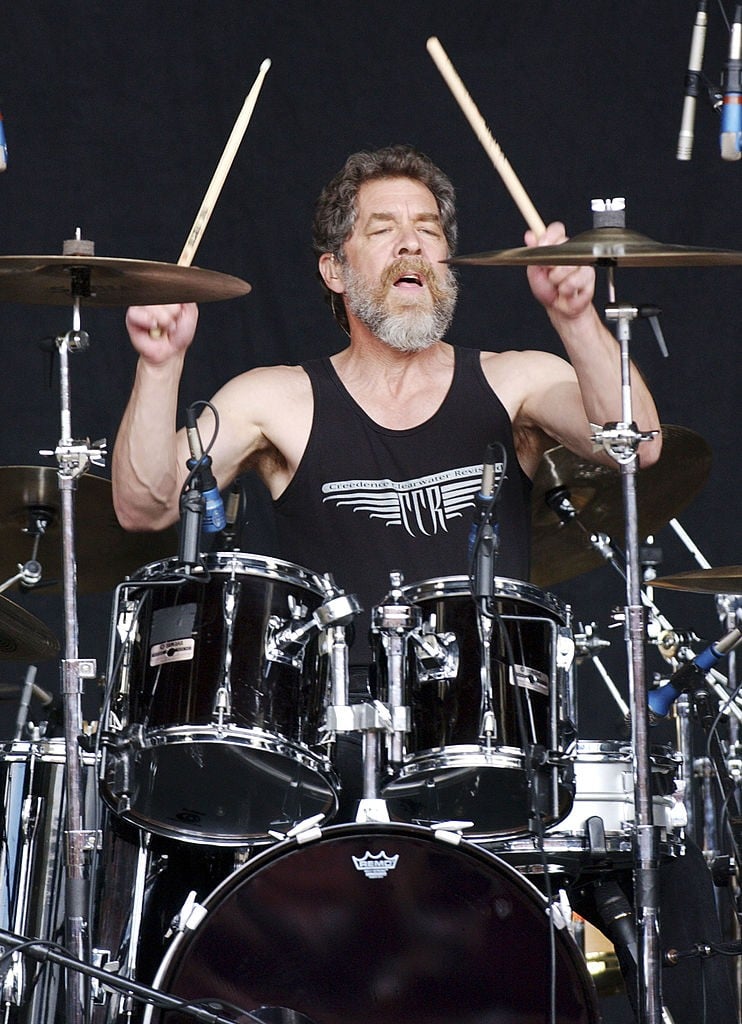
Tim Mosenfelder/Getty Images
Post-CCR Career
After CCR's breakup, Clifford remained active in music, though he largely stayed out of the mainstream spotlight. In the mid-1970s, he released a solo album titled "Cosmo," which allowed him to explore his own musical interests beyond the confines of the band.
In the 1990s, Clifford reunited with Stu Cook to form Creedence Clearwater Revisited. The group focused on performing CCR's classic songs in live settings, giving longtime fans and new audiences the opportunity to experience the music performed by original members of the band. The project proved successful and toured extensively for many years.
Clifford also became involved in business ventures related to the music industry, including running a recording studio and working on music production projects. Throughout his post-CCR career, he maintained a connection to the band's legacy while continuing to explore new creative opportunities.
Musical Style and Influence
Doug Clifford's drumming style is often praised for its simplicity, precision, and effectiveness. Rather than pursuing technical complexity, he focused on creating a solid rhythmic foundation that supported the song. His ability to lock in with bassist Stu Cook gave CCR one of the most dependable rhythm sections in rock.
Clifford's playing drew from a range of influences, including rock and roll, blues, country, and New Orleans rhythm traditions. This blend helped shape CCR's distinctive sound, which stood apart from many of their contemporaries.
His work has influenced generations of drummers who value groove and discipline over flash. Songs like "Run Through the Jungle" and "Have You Ever Seen the Rain" highlight his ability to create atmosphere and momentum with relatively simple patterns, demonstrating that restraint can be just as powerful as technical virtuosity.
Later Years
In 1993, Clifford was inducted into the Rock and Roll Hall of Fame as a member of Creedence Clearwater Revival, cementing his place in music history. Over the years, he has participated in interviews and retrospectives that provide insight into the band's rapid rise and the internal conflicts that ultimately led to its breakup.
Clifford has also spoken openly about the challenges of life after CCR, including financial and personal struggles that followed the band's dissolution. Despite these challenges, he remained resilient and continued to perform and engage with fans through live music and public appearances.
Although he stepped back from extensive touring later in life, Doug Clifford's legacy endures through the timeless music of Creedence Clearwater Revival. His steady, unpretentious drumming helped define an era of American rock and continues to resonate with listeners decades after the band's peak.
/2015/10/Doug-Clifford1.jpg)
/2015/10/Stu-Cook.jpg)
/2015/07/GettyImages-484742062.jpg)
/2019/03/Eric-Martin.jpg)
/2015/02/Dennis-Dunaway-1.jpg)
/2018/07/Carlos-Marín.jpg)
/2014/11/GettyImages-459115146-e1587506061780.jpg)
/2020/02/Angelina-Jolie.png)