
/2014/08/GettyImages-462450834.jpg)
/2013/09/GettyImages-95621045.jpg)
/2009/11/Axl-Rose.jpg)
/2019/04/brian-bell.png)
/2012/03/GettyImages-489914213.jpg)
/2011/12/is.jpg)
/2019/04/rr.jpg)
:strip_exif()/2009/09/P-Diddy.jpg)
/2017/02/GettyImages-528215436.jpg)
/2009/09/Brad-Pitt.jpg)
/2009/11/George-Clooney.jpg)
/2009/09/Jennifer-Aniston.jpg)
/2020/06/taylor.png)
/2020/02/Angelina-Jolie.png)
/2009/09/Cristiano-Ronaldo.jpg)
:strip_exif()/2015/09/GettyImages-476575299.jpg)
/2019/10/denzel-washington-1.jpg)
What is Dizzy Reed's Net Worth?
Dizzy Reed is an American musician and actor who has a net worth of $40 million.
Dizzy Reed is best known as the longtime keyboardist for the rock band Guns N' Roses, one of the most successful and influential groups in modern music history. Joining the band in 1990 at the height of its global fame, Reed became the sixth and longest-serving member outside of the original lineup, contributing to the band's evolving sound during its most ambitious and commercially successful period. His keyboard work added layers of texture to Guns N' Roses' hard rock foundation, particularly on the "Use Your Illusion I" and "Use Your Illusion II" albums, which showcased a more expansive and experimental approach.
Over the decades, Reed has remained a steady presence within a band often defined by lineup changes and internal conflict, earning a reputation for professionalism and musical versatility. In addition to his work with Guns N' Roses, he has pursued solo projects, collaborated with other artists, and remained active in various musical ventures. His longevity within one of rock's most turbulent bands has made him a unique figure in the genre, bridging the group's peak years with its modern revival.
Early Life
Dizzy Reed was born Darren Arthur Reed on June 18, 1963, in Hinsdale, Illinois. He grew up in Colorado, where he developed an early interest in music. Reed began playing piano as a child, showing a natural aptitude for the instrument that would later define his career.
During his teenage years, he immersed himself in rock music and began performing with local bands. His early experiences playing live helped him develop the technical skills and stage presence necessary to succeed in a competitive music scene.
After graduating from high school, Reed relocated to Los Angeles to pursue a career in music, joining the wave of aspiring musicians drawn to the city's thriving rock scene in the 1980s.
Early Career and Hollywood Scene
Before joining Guns N' Roses, Reed was involved in several bands within the Los Angeles rock circuit. He was a member of the group The Wild, where he gained valuable experience performing and recording.
Like many musicians of the era, Reed navigated the challenges of the competitive Sunset Strip scene, building connections and refining his craft. His keyboard-driven style, which blended rock, blues, and classical influences, helped him stand out in a genre typically dominated by guitarists.
These early years laid the groundwork for the opportunity that would ultimately define his career.
Joining Guns N' Roses
Dizzy Reed joined Guns N' Roses in 1990, just as the band was preparing to expand its sound and lineup. At the time, the core group featured Axl Rose, Slash, Duff McKagan, Izzy Stradlin, and Steven Adler, though Adler would soon be replaced by drummer Matt Sorum during the band's next phase. Reed was introduced to the group through mutual connections and quickly proved to be a strong fit musically and personally. Unlike many lineup changes in the band's history, Reed did not replace an existing member. Instead, Guns N' Roses expanded to include a full-time keyboardist, adding a new dimension to their sound.
His addition allowed the band to incorporate more complex arrangements, adding piano, organ, and synthesizer elements to their music. This expanded sonic palette became a defining feature of the "Use Your Illusion" era.
Reed made his debut with the band on the albums "Use Your Illusion I" and "Use Your Illusion II," both released in 1991. The albums were massive commercial successes and included some of the band's most iconic songs, such as "November Rain," where Reed's piano work played a central role.
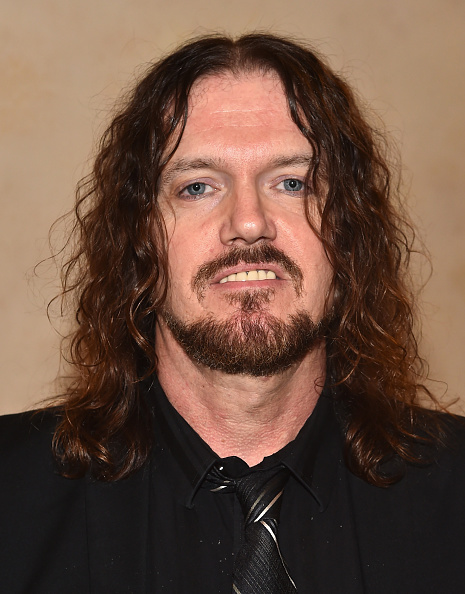
Getty Images
Life Inside Guns N' Roses
Throughout the 1990s and beyond, Guns N' Roses became known as much for its internal conflicts as for its music. Lineup changes, creative differences, and long gaps between releases defined much of the band's history.
Amid this instability, Reed remained a constant presence. His ability to adapt to different musical directions and work with changing band members helped him maintain his role within the group.
He contributed to later projects, including the long-delayed album "Chinese Democracy," which was released in 2008 after years of development. His continued involvement with the band through multiple eras made him one of its most enduring members.
When Guns N' Roses reunited key members for the "Not in This Lifetime" tour in 2016, Reed was part of the lineup, further solidifying his place in the band's history.
Solo Work and Collaborations
Outside of Guns N' Roses, Dizzy Reed has pursued various solo and collaborative projects. He released his debut solo album, "Rock 'n Roll Ain't Easy," in 2018, showcasing his abilities as a vocalist, songwriter, and multi-instrumentalist.
The album reflected his personal musical influences and allowed him to step out from behind the keyboard to take on a more central creative role. He has also collaborated with other musicians and participated in side projects that highlight his versatility.
These ventures demonstrate his commitment to music beyond his primary role in one of rock's biggest bands.
Musical Style and Influence
Dizzy Reed's playing style is characterized by its adaptability and emphasis on enhancing the overall sound of a band rather than dominating it. His contributions often provide depth and atmosphere, whether through piano-driven ballads or subtle keyboard textures in harder rock tracks.
In a genre where keyboards are sometimes secondary, Reed has shown how they can play a crucial role in shaping a band's identity. His work on songs like "November Rain" remains one of the most recognizable uses of piano in rock music.
Personal Life
Reed has maintained a relatively low public profile compared to many of his bandmates. He has focused primarily on his music career and family life, avoiding much of the controversy that has surrounded Guns N' Roses over the years.
His steady presence both on and off stage has contributed to his reputation as a reliable and grounded figure within the rock community.
Legacy
Dizzy Reed's legacy is closely tied to his role in Guns N' Roses, where he has been a key contributor for more than three decades. As the band's longest-serving member outside of its original lineup, he represents continuity in a group often marked by change.
His ability to adapt, collaborate, and consistently deliver strong performances has earned him respect within the music industry. While he may not always be the most visible member of the band, his contributions have been essential to its sound and longevity.
Through his work with Guns N' Roses and his own projects, Reed has secured a lasting place in rock music history as a musician whose influence is felt as much in the background as it is in the spotlight.
/2014/08/GettyImages-462450834.jpg)
/2011/12/is.jpg)
/2013/09/GettyImages-95621045.jpg)
/2009/11/Axl-Rose.jpg)
/2015/03/GettyImages-665960406.jpg)
/2019/04/brian-bell.png)
/2018/07/Simon-Gallup.jpg)
/2019/01/Alan-White.png)
/2019/11/GettyImages-1094653148.jpg)
/2020/01/lopez3.jpg)
/2018/03/GettyImages-821622848.jpg)
/2020/04/Megan-Fox.jpg)