
/2014/08/dee-dee-ramone.jpg)
/2012/07/marky-ramone-1.jpg)
/2015/08/Dee-Dee-Davis.jpg)
/2017/08/bg.jpg)
/2019/03/Bill-Stevenson.jpg)
/2014/09/johnny-ramone.jpg)
/2020/01/lopez3.jpg)
/2009/09/Brad-Pitt.jpg)
/2020/06/taylor.png)
/2019/11/GettyImages-1094653148.jpg)
/2018/03/GettyImages-821622848.jpg)
/2019/10/denzel-washington-1.jpg)
/2009/09/Cristiano-Ronaldo.jpg)
/2020/04/Megan-Fox.jpg)
/2020/02/Angelina-Jolie.png)
/2009/09/Jennifer-Aniston.jpg)
:strip_exif()/2015/09/GettyImages-476575299.jpg)
What was Dee Dee Ramone's Net Worth?
Dee Dee Ramone was a German-American songwriter and musician who had a net worth of $500 thousand.
Dee Dee Ramone was a founding member, primary songwriter, and emotional engine of the Ramones, whose raw energy and brutally concise songs helped invent punk rock. As the band's bassist and most prolific writer, Dee Dee supplied the Ramones with their voice of desperation, humor, boredom, and rage, distilling chaotic inner life into two-minute explosions that permanently altered popular music. While Johnny Ramone enforced discipline and structure, Dee Dee provided volatility, vulnerability, and melody, making him the creative counterweight that gave the band its soul.
Dee Dee wrote or co-wrote many of the Ramones' defining songs, including "Blitzkrieg Bop," "Rockaway Beach," "Teenage Lobotomy," "Sheena Is a Punk Rocker," and "Poison Heart." His lyrics were simple on the surface but emotionally loaded, capturing alienation, addiction, paranoia, and childish joy with startling directness. Though the Ramones never became mainstream hitmakers, their influence spread globally, and Dee Dee's songwriting became a template for generations of punk, hardcore, and alternative musicians. His life, marked by addiction, instability, and restless creativity, mirrored the contradictions at the heart of punk itself.
Early Life
Dee Dee Ramone was born Douglas Glenn Colvin on September 18, 1951, in Fort Lee, Virginia. His father served in the U.S. Army, and Dee Dee spent much of his childhood moving between military bases in the United States, Japan, and Germany. He later wrote that his upbringing was marked by violence, instability, and heavy drinking by both parents, experiences that left lasting psychological scars.
After his parents separated, Dee Dee moved with his mother and sister to New York City in the late 1960s. They settled in Forest Hills, Queens, where he struggled in school, experimented with drugs, and drifted toward petty crime. Music became both an escape and an outlet for his anger, confusion, and energy.
Formation of the Ramones
In Forest Hills, Dee Dee fell in with a group of similarly alienated young men, including Johnny Ramone and Joey Ramone. Together with Tommy Ramone, they formed the Ramones in 1974.
Dee Dee initially struggled with his instrument but compensated with intensity and songwriting instinct. His shouted count-offs of "one, two, three, four" became a signature of the band's live shows. Playing regularly at CBGB in New York, the Ramones developed a sound that rejected musical complexity in favor of speed, volume, and melody, creating something radically new.
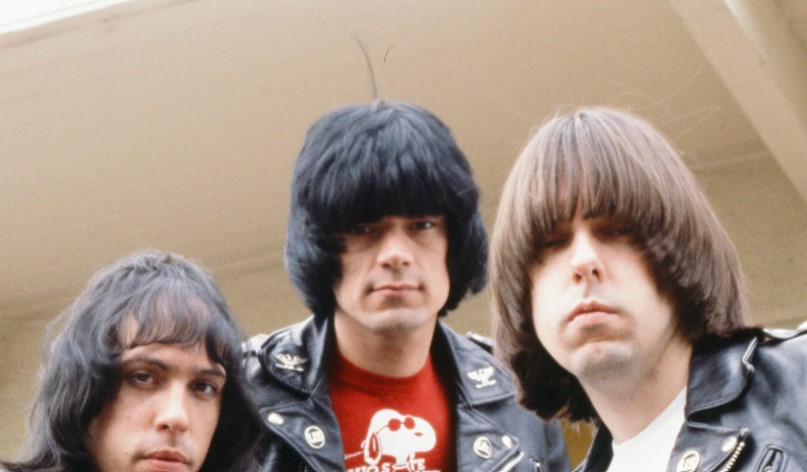
Getty
Songwriting and Punk Foundations
Dee Dee was the Ramones' most important songwriter. He had an instinct for pop hooks filtered through aggression and absurdity. Songs like "Blitzkrieg Bop" turned teenage frustration into chant-along anthems, while "Rockaway Beach" delivered pure joy at breakneck speed. Others, such as "Teenage Lobotomy," hinted at paranoia and mental collapse beneath the humor.
Across their early albums, including "Ramones," "Leave Home," "Rocket to Russia," and "Road to Ruin," Dee Dee's writing defined punk rock's emotional range. His later songs grew darker and more introspective, reflecting his worsening struggles with addiction and mental health, yet retained the same blunt clarity.
Addiction and Volatility
Dee Dee's life was shaped by long-term heroin addiction, mood swings, and impulsive behavior. Friends and collaborators described him as charming and childlike one moment, explosive and self-destructive the next. His volatility strained relationships within the band and made touring increasingly difficult.
Despite repeated attempts at sobriety, addiction remained a constant presence. Dee Dee later chronicled these struggles in his autobiography, "Lobotomy: Surviving the Ramones," which offered a brutally honest account of life inside one of rock's most influential bands.
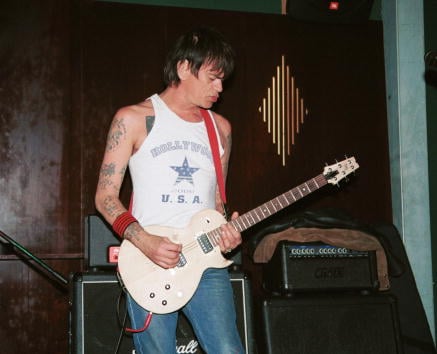
Getty Images
Leaving the Band and Solo Work
In 1989, exhausted by years of touring and internal conflict, Dee Dee left the Ramones. He briefly attempted a radical reinvention with a rap album, "Standing in the Spotlight," before returning to punk-oriented solo work. He continued writing songs for the Ramones even after his departure.
Throughout the 1990s, Dee Dee released several solo albums, including "I Hate Freaks Like You," "Zonked!!," and "Greatest and Latest." He also wrote fiction, publishing the novel "Chelsea Horror Hotel," and continued performing sporadically. His work remained restless and uneven but driven by genuine creative urgency.
Final Years and Death
In his final years, Dee Dee lived in Los Angeles and continued to perform, write, and create visual art in collaboration with the Ramones' longtime art director Arturo Vega. Friends believed he had moved past heroin, though his history of relapse loomed.
Dee Dee Ramone died on June 5, 2002, at the age of 50, from an apparent heroin overdose. His death came one year after Joey Ramone's and two years before Johnny Ramone's, marking the loss of another core architect of punk rock.
Legacy
Dee Dee Ramone was the Ramones' heartbeat and its most human presence. His songwriting captured joy, fear, boredom, and pain in their rawest forms, giving punk rock its emotional vocabulary. Though his life was chaotic and often tragic, his influence is immeasurable. Every fast, loud, honest punk song owes something to Dee Dee Ramone, a true rock star who turned damage into art.
/2014/08/dee-dee-ramone.jpg)
/2014/09/johnny-ramone.jpg)
/2014/07/Tommy-Ramone.png)
/2012/07/marky-ramone-1.jpg)
/2022/09/joey-ramone.jpg)
/2019/03/Bill-Stevenson.jpg)
/2020/06/ml-1.jpg)
/2011/01/Jason-Wade.jpg)
/2017/02/GettyImages-528215436.jpg)
:strip_exif()/2009/09/P-Diddy.jpg)
/2019/04/rr.jpg)