













What is Bobby Rush's Net Worth?
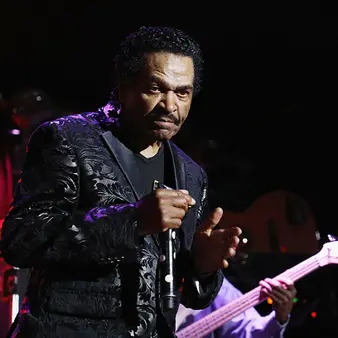
Bobby Rush is an American blues singer, songwriter, guitarist, harmonica player, and record producer who has a net worth of $2 million.
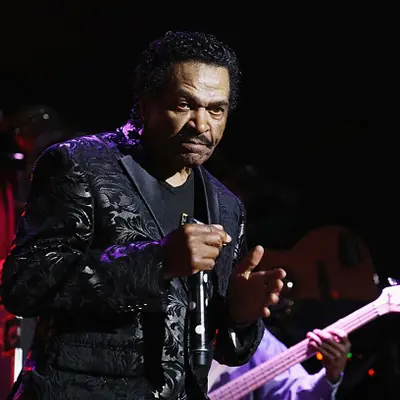
Bobby Rush is one of the longest-performing musicians in American blues history, with a career spanning more than seven decades. Known as the "King of the Chitlin' Circuit," Rush developed a distinctive musical style that combines traditional blues, soul, funk, and humor, which he calls "folk-funk." His best-known recordings include "Chicken Heads," "Sue," "I Ain't Studdin' You," and "Hoochie Man." Unlike many blues performers who achieved widespread recognition early in their careers, Rush spent decades performing in predominantly Black clubs throughout the American South before reaching a broader international audience. He eventually won three Grammy Awards, receiving his first in 2017 when he was in his 80s. His other honors include induction into the Blues Hall of Fame and numerous Blues Music Awards.
Rush has released dozens of albums and written hundreds of songs while maintaining an unusually active touring career. He has also operated his own record label, Deep Rush Records, which has distributed several of his later albums. His career has included collaborations with Buddy Guy, B.B. King, and Kenny Wayne Shepherd, along with appearances in films and documentaries. His life story inspired a stage musical, while his autobiography chronicled his journey from poverty in rural Louisiana to international recognition.
Early Life
Bobby Rush was born Emmett Ellis Jr. on November 10, 1933, in Homer, Louisiana. He grew up in a poor farming family, and his father, Emmett Ellis Sr., was a Baptist minister who played guitar and harmonica. Rush developed an interest in music as a child, making his first instruments from household materials, including a homemade guitar constructed with broom wire.
His family moved to Pine Bluff, Arkansas, during the 1940s. There, Rush became involved in the local blues scene and encountered musicians including Elmore James and Johnny "Big Moose" Walker. He began performing in local clubs while still a teenager, sometimes wearing a fake mustache to appear older. He adopted the stage name Bobby Rush partly to distinguish his secular music career from his father's religious work.
Chicago Blues and Early Recordings
In 1953, Rush moved to Chicago, where he became part of the city's thriving electric blues scene. He performed alongside musicians including Muddy Waters, Little Walter, Jimmy Reed, and Howlin' Wolf. He also led bands that featured future blues stars such as Freddie King and Luther Allison.
Rush recorded his first commercial single, "Sock Boo Ga Loo," for Checker Records in 1967. By this point, he had developed a performance style that combined blues singing with energetic dancing, suggestive humor, and audience participation.
His breakthrough arrived in 1971 with "Chicken Heads," a funky blues recording that became his first major hit. The song helped establish his reputation on the Southern club circuit and remained one of his signature recordings for decades.
King of the Chitlin' Circuit
Rather than concentrating on mainstream rock audiences, Rush developed an exceptionally loyal following on the Chitlin' Circuit, a network of clubs, theaters, and other venues that historically served African American audiences during segregation.
His live performances became famous for their theatricality. Rush frequently incorporated dancers, comedy routines, costume changes, and provocative lyrics, creating a show that appealed to audiences looking for both music and entertainment.
In 1979, Rush released his first full-length album, "Rush Hour," produced by Kenny Gamble and Leon Huff. During the 1980s, he continued releasing recordings including "Sue," "Gotta Have Money," "What's Good for the Goose Is Good for the Gander," and "A Man Can Give It (But He Can't Take It)."
He relocated to Jackson, Mississippi, during the early 1980s, putting himself closer to his Southern audience. His reputation as an extraordinarily hardworking performer grew through years of extensive touring, often involving hundreds of performances annually.

Getty
Grammy Awards and Late-Career Success
Rush experienced a remarkable career resurgence during the 2000s and 2010s. His albums "Hoochie Man," "Down in Louisiana," and "Decisions" earned Grammy nominations, while his live performances attracted growing attention from blues festivals and international audiences.
In 2006, he was inducted into the Blues Hall of Fame. His first Grammy victory came in 2017 when "Porcupine Meat," released the previous year, won Best Traditional Blues Album. The recording featured guest appearances by Joe Bonamassa, Dave Alvin, and Keb' Mo'.
He won his second Grammy in 2021 for "Rawer Than Raw," an acoustic collection featuring interpretations of traditional blues recordings. His third victory followed in 2024 for "All My Love for You," an album released through Deep Rush Records and Thirty Tigers.
By then, Rush had established himself as one of the most celebrated surviving musicians of the postwar blues generation.
Later Albums, Films, and Musical
Rush continued making new music well into his 90s. In 2025, he collaborated with Kenny Wayne Shepherd on "Young Fashioned Ways," an album recorded at Royal Studios in Memphis. The project received a Grammy nomination for Best Traditional Blues Album.
In 2026, he released an expanded tenth-anniversary edition of "Porcupine Meat," featuring previously unreleased recordings. His life was also the subject of "Bobby Rush: King of the Chitlin' Circuit," a documentary produced by Mississippi Public Broadcasting.
That year, "Slippin' Through the Cracks: The Bobby Rush Musical" premiered at New Stage Theatre in Jackson, Mississippi. The production traced his journey from the segregated South to Grammy recognition, using his music to tell the story.
Rush has also appeared in the documentary "The Road to Memphis" and the 2019 Netflix film "Dolemite Is My Name," starring Eddie Murphy.
Record Label and Career Earnings
Rush's earnings have come primarily from live performances, recording contracts, songwriting royalties, and music publishing. His unusually long career has allowed him to generate income across several generations of blues audiences.
He established Deep Rush Records to maintain greater control over his recordings and later partnered with independent distributor Thirty Tigers. Albums including "Sitting on Top of the Blues," "Rawer Than Raw," and "All My Love for You" were released through that arrangement.
Unlike major pop or rock performers, Rush achieved much of his commercial success through sustained touring rather than blockbuster record sales. His catalog, which includes hundreds of compositions, has also created opportunities for licensing and royalty income.
Rush's autobiography, "I Ain't Studdin' Ya: My American Blues Story," written with Herb Powell and published in 2021, added another dimension to his business activities. The book documented his life in music, including the financial struggles, racial barriers, and personal tragedies he experienced before achieving mainstream recognition.
Personal Life
Rush has endured significant personal hardships, including the deaths of three children from sickle cell anemia. He has also survived a serious touring-bus accident and other difficult experiences that he discusses in his autobiography.
Despite these losses, Rush has continued performing and recording while advocating for the preservation of traditional blues music. His longevity and willingness to collaborate with younger artists have helped introduce the genre to new generations of listeners.