














What Is Adrian Belew's Net Worth?
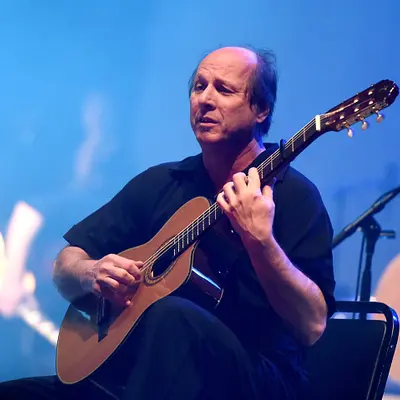
Adrian Belew is an American guitarist, singer, songwriter, and record producer who has a net worth of $8 million. Belew is best known for his nearly three-decade association with the progressive rock band King Crimson and for his collaborations with some of the most influential musicians in rock history. His career has included recording and touring with David Bowie, Frank Zappa, Talking Heads, Paul Simon, and Nine Inch Nails, alongside an extensive catalog of solo recordings. His distinctive guitar technique, which frequently incorporates unusual electronic effects and sounds resembling animals, machines, and human voices, has made him one of rock music's most recognizable experimental guitarists.
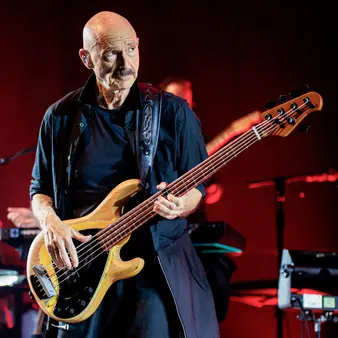
Belew's financial success comes from a combination of touring, recording contracts, songwriting royalties, session work, and independent music ventures. One particularly valuable source of income is his songwriting interest in Tom Tom Club's 1981 hit "Genius of Love," which has been sampled in nearly 200 songs, including Mariah Carey's "Fantasy" and Latto's "Big Energy." Belew has confirmed that he receives ongoing royalties from those recordings. Beyond his work with King Crimson, he has released more than 20 solo albums, performed with the power-pop group The Bears, and developed experimental music applications. He also helped launch BEAT, a touring supergroup featuring Steve Vai and Tony Levin that revisits King Crimson's groundbreaking 1980s catalog.
Early Life
Adrian Belew was born Robert Steven Belew on December 23, 1949, in Covington, Kentucky. He grew up in the Cincinnati metropolitan area and developed an early fascination with music, particularly the sounds of the Beatles and the emerging British Invasion. He initially studied drums and played in his high school's marching band before joining a local rock group called the Denems.
At 16, Belew contracted mononucleosis and was confined to bed for several weeks. Unable to play drums, he borrowed a guitar from a bandmate and began teaching himself to play. By the time he recovered, he had written several original songs and developed an unconventional approach to chords and melodies.
Rather than studying conventional guitar techniques, Belew learned by listening to recordings and attempting to reproduce the sounds he heard. His influences included Jimi Hendrix, Jeff Beck, the Beatles, and guitarist Lonnie Mack. He eventually began experimenting with effects pedals, feedback, and unusual playing techniques, laying the groundwork for the distinctive style that would later define his career.
In the mid-1970s, he adopted the first name Adrian and moved to Nashville to pursue professional opportunities. He joined the cover band Sweetheart, which performed regularly in clubs throughout the region.
Discovery by Frank Zappa
Belew's professional breakthrough came in 1977 when Frank Zappa attended a performance by Sweetheart at Fanny's Bar in Nashville. Zappa had been directed to the club by his chauffeur and was impressed by Belew's unusual guitar playing and ability to sing while performing complicated instrumental passages.
Zappa invited him to audition for his touring band. Despite lacking formal musical training and being unable to read standard notation, Belew won the position and spent several months rehearsing Zappa's demanding compositions. He later described working with Zappa as an intensive education in both music and the professional recording business.
Belew joined Zappa's touring ensemble in 1978 and appeared in the concert film "Baby Snakes." His contributions were also featured on the 1979 album "Sheik Yerbouti," including the song "Flakes," on which he performed a memorable imitation of Bob Dylan.
The experience immediately raised Belew's profile among established musicians. Zappa's endorsement effectively transformed him from a regional club performer into an internationally touring professional guitarist.
Working with David Bowie
While touring with Zappa in 1978, Belew attracted the attention of David Bowie, who attended a performance in Berlin. Bowie subsequently recruited him as lead guitarist for his world tour, beginning a professional relationship that would span more than a decade.
Belew appeared on Bowie's 1978 live album "Stage" and contributed guitar to the 1979 studio album "Lodger." The latter was recorded with producer Brian Eno and featured an experimental approach in which Belew was sometimes asked to improvise without knowing the key or structure of the music. His unpredictable playing became an important element of the album's unusual sound.
In 1990, Bowie recruited Belew again, this time as guitarist and musical director for the massive "Sound+Vision" world tour. The production featured an extensive collection of Bowie's best-known songs and required Belew to recreate guitar parts originally performed by numerous different musicians.
Their collaboration also produced the single "Pretty Pink Rose," which appeared on Belew's 1990 solo album "Young Lions." The duet reached number two on Billboard's Modern Rock chart and became one of Belew's most commercially successful recordings.

Getty
Talking Heads and "Genius of Love"
Belew became closely associated with Talking Heads during the recording of their acclaimed 1980 album "Remain in Light." Working with David Byrne and Brian Eno, he contributed experimental guitar performances to songs including "The Great Curve." His combination of distortion, feedback, and unusual rhythmic phrasing helped complement the album's intricate, funk-influenced arrangements.
He subsequently joined the expanded Talking Heads touring ensemble, participating in performances that helped establish the group as one of the most innovative live acts of the era. Recordings from those concerts appeared on the 1982 live album "The Name of This Band Is Talking Heads."
Belew also worked with Talking Heads members Chris Frantz and Tina Weymouth on their side project, Tom Tom Club. He contributed guitar to the group's self-titled 1981 debut album and helped create the infectious riff underlying "Genius of Love."
The song became a major dance and R&B hit and eventually developed an extraordinary afterlife through sampling. Its instantly recognizable instrumental groove was incorporated into Mariah Carey's 1995 number-one single "Fantasy" and later into rapper Latto's hit "Big Energy."
In a 2026 interview with Vulture, Belew revealed that "Genius of Love" had been sampled in nearly 200 recordings. He explained that an applicable royalty arrangement allocated 32% to the original composition, with 8% going to each of its four writers, including himself. The continuing popularity of the song has provided Belew with an important source of recurring income decades after its original release.
King Crimson and Progressive Rock Success
In 1981, Belew joined a newly reformed King Crimson alongside founding guitarist Robert Fripp, bassist Tony Levin, and drummer Bill Bruford. Belew became the group's lead vocalist, principal lyricist, and second guitarist, marking a significant departure from the band's earlier sound.
The lineup released three influential albums: "Discipline" in 1981, "Beat" in 1982, and "Three of a Perfect Pair" in 1984. These recordings incorporated interlocking guitar patterns, unusual time signatures, electronic effects, and influences from funk, new wave, and minimalist music.
Belew helped create some of the group's most recognizable songs, including "Elephant Talk," "Frame by Frame," "Thela Hun Ginjeet," "Heartbeat," and "Sleepless." His expressive singing and melodic songwriting provided an accessible counterpoint to Fripp's intricate instrumental compositions.
After King Crimson disbanded in 1984, Belew concentrated on his solo career and other projects. He reunited with Fripp in the 1990s when King Crimson returned with an expanded six-member lineup, releasing the album "THRAK" in 1995.
The group subsequently recorded "The ConstruKction of Light" in 2000 and "The Power to Believe" in 2003. Belew remained associated with King Crimson through its later performances in the 2000s, although he was not part of the lineup assembled by Fripp in 2013.
His years with King Crimson established him as a central figure in progressive rock. The group's recordings have continued to influence generations of guitarists and generate income through catalog sales, streaming, and reissues.
Solo Albums and Chart Success
Belew began his solo recording career with "Lone Rhino" in 1982, followed by "Twang Bar King" in 1983. Both albums showcased his ability to combine experimental guitar sounds with melodic pop songwriting, often performing multiple instruments himself.
His 1986 album "Desire Caught by the Tail" concentrated on instrumental experimentation, while 1989's "Mr. Music Head" brought his greatest commercial breakthrough as a solo artist. The album featured "Oh Daddy," a playful song recorded with his young daughter Audie, which reached number five on Billboard's Modern Rock chart and number 58 on the Hot 100.
Belew followed that success with "Young Lions" in 1990 and "Inner Revolution" in 1992. He continued releasing albums throughout the decade, including "Here," "The Guitar as Orchestra," and "Op Zop Too Wah."
During the 2000s, he released the experimental albums "Side One," "Side Two," and "Side Three," incorporating contributions from musicians including Les Claypool of Primus and Danny Carey of Tool. The instrumental "Beat Box Guitar" earned him a Grammy nomination for Best Rock Instrumental Performance in 2006.
His subsequent solo releases included "e," "Pop Sided," and "Elevator." In 2024, he released "A Toe in the Ocean," a collection of previously overlooked recordings from his extensive catalog.
The Bears, Nine Inch Nails, and Other Collaborations
Outside King Crimson, Belew formed the power-pop band The Bears with guitarist Rob Fetters, bassist Bob Nyswonger, and drummer Chris Arduser. The group released its self-titled debut album in 1987, followed by "Rise and Shine" in 1988. Although the band never achieved major commercial success, it developed a loyal following and later reunited for additional recordings, including "Car Caught Fire" and "Eureka!"
Belew also became a sought-after session musician, contributing distinctive guitar performances to albums by Laurie Anderson, Herbie Hancock, and Paul Simon. His work on Simon's Grammy-winning 1986 album "Graceland" included experimental guitar-synthesizer textures, notably on "You Can Call Me Al."
During the 1990s, Belew began a collaboration with Trent Reznor and Nine Inch Nails. He contributed to the acclaimed 1994 album "The Downward Spiral" and later appeared on "The Fragile," "Ghosts I–IV," and "Hesitation Marks."
In 2017, he joined the supergroup Gizmodrome alongside Police drummer Stewart Copeland, Level 42 bassist Mark King, and Italian keyboardist Vittorio Cosma. The band released its self-titled debut album that year, combining progressive rock with new wave and experimental pop.
BEAT and the Return of King Crimson's Music
In 2024, Belew teamed with former King Crimson bassist Tony Levin, guitarist Steve Vai, and Tool drummer Danny Carey to form BEAT. The project was dedicated to reinterpreting music from King Crimson's influential 1981–1984 period.
The original North American tour proved considerably more successful than anticipated. What began as a proposed run of approximately 40 performances expanded to 65 concerts, with Belew reporting that the shows sold out. The group's success demonstrated continued demand for music that King Crimson had originally recorded more than four decades earlier.
BEAT subsequently toured internationally, including performances in South America, Japan, and Europe. In 2025, the group released a live album recorded during its Los Angeles performances.
The band's lineup changed in 2026 when drummer Terry Bozzio, another former Frank Zappa collaborator, replaced Carey because of his commitments with Tool. Belew continued leading the project alongside Levin and Vai, performing an expanded selection of King Crimson material.
He has also toured with Talking Heads guitarist and keyboardist Jerry Harrison, revisiting the music of "Remain in Light." These projects have provided Belew with substantial ongoing touring activity and opportunities to introduce his earlier recordings to new audiences.
Guitar Technology and Business Ventures
Belew's unusual guitar sound has become one of his defining artistic trademarks. He is particularly famous for reproducing the sounds of elephants, rhinoceroses, birds, industrial machinery, and electronic synthesizers using a combination of guitar effects, unconventional playing techniques, and pitch manipulation.
His interest in instrument design led to a collaboration with Parker Guitars on the Adrian Belew Signature Fly. The instrument incorporated advanced electronics, MIDI capabilities, a Sustainiac pickup, and Line 6 Variax technology, allowing him to produce an unusually wide variety of sounds from a single guitar.
He also developed experimental music applications, including "FLUX by belew" and "FLUX:FX," which allowed users to experience changing musical compositions and manipulate audio in unconventional ways.
Belew has operated recording studios from his own properties, including a custom facility established at his Nashville-area home during the 1990s. His independent recording and distribution efforts have allowed him to exercise greater control over his later releases than he enjoyed under traditional major-label contracts.
Personal Life
Belew was previously married to artist Margaret Belew, who contributed artwork to several of his early recordings. The couple had two children, Audie and Ernie, before divorcing around the beginning of the 1990s.
He subsequently married Martha Thompson, who also became involved in the business side of his musical career. Belew has credited Martha with encouraging him to pursue greater financial control over his recordings, including rerecording earlier compositions and releasing them independently. The couple have a daughter named Iris.
Belew has spent much of his adult life in Tennessee, where he has maintained a home recording studio and continued composing and experimenting with musical technology. Despite his extensive history of international touring, he has frequently emphasized the importance of family and the satisfaction he receives from creating music outside the conventional recording industry.