




What Is Adam Clayton's Net Worth?
Adam Clayton is an English-born Irish musician who has a net worth of $400 million.
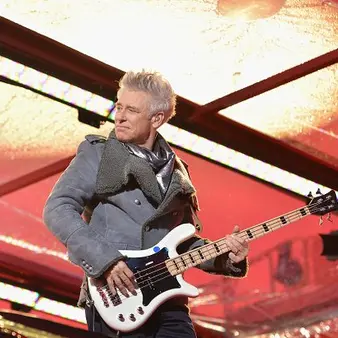
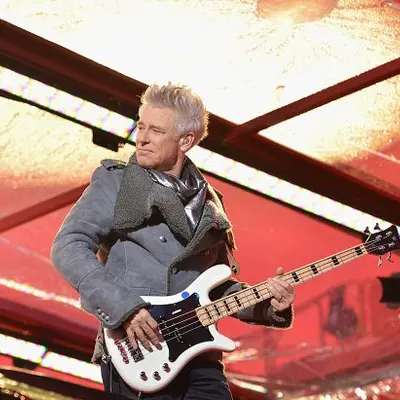
Adam Clayton is best known as the bassist and a founding member of U2, one of the most commercially successful rock bands in history. Since forming in Dublin in 1976, U2 has sold more than 175 million albums worldwide, won 22 Grammy Awards, and generated billions of dollars in concert ticket sales. The band has maintained the same four core members for five decades: Clayton, vocalist Bono, guitarist The Edge, and drummer Larry Mullen Jr. Their recordings include some of the most influential rock albums ever released, including "The Joshua Tree," "Achtung Baby," and "All That You Can't Leave Behind." U2 was inducted into the Rock and Roll Hall of Fame in 2005.
Clayton's understated but distinctive bass playing has provided the rhythmic foundation for many of U2's most recognizable songs, including "With or Without You," "New Year's Day," and "Mysterious Ways." Alongside his bandmates, he has participated in enormously successful tours, including the record-breaking "U2 360° Tour," which grossed $736 million, and the band's 40-show Las Vegas Sphere residency, which generated $244.5 million in ticket sales. Outside U2, Clayton has contributed to film soundtracks, collaborated with other recording artists, and developed an interest in historic architecture and landscape restoration. His most significant personal property is Danesmoate House, a Georgian estate outside Dublin where U2 recorded much of "The Joshua Tree" before Clayton purchased the property in 1988.
Early Life
Adam Charles Clayton was born on March 13, 1960, in Chinnor, Oxfordshire, England. His father, Brian Clayton, served as a pilot in the Royal Air Force before moving into commercial aviation, while his mother, Jo, worked as an airline stewardess. When Adam was four, the family relocated to Nairobi, Kenya, after his father accepted a position with East African Airways. They moved to Ireland in 1965 and settled in Malahide, north of Dublin.
Clayton attended Castle Park School in Dalkey, where he struggled with the school's emphasis on academics and athletics. Music became an important outlet, and he joined a school society devoted to listening to classical recordings. He also took piano lessons before developing an interest in rock music.
At 13, Clayton began attending St. Columba's College in Dublin. Influenced by bands including The Who, The Beatles, and the Grateful Dead, he purchased an acoustic guitar for £5 and began teaching himself to play. He soon developed an interest in the bass guitar, and his mother purchased one after he promised to practice seriously.
Clayton eventually transferred to Mount Temple Comprehensive School, where he became acquainted with the students who would form U2. Unlike his future bandmates, he had little interest in the religious and spiritual discussions that influenced the group's early development. His musical interests, distinctive appearance, and confidence nevertheless made him an important part of the emerging band.
Formation of U2
In September 1976, drummer Larry Mullen Jr. posted a notice at Mount Temple Comprehensive School seeking musicians to form a band. Clayton responded, as did Paul Hewson, later known as Bono, David Evans, later known as The Edge, and David's older brother Dik Evans.
The group initially called itself Feedback before adopting the name The Hype. After Dik Evans departed in 1978, the remaining four musicians settled on U2. Although none of the members was particularly accomplished at the beginning, they gradually developed a distinctive sound built around Bono's vocals, The Edge's atmospheric guitar playing, Mullen's precise drumming, and Clayton's melodic bass lines.
During the band's earliest years, Clayton also handled some management responsibilities, including helping arrange performances. In 1978, U2 won a talent competition in Limerick that awarded them £500 and an opportunity to record a demo.
Their growing popularity attracted the attention of music journalist Bill Graham, who introduced them to manager Paul McGuinness. The relationship became one of the most important partnerships in the band's history, with McGuinness overseeing U2's commercial development for more than three decades.
In 1979, U2 released its debut EP, "Three," in Ireland. The following year, the band signed with Island Records and released its first studio album, "Boy," produced by Steve Lillywhite. The album received favorable reviews and established U2 as a promising new act.

Slaven Vlasic/Getty Images
U2's Rise to International Fame
U2 followed "Boy" with "October" in 1981. The recording process proved difficult because several members were wrestling with questions about religion and their commitment to rock music. Clayton, who did not share the same religious convictions, occasionally felt isolated from the others.
The band's commercial breakthrough came with its third album, "War," released in February 1983. Featuring "Sunday Bloody Sunday" and "New Year's Day," the album reached number one in the United Kingdom and helped establish U2 as an international touring attraction.
Clayton's bass playing became increasingly prominent as the band's music developed. On "New Year's Day," his driving bass line became one of the song's defining musical features. Rather than relying on technical showmanship, he concentrated on creating rhythmic patterns that complemented The Edge's guitar and Bono's vocals.
In 1984, U2 released "The Unforgettable Fire," produced by Brian Eno and Daniel Lanois. The album marked a shift toward a more atmospheric, experimental sound and included the hit single "Pride (In the Name of Love)." The band's performance at Live Aid in July 1985 further expanded its international audience.
U2 reached a new commercial level with the release of "The Joshua Tree" in March 1987. The album produced two number-one singles on the Billboard Hot 100, "With or Without You" and "I Still Haven't Found What I'm Looking For," and sold more than 20 million copies worldwide. It also earned the band its first two Grammy Awards, including Album of the Year.
The accompanying world tour transformed U2 into a stadium-level attraction. By the end of the decade, the band had become one of the most successful acts in rock music, with Clayton's understated bass work providing an important contrast to its increasingly elaborate arrangements.
Reinvention and Continued Success
After releasing "Rattle and Hum" in 1988, U2 underwent a major stylistic transformation. The result was 1991's "Achtung Baby," which incorporated alternative rock, electronic music, industrial influences, and dance rhythms.
Clayton adapted his playing to the new musical direction, contributing prominent bass parts to songs including "Mysterious Ways," "The Fly," and "One." The album became another enormous commercial success and helped U2 remain relevant during a period when alternative rock was reshaping popular music.
The subsequent Zoo TV Tour, which ran from 1992 through 1993, was one of the most elaborate concert productions of its era. U2 continued experimenting with electronic sounds on "Zooropa" in 1993 and "Pop" in 1997.
In 2000, the band returned to a more conventional rock sound with "All That You Can't Leave Behind." The album included "Beautiful Day," "Elevation," and "Walk On," and helped launch another commercially successful period.
U2 followed with "How to Dismantle an Atomic Bomb" in 2004, which won eight Grammy Awards, including Album of the Year. The band was inducted into the Rock and Roll Hall of Fame in 2005, with Bruce Springsteen delivering its induction speech.
Later releases included "No Line on the Horizon" in 2009, "Songs of Innocence" in 2014, and "Songs of Experience" in 2017. In 2023, U2 released "Songs of Surrender," featuring 40 newly recorded interpretations of songs from its existing catalog.
During 2023 and 2024, Clayton participated in U2's acclaimed Las Vegas Sphere residency. Larry Mullen Jr., who was recovering from health problems, was temporarily replaced on drums by Bram van den Berg. The residency ran for 40 performances and demonstrated the band's continuing commercial appeal.
U2 marked its 50th anniversary year in 2026 with the release of two six-track EPs, "Days of Ash" and "Easter Lily." The band also announced "Carnaval de Luz," its 16th studio album and its first full-length collection of new material since 2017.
Getty
U2 Touring Revenue
A substantial portion of Clayton's fortune comes from U2's extraordinary success as a live touring act. The band has generated billions of dollars in concert ticket revenue, with several tours ranking among the highest-grossing in music history.
The "Vertigo Tour," which ran from 2005 through 2006, grossed $389 million. Its success was followed by the "U2 360° Tour," which took place from 2009 through 2011 and featured an enormous circular stage designed to accommodate audiences surrounding the band.
The "U2 360° Tour" grossed $736.4 million from more than 7.2 million tickets sold across 110 performances. At the time, it was the highest-grossing concert tour in history, surpassing the record previously held by the Rolling Stones.
U2 continued generating substantial touring revenue with its "Innocence + Experience Tour" in 2015 and its anniversary performances celebrating "The Joshua Tree." The latter production grossed $317 million during its 2017 run and another $74 million from additional concerts in 2019, bringing combined ticket sales to $391 million.
The band's Las Vegas residency, "U2:UV Achtung Baby Live at Sphere," generated another $244.5 million from 40 sold-out performances between September 2023 and March 2024. That represented an average gross of more than $6.1 million per show.
Those three major undertakings alone—the "360° Tour," "The Joshua Tree" anniversary tour, and Sphere residency—generated more than $1.37 billion in combined ticket revenue.
Beyond concerts, Clayton has earned money from U2's recording catalog, music publishing, licensing, merchandise, and other commercial activities associated with the band's decades of success.
Other Music Projects and Collaborations
Although Clayton has spent nearly his entire professional career with U2, he has occasionally participated in projects outside the band.
In 1989, he and Larry Mullen Jr. contributed to producer Daniel Lanois' solo album "Acadie," performing on the tracks "Still Water" and "Jolie Louise." Clayton also contributed to recordings by artists including Nanci Griffith, Robbie Robertson, and Sharon Shannon.
His most commercially successful work outside U2 came in 1996, when he and Mullen recorded a new version of the "Mission: Impossible" theme for the film starring Tom Cruise. The instrumental single reached number seven on both the Billboard Hot 100 and the UK Singles Chart.
The recording earned Clayton and Mullen a Grammy nomination for Best Pop Instrumental Performance in 1997, demonstrating that their musical partnership could produce major hits independently of U2.
Clayton's playing style has been influenced by bassists including Paul Simonon of The Clash, Bruce Foxton of The Jam, Peter Hook of Joy Division and New Order, and Motown session musician James Jamerson. His musical approach emphasizes melody, timing, and the relationship between bass and drums rather than elaborate solos.
Beyond performing, Clayton has explored Irish musical history. He presented the documentary "Ballroom Boom," examining the Irish showband scene of the 1950s and 1960s and its influence on later generations of musicians.
Personal Life
Clayton has had several high-profile relationships, including a romance with supermodel Naomi Campbell during the early 1990s. He was also engaged to Suzanne "Susie" Smith, a former assistant to U2 manager Paul McGuinness, before their relationship ended in 2007.
In 2010, Clayton welcomed a son from a previous relationship with a French woman.
On September 4, 2013, he married Brazilian lawyer Mariana Teixeira de Carvalho in a ceremony in Dublin. The couple subsequently celebrated their marriage with another ceremony in France. They welcomed a daughter, Alba, in July 2017.
In April 2024, Clayton and Mariana announced that they had amicably divorced after more than ten years of marriage. A spokesperson confirmed that both parents would remain actively involved in raising their daughter. The financial terms of the divorce were not publicly disclosed.
Clayton has also spoken openly about his history of alcohol abuse. During U2's Zoo TV Tour in November 1993, he missed a concert in Sydney after becoming too intoxicated to perform, forcing his bass technician Stuart Morgan to substitute for him. It was an unusual interruption in U2's history, given the band's longstanding commitment to performing with its original members.
Clayton subsequently sought help and has maintained his sobriety since 1996. He has credited his bandmates and other people in his life with supporting his recovery.
In June 2017, he received the Stevie Ray Vaughan Award from MusiCares in recognition of his support for addiction recovery programs and his efforts to help other musicians struggling with substance abuse. The event included performances by his U2 bandmates and other recording artists.
Former Assistant's €2.86 Million Theft
One of the most significant financial incidents in Clayton's personal life involved the discovery that his longtime housekeeper and personal assistant, Carol Hawkins, had stolen €2.86 million from his bank accounts.
Hawkins began working for Clayton in 1992 and eventually gained substantial control over his household finances. She was authorized to sign checks and manage expenses while the musician traveled with U2.
Between 2004 and 2008, Hawkins used that access to transfer money into accounts under her control. Prosecutors established that she had stolen €2,862,567 through 181 separate transactions.
The money funded an extravagant lifestyle that included the purchase and maintenance of 22 thoroughbred racehorses, a €310,000 apartment in New York, shopping, travel, and substantial credit card spending. More than €1.4 million passed through her credit card accounts during the scheme.
The fraud was uncovered after Hawkins acknowledged using Clayton's money for unauthorized personal travel. A subsequent examination of his bank accounts revealed the much larger theft.
In June 2012, Hawkins was convicted on all 181 counts of theft. She was sentenced to seven years in prison the following month.
Clayton subsequently pursued separate legal claims against Bank of Ireland Private Banking and his accounting firm, alleging that they had failed to detect the unauthorized transactions. His claims sought €4.38 million and €4.8 million, respectively, in damages.
The litigation was settled in February 2014. The settlement terms were not publicly disclosed, so the amount Clayton ultimately recovered remains unknown.
Real Estate
Adam Clayton's best-known property is Danesmoate House, an 18th-century Georgian estate in Rathfarnham, at the foot of the Dublin Mountains. The property has an important place in U2's history because the band used it as a recording location for "The Joshua Tree" in 1986.
U2 rented the house while working with producers Brian Eno and Daniel Lanois, converting its spacious drawing room into a temporary recording studio. The room's acoustics contributed to the album's distinctive sound, particularly the powerful drum recordings.
Clayton became attached to the estate during the sessions. He recalled that the owner offered to deduct the band's rental payments from the purchase price if one of the musicians wanted to buy the property.
In 1988, Clayton purchased Danesmoate for a reported IR£300,000, equivalent to €380,000 at the fixed conversion rate later established when Ireland adopted the euro. He was 28 years old.
The estate includes a substantial Georgian residence, historic outbuildings, gardens, woodland, and a river valley. Its grounds encompass 17 acres, including landscaped areas along the Little Dargle River.
When Clayton acquired the property, its gardens had deteriorated and much of the woodland was overgrown. He subsequently embarked on an extensive restoration program that would become one of his most significant personal interests.
Working with landscape designer Neil Murray and other gardening specialists, Clayton planted more than 4,000 trees, including oak, beech, birch, sycamore, and conifers. The plantings helped shield the estate from the nearby M50 motorway while restoring its historic woodland character.
The property also contains an extraordinary collection of flowering trees and shrubs. By 2023, Danesmoate featured 50 varieties of magnolias and close to 100 varieties of rhododendrons, alongside extensive collections of camellias, ferns, and other ornamental plants.
Clayton has also invested in restoring the estate's stone bridges, water features, walled gardens, and other historic architectural elements. The grounds include a formal garden, woodland trails, and natural areas designed to support local wildlife.
In 2023, the property was featured in "Country Life" magazine, which documented Clayton's decades-long restoration project and his interest in landscape architecture. The following year, he appeared on the BBC gardening program "Gardeners' World" to discuss the estate's history and transformation.
Danesmoate is also home to part of Clayton's personal art collection, which includes contemporary sculptures and other works displayed throughout the house and gardens.