













What is Juvenile's Net Worth?
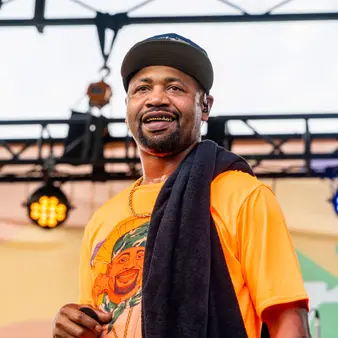
Juvenile is an American rapper, songwriter, and producer who has a net worth of $500 thousand. Juvenile is one of the most important figures in the rise of New Orleans hip-hop and Cash Money Records. After building a regional following in the city's bounce scene, he became a national star with his 1998 album "400 Degreez." The album eventually went quadruple platinum and produced "Ha" and "Back That Azz Up," the latter of which became one of the defining rap songs of the late 1990s.
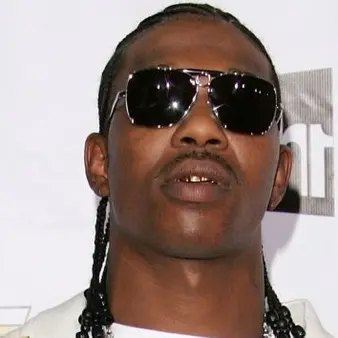
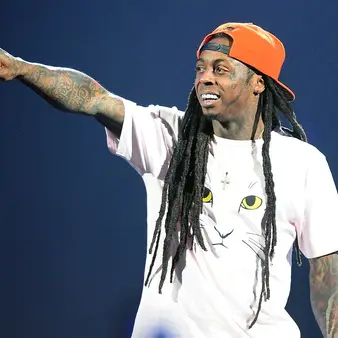
Juvenile was also a member of the Hot Boys alongside Lil Wayne, B.G., and Turk. His subsequent albums included "Tha G-Code," "Project English," "Juve the Great," and "Reality Check." In 2004, "Slow Motion," featuring the late Soulja Slim, reached #1 on the Billboard Hot 100.
After periods of separation and reconciliation with Cash Money, Juvenile reunited with Birdman for the 2019 album "Just Another Gangsta." His career experienced another resurgence following a hugely popular 2023 NPR Tiny Desk performance. He celebrated the 25th anniversary of "400 Degreez" with new performances and a deluxe reissue, then returned in 2026 with "Boiling Point," his first solo studio album in 12 years. Its single "B.B.B." received a remix featuring Megan Thee Stallion and gave Juvenile his first Billboard Hot 100 appearance in two decades.
Cash Money Disputes and Financial Issues
Juvenile's enormous commercial success did not always translate into a smooth financial relationship with Cash Money Records. After helping turn the New Orleans label into a national force, Juvenile left Cash Money in the early 2000s amid disputes over his contract and compensation. He later said that he had been inexperienced about the business side of music when he initially signed and eventually went back through his paperwork as his career became more successful.
The dispute was eventually resolved, and Juvenile returned to Cash Money for 2003's "Juve the Great." His relationship with Birdman and the label continued to go through periods of separation and reconciliation over the following years. Juvenile later said that the old business disputes had been settled, and he formally reunited with Cash Money for additional projects.
Juvenile has also faced significant child-support issues. In 2012, a Louisiana court issued a warrant after determining that he owed substantial back child support to Dionne Williams, the mother of one of his sons. Juvenile disputed the characterization that he had failed to support his child and said his son spent much of his time living with him.
The issue resurfaced in 2017. Court records cited in contemporary reports indicated that Juvenile had been found to owe roughly $170,000 under earlier rulings and had subsequently paid $20,000. A judge ordered him jailed after determining that approximately $150,000 remained outstanding, giving him the option of paying the debt or serving 30 days.
Early Life
Terius Gray, better known by his stage name Juvenile, was born on March 25, 1975, in New Orleans, Louisiana. He grew up in the Magnolia Projects, a public housing development that would become deeply connected to his music and to the emergence of Cash Money Records.
Juvenile became interested in rap while still young and came of age during the growth of New Orleans bounce, the highly rhythmic local style built around call-and-response vocals and dance-oriented beats. He began performing in New Orleans before achieving national recognition, developing the distinctive voice, accent, and rhythmic delivery that would later make him immediately recognizable.
Early Career and Cash Money
Juvenile released his debut album, "Being Myself," through Warlock Records in 1995. The album did not become a national commercial success, but it strengthened his profile in Louisiana and helped lead to a deal with Cash Money Records.
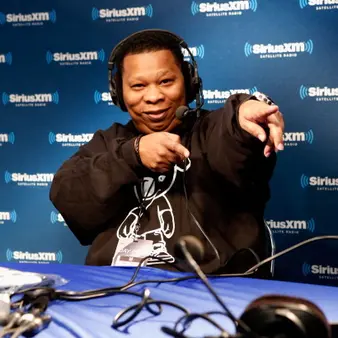
His first Cash Money album, "Solja Rags," arrived in 1997. The project marked the beginning of his crucial partnership with producer Mannie Fresh, whose drum programming, keyboards, and interpretation of New Orleans bounce became central to the classic Cash Money sound.
Around the same period, Juvenile joined the Hot Boys with B.G., Turk, and a teenage Lil Wayne. The group released its debut album, "Get It How U Live!," in 1997. Although initially a regional act, the Hot Boys became an important part of Cash Money's rapid expansion and gave the label a roster of young rappers whose solo careers could support one another.
Cash Money subsequently struck a distribution agreement with Universal Records that gave its artists national distribution while allowing the label to retain an unusually high degree of control over its music.
400 Degreez and "Back That Azz Up"
Everything changed for Juvenile with the release of "400 Degreez" in 1998. Produced by Mannie Fresh, the album combined New Orleans bounce rhythms with street narratives and Juvenile's unconventional flow. "Ha," built around verses in which nearly every line ends with the same questioning word, became his first major national hit.
The album's biggest song was "Back That Azz Up," featuring Mannie Fresh and Lil Wayne. Released to radio in a cleaned-up version as "Back That Thang Up," the song reached #19 on the Billboard Hot 100 and became a fixture at clubs, parties, sporting events, and celebrations. Lil Wayne was still a teenager when he delivered the closing verse.
"400 Degreez" ultimately received a quadruple-platinum certification in the United States and remains Juvenile's signature album. Its success also helped establish Cash Money as one of the most important labels in hip-hop.
The popularity of "Back That Azz Up" proved especially durable. A quarter-century after its release, the track was still a centerpiece of Juvenile's live shows. In 2024, New Orleans recognized the song's 25th anniversary by proclaiming June 11 "Back That Azz Up Day."
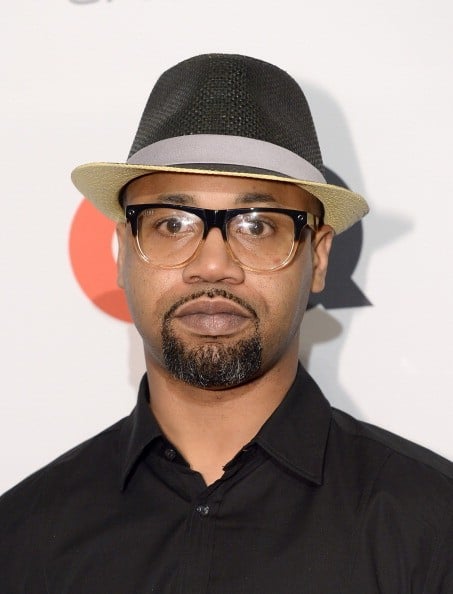
Michael Loccisano / Getty Images
Hot Boys and Continued Success
Juvenile's solo breakthrough coincided with the Hot Boys becoming a national act. Their 1999 album "Guerrilla Warfare" reached the upper end of the Billboard album chart and was certified platinum. The group's success helped introduce a wider audience not only to Juvenile but also to Lil Wayne, B.G., Turk, Birdman, and the broader Cash Money roster.
Juvenile followed "400 Degreez" with "Tha G-Code" in 1999. Although it could not match the phenomenon of its predecessor, it became another major commercial success. He released "Project English" in 2001, featuring the single "Set It Off."
By that point, however, Juvenile's relationship with Cash Money had deteriorated over financial and contractual issues. He left the label, as did other members of the Hot Boys, and began developing his own UTP Records operation with longtime associates.
The Hot Boys' third album, "Let 'Em Burn," was released by Cash Money in 2003 using previously recorded material.
Juve the Great and "Slow Motion"
Juvenile eventually reconciled with Cash Money and returned with "Juve the Great" in late 2003. The album produced one of the biggest hits of his career.
"Slow Motion," featuring fellow New Orleans rapper Soulja Slim, reached #1 on the Billboard Hot 100 in 2004. Tragically, Soulja Slim had been shot and killed shortly before the album was released and did not live to see the song become a national hit.
Juvenile subsequently left Cash Money again and focused on UTP. Along with Wacko and Skip, he recorded as the UTP group and scored another notable regional and national rap hit with "Nolia Clap."
His 2006 solo album "Reality Check" became his first album to reach #1 on the Billboard 200. The album addressed Hurricane Katrina and the devastation suffered by New Orleans as well as Juvenile's own experiences following the disaster.
He continued releasing albums over the next decade, including "Cocky & Confident" in 2009, "Beast Mode" in 2010, "Rejuvenation" in 2012, and "The Fundamentals" in 2014.
Cash Money Reunion and Later Career
Despite their earlier business disputes, Juvenile and Cash Money repeatedly found their way back to one another. He reunited with Birdman for the 2019 collaborative album "Just Another Gangsta," released through Cash Money Records. The project marked a notable reconciliation between two people who had been central to the label's original rise.
A new generation also began discovering Juvenile's catalog through streaming, social media, and the continued popularity of "Back That Azz Up."
That resurgence reached a new level in 2023 after a fan suggested that Juvenile perform an NPR Tiny Desk concert. Juvenile initially responded on social media by asking what a Tiny Desk was and rejecting the idea. The exchange went viral, fans pushed him to reconsider, and he eventually agreed.
The resulting performance featured Mannie Fresh, Trombone Shorty, Jon Batiste, members of the Louisiana Philharmonic, and a full band. Juvenile performed songs including "Ha," "400 Degreez," "Slow Motion," "Set It Off," and "Back That Azz Up." The crowd demanded an encore of "Back That Azz Up," an unusual occurrence at Tiny Desk, and the performance introduced his catalog to another wave of listeners.
Juvenile subsequently toured with the 400 Degreez Band and participated in Cash Money reunion performances. A deluxe version of "400 Degreez" was also released in 2024 with previously unreleased material.
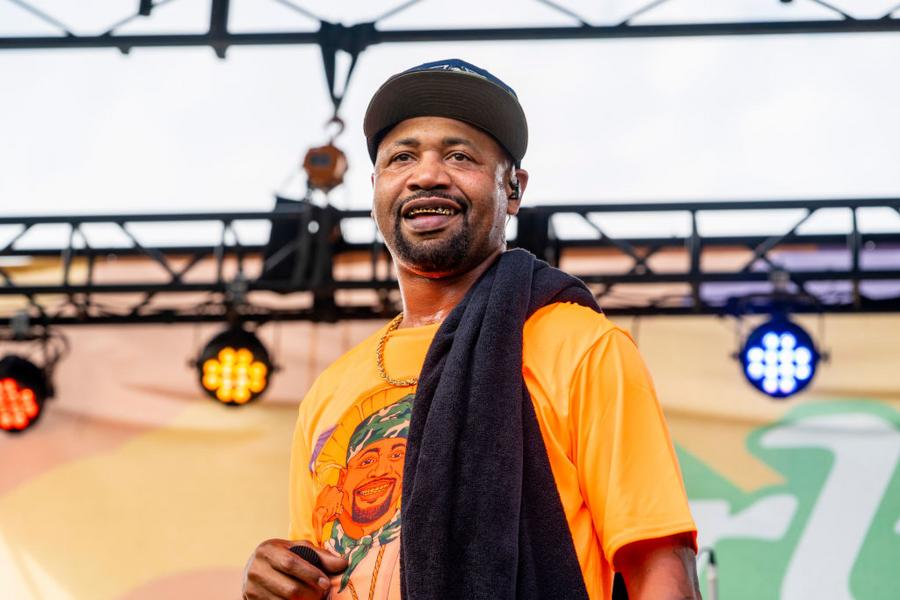
(Photo by Erika Goldring/Getty Images)
Boiling Point
In March 2026, Juvenile released "Boiling Point," his first solo studio album since "The Fundamentals" 12 years earlier. Rather than attempting to distance himself from his classic sound, the album embraced his New Orleans and Cash Money history while presenting an older version of the rapper who made "400 Degreez."
The album featured appearances from B.G., Birdman, Mannie Fresh, Jacquees, Trombone Shorty, DJ Khaled, Swizz Beatz, and Juvenile's son Young Juve.
One of the album's singles, "B.B.B.," found a new audience through social media. Fans began suggesting that Megan Thee Stallion would fit the track, and she eventually joined Juvenile for an official remix. The collaboration reached #67 on the Billboard Hot 100 in 2026, giving Juvenile his first appearance on the chart in roughly 20 years.
The release extended a career that had already lasted more than three decades and reinforced Juvenile's unusual position in hip-hop: an artist whose late-1990s records remain deeply associated with their original era while continuing to reach younger audiences.
Personal Life
Juvenile began a relationship with Shadonna Jones in 2003, and they married in September 2004. He is the father of several children, including a son who performs as Young Juve.
Juvenile also had a daughter, Jelani, with Joy Deleston. In February 2008, four-year-old Jelani, Deleston, and Deleston's 11-year-old daughter Micaiah were shot and killed at their home in Georgia. Deleston's 17-year-old son, Anthony Tyrone Terrell Jr., was arrested and charged with the killings. He later pleaded guilty and received two consecutive life sentences.
Juvenile did not attend the funeral, a decision that drew some criticism at the time. His representatives explained that he was devastated by the deaths and believed his presence would attract intense media attention and take focus away from the family and the funeral itself.
Outside music, Juvenile has pursued a number of entrepreneurial and creative interests. He has spoken about doing carpentry and electrical work, has built custom furniture, and has attached his name to products including Juvie Juice. Even after decades in the music business, he has continued recording, touring, and performing the New Orleans catalog that first made him famous.
Net Worth Unpacked Juvenile
Explore the figures, comparisons, and money moments in this profile.
Read the text version 11 cards
Juvenile’s fortune, from Hot Boys to his comeback
CNW estimated net worth $500K
CNW snapshot: 2026-11-05
Sources400 Degreez made Juvenile a national star
400 Degreez · US album certification 4× platinum
SourcesThree Hot Boys, very different fortunes
Juvenile, Lil Wayne and B.G. · CNW estimated net worth
CNW snapshot: 2026-11-05
Juvenile among CNW’s 713 rapper profiles
of 713 CNW profiles #579
CNW profiles in Rappers
Population: 713 covered profiles. 57 profiles share this rank.
CNW snapshot: 2026-11-05
Top five · Rappers
CNW estimates · Rappers
- #1 · Jay-Z$2.8B
- #2 · Dr. Dre$500M
- Tied #3 · Diddy$400M
- Tied #3 · Drake$400M
- #5 · Kanye West$350M
Juvenile · Tied #579 · $500K
CNW snapshot: 2026-11-05
After his hits, Juvenile challenged his Cash Money deal
He later said he had been inexperienced when he signed. The compensation dispute was eventually settled.
SourcesA 2017 court said about $150K was still owed
Juvenile disputed the claim that he had failed to support his son.
Approximate child-support arrears · 2017 court ruling $150K
SourcesJuvenile reunited with Birdman for a 2019 album
Just Another Gangsta collaborators · CNW estimated net worth
CNW snapshot: 2026-11-05
SourcesJuvenile’s Tiny Desk brought in Mannie Fresh and Jon Batiste
Selected 2023 Tiny Desk performers · CNW estimated net worth
- Juvenile$500K
- Mannie Fresh$20M
- Jon Batiste$4M
CNW snapshot: 2026-11-05
The B.B.B. remix put Juvenile back on the Hot 100
It was Juvenile’s first appearance on the chart in roughly 20 years.
B.B.B. remix with Megan Thee Stallion · Billboard Hot 100, 2026 #67
SourcesThe remix paired Juvenile with Megan Thee Stallion
B.B.B. remix collaborators · CNW estimated net worth
- Juvenile$500K
- Megan Thee Stallion$40M
CNW snapshot: 2026-11-05