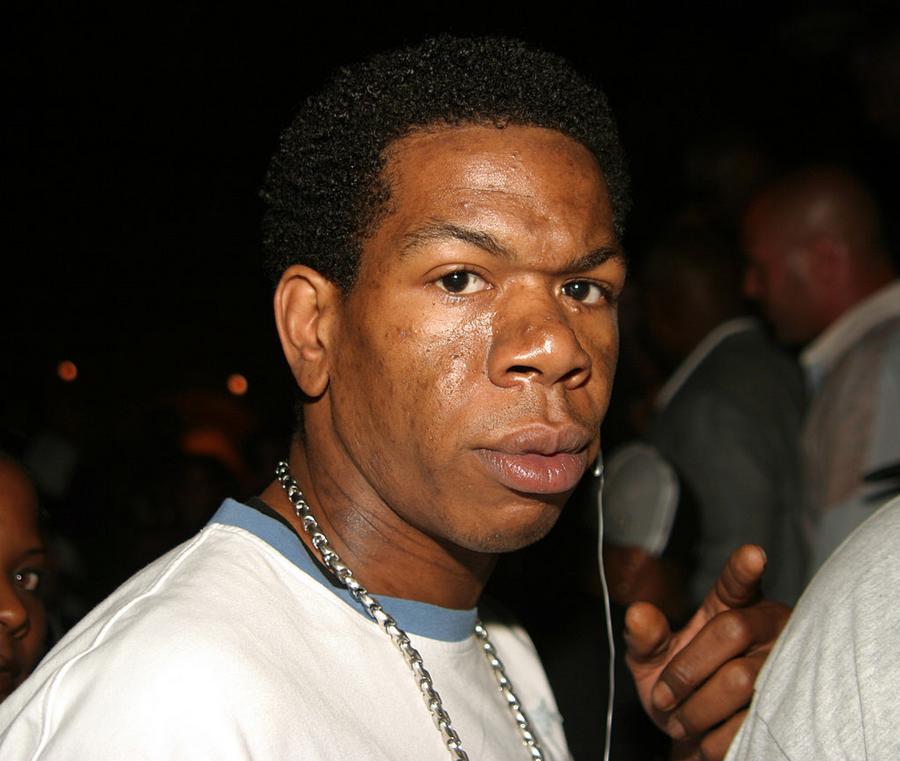
What Was Craig Mack's Net Worth?
Craig Mack was an American rapper and record producer who had a net worth of $600 thousand at the time of his death in 2018.
Craig Mack became Bad Boy Records' first breakout star with the 1994 single "Flava in Ya Ear," one of the defining hip-hop records of the decade. The song reached #9 on the Billboard Hot 100, topped the rap chart, was certified Platinum, and earned Mack a Grammy nomination. An all-star remix featuring The Notorious B.I.G., LL Cool J, Busta Rhymes, and Rampage became an enduring classic in its own right.
Mack's debut album, "Project: Funk da World," arrived in September 1994 as the second full-length album released by Sean "Diddy" Combs' newly established Bad Boy Records, one week after Biggie's "Ready to Die." Although Mack never replicated the enormous success of "Flava in Ya Ear," his early records helped establish Bad Boy as a major force in New York hip-hop. He released a second studio album, "Operation: Get Down," in 1997 before largely withdrawing from the music industry. During his later years, he lived at the controversial Overcomer Ministry religious community in South Carolina.
Early Life
Craig Jamieson Mack was born on May 10, 1970, in the Bronx, New York City, and grew up in Brentwood on Long Island. He became interested in rap while still young and began writing rhymes as hip-hop was rapidly expanding across New York.
As a teenager, he performed under the name MC EZ. Mack released his first single, "Get Retarded," with MC Troup on Fresh Records in 1988, years before the fame that would come through Bad Boy.
Mack also developed a relationship with Long Island rap duo EPMD and worked as a roadie, helping with equipment while touring with the group. EPMD member Erick Sermon remained one of Mack's friends throughout his life.
Bad Boy Records
Mack's career changed after he connected with Sean Combs, who was building Bad Boy Records following his departure from Uptown Records. According to accounts of their early meeting, Mack impressed Combs by freestyling over a Mary J. Blige track.
Bad Boy released "Flava in Ya Ear" in 1994. Built around Easy Mo Bee's instantly recognizable production and Mack's unconventional delivery, the record became the young label's first major hit.
The original version reached #9 on the Billboard Hot 100 and #1 on the Hot Rap Singles chart. It also earned Mack a Grammy nomination for Best Rap Solo Performance.
The song became even more influential after the release of "Flava in Ya Ear (Remix)." The track assembled Mack with Biggie, LL Cool J, Busta Rhymes, and Rampage, while its music video became one of the signature visual statements of early Bad Boy Records.
"Project: Funk da World"
Mack released his debut album, "Project: Funk da World," on September 20, 1994. It followed Biggie's "Ready to Die," which had been released one week earlier, making Mack's project the second full-length album in the young Bad Boy catalog.
The album reached #21 on the Billboard 200 and #6 on the R&B/Hip-Hop Albums chart. It was certified Gold by the RIAA.
In addition to "Flava in Ya Ear," the album produced "Get Down," which reached #38 on the Billboard Hot 100 and became another significant rap hit. Other tracks included "Making Moves with Puff," "Judgement Day," and "Real Raw."
For a brief period, Mack and Biggie were effectively the two flagship rappers of Bad Boy Records. Biggie's career soon accelerated to a different level, however, while Mack's relationship with the label deteriorated.
Craig Mack (Photo by Johnny Nunez/WireImage)
Leaving Bad Boy and "Operation: Get Down"
Mack left Bad Boy during the mid-1990s and signed with Street Life Records, distributed by Scotti Brothers.
His second studio album, "Operation: Get Down," was released in 1997. The album reached #46 on the Billboard 200 and #17 on the Top R&B/Hip-Hop Albums chart. Its singles included "What I Need" and "Jockin' My Style," but neither approached the commercial impact of "Flava in Ya Ear."
As the decade progressed, Bad Boy expanded with artists including Mase and Faith Evans, while Mack gradually disappeared from the mainstream music business.
He made occasional returns. In 2001, Mack appeared on the remix of Bad Boy rapper G. Dep's "Special Delivery," alongside Ghostface Killah and Keith Murray. He was also seen in Diddy's 2002 video for "I Need a Girl (Part One)."
Religion and Overcomer Ministry
Mack largely disappeared from public view during the 2000s. He eventually became involved with Overcomer Ministry, an apocalyptic Christian community based near Walterboro, South Carolina, and led by preacher Ralph Gordon Stair.
His presence there became public in 2012 when video surfaced showing Mack participating in one of the ministry's services. In the footage, he renounced aspects of his previous life in the music industry and described himself as devoted to his new faith.
Overcomer Ministry became highly controversial. Stair had a history of legal problems and was accused by former members of sexual abuse and other misconduct. He faced numerous criminal charges during the period immediately preceding Mack's death.
Mack declined opportunities to return to the hip-hop spotlight, including an invitation to participate in Bad Boy's reunion activities. In a 2016 ministry video, however, he demonstrated that he was still capable of rapping, performing lyrics focused on his Christian beliefs.
Final Music
Although Mack had largely abandoned the commercial music industry, recordings continued to surface during his final years.
"The Mack World Sessions" was released in 2017 and compiled 18 previously unreleased tracks. In 2018, the Dutch label MECSMI released the mixtape "That's My World."
Mack was also working on additional music shortly before his death. Erick Sermon said after Mack died that the two had been completing a new album.
Producer Alvin Toney, who had worked with Mack during his Bad Boy years, also began filming a documentary about the rapper's life, career, religious conversion, and disappearance from the music industry. Toney recorded one of Mack's final interviews shortly before his death. The documentary remained unfinished for years, with Mack's family later becoming involved in efforts to complete a fuller account of his life.
Personal Life
Mack had two children, Amanda and Asah, with his former wife, Roxanne Alexis Hill-Johnson.
His withdrawal from the entertainment business created distance between Mack and members of his family. In later accounts, relatives described his commitment to Overcomer Ministry as becoming increasingly consuming during his final years.
Despite his long absence from mainstream hip-hop, Mack remained highly regarded by artists who remembered his importance during the formative period of Bad Boy Records. Erick Sermon, DJ Scratch, Busta Rhymes, and other members of the New York rap community paid tribute to him following his death.
Death
Craig Mack died at his home near Walterboro, South Carolina, on March 12, 2018. He was 47 years old.
At the time, Mack's death was widely reported as the result of congestive heart failure, based on statements from people close to him. Producer Alvin Toney said Mack had been seriously ill and appeared to know that he was nearing the end of his life.
New information emerged in 2024 when Rolling Stone obtained Mack's death certificate and interviewed members of his family. According to the death certificate, Mack's official cause of death was complications related to HIV/AIDS rather than congestive heart failure.
Members of Mack's family said he had known about his HIV diagnosis for years but resisted medical treatment. As his condition deteriorated in early 2018, his children and brother traveled to South Carolina to see him shortly before he died.
Mack was buried at the Overcomer Ministry property in South Carolina.
Legacy
Craig Mack's mainstream career was brief, but "Flava in Ya Ear" secured him a lasting place in hip-hop history. The record gave Bad Boy Records its first major hit and helped announce a label that would become one of the dominant forces in 1990s rap.
The remix was particularly influential. Its collection of established and emerging rappers helped popularize the all-star posse remix format that became common throughout hip-hop, while Biggie's opening verse became one of the most celebrated performances of his early career.
Mack ultimately released only two major-label studio albums during his period of commercial prominence, but his unmistakable voice, eccentric delivery, and role in Bad Boy's earliest success ensured that his influence extended far beyond the length of his recording career.
/2011/01/Erick-Sermon.jpg)
/2009/12/GettyImages-451331518.jpg)
/2021/01/jadakiss.jpg)
/2014/06/GettyImages-591903622.jpg)
/2011/10/Keith-Murray-1.jpg)
/2009/11/George-Clooney.jpg)
/2009/09/Brad-Pitt.jpg)
/2019/10/denzel-washington-1.jpg)
/2018/03/GettyImages-821622848.jpg)
/2009/09/Jennifer-Aniston.jpg)
/2020/02/Angelina-Jolie.png)
:strip_exif()/2009/09/P-Diddy.jpg)
/2020/01/lopez3.jpg)
/2019/11/GettyImages-1094653148.jpg)
/2020/04/Megan-Fox.jpg)
/2020/06/taylor.png)
/2024/05/craig-mack.png)
/2011/10/Keith-Murray-1.jpg)
/2016/02/092314_earlmack_600.jpg)
/2015/10/mack.jpg)
/2022/10/GettyImages-1951611.jpg)
/2022/11/GettyImages-1438762195.jpg)
/2023/01/GettyImages-1439324564.jpg)
/2022/11/GettyImages-1439324620.jpg)
/2019/04/rr.jpg)
/2009/09/Cristiano-Ronaldo.jpg)