
/2010/11/Biz-Markie.jpg)
/2017/10/Gilbert-OSullivan.jpg)
/2021/05/Big-Daddy-Kane.png)
/2011/04/mister.jpg)
/2011/04/DJ-Quick.jpg)
/2021/06/slick-rick.jpg)
/2017/02/GettyImages-528215436.jpg)
/2020/06/taylor.png)
/2020/01/lopez3.jpg)
/2009/09/Jennifer-Aniston.jpg)
:strip_exif()/2015/09/GettyImages-476575299.jpg)
/2009/09/Cristiano-Ronaldo.jpg)
/2019/10/denzel-washington-1.jpg)
/2018/03/GettyImages-821622848.jpg)
/2020/02/Angelina-Jolie.png)
:strip_exif()/2009/09/P-Diddy.jpg)
/2019/11/GettyImages-1094653148.jpg)
What was Biz Markie's Net Worth?
Biz Markie was an American rapper and comedian who had a net worth of $1 million at the time of his death.
Known as the "Clown Prince of Hip-Hop," he built a career on humor, offbeat creativity, and a deliberately unpolished vocal style that stood in stark contrast to the harder, more aggressive tone of many of his peers. He first gained attention in the mid-1980s as a member of the influential Juice Crew before breaking out as a solo artist with albums like "Goin' Off" and "The Biz Never Sleeps." His 1989 hit "Just a Friend" became one of the most recognizable songs in hip-hop history, crossing over into the pop charts and turning him into a mainstream star. Although he is often labeled a one-hit wonder, his influence extended far beyond that single, helping shape the role of personality, humor, and storytelling in rap. Later in his career, he remained a fixture in pop culture through television appearances, voice work, and live performances. His legacy also includes an unexpected but lasting impact on the music industry through a landmark copyright lawsuit that fundamentally changed how hip-hop handles sampling.
Early Life
Biz Markie was born Marcel Theo Hall on April 8, 1964, in Harlem, New York City, and was raised on Long Island. As a teenager, he developed an early passion for hip-hop, which was still in its formative years. He began as a beatboxer and DJ, gaining attention for his ability to mimic drum machines and create complex rhythms using only his voice.
His early experiences in New York's club scene helped him build connections within the emerging hip-hop community. Determined to break in, he famously spent time outside producer Marley Marl's home, waiting for an opportunity to be noticed. That persistence paid off, and he eventually became part of the Juice Crew, a highly influential collective that included artists like Big Daddy Kane, Roxanne Shanté, and Kool G Rap.
Rise with the Juice Crew
Biz Markie's early career was closely tied to the Juice Crew and the Cold Chillin' Records label. He first gained attention in 1986 with "Make the Music With Your Mouth, Biz," a track that showcased his signature beatboxing skills and playful personality.
His debut album, "Goin' Off," was released in 1988. While it was not a major commercial success, it became an underground classic and featured standout tracks like "Vapors," "Nobody Beat the Biz," and "Pickin' Boogers." The album established his identity as a humorous, self-aware performer who didn't take himself too seriously, a rarity in a genre that was increasingly focused on bravado.
"Just a Friend" and Mainstream Breakthrough
Biz Markie achieved widespread fame in 1989 with the release of "The Biz Never Sleeps," which featured his breakout hit "Just a Friend." Built around a simple piano riff and an interpolation of "(You) Got What I Need," the song told a relatable story of romantic frustration.
What made the track unforgettable was its chorus, sung by Markie himself in an intentionally off-key, almost pleading style. The performance was not originally planned. When no one else showed up to sing the hook, he recorded it himself, creating what would become one of the most iconic moments in hip-hop history.
"Just a Friend" reached No. 9 on the Billboard Hot 100 and became a platinum-selling single. It introduced Markie to a mainstream audience and blurred the line between rap and pop, opening doors for future crossover hits.
Signature Style and Cultural Impact
Biz Markie's appeal went far beyond traditional measures of success. His music embraced humor, awkwardness, and everyday experiences, making him feel relatable in a way that few rappers at the time did. Critics would later describe him as a kind of "everyman" figure in hip-hop, someone whose charm came from his imperfections rather than polished image.
His beatboxing skills, comedic storytelling, and willingness to lean into his own quirks influenced a generation of artists. Figures like Ol' Dirty Bastard and other unconventional rappers would follow in his footsteps, proving that personality could be just as important as lyrical precision.
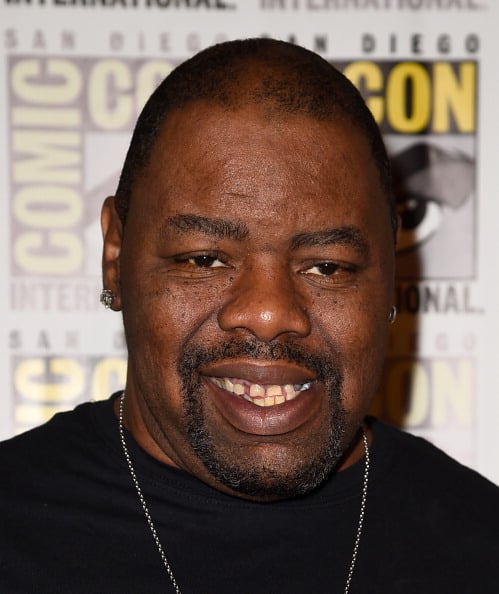
Frazer Harrison/Getty Images
Gilbert O'Sullivan Lawsuit and Industry Impact
In 1991, Biz Markie released his third album, "I Need a Haircut." The album included the track "Alone Again," which sampled Gilbert O'Sullivan's 1972 hit "Alone Again (Naturally)" without permission. The unauthorized use led to a lawsuit that would have enormous consequences for both Markie's career and the music industry as a whole.
The case, Grand Upright Music, Ltd. v. Warner Bros. Records Inc., was heard in federal court in New York. Judge Kevin Thomas Duffy ruled decisively in favor of O'Sullivan, opening his opinion with the statement, "Thou shalt not steal." The court found that the sample constituted clear copyright infringement and ordered Markie and his label to pay $250,000 in damages.
The ruling went even further. The judge issued an injunction forcing Warner Bros. to pull "I Need a Haircut" from store shelves, effectively halting its sales and crippling its commercial prospects. In an unusual move, the court also referred the case to the U.S. Attorney's Office for potential criminal prosecution, though no charges were ultimately filed.
The impact on Markie's career was immediate and significant. The album's removal disrupted his momentum following the success of "Just a Friend," and his mainstream profile never fully recovered.
In response, Markie released "All Samples Cleared!" in 1993, a title that both acknowledged and poked fun at the new legal reality. However, the broader consequences of the case extended far beyond one artist. The ruling transformed the economics of hip-hop, forcing record labels and producers to obtain formal clearance for all samples. What had once been an informal creative practice became a highly regulated and often expensive process, fundamentally reshaping how hip-hop music was produced.
Later Career and Media Appearances
After the early 1990s, Biz Markie released fewer albums, with his final studio release, "Weekend Warrior," arriving in 2003. However, he remained a visible and beloved figure in entertainment.
He appeared in television shows such as "In Living Color," "Crank Yankers," and "Wild 'n Out," as well as children's programming like "Yo Gabba Gabba!" where he introduced music to younger audiences. He also made cameo appearances as himself on shows like "Black-ish" and participated in numerous VH1 retrospective specials.
Markie's personality made him a natural fit for television, and he continued to perform live, DJ, and collaborate with other artists. He also developed a reputation as a collector, amassing large collections of records, toys, and memorabilia.
Personal Life and Health
Biz Markie was married to Tara Hall. In his later years, he faced significant health challenges related to Type 2 diabetes. He lost a substantial amount of weight and worked to improve his health, but complications from the disease continued to affect him.
In 2020, he was hospitalized and later suffered a stroke. His condition declined over time, and he passed away on July 16, 2021, at the age of 57.
Legacy
Biz Markie's legacy is both musical and cultural. While "Just a Friend" remains his most famous song, his influence extends far beyond a single hit. He helped expand the boundaries of hip-hop, proving that humor, vulnerability, and individuality could coexist with the genre's traditional themes.
At the same time, his role in one of the most important copyright cases in music history ensured that his impact would be felt behind the scenes as well. The legal precedent set by his lawsuit changed how music is created, licensed, and monetized, shaping the industry for decades.
Ultimately, Biz Markie is remembered not just for his music, but for his personality. He brought joy, humor, and originality to hip-hop, leaving behind a body of work and a cultural imprint that continues to resonate long after his passing.
/2010/11/Biz-Markie.jpg)
/2021/05/Big-Daddy-Kane.png)
/2017/10/Gilbert-OSullivan.jpg)
/2013/11/marley.jpg)
/2011/04/DJ-Quick.jpg)
/2010/12/GettyImages-50897790.jpg)
/2009/09/J.-Holiday.png)
/2010/09/GettyImages-481343682.jpg)
/2019/04/rr.jpg)
/2009/09/Brad-Pitt.jpg)
/2009/11/George-Clooney.jpg)