Category:
Richest CelebritiesRichest Comedians
Net Worth:
$75 Million
Salary:
$20 Million
Birthdate:
May 13, 1964 (62 years old)
Birthplace:
Washington, D.C.
Gender:
Male
Height:
5 ft 11 in (1.81 m)
Profession:
Comedian, Actor, Writer, Television Show Host, TV Personality, Presenter, Screenwriter, Television producer, Film Producer, Satirist
Nationality:
United States of America
  1. What Is Stephen Colbert's Net Worth And Salary?
  2. Salary And Contract History
  3. Early Life And Career Beginnings
  4. Second City And Early Comedy Career
  5. The Daily Show
  6. The Colbert Report
  7. The Late Show
  8. Cancellation Of The Late Show
  9. Final Episode
  10. Other Work
  11. Personal Life
  12. Real Estate
Last Updated: May 22, 2026

What Is Stephen Colbert's Net Worth and Salary?

Stephen Colbert is an American comedian, writer, actor, author, and talk show host who has a net worth of $75 million.

Stephen Colbert first gained national prominence as a correspondent on Comedy Central's "The Daily Show," where his deadpan delivery and mock-conservative persona made him one of the show's breakout stars. That character was later fully realized on "The Colbert Report," the satirical news program he hosted from 2005 to 2014. Playing a fictionalized, bombastic right-wing pundit, Colbert turned the series into one of the defining political comedy shows of its era, earning multiple Emmy Awards and helping reshape the relationship between satire, cable news, and American politics.

In 2015, Colbert moved to network television as the host of "The Late Show with Stephen Colbert," succeeding David Letterman at CBS's Ed Sullivan Theater. The transition initially required him to drop the character that had made him famous and adapt to a more traditional late-night format. But as the political climate intensified, Colbert leaned back into topical commentary and became one of the most prominent late-night critics of Donald Trump. His sharper political focus helped "The Late Show" overtake "The Tonight Show Starring Jimmy Fallon" in the ratings in 2017, and the show remained a leader in late-night for years afterward.

In July 2025, CBS announced that it would cancel "The Late Show with Stephen Colbert" after Colbert's contract expired, calling the move a "purely financial decision" amid a challenging late-night television market. The decision shocked the entertainment industry because Colbert's show was still the most-watched program in late night and arrived during a period of broader uncertainty around Paramount, CBS's parent company. "The Late Show with Stephen Colbert" aired its final episode on May 21, 2026, ending both Colbert's 11-season run and the larger "Late Show" franchise that David Letterman had launched in 1993.

Outside of late night, Colbert has written bestselling books, performed on Broadway, hosted major awards shows, voiced animated characters in projects including "The Venture Bros." and "Monsters vs. Aliens," and remained one of the most recognizable figures in modern American comedy. A devout Catholic and classically trained actor, Colbert built his career on a rare blend of intellect, satire, sincerity, and emotional openness. His body of work spans sketch comedy, political parody, network late-night, books, live performance, and cultural commentary, making him one of the most influential comedic voices of his generation.

Salary and Contract History

By the end of his legendary 11-season run on basic cable, Colbert had negotiated his way up to a highly lucrative $6 million annual salary. He was Comedy Central's crown jewel alongside Jon Stewart (who was making $25 million).

When Stephen first made the jump from Comedy Central to network television in 2015, his initial CBS contract featured a starting base salary of $4.6 million, which quickly leveled out to an annual average of $6 million as he successfully transitioned into the post-Letterman era. Following consecutive seasons as the #1 late-night show on television, Colbert signed a massive contract extension in October 2019 that more than doubled his compensation to $15 million per year. In mid-2023, CBS offered him a five-year renewal; Colbert instead accepted a shorter three-year extension that bumped his annual salary to a peak of $20 million. He maintained this $20 million salary until his final episode aired in May 2026

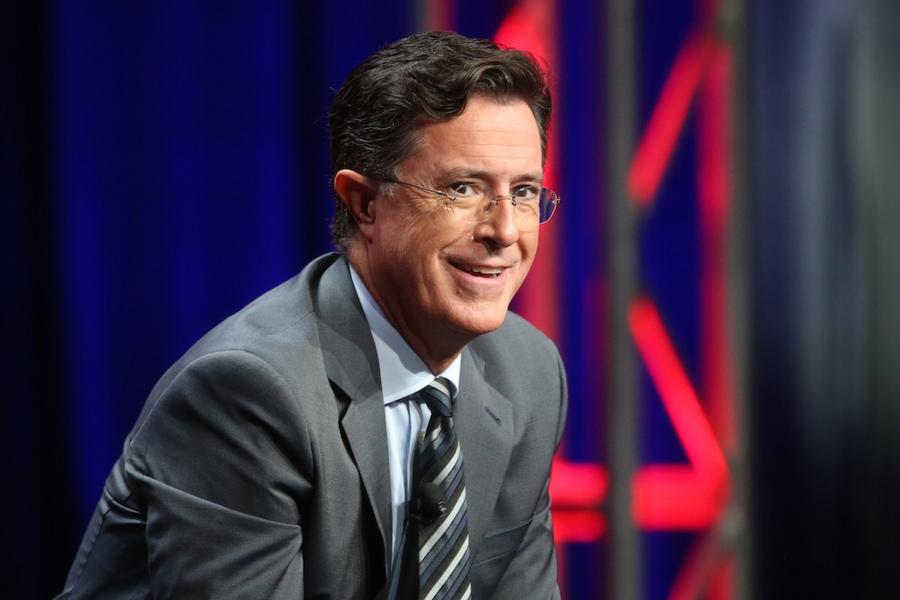
Frederick M. Brown/Getty Images

Early Life and Career Beginnings

Stephen Tyrone Colbert was born on May 13, 1964, in Washington, D.C. He is the youngest of 11 children. He spent his early years in Bethesda, Maryland, but the family later moved to James Island, South Carolina, a suburb of Charleston. His father, James William Colbert Jr., and his brothers Peter and Paul died in the Eastern Air Lines Flight 212 crash on September 11, 1974. After the crash, his mother relocated the family to downtown Charleston.

Colbert attended the Episcopal Porter-Gaud School in Charleston, where he participated in several school plays. He initially wanted to study marine biology, but sustained inner ear damage during surgery to repair a perforated eardrum. As a result, he became deaf in his right ear and was unable to pursue a career that required scuba diving. He eventually enrolled at Hampden-Sydney College in Virginia in 1982, where he majored in philosophy and continued to act in plays. Colbert transferred to Northwestern University in 1984 as a theater major, where he studied performance, graduating in 1986.

Second City and Early Comedy Career

While at Northwestern, Stephen began performing improvisation, both on campus as part of the No Fun Mud Piranhas team and at the Annoyance Theatre in Chicago. After graduation, a friend offered him a job working at Second City in Chicago, answering phones and selling souvenirs. He also signed up for the free improv classes offered to employees. At Second City, Colbert met and worked with several future collaborators, including Amy Sedaris and Paul Dinello. The trio later created "Exit 57," a sketch comedy series that aired on Comedy Central in the mid-1990s. Although the show was short-lived, it became a cult favorite and earned critical attention for its strange, theatrical, and highly specific sense of humor.

Colbert, Sedaris, and Dinello later reunited for "Strangers with Candy," a dark comedy series that spoofed after-school specials. Colbert played Chuck Noblet, a closeted history teacher whose stiff public persona concealed a deeply dysfunctional personal life. The show never became a major mainstream hit during its original run, but it developed a devoted following and helped establish Colbert as a distinctive comic actor.

The Daily Show

Colbert's national breakthrough came in 1997 when he joined "The Daily Show" as a correspondent. After Jon Stewart took over as host in 1999, the show evolved into one of the most influential political comedy programs on television, and Colbert became one of its defining performers.

On "The Daily Show," Colbert perfected the persona that would later make him famous: an arrogant, self-serious, aggressively uninformed conservative pundit who was absolutely certain of his own correctness. His deadpan delivery and ability to stay in character made him one of the show's most reliable comic weapons. He could interview real people, parody cable-news language, and expose political absurdity without ever breaking the illusion.

Alongside performers including Steve Carell, Ed Helms, Rob Corddry, Samantha Bee, and others, Colbert helped turn "The Daily Show" into a training ground for a new generation of political comedians. His work on the show led directly to his own spinoff and made him one of the most recognizable satirical voices of the George W. Bush era.

The Colbert Report

In 2005, Colbert launched "The Colbert Report" on Comedy Central. The show was built around the fictional version of "Stephen Colbert" he had developed on "The Daily Show," a pompous, flag-waving, ratings-obsessed pundit modeled partly on the dominant cable-news personalities of the era.

"The Colbert Report" was formatted like a conservative opinion show, but its comedy came from the gap between the character's certainty and his obvious absurdity. Colbert coined the term "truthiness" in the show's first episode, capturing the idea of people choosing beliefs based on feeling rather than fact. The word became one of the defining political-comedy terms of the decade.

The series ran from 2005 to 2014 and became one of Comedy Central's signature programs. It won multiple Emmy Awards, attracted major political and celebrity guests, and gave Colbert a platform that blurred the line between satire and real-world influence. In 2006, he delivered a famously blistering performance at the White House Correspondents' Dinner while standing just feet from President George W. Bush. In 2010, he and Jon Stewart held the "Rally to Restore Sanity and/or Fear" on the National Mall in Washington, D.C., drawing a large crowd and demonstrating the real-world reach of their comedy.

"The Colbert Report" ended in December 2014, closing one of the most successful runs in modern political satire. By the time it ended, Colbert had transformed a deliberately ridiculous cable-news character into one of the most important comic inventions of the 2000s.

The Late Show

In 2015, Colbert succeeded David Letterman as host of "The Late Show" on CBS. The move was a major career transition. Instead of performing as the fictional pundit from "The Colbert Report," Colbert had to appear as himself while adapting to the broader expectations of network late night: celebrity interviews, musical guests, monologues, desk pieces, live events, and a large studio audience inside the historic Ed Sullivan Theater.

The transition was not immediately smooth. Colbert had spent nearly a decade behind a satirical character, and early ratings reflected the challenge of redefining himself for a mainstream CBS audience. Over time, however, he found his rhythm by leaning into the political instincts that had made him famous. As Donald Trump's presidency became the dominant subject of American news, Colbert's monologues became sharper, more topical, and more openly critical.

That shift transformed "The Late Show." In 2017, Colbert overtook "The Tonight Show Starring Jimmy Fallon" in the ratings, and his show remained a late-night leader for years. His version of "The Late Show" became the most politically pointed of the major network late-night programs, combining traditional celebrity bookings with nightly commentary on Washington, the media, and American culture.

Cancellation of The Late Show

In July 2025, CBS announced that it would cancel "The Late Show with Stephen Colbert" after the conclusion of Colbert's contract. The decision shocked the entertainment industry because Colbert's show was still widely described as the most-watched program in late night. CBS said the cancellation was a "purely financial decision" tied to the difficult economics of late-night television, not the show's ratings, content, performance, or any other matter involving Paramount, CBS's parent company.

The announcement arrived during a volatile period for both late-night television and Paramount. Traditional late-night audiences had been shrinking as viewers increasingly watched clips online instead of tuning in live. Advertising revenue for late-night shows had also declined sharply. At the same time, Paramount was seeking approval for a merger with Skydance Media and had recently settled a lawsuit involving President Trump. Because Colbert had publicly criticized Trump and Paramount's settlement, some fans, politicians, and fellow entertainers questioned whether the cancellation was purely financial.

Colbert did not directly blame the cancellation on politics. On the night he told his audience, he said he shared their disappointment, but also thanked CBS for giving him the Ed Sullivan Theater and the opportunity to host the show. The cancellation nonetheless became a flashpoint in the broader debate over late-night comedy, corporate media, political pressure, and the future of broadcast television.

Final Episode

"The Late Show with Stephen Colbert" aired its final episode on May 21, 2026, ending Colbert's nearly 11-year run as host and closing the larger "Late Show" franchise that David Letterman had launched in 1993. The finale was designed less as a bitter farewell than as a joyful sendoff.

The episode featured a celebratory, surreal tone, with appearances from several of Colbert's friends and fellow late-night hosts. Jimmy Kimmel, Jimmy Fallon, Seth Meyers, and John Oliver appeared together as part of the "Strike Force Five" group that had formed during the 2023 writers' strike. Jon Stewart, Colbert's friend, mentor, and former "Daily Show" boss, also appeared and helped frame the ending as a metaphorical walk into the unknown.

The finale ended with a musical farewell led by Paul McCartney, who joined Colbert onstage for "Hello, Goodbye." Elvis Costello also appeared, along with current and former "Late Show" bandleaders Louis Cato and Jon Batiste. Colbert and McCartney then switched off the lights inside the Ed Sullivan Theater, a particularly meaningful gesture given that the Beatles made their American television debut in the same building in 1964.

In the show's final visual joke, the entire production and theater were sucked into a giant green interdimensional wormhole. It was an appropriately strange ending for Colbert: sentimental, theatrical, self-aware, and proudly ridiculous.

Other Work

Outside of late night, Colbert has built a wide-ranging career as an author, actor, voice performer, producer, and live entertainer. He has written and co-written books, including "I Am America (And So Can You!)," "America Again: Re-becoming the Greatness We Never Weren't," and other satirical works connected to his television career.

As an actor and voice performer, Colbert has appeared in projects including "The Venture Bros.," "The Simpsons," "American Dad!," "Harvey Birdman, Attorney at Law," and "Monsters vs. Aliens." He has hosted major live events, appeared on Broadway, and remained a frequent presence in political and cultural conversations beyond his own shows.

Colbert has also been closely associated with "The Lord of the Rings" fandom. After the end of "The Late Show," he was reported to be working with his son Peter McGee on a script connected to an upcoming "Lord of the Rings" movie, a fitting project for a performer whose public persona has long combined political satire, literary references, Catholic seriousness, Tolkien obsession, and unabashed nerd enthusiasm.

Personal Life

Colbert has been married to Evelyn "Evie" McGee-Colbert since 1993. Together, they have three children, Madeleine (born 1995), Peter (born 1998), and John (born 2002). The family lives in Montclair, New Jersey. Stephen is a self-identified Democrat and a practicing Roman Catholic. He is also an ordained minister with the Universal Life Church Monastery.

Real Estate

Unlike many of his late-night peers, Stephen Colbert has not built a public real estate profile around flashy mega-mansions, constant house flipping, or sprawling vacation compounds. His known real estate footprint is relatively stable and personal, centered around a long-time family home in New Jersey and deep ties to South Carolina, where he grew up.

Colbert's primary residence is a historic home in Montclair, New Jersey, a suburban arts community located less than an hour outside Manhattan. He reportedly purchased the property in 2007 for $1.7 million. Built in 1885, the Colonial Revival-style estate spans roughly 5,900 square feet and sits on just under one acre of land. The home features a classic white exterior, large lawns, multiple outdoor entertaining areas, mature landscaping, and privacy hedges. Thanks to the strength of the New Jersey luxury suburban market, the property is estimated to be worth around $3 million today.

The Montclair home became unexpectedly familiar to "Late Show" viewers during the COVID-19 pandemic, when Colbert began broadcasting remote episodes from his property. Audiences saw him deliver monologues and interviews from various parts of the home, including his book-lined office, backyard patio, fire pit area, and, in one of the more memorable remote-production moments, his bathtub. What had previously been a private family residence briefly became one of the most recognizable work-from-home studios in late-night television.

Colbert also maintains strong emotional and real estate ties to South Carolina. His family lived in Charleston when he was growing up, including a period in the historic George Chisolm House at 39 East Bay Street, where his mother operated a bed-and-breakfast out of the carriage house. Colbert has often spoken about his connection to Charleston and the Lowcountry, and his family has maintained private property near Sullivan's Island, just outside Charleston. Rather than a trophy beach mansion, the Sullivan's Island property appears to function as a low-profile family retreat and a link to the region that shaped much of Colbert's early life.

All net worths are calculated using data drawn from public sources. When provided, we also incorporate private tips and feedback received from the celebrities or their representatives. While we work diligently to ensure that our numbers are as accurate as possible, unless otherwise indicated they are only estimates. We welcome all corrections and feedback using the button below.
Did we make a mistake?
Submit a correction suggestion and help us fix it!
Submit a Correction