
/2014/06/rik.jpg)
/2014/02/mary-grace.jpg)
/2013/09/GettyImages-56657929-e1580746819961.jpg)
/2014/01/GettyImages-469882080.jpg)
/2014/08/James-Buckley-pic.jpg)
/2021/12/Phoebe-Cates-1.jpg)
/2020/01/lopez3.jpg)
/2009/11/George-Clooney.jpg)
/2020/02/Angelina-Jolie.png)
/2019/10/denzel-washington-1.jpg)
/2020/06/taylor.png)
/2009/09/Jennifer-Aniston.jpg)
/2017/02/GettyImages-528215436.jpg)
/2019/04/rr.jpg)
/2009/09/Cristiano-Ronaldo.jpg)
/2020/04/Megan-Fox.jpg)
:strip_exif()/2015/09/GettyImages-476575299.jpg)
What is Rik Mayall's net worth?
Rik Mayall was an English comedian, writer, actor, and director who had a net worth of $5 million.
Rik Mayall was one of the most influential figures in British alternative comedy during the 1980s and 1990s. Known for his explosive energy, anarchic performances, and fearless commitment to outrageous characters, Mayall rose to prominence through the groundbreaking sitcom "The Young Ones," where he played the pompous and delusional Rick. He followed that success with a string of iconic roles, including Lord Flashheart in "Blackadder," the scheming politician Alan B'Stard in "The New Statesman," and the perpetually chaotic Richie in "Bottom," his long-running collaboration with Adrian Edmondson. Mayall's style was loud, physical, and often deliberately abrasive, yet it was underpinned by sharp intelligence and impeccable timing. Beyond television, he appeared in films such as "Drop Dead Fred" and lent his voice to numerous projects. His work helped redefine British comedy by pushing boundaries and embracing a rebellious spirit that stood in contrast to more traditional sitcoms. Even decades after his peak, Mayall remains a cult figure whose influence can be seen across generations of comedians.
Early Life
Rik Mayall was born Richard Michael Mayall in March 1958 in Harlow, Essex, England, and grew up in Droitwich Spa, Worcestershire. His parents were drama teachers, and he spent much of his childhood performing in plays they staged, developing an early love of acting and attention. He later attended the University of Manchester, where he studied drama and met future collaborator Adrian Edmondson. During his university years, he became involved in the emerging alternative comedy scene, which rejected traditional joke-based stand-up in favor of more experimental and character-driven performances.
Rise of Alternative Comedy
After moving to London, Mayall became a central figure in the alternative comedy movement, performing at venues such as The Comic Strip Club in Soho. Working alongside performers like French and Saunders, Peter Richardson, and Nigel Planer, he helped shape a new style of comedy that blended surrealism, satire, and physical performance.
During this period, Mayall created several early characters, most notably the dim-witted "investigative journalist" Kevin Turvey, which earned him his first television exposure on the sketch show "A Kick Up the Eighties." He also appeared in "The Comic Strip Presents…," a series that emerged directly from the same creative scene.
"The Young Ones" and Breakthrough
Mayall's breakthrough came in 1982 with "The Young Ones," a chaotic and groundbreaking sitcom that combined surreal humor, slapstick, and social satire. His portrayal of Rick, a self-proclaimed anarchist who was equal parts arrogant and clueless, became one of the show's most memorable elements.
The series was unlike anything else on British television at the time and quickly developed a devoted following. It also produced the first Comic Relief single, a comedic cover of "Living Doll," further cementing its cultural impact.
He followed the show with "Filthy, Rich and Catflap," which, despite running for only one series, continued to showcase his distinctive anarchic style.
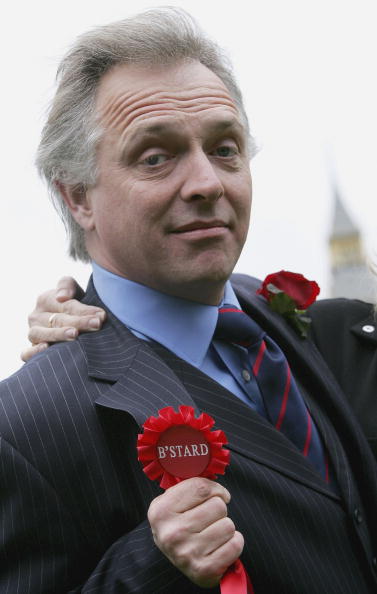
Gareth Cattermole/Getty Images
"Blackadder" and Expanding Success
Mayall further cemented his reputation with his appearances in "Blackadder," particularly as Lord Flashheart in "Blackadder II." Although his role was relatively brief, his high-energy, scene-stealing performance made the character one of the most memorable in the series.
Throughout the 1980s, Mayall continued to expand his profile across television and film, becoming one of the most recognizable faces of British comedy.
"The New Statesman"
In 1987, Mayall took on one of his most defining roles as Alan B'Stard in "The New Statesman." The series, which he helped develop, followed the exploits of a corrupt and morally bankrupt Conservative MP.
Mayall's performance was both outrageous and sharply satirical, capturing the character's greed and hypocrisy with gleeful intensity. The show was a critical and commercial success, running for multiple seasons and earning Mayall a BAFTA Award for Best Comedy Performance.
"Bottom" and Partnership with Adrian Edmondson
Mayall's creative partnership with Adrian Edmondson reached new heights with "Bottom," which debuted in 1991. The series followed two dysfunctional flatmates, Richie and Eddie, whose lives were defined by poverty, desperation, and constant bickering.
The show drew loose inspiration from Samuel Beckett's "Waiting for Godot," reimagining existential stasis through violent slapstick and absurd dialogue. "Bottom" leaned heavily into physical comedy, with elaborate fight sequences and exaggerated scenarios becoming a hallmark of the series.
The chemistry between Mayall and Edmondson was central to the show's success, and the pair also took the characters on several national stage tours. At one point, they planned a follow-up project titled "Hooligans Island," though it was abandoned after Edmondson withdrew, briefly straining their partnership before they later reconciled.
Film and Other Work
In addition to his television success, Mayall appeared in a variety of films, most notably "Drop Dead Fred," in which he played the titular imaginary friend. The film became a cult favorite and demonstrated his ability to translate his manic energy to the big screen.
He also worked extensively in voice acting and appeared in numerous television projects across different genres, showcasing his versatility beyond traditional sketch and sitcom formats.
Personal Challenges and Later Years
In 1998, Mayall suffered a serious accident when he was struck by a quad bike, leaving him in a coma for several days. His recovery was long and difficult, but he eventually returned to performing.
In his later years, he continued to appear in television and stage productions, including the Channel 4 sitcom "Man Down," where he played the eccentric father of Greg Davies' character.
Death and Legacy
Rik Mayall died in June 2014 at the age of 56. His death prompted an outpouring of tributes from fans and fellow comedians, many of whom credited him with inspiring their own careers.
Mayall's legacy lies in his willingness to take risks and push boundaries. His performances were unapologetically bold, often chaotic, yet always driven by sharp comedic instincts. Through shows like "The Young Ones," "The New Statesman," and "Bottom," he helped redefine British comedy and pave the way for a more irreverent and experimental approach.
He is survived by his wife, Barbara, and their three children.
/2014/06/rik.jpg)
/2021/12/Phoebe-Cates-1.jpg)
/2014/02/mary-grace.jpg)
/2015/11/Bob-Mortimer.jpg)
/2013/11/David-Suchet-e1568072636201.jpg)
/2013/11/Kirsten-Vangsness.jpg)
/2014/08/James-Buckley-pic.jpg)
/2014/04/GettyImages-450364522.jpg)
/2019/11/GettyImages-1094653148.jpg)
:strip_exif()/2009/09/P-Diddy.jpg)
/2018/03/GettyImages-821622848.jpg)
/2009/09/Brad-Pitt.jpg)