








What Is Larry David's Net Worth?
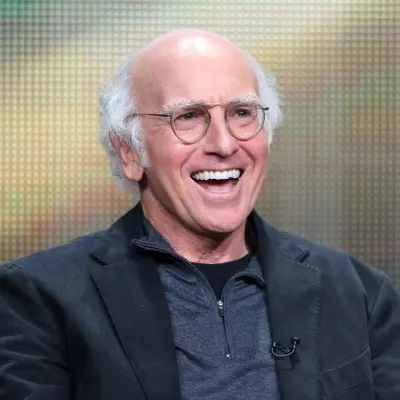
Larry David is an American comedian, writer, actor, and television producer who has a net worth of $400 million.
Larry David made his fortune by co-creating "Seinfeld" with Jerry Seinfeld and then creating, writing, and starring in HBO's "Curb Your Enthusiasm." Those two shows changed television comedy, but they also produced one of the great fortunes in entertainment history, largely because Larry negotiated something much more valuable than a salary: a share of the money "Seinfeld" would make long after its original episodes stopped airing.
David spent much of his early career as a struggling New York stand-up comic, earned a living from odd jobs, and had an unhappy stint writing for "Saturday Night Live." He was already in his 40s when "Seinfeld" finally made him successful. Even then, he was more comfortable writing about petty grievances and awkward social encounters than behaving like a Hollywood mogul. He left "Seinfeld" before its final two seasons, then turned his own abrasive public persona into the basis for "Curb Your Enthusiasm," which ran for 12 seasons between 2000 and 2024. He returned to HBO in 2026 with the historical sketch-comedy series "Life, Larry and the Pursuit of Unhappiness."
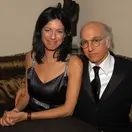
The gap between Larry's fortune and Jerry Seinfeld's larger net worth has a particularly interesting explanation. In 2007, Larry divorced his first wife, Laurie David, in a settlement that reportedly transferred hundreds of millions of dollars in assets and rights to future income. Larry himself has acknowledged that his ex-wife received half of their wealth.
Larry David's "Seinfeld" Syndication Fortune
When Larry David and Jerry Seinfeld started developing their NBC sitcom in 1989, neither could have known what the show would eventually be worth. But they made a crucial decision early on: instead of accepting only writing, producing, and acting compensation, they each secured 7.5% of the show's backend equity points. Those points entitled them to participate in the profits from syndication and other exploitation of the series.
As "Seinfeld" became one of the most popular programs on television, Larry and Jerry improved their terms. By the mid-1990s, each had increased his backend participation to 15%. Part of the increase came from buying out an early equity participant who wanted to cash out. It proved to be an extraordinarily lucrative decision. The show ran for nine seasons, but the value of its 180 episodes was only beginning to emerge when production ended in 1998.
"Seinfeld" actually began airing in off-network syndication in September 1995, while new episodes were still being produced for NBC. By 1998, its expanding syndication business had reached a reported $1.7 billion. Contemporary estimates put Larry and Jerry's respective windfalls from that era at roughly $250 million each. In a remarkable illustration of the arrangement's power, Forbes ranked Larry the second-highest-paid entertainer in the world in 1998, estimating his annual income at $200 million. Jerry ranked first at $225 million. Larry had left the show's day-to-day production two years earlier, but his ownership kept paying him as though he were still its biggest star.
The money did not stop in the 1990s. "Seinfeld" kept earning through local television stations, cable networks, international licensing, and home-video sales. At a 2010 investor conference, Time Warner disclosed that the first three broadcast syndication cycles had generated $598 million, $984 million, and $703 million, respectively. Three cable cycles added another $379 million, for a combined $2.67 billion in revenue. By 2013, the total had passed $3 billion. These were not all profits paid directly to Larry, but they illustrate how much the same 180 episodes could earn every time television rights came up for renewal.
Streaming then created an entirely new market for a sitcom that had already made its creators extraordinarily wealthy. Hulu acquired streaming rights in 2015 in a transaction reported at between $130 million and $180 million. In 2019, Netflix agreed to pay more than $500 million for global streaming rights beginning in 2021. TheWrap reported that Larry and Jerry each stood to receive at least $100 million to $125 million from that Netflix transaction, with another source suggesting the payments could be even larger.
The series kept finding new buyers. In 2026, Sony renewed its Netflix licensing arrangement for another five years and separately extended the show's U.S. basic-cable rights with Paramount for three years. The prices of those renewals were not disclosed, but the agreements demonstrated how valuable "Seinfeld" remained decades after its finale. Across television syndication, streaming, DVDs, merchandise, and related licensing, CelebrityNetWorth estimates that the franchise has generated roughly $5 billion and that Larry's cumulative "Seinfeld" earnings have reached approximately $750 million to $800 million over the decades.
For a more detailed account of the contracts and major sales, see our breakdown of how much Larry David made from "Seinfeld" syndication. His 15% backend participation was the financial decision that transformed a late-blooming comedy writer into one of the wealthiest people in television.

Larry David – $400 Million Man /Andrew Toth/Getty Images
Early Life
Lawrence Gene David was born on July 2, 1947, in Brooklyn, New York. He grew up in the Sheepshead Bay neighborhood in a Jewish family. His father, Morty David, worked in the garment business, while his mother, Rose, was a homemaker. Much of the humor that would later make Larry famous grew out of the New York environment in which he was raised, particularly its arguments, social rituals, and everyday frustrations.
David attended Sheepshead Bay High School and graduated from the University of Maryland in 1970 with a degree in history. He also served in the Army Reserve. Before comedy provided a steady living, he worked jobs that included limousine driving, retail work, and television repair. Those experiences were hardly glamorous, but they gave him an endless supply of stories about irritating bosses, difficult customers, and uncomfortable encounters with strangers.
Stand-Up Comedy, "Fridays," and "Saturday Night Live"
David spent much of the 1970s performing stand-up in New York clubs, developing a style built on blunt honesty and obsessive attention to situations other people might consider too trivial to discuss. His frustration with ordinary social behavior was funny onstage, but it could also make him a difficult fit for more conventional entertainment jobs. In 1980, he joined the cast and writing staff of ABC's sketch-comedy series "Fridays," where he worked alongside future "Seinfeld" star Michael Richards.
In 1984, David was hired as a writer for "Saturday Night Live." The experience was not a happy one: very little of his material made it to air, and he grew so frustrated that he quit in anger. Then, on a friend's advice, he showed up for work again as though he had never resigned. Years later, David recycled the incident into an episode of "Seinfeld" in which George Costanza tries essentially the same tactic after walking out on his job.
One of David's fellow "SNL" performers during that period was Julia Louis-Dreyfus. Neither could have known they would eventually work on a sitcom that would make them household names. David's professional setbacks also contributed to the worldview that later defined his television writing: people were selfish, social rules were ridiculous, and there was comedy in refusing to pretend otherwise.
Creating "Seinfeld"
David's breakthrough came through his friendship with Jerry Seinfeld. In 1989, the two developed a pilot about a stand-up comedian and the mundane details of his life. Larry stayed at Jerry's Los Angeles apartment while they worked on the script, and their conversations and disagreements helped establish the show's unusual rhythm. The project was initially called "The Seinfeld Chronicles," and executives at Castle Rock and NBC were uncertain about its lack of conventional sitcom storytelling. Larry and Jerry fought to preserve the dry, conversational humor that made it different.
The resulting series premiered in July 1989 and gradually became a ratings phenomenon. As co-creator, head writer, and executive producer, David helped develop the show's cynical approach to friendship, relationships, and everyday etiquette. He was also the primary inspiration for George Costanza, the anxious and frequently dishonest character portrayed by Jason Alexander. Many plots borrowed directly from David's own life, including his disastrous workplace resignation and recurring difficulties with social conventions.
Larry wrote or co-wrote 62 of the series' 180 episodes. Among his most famous contributions was "The Contest," a 1992 episode built around an outrageous subject that its characters never explicitly name. It won David a Primetime Emmy Award for Outstanding Writing for a Comedy Series. He also provided the voice of Yankees owner George Steinbrenner, whose conversations with George Costanza became a recurring joke.
David stepped down from his regular writing and producing responsibilities after the seventh season in 1996, although he returned to write the two-part series finale in 1998. The ending, which placed the four principal characters on trial for their selfish behavior, divided audiences. Larry would eventually find a wonderfully elaborate way to revisit that controversy in the finale of his next major series.
"Curb Your Enthusiasm" and a Second Television Fortune
Most writers who co-created a series as successful as "Seinfeld" would have had little financial incentive to attempt anything equally ambitious. Larry, however, returned to television with something even more personal. An HBO comedy special in 1999 followed a fictionalized David preparing to return to stand-up. It evolved into "Curb Your Enthusiasm," which premiered as a series in 2000 and made Larry himself the central character.
The show's Larry David was rich, stubborn, socially oblivious, and perpetually irritated by the unwritten rules of civilized behavior. Unlike "Seinfeld," "Curb" relied heavily on improvisation. The actors worked from detailed story outlines rather than conventional scripts, allowing ordinary conversations to become elaborate disasters. The ensemble included Jeff Garlin, Cheryl Hines, Susie Essman, J.B. Smoove, Richard Lewis, and Bob Einstein, along with a long list of celebrity guests willing to make fun of themselves.
The series ran for 12 seasons and 120 episodes, although David frequently took long breaks between installments and returned only when he felt he had enough material. One of its most memorable arcs reunited the main cast of "Seinfeld" in 2009. The 2024 series finale went a step further, deliberately echoing the much-criticized 1998 "Seinfeld" ending and allowing Jerry to appear as himself in the concluding joke. "Curb Your Enthusiasm" won the Golden Globe for Best Television Series – Musical or Comedy and accumulated dozens of Emmy nominations during its long run.
"Curb" also became a significant source of additional wealth. David served as creator, star, writer, and executive producer, giving him an unusually strong negotiating position with HBO. The exact financial terms of his long-running agreement have not been publicly disclosed, but Forbes estimated that his compensation for the final season could reach as much as $1 million per episode. That would be up to $10 million for the ten-episode final season, separate from any continuing value associated with the show's catalog and his producing interests.
Broadway, Movies, and Other Projects
David's film career has been sporadic, largely because television and his considerable "Seinfeld" income gave him the freedom to choose projects for their creative appeal rather than their paychecks. In 1998, he wrote and directed the comedy "Sour Grapes." He later starred in Woody Allen's 2009 film "Whatever Works" and co-wrote and starred in the 2013 HBO film "Clear History," playing a former marketing executive bitter about a business opportunity he abandoned just before it became enormously successful.
In 2015, he tried Broadway with "Fish in the Dark," a comedy about an argumentative family dealing with a death. The production was a genuine financial success. It sold a reported $13.5 million in advance tickets before its first preview, a record for a spring Broadway production at the time, and recouped its initial investment within months. By the end of its run, the show had grossed approximately $27.7 million. Larry starred in the original production before handing the lead role to Jason Alexander.
David also returned periodically to "Saturday Night Live," most memorably to portray Bernie Sanders during the 2016 presidential campaign. In an especially unlikely coincidence, an episode of "Finding Your Roots" later revealed that David and Sanders were distantly related. Decades after his miserable experience on "SNL" as a staff writer, he had become exactly the sort of guest star the show was eager to recruit.
"Life, Larry and the Pursuit of Unhappiness"
Ending "Curb Your Enthusiasm" in 2024 did not end Larry's relationship with HBO. In 2026, he reunited with longtime collaborator Jeff Schaffer for "Life, Larry and the Pursuit of Unhappiness," a seven-episode sketch-comedy series created with Barack and Michelle Obama's Higher Ground production company. The series reimagined episodes of American history through David's distinctively argumentative comic sensibility, with Larry portraying historical figures and people caught up in famous events.
The series premiered in June 2026 and concluded in August. The same year also brought "Emperor of Nothing: The Making of Larry David," Blake J. Harris's extensive biography based on interviews with David, Seinfeld, and numerous collaborators. The book revisited the unlikely rise of a comedian who spent years struggling to get noticed before helping create two of television's defining comedies.

(Photo by Frederick M. Brown/Getty Images)
Personal Life
Larry married environmental activist and producer Laurie Lennard in March 1993. The couple had two daughters, Cazzie David and Romy David. Laurie was closely involved in environmental advocacy and helped produce the Oscar-winning 2006 documentary "An Inconvenient Truth." Elements of their relationship informed the fictional marriage between Larry and Cheryl on "Curb Your Enthusiasm," although the series' storylines were not intended to be a literal account of their lives.
Laurie filed for divorce in 2007 after 14 years of marriage. In 2020, Larry married television producer Ashley Underwood, whom he had met through mutual friends at a gathering hosted by Sacha Baron Cohen. Despite the public image of a man who seems to dislike nearly everyone, David has maintained long friendships with many of the comedians, writers, and performers who have worked with him over the decades.
The Divorce That Cost Larry David Hundreds of Millions
There is an unavoidable financial question at the center of Larry David's story: if he and Jerry Seinfeld negotiated matching ownership stakes in one of the most lucrative sitcoms ever made, why is Jerry so much wealthier? Part of the answer is Jerry's substantial earnings from performing, touring, and other ventures. But a major factor in Larry's case is the breakup of his first marriage.
When Larry and Laurie David divorced in 2007, they had been married through much of the period in which the "Seinfeld" fortune was created. California's community-property system generally treats assets earned during a marriage as jointly owned, and Larry has acknowledged that Laurie received half of their wealth. Estimates have put the value of the settlement at roughly $200 million to $300 million, with the division also reportedly affecting future revenue from "Seinfeld" and interests tied to "Curb Your Enthusiasm."
Larry has occasionally bristled at the public's fascination with his finances. In a 2011 interview with "Rolling Stone," he said, "My wife got half of it," while dismissing the idea that the enormous wealth suited his personality. The joke, of course, is that Larry David has spent much of his career portraying someone obsessed with relatively small financial injustices, even as the real Larry was earning extraordinary sums from television royalties.
The $10 Million FTX Commercial
One of David's most unusual paydays came from a commercial that quickly became infamous. During the 2022 Super Bowl, he appeared in an elaborate advertisement for the cryptocurrency exchange FTX, playing a skeptic who dismisses major inventions and historical breakthroughs before rejecting the company's pitch. The ad invited viewers not to make the same mistake. Months later, FTX collapsed amid revelations of massive fraud involving its founder, Sam Bankman-Fried.
Legal filings and subsequent reporting put the cost of hiring David at roughly $10 million. The transaction was especially ironic because Larry later revealed that part of his compensation had been paid in cryptocurrency, which lost value when FTX collapsed. David and other celebrity promoters were also named in litigation brought by investors; the allegations did not establish that he knowingly participated in the fraud.
Speaking to the Associated Press in 2024, David said he had asked people he trusted whether appearing in the advertisement was a good idea and had been assured it was legitimate. His assessment afterward was characteristically concise: "Like an idiot, I did it." Our separate story examines the reported FTX endorsement payments to Larry and other celebrities.
Real Estate
Larry David has owned an extensive collection of expensive properties in Southern California and elsewhere, with some especially notable purchases and sales in Pacific Palisades and Montecito. In 1998, he and Laurie purchased a Pacific Palisades property for approximately $1.26 million and later assembled neighboring land around it. The resulting nearly one-acre estate featured an English country-style house with seven bedrooms, ten bathrooms, a guesthouse, and ocean and canyon views. Following the divorce, the former family estate went on the market for almost $15 million and ultimately sold for $12 million in March 2014. It was one transaction, not two separate $12 million sales.
David also acquired other property in Pacific Palisades, including a residence reportedly purchased for $10.35 million in the mid-2000s. His real-estate activity extended north to Montecito, where he bought a home for $5.7 million in early 2022 and sold it later that year for $6.9 million. He then purchased a different Montecito property in September 2022 for approximately $7.6 million. That house, originally built in 1917, featured five bedrooms, mature landscaping, and the understated architectural details associated with the area's older estates.
Here is a video tour of the Montecito home he purchased for $5.7 million and later sold for $6.9 million:
David and Laurie also acquired property on Martha's Vineyard during their marriage, with the island home figuring into their divorce-related property arrangements. These real-estate holdings, alongside his television rights and other investments, help explain why David remains extraordinarily wealthy even after the financial impact of his divorce. His greatest asset, however, has always been the recurring income from a sitcom he helped create nearly four decades ago.
Net Worth Unpacked Larry David
Explore the figures, comparisons, and money moments in this profile.
Read the text version 15 cards
Larry David's sitcom stake kept paying for decades
CNW estimated net worth $400M
CNW snapshot: 2026-11-05
SourcesLarry and Jerry doubled their 'Seinfeld' stakes
Each co-creator's 'Seinfeld' backend equity stake
- Initially, 19897.5%
- By the mid-1990s15%
CNW snapshot: 2026-11-05
Reruns became the bigger paycheck
Approximate early 'Seinfeld' syndication windfall for Larry, late 1990s $250M
Larry nearly matched Jerry's 1998 earnings
Forbes-estimated entertainer earnings, 1998
- Larry David · 1998$200M
- Jerry Seinfeld · 1998$225M
CNW snapshot: 2026-11-05
Larry beside three 'Seinfeld' cast members
Unlike Larry, the three actors did not receive 'Seinfeld' backend ownership points.
Creator and selected principal cast · CNW estimated net worth
- Larry David$400M
- Julia Louis-Dreyfus$250M
- Jason Alexander$50M
- Michael Richards$30M
CNW snapshot: 2026-11-05
Netflix brought Larry another nine-figure deal
Reported expected Larry payout from the 2019 'Seinfeld' streaming deal $100M–$125M
Larry lands in CNW's comedian top ten
of 756 CNW profiles #8
CNW profiles in Richest Comedians
- #7 · Jay Leno$450M
- Tied #8 · Larry David$400M
- Tied #8 · Seth MacFarlane$400M
- #11 · Kevin Hart$300M
CNW profiles in Richest Comedians
Population: 756 covered profiles. 3 profiles share this rank.
CNW snapshot: 2026-11-05
Top five · Richest Comedians
CNW estimates · Richest Comedians
- Tied #1 · Trey Parker$1.5B
- Tied #1 · Matt Stone$1.5B
- #3 · Byron Allen$1B
- #4 · Matt Groening$600M
- Tied #5 · Ellen DeGeneres$500M
Larry David · Tied #8 · $400M
CNW snapshot: 2026-11-05
'Curb' offered a sizable final-season paycheck
Forbes-estimated Larry David compensation per episode, final 'Curb' season, 2024 Up to $1M
SourcesLarry's Broadway comedy found its audience
Approximate Broadway gross for 'Fish in the Dark,' 2015 run $27.7M
SourcesLarry's FTX ad was one of three reported deals
Larry's reported fee was for one ad; Brady's deal covered three years.
Reported FTX endorsement fees, according to 2023 reporting
- Larry David · 2022 Super Bowl ad$10M
- Steph Curry · FTX endorsement$35M
- Tom Brady · FTX endorsement$55M
CNW snapshot: 2026-11-05
The 'Seinfeld' checks added up over decades
CNW estimated cumulative Larry David earnings from 'Seinfeld,' through 2026 $750M–$800M
What did Larry's 2007 divorce reportedly cost?
Larry and Laurie's reported divorce settlement
Larry says Laurie received half their accumulated wealth. Future 'Seinfeld' income was reportedly affected, too.
Estimated settlement, 2007 $200M–$300M
Larry and Laurie David both have substantial fortunes
Larry David and former wife Laurie David · CNW estimated net worth
- Larry David$400M
- Laurie David$300M
CNW snapshot: 2026-11-05