

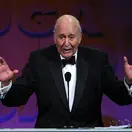














What Was Jonathan Winters' Net Worth?
Jonathan Winters was an American comedian, actor, voice artist, writer, and painter who had a net worth of $5 million at the time of his death in 2013. Widely regarded as one of the pioneers of modern improvisational comedy, Winters spent more than six decades entertaining audiences with his extraordinary ability to invent characters, voices, and entire comic situations without a script. His memorable creations included the sharp-tongued elderly woman Maude Frickert and the eccentric country bumpkin Elwood P. Suggins. His freewheeling approach to comedy influenced generations of performers, most notably Robin Williams, who considered Winters his greatest comedic inspiration.
Winters became a television fixture during the 1950s and 1960s, appearing on popular variety shows and hosting several programs of his own. His film credits included "It's a Mad, Mad, Mad, Mad World," "The Loved One," "The Russians Are Coming, the Russians Are Coming," and "The Flintstones." He later reached another generation of television viewers playing Mearth, the adult-sized infant son of Robin Williams' character on "Mork & Mindy." He also voiced characters in "The Smurfs" and earned a Primetime Emmy Award for his performance on the sitcom "Davis Rules."
In addition to television and film, Winters released numerous comedy albums, winning a Grammy Award for "Crank Calls" in 1996. He was also an accomplished painter and published several books featuring his humor and artwork. In 1999, he received the prestigious Mark Twain Prize for American Humor. Winters died on April 11, 2013, at age 87.
Early Life
Jonathan Harshman Winters III was born on November 11, 1925, in Dayton, Ohio. His father, Jonathan Harshman Winters II, worked in banking and insurance, while his mother, Alice Kilgore Rodgers, eventually became a radio personality. His grandfather had owned Winters National Bank, although the family's financial circumstances deteriorated during the Great Depression.
Winters experienced a difficult childhood. His parents separated when he was seven, and he moved with his mother to Springfield, Ohio, where they lived with his grandmother. His mother began working at local radio station WIZE, introducing him to the broadcasting industry.
As an only child, Winters frequently entertained himself by inventing imaginary companions, creating characters, and conducting mock interviews. He also developed an impressive collection of sound effects and imitations, skills that would eventually become central to his professional comedy.
During his senior year at Springfield High School, Winters left school to enlist in the United States Marine Corps. He served approximately two and a half years during World War II, including time in the Pacific Theater.
After returning to civilian life, he attended Kenyon College and later studied at the Dayton Art Institute. His original ambition was to become a professional cartoonist or commercial artist, but he gradually discovered that his talent for entertaining people offered another possible career.
Early Comedy Career
Winters entered show business almost accidentally. During the late 1940s, his wife, Eileen, encouraged him to participate in a local talent contest because they needed to replace a lost wristwatch. He won the competition, receiving a new watch and attracting the attention of a local radio station.
He began working as a disc jockey at WING in Dayton, where his improvised jokes and character voices quickly became more popular than the records he was supposed to play. Instead of simply introducing songs and reading advertisements, he created conversations between imaginary personalities and developed elaborate comic routines.
His radio work eventually led to television opportunities at WBNS-TV in Columbus, Ohio. In the early 1950s, he moved to New York City to pursue a national entertainment career.
Winters began appearing in television variety programs and comedy clubs, developing his reputation as an unpredictable performer who could transform an ordinary object into an elaborate comedy routine.
He became particularly popular on "The Tonight Show" during Jack Paar's tenure as host. One of his most celebrated appearances involved Paar handing him a simple wooden stick. Winters instantly transformed it into a fishing pole, a violin, a whip, and numerous other objects while inventing a succession of characters.
Unlike conventional stand-up comedians who relied on rehearsed jokes, Winters frequently performed without knowing what he was going to say next. His remarkable spontaneity helped establish improvisational comedy as a major form of American entertainment.
Television Stardom
In 1956, Winters received his first nationally televised series, "The Jonathan Winters Show," on NBC. The 15-minute program featured many of the eccentric characters he had developed during his radio and nightclub performances, including Maude Frickert and Elwood P. Suggins.
Maude Frickert became one of his most enduring creations. Appearing as an elderly woman with a seemingly harmless manner and a surprisingly sharp tongue, Winters used the character to deliver outrageous observations about relationships, society, and human behavior.
He returned to weekly television with another version of "The Jonathan Winters Show," which aired on CBS from 1967 to 1969. The variety program featured celebrity guests, comedy sketches, musical performances, and improvisational segments.
During the 1970s, Winters hosted "The Wacky World of Jonathan Winters" and appeared in numerous television specials and variety programs. He became a favorite guest of Johnny Carson, Steve Allen, and other leading television personalities, often stealing entire episodes through improvised performances.
His television work also included dramatic acting. In 1961, he appeared opposite Jack Klugman in the celebrated "Twilight Zone" episode "A Game of Pool," portraying the ghost of legendary pool champion Fats Brown.
The performance demonstrated that Winters could be effective in serious roles as well as comedy, although he remained best known for his extraordinary improvisational abilities.
Film Career
Winters made his feature film debut in Stanley Kramer's 1963 comedy "It's a Mad, Mad, Mad, Mad World," playing Lennie Pike, a moving-truck driver who becomes involved in a chaotic cross-country treasure hunt.
The film featured an enormous ensemble of comedy stars, including Spencer Tracy, Milton Berle, Sid Caesar, Buddy Hackett, and Ethel Merman. Winters' energetic performance became one of its most memorable elements and earned him a Golden Globe nomination for Best Actor in a Motion Picture – Musical or Comedy.
He subsequently appeared in the 1965 black comedy "The Loved One," playing two characters, Henry Glenworthy and his brother, the Reverend Wilbur Glenworthy. The following year, he appeared in Norman Jewison's Cold War comedy "The Russians Are Coming, the Russians Are Coming."
Other films included "Penelope," "Eight on the Lam," "Viva Max!," "Hanky Panky," "Moon Over Parador," "The Flintstones," and "The Shadow."
Although Winters appeared in dozens of movies, his unpredictable style was sometimes difficult to accommodate within tightly scripted productions. He was often most effective when directors allowed him the freedom to improvise.
Later film appearances included "The Adventures of Rocky and Bullwinkle," "Comic Book: The Movie," and the 2007 mockumentary "Certifiably Jonathan," which explored his comedy, artwork, and personality.

Getty Images
Mork & Mindy and Robin Williams
One of Winters' most memorable later television roles came during the fourth and final season of "Mork & Mindy," which aired from 1981 to 1982.
The sitcom starred Robin Williams as Mork, an alien from the planet Ork, and Pam Dawber as his human companion Mindy. Williams had idolized Winters since childhood and regarded him as a major influence on his own rapid-fire improvisational style.
Winters joined the show as Mearth, Mork and Mindy's son. Because Orkans aged backward, Mearth emerged from an egg as an adult-sized infant, providing the perfect opportunity for Winters to perform his unpredictable physical comedy and childlike improvisations.
His arrival created an unusual situation in which Williams was effectively working alongside the comedian who had inspired him to enter the profession. Their scenes frequently became exercises in spontaneous invention, with each performer encouraging the other to develop increasingly absurd ideas.
Although "Mork & Mindy" ended in 1982, the collaboration strengthened their friendship. Williams continued publicly acknowledging Winters as one of the most important figures in his professional development.
Winters also influenced comedians including Steve Martin, Jim Carrey, Lily Tomlin, and many others who adopted elements of his character-based, improvisational approach.
Davis Rules and Voice Acting
Winters enjoyed another major television success in 1991 when he joined the ABC sitcom "Davis Rules," starring Randy Quaid and Patricia Clarkson.
He portrayed Gunny Davis, the eccentric father of Quaid's character, Dwight Davis. The show's producers deliberately allowed Winters considerable freedom to improvise, frequently leaving portions of his dialogue open-ended.
His performance earned him the Primetime Emmy Award for Outstanding Supporting Actor in a Comedy Series in 1991. Although the series lasted only two seasons, the role became one of the most acclaimed performances of his later career.
Winters also worked extensively as a voice actor. During the 1980s, he voiced Grandpa Smurf on the animated series "The Smurfs," introducing his distinctive voice to a younger audience.
His other animated television credits included "The Completely Mental Misadventures of Ed Grimley," "Gravedale High," "Little Dracula," and "Fish Police."
He later returned to the Smurfs franchise as the voice of Papa Smurf in the 2011 film "The Smurfs." The movie grossed more than $560 million worldwide, becoming one of the biggest commercial successes associated with his later career.
Winters reprised the role in "The Smurfs 2," released in July 2013, three months after his death. The film was dedicated to his memory.
Comedy Albums and Commercial Work
Beyond live performances, Winters built a substantial recording career through comedy albums, many of which featured his improvised characters and unusual vocal performances.
His early releases included "The Wonderful World of Jonathan Winters" in 1960, "Here's Jonathan" in 1961, "Another Day, Another World" in 1962, and "Whistle Stopping" in 1964.
His recordings established him as one of the leading comedians of the LP era, when comedy albums provided performers with an important revenue source beyond television appearances and nightclub engagements.
Winters continued recording for decades, releasing albums including "Finally Captured," "Jonathan Winters Into the '90s," and "Jonathan Winters Is Terminator 3."
In 1996, he won the Grammy Award for Best Spoken Comedy Album for "Crank Calls." Over his career, he received 11 Grammy nominations.
Winters also earned income through an extensive advertising career. During the late 1950s and early 1960s, he provided voices for a popular series of Utica Club beer commercials featuring talking beer steins named Schultz and Dooley.
During the 1970s, he became a familiar television spokesperson for Hefty trash bags, portraying an elegantly dressed garbage collector who pronounced garbage as "gar-bahj." The advertisements became closely associated with his comic persona and helped introduce him to viewers who were unfamiliar with his nightclub and television work.
His other commercial appearances included campaigns for Good Humor ice cream and various consumer products.
Painting and Books
Although comedy made him famous, Winters maintained a lifelong passion for visual art. He studied painting and illustration before entering show business and continued creating artwork throughout his professional career.
His paintings frequently combined surrealist imagery, unusual characters, and humorous observations about society. He exhibited his work in galleries and participated in solo exhibitions, establishing a second creative career outside entertainment.
Winters also published several books, beginning with "Mouse Breath, Conformity and Other Social Ills" in 1965.
His 1987 collection, "Winters' Tales: Stories and Observations for the Unusual," became a national bestseller. He followed it with "Hang-Ups: Paintings by Jonathan Winters" in 1988 and "Jonathan Winters: After the Beep" in 1989.
He also published "Maude Frickert Tells All," a collection devoted to one of his most popular comedy characters, in 2010.
Real Estate
Winters and his wife, Eileen, lived for many years in Montecito, California, the affluent community near Santa Barbara.
In February 1991, the Los Angeles Times reported that the couple had purchased a substantial home on the same Montecito street where they had owned another residence for more than a decade.
The newly acquired property had originally been listed for $4.2 million but sold for approximately $2.5 million.
The French Normandy-style residence measured approximately 6,000 square feet and occupied three acres with views of the Pacific Ocean. It also featured a separate guesthouse, mature oak trees, and extensive landscaped gardens.
The couple undertook renovations after purchasing the property. Winters continued living in Montecito throughout his later years and died at his home in the community in 2013.
Personal Life and Mental Health
Winters married Eileen Ann Schauder on September 11, 1948, after meeting her while studying at the Dayton Art Institute. The couple remained married for more than 60 years and had two children, Jay and Lucinda.
Eileen died in January 2009 at age 84 following a lengthy battle with breast cancer.
Throughout his career, Winters spoke candidly about his struggles with mental health. He experienced severe nervous breakdowns and periods of psychiatric hospitalization, including treatment during 1959 and 1961.
His experiences with bipolar disorder and emotional difficulties influenced aspects of his comedy, although he often used humor to discuss subjects that were painful or difficult to explain directly.
Winters remained devoted to painting, collecting unusual objects, and pursuing creative interests outside the entertainment industry. He was known for his fascination with antiques, firearms, military history, and other subjects that frequently appeared in his improvisational routines.
Awards and Legacy
Winters received numerous honors recognizing his influence on American comedy.
In addition to his Grammy and Primetime Emmy Awards, he earned a Golden Globe nomination for "It's a Mad, Mad, Mad, Mad World" and received a second Emmy nomination in 2003 for a guest appearance on "Life with Bonnie."
He received a star on the Hollywood Walk of Fame in 1960 and the American Comedy Awards' Lifetime Achievement Award in 1987.
In October 1999, Winters was honored with the Mark Twain Prize for American Humor at the Kennedy Center in Washington, D.C. He was only the second recipient of the award, following Richard Pryor.
The ceremony featured tributes from prominent comedians, including Robin Williams, Steve Allen, and Sid Caesar. It recognized Winters' enormous influence on the development of improvisational comedy and his ability to create fully realized characters without written material.
His influence remained evident in subsequent generations of comedians who adopted his improvisational approach to stand-up, sketch comedy, and television.
Death
Jonathan Winters died of natural causes on April 11, 2013, at his home in Montecito, California. He was 87 years old.
His death prompted tributes from performers throughout the entertainment industry, including Robin Williams, Steve Martin, and Jim Carrey, all of whom credited him with helping shape their approach to comedy.
Winters was cremated, and his remains were given to his family. He was survived by his two children and five grandchildren.
His final major film appearance came posthumously in "The Smurfs 2," which was released later that year and dedicated to him. His six-decade career left behind an extensive body of television appearances, recordings, films, books, and artwork, along with a lasting reputation as one of the most inventive comedic performers of the twentieth century.