










What Was Jerry Lewis' Net Worth and Career Earnings?
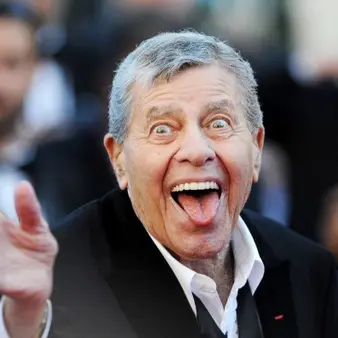
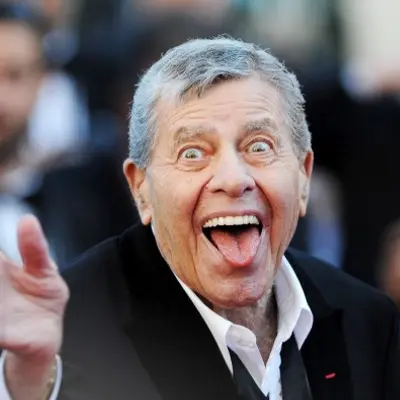
Jerry Lewis was an American comedian, actor, singer, director, producer, and screenwriter who had a net worth of $50 million at the time of his death in 2017.
Jerry Lewis was one of the defining screen comedians of his generation. In the late 1950s and early 1960s, Jerry Lewis was one of the highest-paid entertainers on the planet, able to command large salaries and back-end profits from his films. Jerry Lewis first became famous as a funny man in the comic team of Dean Martin and Jerry Lewis. He then became a solo actor in films and TV and a singer, director, and producer.
Jerry Lewis had well over 70 acting credits to his name. He was the recipient of lifetime achievement awards from The American Comedy Awards, Venice Film Festival, and Los Angeles Film Critics Association. Lewis has two stars on the Hollywood Walk of Fame. Lewis was known for being host of the Muscular Dystrophy Association's Labor Day Telethon. He was also the national chair for the MDA. Jerry Lewis died on August 20, 2017, at the age of 91.
Paramount Contract and Film Ownership
In 1959, Lewis signed a groundbreaking contract with Paramount that promised his production company $10 million plus 60% of the profits from 14 films over seven years. The agreement made him one of Hollywood's highest-paid entertainers and gave him an unusually large financial stake in his own work. He was no longer simply an actor hired to deliver a performance; his company participated in the business behind the films.
The deal followed his transition from the Martin and Lewis partnership to solo stardom. Hits such as "The Delicate Delinquent," "Rock-a-Bye Baby," and "The Geisha Boy" had shown that he could draw audiences without his former partner. As he added directing and producing to his responsibilities, his film interests became an important part of the fortune he later left behind.
Estate Disinheritance
In the wake of his death, it was revealed that Jerry had disinherited his six oldest children. Here's the excerpt in question dealing with six of his seven children:
"I have intentionally excluded Gary Lewis, Ronald Lewis, Anthony Joseph Lewis, Christopher Joseph Lewis, Scott Anthony Lewis, and Joseph Christopher Lewis and their descendants as beneficiaries of my estate, it being my intention that they shall receive no benefits hereunder."
The comedian and filmmaker was known to have had a complicated, if not outright hostile, relationship with his six sons from his first marriage to British singer Patti Palmer. One of those sons – Joseph Lewis – actually died from a heroin overdose in 2009 and had been dead for three years when the will was executed.
The Lewis estate is estimated to be worth millions in cash and real estate holdings, with the real big money value coming in the intellectual property rights to Lewis' films, which the comedian owned himself. Under his will, those assets went to his second wife, SanDee Pitnick, with their daughter Danielle named as the alternate beneficiary. His sons and their descendants were specifically excluded.

Kevork Djansezian/Getty Images
Las Vegas Real Estate
Lewis and SanDee moved into their Las Vegas home in 1983, and he lived there until his death. The two-story property in the Scotch 80s neighborhood was listed for $1.4 million in 2018. SanDee sold it for $1.2 million that June.
The property later attracted attention through an auction promoted by its subsequent owner, including a publicized $2.5 million bid. That auction involved the later owner, after the Lewis family had received $1.2 million for the property. By July 2019, the house remained on the market for $1.6 million.
Early Life
Lewis was born on March 16, 1926, in Newark, New Jersey. His parents were both Jewish and raised Lewis in a Jewish household. His father, Daniel Levitch, was a master of ceremonies and vaudevillian whose parents had emigrated to the United States from Russia. His mother, Rachael, was a pianist and music director who was originally from Warsaw, Poland. Lewis identified his birth name as Joseph in his autobiography, though biographer Shawn Levy found a birth record naming him Jerome. He went by Jerry in order to avoid confusion with Joe E. Lewis, a comedian, and Joe Louis, a boxer. He attended Irvington High School, where he was known for pulling pranks until he dropped out during his tenth-grade year.

(Photo by Evening Standard/Getty Images)
Martin and Lewis
By the time Lewis was 15, he had already developed his own act as a mime and began performing at some clubs, theaters, and hotels in New York. In 1945, Lewis met Dean Martin, a young singer. The two decided to develop an act together, which quickly rose to national prominence, given their attractiveness and charisma. They booked spots on a number of national TV and radio shows like "Toast of the Town" and "Welcome Aboard." In 1950, the duo signed with NBC to become one of the weekly hosts of "The Colgate Comedy Hour," which premiered live every Sunday. The following year, they appeared at the Paramount Theatre in New York. They had developed such a strong following that Paramount Pictures began casting Martin and Lewis as ensemble players in films like "My Friend Irma," "The Stooge," and "Scared Stiff," among many others. Their massive popularity even inspired its own comic series by DC Comics, "The Adventures of Dean Martin and Jerry Lewis," which was published between 1952 and 1957.
The partnership eventually became strained, with Martin increasingly frustrated by being treated as the straight man while Lewis attracted much of the attention. They ended the act in 1956, ten years after their first performances together, and both went on to successful solo careers.
Solo Stardom and The Nutty Professor
Lewis recorded an album, "Jerry Lewis Just Sings," which reached the third spot on the Billboard charts. He followed this up with a second album and then began performing regularly at the Sands Hotel and Casino in Las Vegas, as well as a number of other theaters and clubs around the country. These performances helped thrust Lewis even more firmly into the spotlight. DC Comics even published a new comic series entitled "The Adventures of Jerry Lewis" from 1957 to 1971.

Stuart C. Wilson/Getty Images
In 1960, Lewis made his debut as a film director, directing "The Bellboy." He then began regularly directing films, in addition to acting in them and producing. In 1963, he directed, wrote, and starred in "The Nutty Professor" which became a huge commercial success and has subsequently spawned sequels and stage adaptations. Lewis continued landing major film roles and working steadily throughout the 1960s and into the 1970s but then went 11 years without a new theatrically released starring vehicle before "Hardly Working" reached American theaters in 1981. This film went on to earn $50 million, though it was not loved by the critics.
Later Films, Broadway, and Television
One of his most acclaimed dramatic performances came in Martin Scorsese's "The King of Comedy". Lewis played television host Jerry Langford opposite Robert De Niro's obsessive aspiring comedian, Rupert Pupkin. The controlled, often angry performance revealed a very different side of an actor famous for pratfalls and manic energy.
Lewis also took his comedy to Broadway, playing the devilish Mr. Applegate in the 1995 production of "Damn Yankees," following Victor Garber in the role. He later toured with the musical. Television interviews and occasional performances kept him visible even as declining health made full-time work more difficult.
Though Lewis experienced an increasing number of health problems during the latter half of his life, he still acted and directed films and television shows and continued recording music. One of his final leading roles was in "Max Rose," which received its theatrical release in 2016. He also appeared on popular talk shows and podcasts during his final years, like "WTF with Marc Maron" and "Comedians in Cars Getting Coffee," hosted by Jerry Seinfeld.
The MDA Telethon and Film Legacy
Lewis became associated with the Muscular Dystrophy Association in 1952. His first Labor Day telethon aired on a single New York station in 1966, and by his final broadcast in 2010, the annual fundraiser reached more than 150 stations. MDA credits the telethons with raising more than $2 billion with his support.
The marathon broadcasts mixed celebrity performances with fundraising appeals. One of their most memorable moments came in 1976, when Frank Sinatra brought Dean Martin onstage for a reunion with Lewis. The Academy of Motion Picture Arts and Sciences later recognized Lewis with the Jean Hersholt Humanitarian Award in 2009.
His legacy also includes the unfinished 1972 film "The Day the Clown Cried." Lewis donated his personal collection to the Library of Congress under a 2014 agreement that restricted access to some materials for ten years. In September 2024, the Library made surviving footage available for research, including an assembled portion and unedited material. It did not have a complete finished film.
Personal Life
Jerry Lewis married Patti Palmer in October of 1944. The couple had six children together, five biological and one adopted. During their 35 years of marriage, Lewis was open with his pursuit of other women and discussed having affairs with Marilyn Monroe and Marlene Dietrich in interviews. In 1980, his first wife filed for divorce due to Lewis's infidelity and his extravagant spending to maintain his lifestyle. Their divorce was finalized in 1983, and thereafter Lewis excluded the children he had with Palmer from inheriting any part of his estate.
The same year that his divorce was finalized, Lewis married former ballerina and stewardess Sandra Pitnick. The two had met on set for one of Lewis's films, "Hardly Working," in which Pitnick had a minor role. They had an adopted daughter together and remained married for 34 years until Lewis died.
Throughout his life, Lewis had several health problems and illnesses. After sustaining a back injury during a comedy performance, Lewis became addicted to Percodan for thirteen years before finally kicking the addiction in 1978. He also suffered from a number of heart problems, having his first heart attack at the age of 34 in 1960. Following another heart attack in 1982, he had a double-bypass surgery.
He also had prostate cancer, diabetes, and pulmonary fibrosis, all of which grew progressively more serious in the later years of his life. At the age of 91 in 2017, Lewis died at his home in Las Vegas from cardiac and peripheral artery disease. His will named his second wife as beneficiary and their daughter as the alternate.
Following his death, multiple marquees in Las Vegas displayed Lewis's image to commemorate the many years that Lewis had performed in the city as a headliner.