












What Was Jango Edwards' Net Worth?
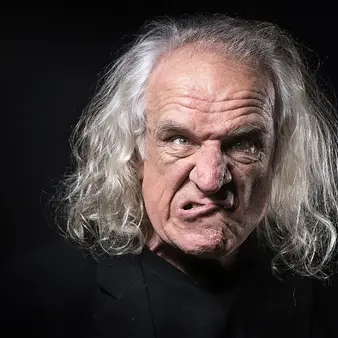
Jango Edwards was an American clown, comedian, actor, and performance artist who had a net worth of $1 million at the time of his death in 2023.
Jango Edwards was one of the most influential figures in modern clowning, helping transform the traditional circus art form into a provocative style of adult entertainment incorporating satire, physical comedy, political commentary, and outrageous behavior. Although he was born in the United States, Edwards achieved his greatest success in Europe, where he became a theatrical celebrity and a familiar presence on French, Dutch, and German television.
Unlike conventional clowns, Edwards rarely relied on red noses or traditional circus routines. His performances were deliberately confrontational, sometimes featuring nudity, vulgar humor, elaborate physical stunts, and audience participation. Beginning in the 1970s, he became a leading figure in the Nouveau Clown movement, co-founded Amsterdam's International Festival of Fools, and eventually established a training institution for aspiring performers in Barcelona. His admirers included members of the Rolling Stones and filmmaker Federico Fellini, while his theatrical engagements attracted devoted audiences for decades.
Before entering show business, Edwards had been involved in a successful family landscaping company in Detroit. He sold his ownership stake in 1969 and moved to Europe, abandoning a conventional business career to pursue an uncertain future as a street performer. What followed was more than five decades of international touring, television appearances, theatrical productions, and teaching. He died of pancreatic cancer in August 2023 at the age of 73.
Early Life
Jango Edwards was born Stanley Ted Edwards on April 5, 1950, in Detroit, Michigan. His parents, Harold and Hermione Edwards, owned a successful landscaping company, which Stanley and his brother, Harold Jr., eventually took over after leaving high school.
As a young man, Edwards became increasingly interested in the counterculture movement of the late 1960s. He explored radical politics, philosophy, music, and alternative lifestyles while growing dissatisfied with the prospect of spending his life operating the family business.
Although the company was financially successful, Edwards felt that he was pursuing a career that offered little personal fulfillment. He later joked that he had gotten rich by "selling grass," a reference to his family's landscaping business that also played on his association with 1960s counterculture.
In 1969, he sold his stake in the business to his brother and left the United States. He initially traveled through Europe and eventually settled in London, where he decided to pursue a career in entertainment.
Becoming Jango Edwards
Edwards arrived in London in 1970 with little formal performance experience. He began working as a street entertainer, experimenting with juggling, music, mime, and increasingly bizarre physical comedy.
Some of his earliest routines were extreme even by the standards of avant-garde performance. In one act, he would spin continuously for 15 minutes until he became physically sick. His willingness to subject himself to discomfort in pursuit of a reaction became one of the defining characteristics of his performance style.
He adopted the name Jango after visiting Morocco, where children told him he resembled Django, a character from a spaghetti western. Edwards dropped the initial D and embraced Jango as his professional identity.
While in London, he enrolled in evening classes devoted to clowning. He quickly demonstrated enough ability that when his instructor temporarily left to work in a circus, Edwards took over teaching the classes.
He subsequently joined forces with fellow clown Nola Rae to establish the Friends Roadshow, a traveling performance troupe that helped introduce his increasingly unconventional style to European audiences.
International Festival of Fools and Nouveau Clown
In 1975, Edwards helped establish the International Festival of Fools in Amsterdam. The event brought together experimental clowns, street performers, comedians, and theatrical artists from across Europe and became one of the central gatherings of the emerging Nouveau Clown movement.
The festival, which continued through the mid-1980s, challenged the notion that clowning was primarily entertainment for children. Performers borrowed from centuries of comic traditions, including medieval court jesters, commedia dell'arte, cabaret, burlesque, and modern political satire.
Edwards believed that clowns occupied a unique position in society because they could challenge authority and expose uncomfortable truths through humor. His performances frequently mocked bureaucracy, social conventions, religion, and the absurdities of everyday life.
He became particularly famous for routines that combined carefully rehearsed physical comedy with unpredictable audience interactions. In one sketch, he portrayed a manic magician who attempted a card trick using hot dogs instead of playing cards. In another, he played an airline flight attendant attempting to demonstrate safety procedures while wearing roller skates.
His performances could be deliberately messy, involving food, liquids, and elaborate physical gags that left both performers and audience members covered in debris. He often appeared in drag, oversized costumes, or almost no clothing at all.
The provocative style developed by Edwards and his contemporaries helped broaden the possibilities of clowning and influenced later generations of experimental comedians and physical theater performers.
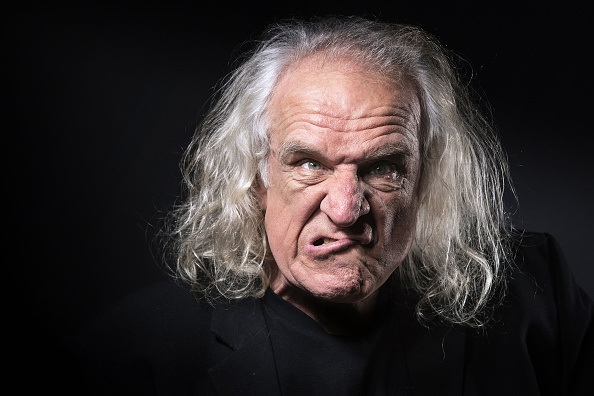
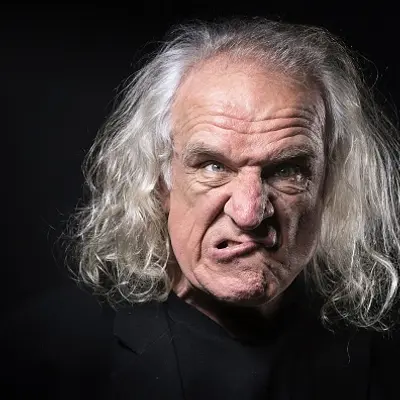
JOEL SAGET/AFP/Getty Images
European Stardom
By the early 1980s, Edwards had developed a substantial following in the Netherlands, Germany, and France. His shows combined the energy of a rock concert with the physical precision of traditional clowning, making him especially popular among younger audiences.
He achieved considerable success in Paris, where French critics praised his performances at venues including the Palais des Glaces and the Théâtre du Splendid. His 1984 production "Y Laugh You" featured a comic interpretation of civilization rebuilding after a nuclear catastrophe.
Between 1987 and 1988, Edwards enjoyed a nine-month theatrical engagement at the Splendid in Paris. At the height of his career, he frequently performed multiple 90-minute shows six nights a week, either alone or alongside other experimental clowns.
His demanding schedule made live performance his primary professional activity. Rather than depending on a single television contract or film franchise, Edwards built his career through international theatrical engagements, touring companies, festival appearances, and independently developed productions.
His reputation extended well beyond theater audiences. Among his admirers were the Rolling Stones, filmmaker Federico Fellini, and other prominent European cultural figures.
Edwards was particularly successful in France, where his distinctive personality led to comparisons with the comedian Coluche. His combination of physical comedy, irreverence, and social criticism also made him a popular guest on European television.
Television, Film, and Recordings
Throughout the 1980s and 1990s, Edwards appeared regularly on European television. He became especially well known to French audiences through appearances on the Canal+ entertainment program "Nulle part ailleurs," where his chaotic performances alongside Antoine de Caunes and José Garcia became memorable moments in the show's history.
He also appeared on the Austrian comedy program "Tohuwabohu" during the 1990s and participated in various European television specials and entertainment programs.
Although live performance remained his principal focus, Edwards accumulated several film credits, including "Rosi und die große Stadt" (1980), "Gemini: The Twin Stars" (1988), "Le Retour des Charlots" (1992), and "Blindspot" (2008).
Edwards also recorded several comedy and musical albums. His releases included "Live at the Melkweg" (1978), "Clown Power" (1980), "Live in Europe" (1980), and "Holey Moley" (1991). Later recordings included "Too Much Fun" (2012) and "Radio Jango (12 Crazy Performances)" (2016).
In 2004, he released a compilation DVD titled "Jango Edwards: The Best of Jango," featuring highlights from his stage performances.
Nouveau Clown Institute
Edwards settled in Barcelona in the early 2000s, establishing a permanent base after decades of international touring.
In 2009, he co-founded the Nouveau Clown Institute with Scottish performer Johnny Melville. The school was dedicated to teaching contemporary clowning and encouraging performers to develop individual styles rather than simply imitate traditional circus routines.
The institution attracted aspiring performers from around the world and offered workshops, master classes, and intensive training programs. Edwards shared techniques developed through decades of theatrical experience while emphasizing spontaneity, vulnerability, and the ability to connect emotionally with audiences.
He continued performing alongside his wife and fellow clown Cristi Garbo. His later productions included "Tous à l'asile!" ("All at the Asylum"), which he presented in France in 2016.
Although Edwards announced his retirement in 2017, he continued making occasional appearances and participating in special performances. He remained closely involved in Barcelona's experimental theater community and continued mentoring younger artists.
Personal Life
Edwards was married twice. His first wife was Cynthia Marler, with whom he had two sons, Mickie and Turne. The marriage ended in divorce. He also had a daughter, Valentina, from another relationship.
In 2014, he married Cristi Garbo, a Spanish clown and longtime creative collaborator. The couple frequently performed together and shared a commitment to promoting contemporary clowning.
Despite spending most of his adult life in Europe, Edwards retained his American identity while becoming deeply integrated into the artistic communities of Amsterdam, Paris, and Barcelona.
His family also became involved in his performances. In 2016, he appeared alongside his sons in "All at the Asylum," bringing together multiple generations in a production that reflected his lifelong dedication to comedy.
Death
In 2022, Edwards publicly announced that he had been diagnosed with terminal cancer. Even while confronting his illness, he maintained the irreverent sense of humor that had defined his career.
He devoted much of his remaining time to completing a memoir and instructional manuscript titled "The Clown Bible," which combined recollections of his career with observations about the philosophy and practice of clowning.
Edwards finished the manuscript just days before his death.
Jango Edwards died of pancreatic cancer on August 5, 2023, at his home in Barcelona, Spain. He was 73 years old. His death was publicly acknowledged by Barcelona mayor Jaume Collboni, who paid tribute to his contributions to the city's cultural life.
Although Edwards never achieved the same level of mainstream recognition in the United States that he enjoyed in Europe, his influence on contemporary clowning was substantial. By combining the traditions of physical comedy with countercultural satire and adult theater, he helped establish an entirely different conception of what a clown could be.