What Is David Letterman's Net Worth and Salary?
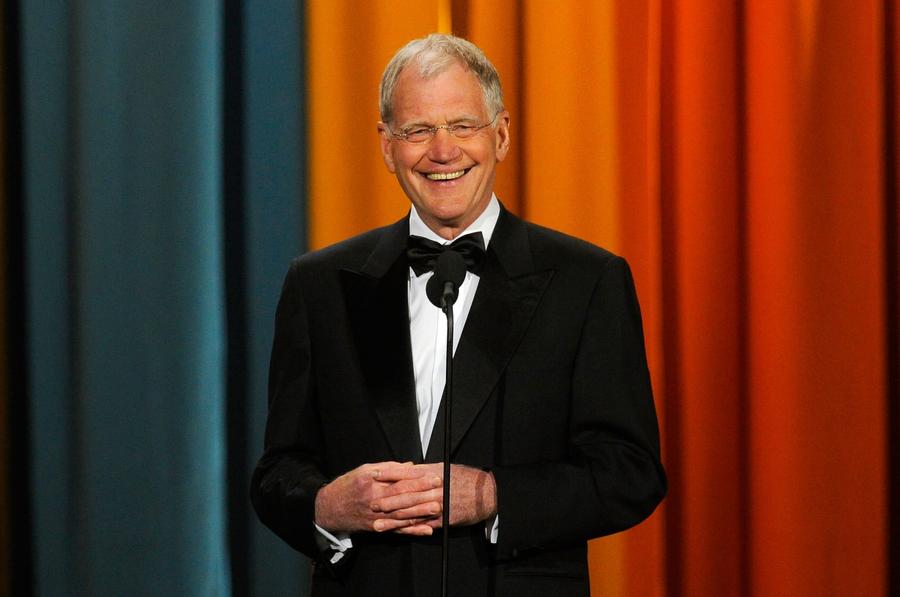
David Letterman is an American comedian and former late-night talk show host who has a net worth of $400 million. Unlike his fellow late-night hosts, like Jay Leno or Jimmy Fallon, David Letterman was not merely a highly paid employee of a network. He owned and produced his show. As a result, he typically earned around $50 million a year in licensing and syndication fees from his show. That does not include what he earned producing shows like "Everybody Loves Raymond."
After beginning as a radio host and local television personality in Indianapolis, Letterman moved to Los Angeles in the 1970s and became a stand-up comedian and writer. His dry, ironic humor soon landed him appearances on "The Tonight Show Starring Johnny Carson," where Carson became an important mentor and champion.
Letterman's first major network opportunity came with the short-lived daytime program "The David Letterman Show" in 1980. Though it was canceled quickly, the show won critical praise and helped establish his offbeat comic voice. In 1982, NBC launched "Late Night with David Letterman," which became a cult favorite thanks to its strange comedy bits, remote segments, self-deprecating humor, audience interaction, and recurring features like "Stupid Pet Tricks" and the "Top Ten List." Letterman's style was more absurdist and less polished than traditional late-night television, making him a major influence on future hosts.
After Johnny Carson retired in 1992, Letterman was famously passed over for "The Tonight Show" in favor of Jay Leno. The decision led Letterman to leave NBC for CBS, where he launched "Late Show with David Letterman" in 1993. He hosted the program for more than two decades, interviewing major celebrities, politicians, musicians, and public figures while maintaining his reputation for sarcasm, unpredictability, and emotional candor.
Letterman retired from nightly late-night television in 2015 after more than 6,000 episodes across NBC and CBS. He later returned with the Netflix interview series "My Next Guest Needs No Introduction with David Letterman," showing a more reflective, long-form side of his interviewing style. Across his career, Letterman became one of the most influential figures in American television comedy.
Late Night Salary
Unlike Jay Leno, who was a highly paid NBC employee while hosting "The Tonight Show," David Letterman built something much more valuable than a salary. After earning $20 million a year between 2002 and 2009, Leno's "Tonight Show" pay peaked at around $30 million per year in 2009 and 2010. Meanwhile, Letterman was consistently earning around $50 million per year all-in through a combination of salary, production fees, backend ownership, and other profits. That was because when Letterman left NBC for CBS in 1993, he did not merely become the host of "Late Show with David Letterman." Through his company Worldwide Pants, he owned and produced the show. That gave him a level of control and upside that most late-night hosts never had.
Worldwide Pants also produced "The Late Late Show" franchise for CBS, including the Craig Kilborn and Craig Ferguson eras, and it had a major primetime hit with "Everybody Loves Raymond," which became one of the most successful sitcoms of the 1990s and 2000s. The company also produced shows such as "Ed," "The Knights of Prosperity," "Bonnie," and various specials and later projects. When Letterman retired in 2015 and Stephen Colbert took over "The Late Show," that ownership era effectively ended. Colbert's version of the show was produced under a different CBS structure, not as a Worldwide Pants vehicle. In other words, Letterman was not just a late-night star. He was a media entrepreneur who owned the factory, not just the desk.
Netflix Salary
For his Netflix show, David makes $2 million per episode.

Michael Hickey / Getty Images
Early Life
David Michael Letterman was born on April 12, 1947, in Indianapolis, Indiana. His father, Harry Joseph Letterman, was a florist, and his mother, Dorothy Mengering, worked as a church secretary and later became a beloved recurring presence on his shows. Letterman grew up in the Broad Ripple area of Indianapolis and attended Broad Ripple High School.
He later enrolled at Ball State University in Muncie, Indiana, where he studied radio and television. Letterman was not considered an especially strong student, but he was drawn to broadcasting and began working in radio while still in college. After graduating in 1969, he worked as a radio announcer and television weatherman in Indianapolis. His early on-air work gave hints of the comic persona that would later make him famous. As a weatherman, he developed a reputation for joking around with the format rather than simply reading the forecast.
Early Comedy Career
In the mid-1970s, Letterman moved to Los Angeles to pursue a career in comedy. He began performing stand-up at The Comedy Store, the legendary club that also helped launch the careers of comedians such as Jay Leno, Richard Pryor, Robin Williams, and Michael Keaton.
Letterman's dry delivery and Midwestern oddness separated him from many other comics of the period. He also worked as a television writer, including on variety and game shows, while making guest appearances on talk shows. His biggest break came when he began appearing on "The Tonight Show Starring Johnny Carson." Carson became a major supporter of Letterman, and those appearances introduced him to a national audience. Letterman later became one of Carson's most important late-night heirs, even though the transition from Carson to the next generation would become one of the most famous dramas in TV history.
"The David Letterman Show" and "Late Night"
Letterman's first network hosting job came in 1980 with "The David Letterman Show," a daytime NBC program. The show was canceled after a short run, but it was admired by critics and won Emmy Awards. More importantly, it convinced NBC that Letterman had a unique voice that might work better late at night.
In 1982, NBC launched "Late Night with David Letterman," which aired after "The Tonight Show." The show became a cult hit and changed the possibilities of late-night television. Letterman and his writers filled the program with absurd comedy, fake remotes, intentionally awkward celebrity interviews, viewer mail segments, and recurring bits like "Stupid Pet Tricks," "Stupid Human Tricks," and the "Top Ten List."
Where Carson had been smooth, Letterman was sarcastic. Where traditional late-night shows treated the format as polished entertainment, Letterman treated the format itself as material. He joked about NBC executives, mocked bad show-business conventions, and created comedy out of the cameras, cue cards, stagehands, audience members, and the streets outside the studio. The show became especially influential among younger viewers, comedians, and writers.
The "Tonight Show" Controversy
For years, Letterman was widely viewed as the natural successor to Johnny Carson. Carson liked him, Letterman frequently guest-hosted "The Tonight Show," and "Late Night" had turned him into NBC's most important late-night figure after Carson.
But when Carson retired in 1992, NBC chose Jay Leno to host "The Tonight Show." The decision stunned Letterman and led to one of the most famous rivalries in television history. Leno became the host of the franchise Letterman had wanted, while Letterman eventually left NBC for CBS.
The battle was later chronicled in the book "The Late Shift" and the HBO film of the same name. It also helped define the 1990s late-night landscape. Leno and Letterman competed directly for viewers for years, with Leno generally winning in the ratings, while Letterman retained a reputation as the more influential and creatively adventurous comedian.
(Photo by Dimitrios Kambouris/Getty Images)
"Late Show with David Letterman"
In 1993, Letterman launched "Late Show with David Letterman" on CBS from the Ed Sullivan Theater in New York City. The move was a major television event. CBS had long struggled in late night, and Letterman's arrival gave the network instant credibility in the time slot.
"Late Show" preserved many of Letterman's signature elements, including the "Top Ten List," remote pieces, ironic comedy, and musical performances, while giving him a larger stage and a broader audience. Paul Shaffer, Letterman's longtime bandleader and comic foil, remained a central part of the show. Letterman interviewed presidents, actors, musicians, athletes, authors, and eccentrics, often blending genuine curiosity with comic impatience.
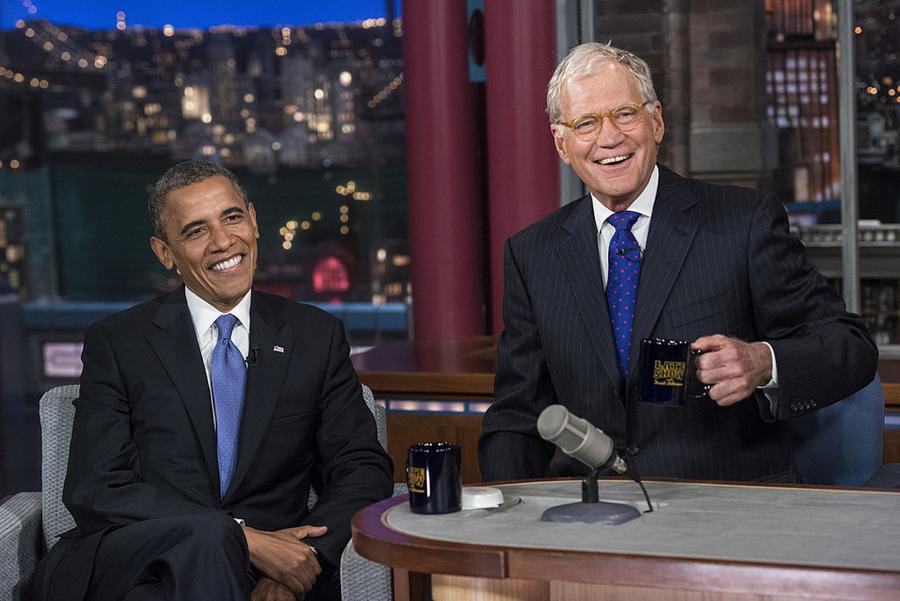
Over time, the CBS version of Letterman became less anarchic than his NBC show, but it also allowed him to show more emotional range. His first broadcast after the September 11 attacks was widely praised for its honesty and vulnerability. He also had memorable interviews with public figures such as Barack Obama, Bill Clinton, Madonna, Joaquin Phoenix, and countless others.
Letterman hosted "Late Show" until May 2015. By the time he stepped down, he had hosted more than 6,000 late-night episodes across NBC and CBS.
Worldwide Pants and Business Success
One of the key differences between David Letterman and Jay Leno was ownership. Leno was a massively successful NBC employee while hosting "The Tonight Show." His salary reportedly peaked around $30 million per year in 2009 and 2010. Letterman, by contrast, consistently earned around $50 million per year all-in through a combination of salary, production fees, ownership, and backend profits.
That was because when Letterman left NBC for CBS, he did not merely become the host of "Late Show with David Letterman." Through his company Worldwide Pants, he owned and produced the show. That gave him a level of control and upside that most late-night hosts never had.
Worldwide Pants also produced "The Late Late Show" franchise for CBS, including the Tom Snyder, Craig Kilborn, and Craig Ferguson eras. The company also produced "Everybody Loves Raymond," one of the most successful sitcoms of the 1990s and 2000s. Other Worldwide Pants projects included "Ed," "Bonnie," "The Building," and various specials and documentaries.
When Letterman retired in 2015 and Stephen Colbert took over "The Late Show," that ownership era effectively ended. Colbert's version of the show was produced under a different CBS structure, not as a Worldwide Pants vehicle. Letterman was not just a late-night star. He was a media entrepreneur who owned the factory, not just the desk.
Netflix and Later Career
After leaving nightly television, Letterman largely stepped away from the grind of late night. He grew a long beard, made occasional public appearances, and seemed to enjoy life outside the daily demands of a network show.
In 2018, he returned to television with the Netflix series "My Next Guest Needs No Introduction with David Letterman." The show featured long-form conversations with major figures from entertainment, politics, sports, and culture. Guests have included Barack Obama, George Clooney, Malala Yousafzai, Kanye West, Dave Chappelle, Kim Kardashian, Billie Eilish, and others.
The Netflix series showed a different side of Letterman. The sarcasm was still there, but the format was slower, more reflective, and often more personal. Instead of racing through a nightly monologue, desk piece, and celebrity plug, Letterman used the show to have deeper conversations and revisit his own place in American culture.
BRENDAN SMIALOWSKI/AFP/GettyImages
Rahal Letterman Lanigan Racing
Letterman's business interests have also extended into auto racing. A lifelong Indiana native and Indianapolis 500 fan, Letterman became a part-owner of Team Rahal in 1996 after years of conversations with Bobby Rahal, the 1986 Indianapolis 500 winner and three-time IndyCar champion. The partnership eventually evolved into Rahal Letterman Racing, and then Rahal Letterman Lanigan Racing after businessman Mike Lanigan joined the ownership group.
For Letterman, the investment was more than a celebrity vanity project. The team became a serious presence in American open-wheel racing. Rahal Letterman Racing won the 2004 Indianapolis 500 with driver Buddy Rice, giving Letterman a victory at the race he had followed since childhood. The team later won the Indianapolis 500 again in 2020 with Takuma Sato, by then competing as Rahal Letterman Lanigan Racing. The organization has also competed in sports car racing and has been associated with major manufacturers and sponsors, including BMW in IMSA competition.
Letterman's racing ownership fits neatly with the larger pattern of his career. Just as he used Worldwide Pants to become more than a late-night host, his stake in Rahal Letterman Lanigan made him more than a celebrity race fan. He became an actual team owner in one of the most important organizations in IndyCar, with a connection to the Indianapolis 500 that reflected both his Indiana roots and his long-standing love of motorsports.
Personal Life
Letterman was married to Michelle Cook from 1968 to 1977. He later had a long relationship with Merrill Markoe, a writer and producer who played an important role in shaping the early voice of "Late Night."
In 1986, Letterman began dating Regina Lasko. Their son, Harry, was born in 2003, and the couple married in 2009. Letterman has often spoken about fatherhood changing his outlook on life. He has also been open about his 2000 quintuple bypass surgery, which became a recurring topic in his comedy and public interviews.
David was the victim of attempted blackmail in 2009 by a person threatening to reveal his affairs with several of his female staffers. Letterman confirmed these affairs to be true and devoted a segment on his October 5, 2009, show to a public apology to his wife and staff.
Letterman has admitted to struggling with alcohol addiction and anxiety, and he no longer drinks.
Real Estate and Other Ventures
David Letterman has built a real estate portfolio that reflects his longtime preference for privacy, open space, and quiet living away from Hollywood. Unlike many celebrities who buy and sell flashy Los Angeles mansions, Letterman has tended to purchase large, secluded properties and hold them for decades.
His primary residence has long been a sprawling estate in North Salem, New York, in Westchester County, about an hour north of Manhattan. Letterman reportedly bought the original 88-acre property in 1994 for $5 million. In 2007, he expanded the estate by purchasing an adjacent 20-acre parcel for another $5 million. The combined property covers roughly 108 acres and includes a traditional mansion of around 7,800 square feet, along with guest houses, gardens, trails, a private pond, and a swimming pool. The estate's size and seclusion made it an ideal base during his years hosting "Late Show with David Letterman" in New York City.
Letterman has also owned a major property in Montana. In 1999, he purchased Deep Creek Ranch near Choteau, along the Rocky Mountain Front. The property reflects his interest in wide-open land and conservation. The ranch has operated as a working landscape, including a bison herd managed with an emphasis on grassland health, rotational grazing, and coexistence with local wildlife such as elk, bears, and mountain lions.
For warmer-weather escapes, Letterman has owned a home on St. Barthélemy, better known as St. Barts, the exclusive Caribbean island popular with ultra-wealthy travelers. The island's privacy, high cost, and relative difficulty of access make it a natural fit for a celebrity who has generally avoided paparazzi attention.
Letterman has also maintained a long connection to Martha's Vineyard, where he has owned property near Edgartown Great Pond. Rather than becoming a high-profile fixture on the island's social scene, he has reportedly used the Vineyard as a quiet summer retreat. Taken together, Letterman's real estate holdings mirror the public image he cultivated after years in late night: intensely private, understated, and more interested in space and solitude than Hollywood spectacle.
Letterman is a car enthusiast with an extensive collection. It's been reported that he has 10 Ferraris, eight Porsches, two Honda motorcycles, a Mercedes-Benz, a Jaguar, and a Chevy pickup.
:strip_exif()/2009/09/Jay-Leno.jpg)
/2010/08/Johnny-Carson.jpg)
/2015/09/GettyImages-483593016.jpg)
/2015/06/Conan-OBrien.jpg)
/2014/02/GettyImages-475092105.jpg)
/2019/11/GettyImages-1094653148.jpg)
/2018/03/GettyImages-821622848.jpg)
/2020/01/lopez3.jpg)
/2009/09/Jennifer-Aniston.jpg)
/2009/09/Brad-Pitt.jpg)
/2019/04/rr.jpg)
/2017/02/GettyImages-528215436.jpg)
:strip_exif()/2009/09/P-Diddy.jpg)
/2020/04/Megan-Fox.jpg)
/2020/06/taylor.png)
/2009/09/Cristiano-Ronaldo.jpg)
/2020/01/David-Letterman.jpg)
/2009/09/Jay-Leno.jpg)
/2015/05/letterman.jpg)
/2017/08/GettyImages-665989754.jpg)
/2014/03/johnny-carson.jpg)
/2010/08/Johnny-Carson.jpg)
/2011/03/GettyImages-539630726.jpg)
/2015/09/GettyImages-483593016.jpg)
:strip_exif()/2015/09/GettyImages-476575299.jpg)
/2019/10/denzel-washington-1.jpg)
/2009/11/George-Clooney.jpg)