
/2020/03/Arsenio-Hall.jpg)
/2010/08/Johnny-Carson.jpg)
/2015/06/Conan-OBrien.jpg)
/2018/11/sa.jpg)
:strip_exif()/2009/09/Jay-Leno.jpg)
:strip_exif()/2019/12/GettyImages-1186122857.jpg)
/2009/09/Brad-Pitt.jpg)
/2020/02/Angelina-Jolie.png)
/2018/03/GettyImages-821622848.jpg)
:strip_exif()/2015/09/GettyImages-476575299.jpg)
/2009/09/Cristiano-Ronaldo.jpg)
/2009/11/George-Clooney.jpg)
/2017/02/GettyImages-528215436.jpg)
/2009/09/Jennifer-Aniston.jpg)
/2020/06/taylor.png)
/2019/11/GettyImages-1094653148.jpg)
/2019/04/rr.jpg)
What is Arsenio Hall's net worth and Salary?
Arsenio Hall is a well-known comedian, talk show host, television personality, actor, writer, and producer who has a net worth of $14 million.
Arsenio Hall rose to prominence in the late 1980s and early 1990s as the host of "The Arsenio Hall Show," a groundbreaking late-night program that disrupted the traditional format and brought a younger, more diverse audience into the genre. At a time when late-night was dominated by legacy hosts, Hall created a show that felt like a party, blending comedy, music, and cultural conversation in a way that had rarely been seen on television.
Before launching his iconic talk show, Hall built momentum as a stand-up comedian and television personality, gaining national exposure through appearances on "Soul Train" and as a sidekick on "Thicke of the Night." He also established himself in film with a standout role alongside Eddie Murphy in "Coming to America," a performance that remains one of his most recognizable.
Over the decades, Hall has remained a versatile entertainer, returning periodically to stand-up, television hosting, and acting. While his original talk show run lasted just five years, its cultural impact has endured for decades, influencing the tone, audience, and format of modern late-night television.
Early Life
Arsenio Hall was born on February 12, 1956, in Cleveland, Ohio. His father, Fred Hall, was a Baptist minister, and his mother, Annie Hall, raised him largely as an only child. As a kid, Hall developed an early love for performance, initially pursuing magic. He performed tricks for family and friends and even booked paid gigs at parties and events, essentially acting as his own promoter from a young age.
He attended Warrensville Heights High School and later enrolled at Kent State University. During this time, his interests shifted from magic to comedy, influenced in part by watching his father captivate audiences during sermons and by exposure to stand-up performers. After college, Hall moved to Chicago and eventually Los Angeles to pursue a career in entertainment.
Early Career: Stand-Up, Sidekick Roles, and Breakthrough
Hall's early years in Los Angeles were defined by hustle and visibility. He performed stand-up regularly while landing small television roles that helped build his profile. He appeared multiple times on "Soul Train," gaining exposure to a national audience, and in 1984, he secured a significant opportunity as the announcer and sidekick on Alan Thicke's late-night series "Thicke of the Night."
Although that show was short-lived, it proved to be a critical stepping stone. Hall's charisma and comedic timing stood out, leading to additional acting opportunities. His biggest early break came in 1988 when he co-starred with Eddie Murphy in "Coming to America." The film became a massive hit and cemented Hall's place in Hollywood, showcasing his ability to handle both comedic and character-driven roles.
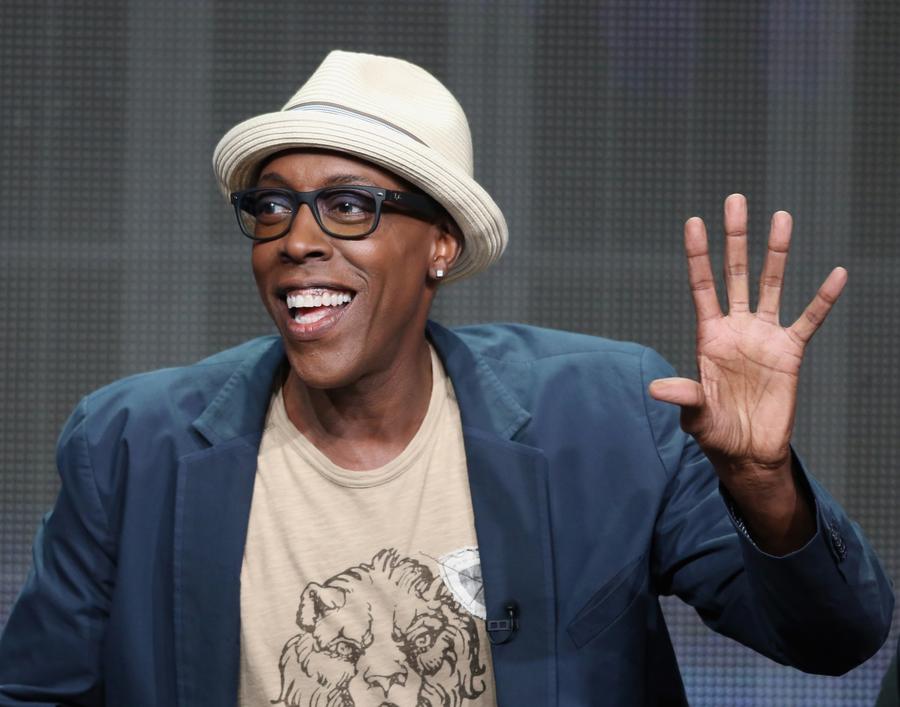
Frederick M. Brown/Getty Images
The Rise of "The Arsenio Hall Show"
Hall's path to late-night dominance began somewhat unexpectedly. In 1987, he was brought in as a guest host for Fox's "The Late Show" after Joan Rivers was dismissed due to poor ratings. His energetic and unconventional style quickly resonated with audiences, generating strong buzz and ratings.
That momentum led to the launch of "The Arsenio Hall Show" in January 1989 as a syndicated program. Unlike traditional late-night shows, Hall eliminated many of the genre's formalities. There was no rigid desk-and-monologue structure. Instead, the show leaned into a high-energy, music-driven atmosphere that felt more like a live event than a broadcast.
The audience became part of the show's identity, most famously through the "Roo, Roo, Roo!" chant, inspired by the Cleveland Browns' Dawg Pound. The program also distinguished itself through its guest lineup. Hall regularly booked hip-hop artists and younger entertainers who were largely ignored by other late-night hosts, helping introduce acts like Tupac Shakur and the Wu-Tang Clan to a national audience.
The show quickly became a ratings powerhouse, particularly in major markets, where it often outperformed "The Tonight Show." It also generated some of the most memorable moments in late-night history, including Bill Clinton playing the saxophone during his 1992 presidential campaign, a performance widely credited with helping him connect with younger voters.
At its peak, "The Arsenio Hall Show" was not just a talk show but a cultural phenomenon that reshaped what late-night television could be.
Peak Fame, Cultural Impact, and Challenges
With success came pressure. Hall found himself navigating a unique and often difficult position as one of the few Black figures in late-night television. As he later reflected, he was frequently caught between competing expectations, with some audiences viewing the show as "too Black" while others wanted it to lean even further into Black culture.
Despite these tensions, Hall used his platform for meaningful cultural conversations. He helped bring attention to HIV/AIDS awareness following Magic Johnson's announcement and provided a space where artists and public figures could speak directly to audiences in a way that felt more authentic than traditional media.
Behind the scenes, the demands of hosting a nightly show and maintaining its success took a toll. The competitive landscape of late-night television intensified in the early 1990s, and by 1994, after a six-season run, "The Arsenio Hall Show" came to an end.
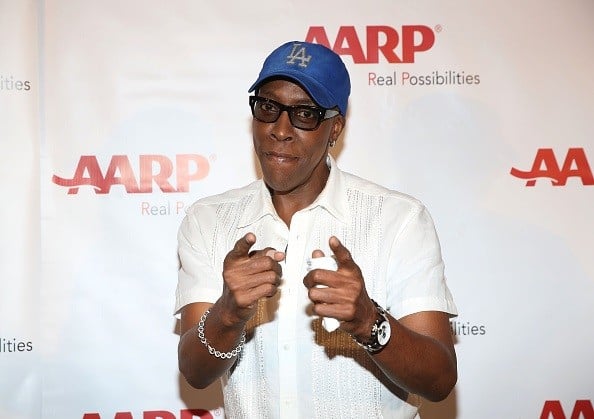
Getty Images
Post–Talk Show Career and Reinvention
Following the end of his show, Hall stepped back from the spotlight for a period, a move that surprised many at the height of his fame. Over time, he returned to television in various capacities, including hosting the revival of "Star Search" from 2003 to 2004.
He also continued acting and voice work while maintaining a presence in stand-up comedy. In 2012, Hall re-entered mainstream pop culture by winning "The Celebrity Apprentice," earning $250,000 for the Magic Johnson Foundation.
In 2013, he attempted a comeback with a revival of "The Arsenio Hall Show." While the reboot generated initial interest, it struggled to find a sustainable audience in a media landscape that had shifted toward digital platforms and fragmented viewing habits. The show was canceled after one season.
Later Career and Continued Influence
In recent years, Hall has returned to his roots in stand-up comedy, performing live and touring, often alongside longtime contemporaries like Jay Leno. He has also remained active in film, reprising his role in "Coming 2 America," the long-awaited sequel to the original film.
Even decades after its original run, "The Arsenio Hall Show" continues to be recognized as a pivotal force in the evolution of late-night television. Its influence can be seen in the more relaxed, culturally aware, and music-forward formats that many modern hosts now embrace.
Personal Life
Arsenio has one son, Arsenio Jr., who was born in 1998 to his long-time girlfriend, Cheryl Bonacci.
Hall had a rivalry with Jay Leno during his original run of "The Arsenio Hall Show" after Leno was named host of "The Tonight Show." Hall said that he would "kick Jay's ass" in ratings.
After "The Arsenio Hall Show" ended in 1994, Hall retreated from the public eye for a number of years. Then, in 1997, he went online and saw rumors that he had checked into Betty Ford for rehab. Hall made up a fake name and responded to those posts with, "I know Arsenio better than anyone else, and he's not in detox, you idiots."
Hall filed a $5 million defamation lawsuit in 2016 against singer Sinéad O'Connor after she claimed that Arsenio was responsible for Prince's drug habit. O'Connor also alleged that Hall had spiked her drink at a party at Eddie Murphy's house. O'Connor apologized and retracted her allegation about Hall and Prince's drug habit, and as a result, Hall dropped his lawsuit.
Salary Highlights
For his role in 1988's "Coming to America," Arsenio Hall earned a salary of $900,000.
Real Estate
In October 2021, Arsenio paid $5.2 million for a home in Tarzana, California. The seller was actor Sean Murray. A little over a year later, Arsenio listed this home for sale for $5.3 million. In November 2022, Arsenio paid $5.2 million for a home in Calabasas, California.
Former Topanga Estate
One of Arsenio's best career moves involves a hilltop property in Topanga, California. In the early 1990s, he paid $450,000 for an incredible 34-acre, 360-degree-view, mountaintop property. It's technically six parcels combined into one
The property is located at one of the highest point of one of the highest points of the western part of Los Angeles. To give you some context: Santa Monica, which is only about 20 minutes down the hill, sits at an elevation of 105 feet above sea level. The average home in Topanga sits at around 1,000 feet above sea level. The highest peak in Topanga State Park is Temescal Peak, at 2,800 feet above sea level. Arsenio's property is at 2,700 feet above sea level. It is literally one of the highest points in suburban Los Angeles.
The property sits over half a mile up in the sky, but is only about three miles inland from the Pacific coast. This extreme, rapid rise in elevation is what gives the estate those famous, completely unobstructed, sheer drop-off views of the Malibu coastline to the south and the Los Angeles basin to the east. At nearly 2,800 feet, the estate sits well above the coastal marine layer (the fog responsible for "June Gloom"). When the lower elevations of Topanga and the beaches are blanketed in thick gray clouds, this property is often looking down on them, basking in clear sunshine.
At one point in the late 1980s, the sprawling property was listed for $10 million. Arsenio scooped it up in a cold real estate market at an absolute steal of a price.
Over several years through the mid-1990s, Arsenio custom-built a 10,000-square-foot Santa Fe-style mansion that resembles an enormous spaceship. The property has a mini-golf course, tennis courts, a pond, a basketball court that has 360-degree views of LA, and much more.
In August 2022, Arsenio quietly sold his Topanga compound/estate for $9 million. The buyers were a married couple, Robert Fedoris and his wife, Liz Hopkins. Robert works in private equity and the couple already owned the property next door. Arsenio's former Topanga estate is pictured below:
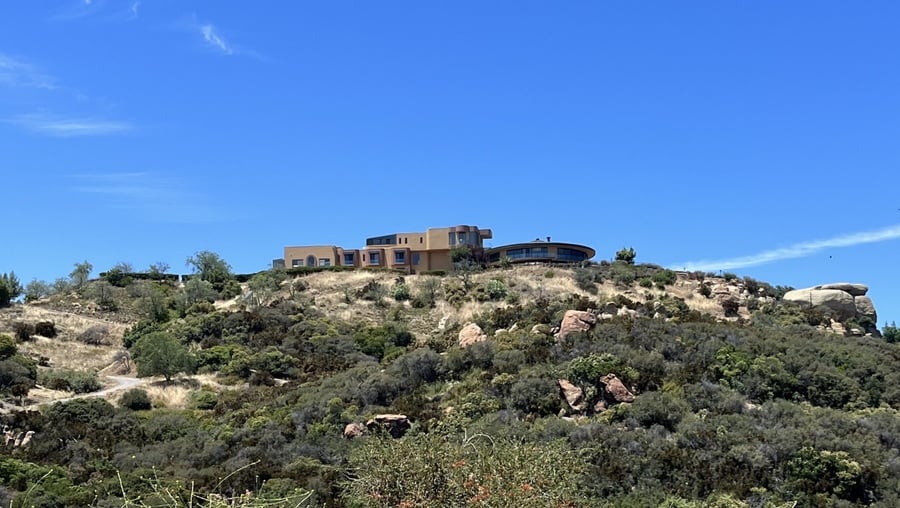
Copyright Brian Warner
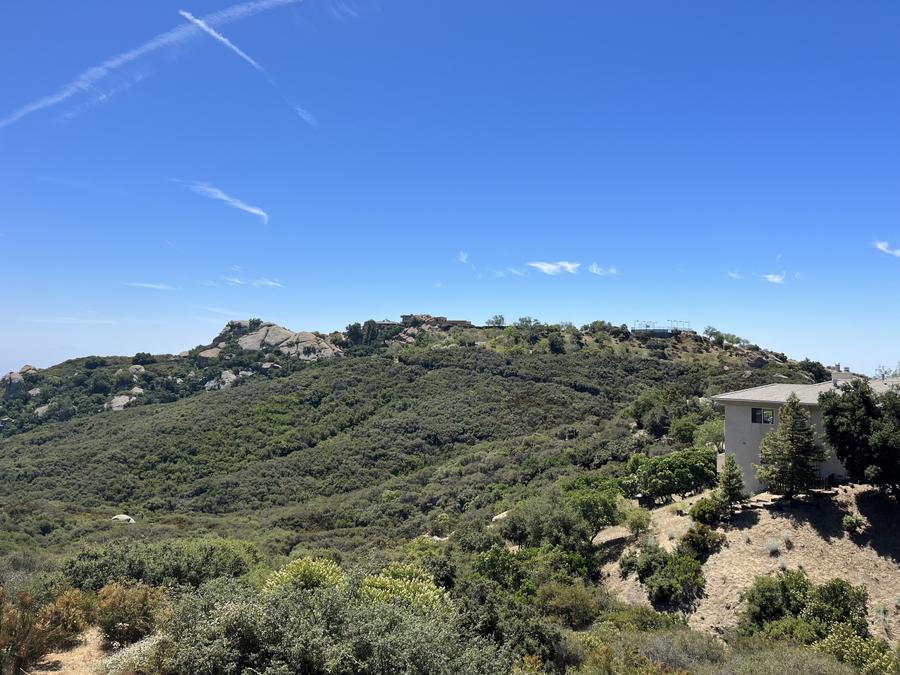
Copyright Brian Warner
/2020/03/Arsenio-Hall.jpg)
/2019/12/GettyImages-1186122857.jpg)
/2026/03/arsenio-topanga-spaceship.png)
/2015/06/Conan-OBrien.jpg)
/2010/01/Kevin-James-1.jpg)
/2010/01/Zach-Galifianakis.jpg)
/2025/12/Matt-Rogers.jpg)
/2009/11/Pamela-Anderson.jpg)
/2019/10/denzel-washington-1.jpg)
/2020/01/lopez3.jpg)
:strip_exif()/2009/09/P-Diddy.jpg)
/2020/04/Megan-Fox.jpg)