













What Is Peter Jackson's Net Worth?
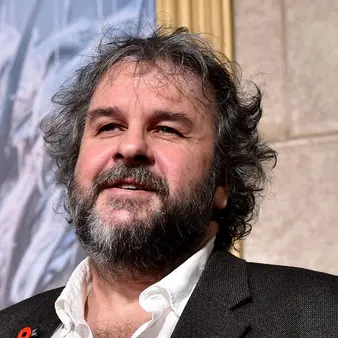
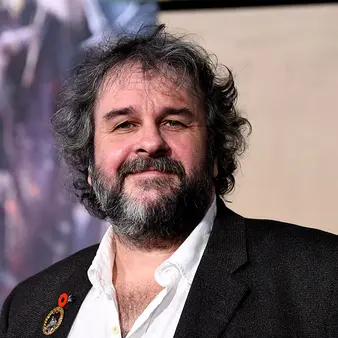
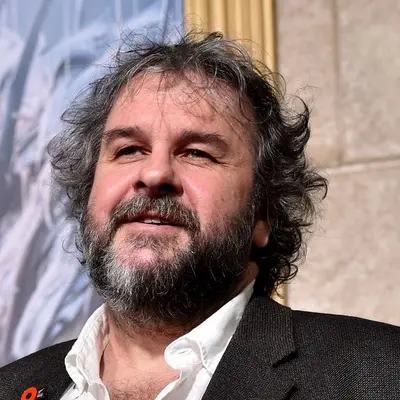
Peter Jackson is a New Zealand film director, producer, screenwriter, and visual-effects entrepreneur who has a net worth of $1.5 billion.
Peter Jackson transformed the global film industry with "The Lord of the Rings" trilogy, then became a billionaire through a business he created to make his movies possible. The director's adaptation of J.R.R. Tolkien's fantasy novels grossed billions of dollars, won seventeen Academy Awards across three films, and made New Zealand an international center for major film production. Jackson subsequently directed "King Kong" and "The Hobbit" trilogy, produced ambitious visual-effects projects, and created documentaries including "They Shall Not Grow Old" and "The Beatles: Get Back." In 2021, game-engine company Unity acquired the technology and engineering operations of Weta Digital for $1.625 billion in cash and stock. Jackson and his partner, writer and producer Fran Walsh, were principal owners of the company, and the transaction pushed his personal fortune into billionaire territory. He also earned enormous compensation from the Tolkien films and "King Kong" and amassed an extraordinary collection of historic aircraft, including World War I warbirds, alongside property holdings in New Zealand and New York City.
Weta Digital's $1.625 Billion Sale
In November 2021, Unity announced an agreement to buy Weta Digital's tools, pipeline, technology, and engineering talent for $1.625 billion. The sale made Jackson a billionaire, as CNW detailed when the transaction was announced. The sale closed on December 1 of that year. The consideration combined cash and Unity shares, and the company's visual-effects production business continued separately under the Weta FX name. Jackson and Walsh had helped create the technology company in 1993 to support "Heavenly Creatures" and later major fantasy productions.
Jackson and Walsh remained principal shareholders through the transaction. His personal share has been described as reaching $1 billion in cash and stock, although the total acquisition price was paid for the relevant business rather than to Jackson alone. The sale was a defining event because it converted decades of privately held film technology and proprietary software into a transaction with a publicly traded company. It also demonstrated that Jackson's fortune extended well beyond director salaries and participation in movie profits.
"The Lord of the Rings" Earnings
Jackson earned enormous sums from "The Lord of the Rings" films, although the original contracts contained different categories of compensation. A commonly quoted cumulative estimate puts his earnings from the trilogy at $180 million, reflecting the success of the films and the producer and director participation attached to the project. The original arrangement has also been described as including a $10 million payment for the three films plus a percentage of receipts. The larger cumulative number reflects long-term participation and should not be confused with the initial fixed fee.
The three movies were filmed in New Zealand, and their global commercial performance exceeded the expectations associated with conventional fantasy adaptations. Their box-office receipts, home-video sales, television licensing, and later streaming distribution created continuing value for the studios and participating creators. Jackson's share of that success contributed to the wealth with which he later expanded his production, aviation, and property interests.
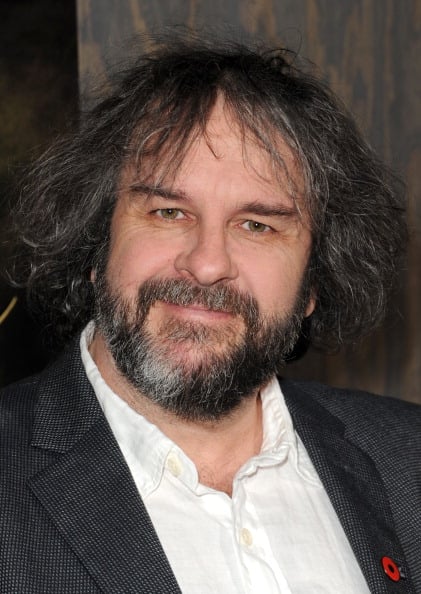
Kevin Winter/Getty Images
Early Life
Peter Robert Jackson was born on October 31, 1961, in Wellington, New Zealand, and grew up in the coastal community of Pukerua Bay. His parents had emigrated from England, and he became fascinated with films and special effects while still young. A Super 8 camera allowed him to make home movies with friends, experimenting with costumes, creature effects, and miniature sets.
Jackson left school as a teenager and worked for seven years at The Evening Post, a Wellington newspaper, as a photo engraver. He lived with his parents and saved money for equipment rather than attending a traditional film school. That practical apprenticeship suited a filmmaker who would later take a personal interest in cameras, effects tools, editing, and every stage of a production.
Low-Budget Horror and "Bad Taste"
Jackson spent several years filming "Bad Taste" with friends, often on weekends, while earning a regular wage from the newspaper. The science-fiction horror comedy used elaborate homemade gore effects and a deliberately outrageous tone. Funding from the New Zealand Film Commission helped him finish the project, which was released in 1987 and introduced him to international cult-film audiences.
He followed with the puppet satire "Meet the Feebles" and the splatter comedy "Braindead," released in some territories as "Dead Alive." The films were radically different from the sweeping fantasy dramas that later made him famous, but they demonstrated the same interests in technical invention, practical effects, and visually elaborate storytelling. Jackson and collaborators established WingNut Films, providing a production structure for increasingly ambitious projects.
"Heavenly Creatures" and "The Frighteners"
Jackson reached a much larger critical audience with the 1994 drama "Heavenly Creatures," inspired by a notorious New Zealand murder case. The film featured a young Kate Winslet and earned Jackson and Walsh an Academy Award nomination for their screenplay. It was a breakthrough in the way the film industry regarded him, proving that the creator of outrageous horror comedies could also direct emotionally complex drama.
He followed it with "The Frighteners," a supernatural comedy starring Michael J. Fox. The film's digital effects pushed the capabilities of the Wellington operation that had become Weta Digital. Although "The Frighteners" was not a major box-office hit, the experience strengthened Jackson's technical and production infrastructure before he began his career-defining adaptation of Tolkien.
Making "The Lord of the Rings"
Jackson pursued the rights to adapt "The Lord of the Rings" during the 1990s and developed a version of the project before securing a three-film deal with New Line Cinema. Jackson worked with actors including Andy Serkis, whose motion-capture performance as Gollum helped establish a major new form of screen acting. The production required building a comprehensive fictional world with costumes, languages, locations, weapons, and creatures that could appear consistent across three enormous movies. The trilogy was shot largely together in New Zealand, an unusually ambitious logistical arrangement for a major Hollywood production.
"The Fellowship of the Ring" premiered in 2001, followed by "The Two Towers" in 2002 and "The Return of the King" in 2003. The films starred Elijah Wood, Ian McKellen, Viggo Mortensen, Sean Astin, and Orlando Bloom. Their technical achievements, musical score, and performances helped make the trilogy a rare example of a fantasy franchise embraced by both mass audiences and major film-awards organizations.
Oscars and a New Zealand Film Industry
"The Return of the King" won eleven Academy Awards, including Best Picture and Best Director. Across the trilogy, the films received seventeen Oscars and became synonymous with epic fantasy filmmaking on an unprecedented scale. The success also brought international attention to New Zealand landscapes, studios, and craftspeople, with the country's film industry benefiting from production infrastructure developed for the movies.
Jackson worked closely with Walsh and Philippa Boyens on the scripts, while Weta's digital and physical-effects teams developed technology and techniques that influenced later blockbusters. The studio's work helped establish New Zealand as a credible home for productions that previously would have been expected to operate almost entirely out of Hollywood.
"King Kong" and the $20 Million Deal
After the Tolkien trilogy, Universal signed Jackson to direct a new version of "King Kong," the 1933 film that had inspired his interest in filmmaking as a child. The 2005 remake featured Naomi Watts, Adrien Brody, and Jack Black, with New York, Skull Island, and Kong himself recreated through vast physical and digital production work. It grossed more than $550 million worldwide.
Jackson received a $20 million fee for directing the film, with additional participation described as a 20% share of gross receipts divided among the key writing and producing participants. Those terms made the deal one of the most lucrative packages associated with a major director at the time. The distinction between the fixed fee and the shared gross participation is important to the arithmetic, since a headline percentage should not be multiplied by worldwide box office and treated as a personal paycheck without considering the contract's precise definitions and divisions.
"The Hobbit" Trilogy
Jackson returned to Tolkien's world with "The Hobbit," initially conceived as a two-film project and ultimately released as three movies: "An Unexpected Journey," "The Desolation of Smaug," and "The Battle of the Five Armies." The films starred Martin Freeman as Bilbo Baggins and reunited members of the earlier trilogy's cast. Their production again centered on New Zealand and the visual-effects infrastructure Jackson had helped create.
The trilogy grossed billions of dollars worldwide and extended the film franchise's commercial value. Its more elaborate digital effects and high-frame-rate experiments attracted both enthusiasm and criticism, and the creative decisions behind dividing Tolkien's comparatively short novel into three films became part of the series' legacy. For Jackson, the project continued a relationship with a valuable film property that had already transformed his professional life.
Documentaries and "The Beatles: Get Back"
Jackson directed "They Shall Not Grow Old," a documentary using restored and colorized First World War footage to present soldiers and their experiences to modern audiences. The project drew upon archives, sound restoration, and digital techniques that had originally been developed for fiction films. Its reception showed that technical innovation could give archival material emotional immediacy without relying on conventional documentary narration.
He then directed "The Beatles: Get Back," a documentary series assembled from extensive footage shot during the band's 1969 recording sessions. Distributed by Disney, the project reexamined the final years of Paul McCartney, John Lennon, George Harrison, and Ringo Starr working together. Its detailed presentation of the musicians' interactions became a major cultural event for Beatles fans and music historians.
Weta, Special Effects, and Other Companies
Weta's contributions extended beyond Jackson's own movies to major productions throughout the entertainment industry. The division of Weta Digital's technology business from Weta FX at the time of the Unity transaction preserved a production-services operation able to continue making effects for studios and filmmakers. Jackson's interests have also included Weta Workshop's physical design and prop-making work and projects associated with WingNut Films.
He created Wingnut Wings, a company specializing in detailed models of World War I aircraft, reflecting his interest in military aviation history. His companies brought together filmmaking, design, collectibles, software, and technical artistry, with the shared thread being a fascination with how complicated physical and imaginary worlds are constructed.
Private Jets and World War I Aircraft
Jackson is an enthusiastic aviator and collector of historic aircraft. His collection has included more than forty airworthy World War I-era aircraft, and his aviation interests have been associated with Hood Aerodrome near Masterton, New Zealand. Aircraft and associated memorabilia have appeared in the Omaka Aviation Heritage Centre's "Knights of the Sky" exhibitions, offering the public a glimpse of his collection.
He also acquired a Gulfstream business jet, described in earlier reporting as a G650 with a purchase price reaching $60 million. A long-range aircraft makes travel between New Zealand and North America substantially easier for a filmmaker working with Hollywood studios. The plane and historic aircraft collection represent unusually substantial personal expenditures on a hobby that Jackson has pursued for decades.

(Photo by Kevin Winter/Getty Images)
New Zealand Real Estate
Jackson and Walsh have accumulated extensive New Zealand property holdings, including commercial sites used by their production businesses. The couple's real estate has been valued in the $150 million range in published estimates, with a significant portion associated with their filmmaking operation and land holdings. Their Matahiwi estate has been valued at $20 million to $30 million and includes a private lake, a large cinema, and a recreation of Frodo Baggins' home.
The property reflects Jackson's lifelong fascination with building environments: his home includes features connected to the fictional world that made him internationally famous. His property activity has also involved preserving historically significant buildings and supporting cultural institutions in Wellington, demonstrating an interest in the places that surround his production operations.
New York City Penthouses
In 2008, Jackson paid $17.35 million for two adjacent penthouses at 155 Franklin Street in Tribeca, New York City. Together, the units contained some 8,300 square feet, with one offering five bedrooms, five bathrooms, and extensive outdoor space, and the other containing two bedrooms and three bathrooms. His original intention was to combine them into one enormous residence, and some work began on the roof, air-conditioning, and interior layout.
The plan was never completed, in part because of Jackson's film production schedule. He listed both apartments for $21.5 million in 2013, later reducing the asking price to $19.95 million. The units sold in February 2014 after the price reduction. The purchase and sale history adds another substantial property transaction to Jackson's career of making and owning valuable assets.
Family and Philanthropy
Jackson's partner, Fran Walsh, is a screenwriter, producer, and lyricist who has worked closely with him for decades. They have two children and have built a partnership that spans filmmaking, music, visual effects, and company ownership. Walsh was a key creative and business participant in the films that made Jackson famous and the technology company whose sale transformed their wealth.
Their philanthropy and cultural interests have included support for stem-cell research, New Zealand theater, and heritage properties. Jackson contributed NZ$500,000 to stem-cell research and was involved in efforts to preserve Wellington cultural sites, including the BATS Theatre. His career has connected international film earnings with a long-term commitment to building and maintaining a creative industry in New Zealand.