
/2016/08/Paul-Greengrass.jpg)
/2021/01/Ryan-Coogler.jpg)
/2017/03/James-Mangold.jpg)
/2012/01/Len-Wiseman.jpg)
/2015/07/GettyImages-631269774.jpg)
/2014/03/GettyImages-487806308.jpg)
/2020/06/taylor.png)
/2019/11/GettyImages-1094653148.jpg)
/2020/01/lopez3.jpg)
:strip_exif()/2009/09/P-Diddy.jpg)
/2020/04/Megan-Fox.jpg)
/2009/09/Brad-Pitt.jpg)
/2019/10/denzel-washington-1.jpg)
/2017/02/GettyImages-528215436.jpg)
/2018/03/GettyImages-821622848.jpg)
/2009/09/Cristiano-Ronaldo.jpg)
:strip_exif()/2015/09/GettyImages-476575299.jpg)
What is Paul Greengrass's net worth?
Paul Greengrass is an English director, producer, screenwriter, and journalist who has a net worth of $20 million. Emerging from a background in British journalism and investigative television, he developed a filmmaking style rooted in authenticity, handheld camerawork, and immersive editing techniques that placed audiences directly inside the events unfolding on screen. Greengrass gained global recognition for his work on the Bourne franchise, revitalizing the series with a kinetic filmmaking language that transformed modern action cinema. At the same time he earned critical acclaim for deeply researched, true-event dramas such as "Bloody Sunday," "United 93," "Captain Phillips," and "22 July," all of which showcased his ability to handle sensitive historical material with restraint and emotional precision. His films often explore themes of power, conflict, security, and moral ambiguity, reflecting the journalistic impulses that shaped his early career. Across two decades of international work, Greengrass built a reputation as a filmmaker who pairs technical innovation with human-centered storytelling, maintaining a rare balance of commercial success and critical prestige.
Early Life
Paul Greengrass was born on August 13, 1955, in Surrey, England. His father worked as a seaman and later as a schoolteacher, and his mother was a secretary. Greengrass developed an early interest in writing, history, and current events, which guided him toward journalism. He attended Sevenoaks School and studied at the University of Cambridge, where his interest in documentary storytelling took shape. After graduating, he briefly pursued journalism before joining the investigative television program "World in Action," a training ground that shaped his narrative instincts and sharpened his interest in political and social issues.
Early Career in Journalism and Television
Before transitioning to feature films, Greengrass spent more than a decade working on "World in Action," one of Britain's most respected investigative programs. His work involved reporting, directing documentaries, and tackling politically charged topics. During this period he also co-authored "Spycatcher," a controversial memoir by former MI5 officer Peter Wright that exposed internal intelligence practices and became an international bestseller. The book's legal battles further fueled Greengrass's interest in the intersection of power, secrecy, and government institutions, themes that would later resonate through his film work.
Greengrass began directing television dramas in the late 1980s and early 1990s. Projects such as "The Murder of Stephen Lawrence," which examined a racially motivated killing and police misconduct, solidified his reputation for handling sensitive subjects with depth and moral clarity. The film received widespread acclaim and influenced public discourse about race and policing in Britain.
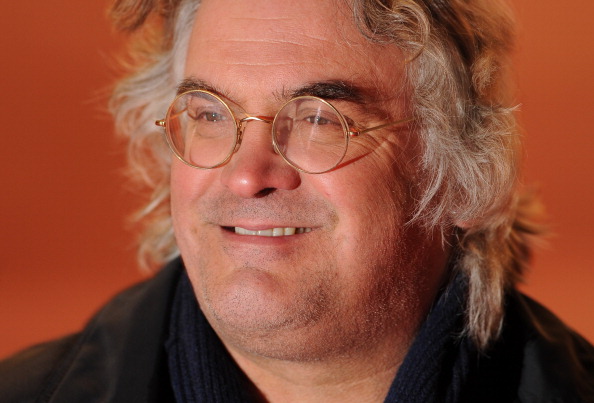
Stuart C. Wilson/Getty Images
Breakthrough Films
Greengrass's international breakthrough came with "Bloody Sunday" in 2002, a harrowing, meticulously researched reconstruction of the 1972 massacre in Northern Ireland. Shot with documentary-style immediacy, the film earned the Sundance Film Festival's Audience Award and established Greengrass as a filmmaker capable of merging vérité aesthetics with dramatic storytelling.
He followed this success with "United 93" in 2006, a powerful depiction of the events aboard the hijacked plane on September 11, 2001. The film received universal acclaim for its emotional restraint, technical precision, and respect for its real-life subjects. Greengrass received an Academy Award nomination for Best Director, solidifying his international prominence.
The Bourne Franchise
Greengrass transformed commercial action filmmaking with his work on "The Bourne Supremacy" (2004) and "The Bourne Ultimatum" (2007). His handheld camerawork, rapid editing rhythms, and grounded approach to fight choreography helped redefine modern action cinema. The success of the franchise elevated Matt Damon to global stardom and established Greengrass as a director who could bring artistic credibility to blockbuster filmmaking. He returned for "Jason Bourne" in 2016, reuniting with Damon and continuing the series' exploration of surveillance, intelligence agencies, and personal identity.
Later Films
Greengrass continued alternating between major studio films and intimate historical dramas. "Green Zone" explored military intelligence failures during the Iraq War. "Captain Phillips," starring Tom Hanks, delivered another tense, vérité-style depiction of real-world events, earning multiple Oscar nominations and widespread acclaim for its portrayal of the 2009 Maersk Alabama hijacking.
He directed "22 July," a restrained retelling of the 2011 Norway attacks that focused not only on the tragedy but also on themes of recovery, justice, and extremism. Greengrass also directed "News of the World," a western starring Tom Hanks that highlighted his ability to work across genres while preserving his signature character-driven approach.
/2016/08/Paul-Greengrass.jpg)
/2014/03/GettyImages-487806308.jpg)
/2025/02/missing_profile.jpg)
/2021/01/Ryan-Coogler.jpg)
/2017/03/James-Mangold.jpg)
/2015/07/GettyImages-631269774.jpg)
/2020/08/fern.jpg)
/2012/01/Len-Wiseman.jpg)
/2009/11/George-Clooney.jpg)
/2009/09/Jennifer-Aniston.jpg)