
/2010/01/Stan-Lee-1.jpg)
/2014/07/spider.jpg)
/2024/01/avi.jpg)
/2018/11/Jim-Lee.jpg)
/2017/08/mark.jpg)
/2025/02/missing_profile.jpg)
/2020/02/Angelina-Jolie.png)
:strip_exif()/2009/09/P-Diddy.jpg)
/2019/10/denzel-washington-1.jpg)
/2009/11/George-Clooney.jpg)
/2020/01/lopez3.jpg)
/2009/09/Jennifer-Aniston.jpg)
:strip_exif()/2015/09/GettyImages-476575299.jpg)
/2020/04/Megan-Fox.jpg)
/2017/02/GettyImages-528215436.jpg)
/2009/09/Cristiano-Ronaldo.jpg)
/2020/06/taylor.png)
What was Stan Lee's Net Worth and Salary?
Stan Lee was an American comic book writer, actor, and entrepreneur who had a net worth of $50 million at the time of his death in November 2018.
Stan Lee was instrumental in the creation of some of the most popular and enduring superheroes in the world, including Spider-Man, the Fantastic Four, the X-Men, Iron Man, Thor, and the Hulk.
He began his career in comics in 1939, writing short stories for Timely Comics, a company that would later become Marvel Comics. In the 1960s, Lee, along with artists Jack Kirby and Steve Ditko, ushered in a new era for comics known as the Silver Age. During this time, Lee created a series of superheroes who were more relatable and human-like than their predecessors. These characters, such as Spider-Man, a teenager who gains superpowers from a spider bite, and the X-Men, a group of mutants who are feared and ostracized by society, struck a chord with readers and helped to make Marvel Comics the most successful comic book company in the world.
Lee was also a pioneer in the use of social commentary in comics, addressing issues such as racism, sexism, and drug abuse. He was a prolific writer, producing hundreds of comic books over the course of his career. He also served as editor-in-chief of Marvel Comics from 1972 to 1992.
In addition to his work in comics, Lee also wrote for television and film. He produced the popular 1970s television series "Spider-Man" and "The Incredible Hulk," and he made cameo appearances in many of the Marvel Cinematic Universe films.
Stan Lee was inducted into the Will Eisner Comic Book Hall of Fame in 1994.
Personal Wealth
In a March 2014 Playboy interview, Stan Lee was asked how much he had financially gained from his involvement in Marvel over the years, especially after the company was sold to Disney for $4 billion. Lee's response was:
"I don't have $200 million. I don't have $150 million. I don't have $100 million or anywhere near that."
When asked if he thought that was fair, considering George Lucas, who is similarly prolific, was worth $7.3 billion, Stan replied:
"George Lucas did it all by himself. He came up with the ideas. He produced the movies. He wrote and directed them and held the rights to the merchandising. It was all his. In my case I worked for the publisher. If the books didn't sell, the publisher went broke—and a lot of publishers did go broke."
What Could Have Been
Stan Lee's net worth could have been exponentially higher if a legal battle in the early 2000s had gone his way. In November 2002, he sued Marvel, arguing that the company had failed to honor a contract that promised him 10% of all profits generated by film and television projects based on his creations. A judge initially sided with Stan but eventually a settlement was reached where Stan was given a one-time payment of $10 million.
Believe it or not, at the time, Marvel movies were not particularly profitable, and $10 million might have been seen as a big win. For example, thanks to a complicated studio and financing partnership, Marvel actually lost money on several movies that generated huge sums of money at the box office.
The first big budget movie based on his characters, 2000's X-Men, earned $130 million in North America alone. The 2002 movie "Spider-Man" earned $400 million, and 2004's "Spider-Man 2" earned $800 million. Unfortunately for Marvel (and Stan), both Spider-Man movies were technically made by Sony Pictures after Marvel sold Sony the rights. So Marvel's cut of the profits was effectively ZERO on both movies. Marvel did make some money thanks to a few licensing and merchandise deals, but nothing substantial.
Had Stan been able to secure even 5% of the profits based on his characters, he would have easily been one of the highest-paid people in Hollywood every year. Though it's also very likely that Disney either would have bought him out of that contract or never would have agreed to buy Marvel because of that arrangement.
Either way, Stan made out OK, and no one can deny that he was an absolute genius on the level of Walt Disney. He may be gone, but his creations will live on forever.
Real Estate and Art Collection
For 40+ years, Stan lived in a modest two-story home on a street that over time became one of LA's most desirable locations. His neighbors at one point included Dr. Dre and Leonardo DiCaprio. An average house on this street can easily list for $20 million. At one point, his direct next-door neighbor sold a similar-sized (but vastly more updated) property for $29 million. He owned at least one other home in the same neighborhood, which he bought for $4.4 million in 2016. And that was after selling a different home in the same neighborhood for $2.8 million.
In 2019, Lee's San Francisco condo was listed for sale at $1.35 million.
He also had an extremely valuable art collection, including original work not only from himself but from artists such as Salvador Dali, Roy Lichtenstein, Joan Miro, and Pablo Picasso.
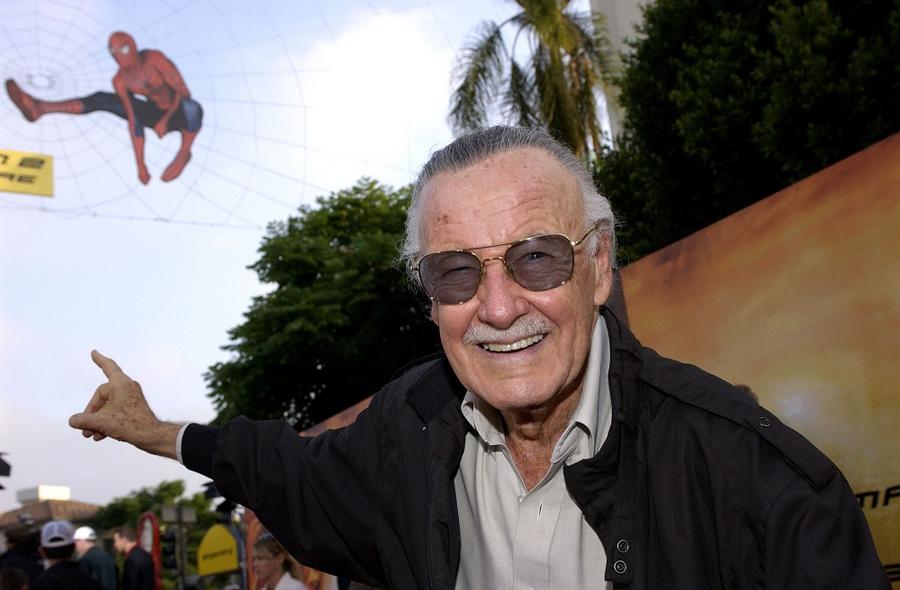
Vince Bucci/Getty Images
Early Life
Stan Lee was born Stanley Martin Lieber on December 28, 1922, in Manhattan, New York City. He was raised in a working-class Jewish family during the Great Depression, an experience that shaped his ambition and work ethic. His father, Jack Lieber, worked as a dress cutter, while his mother, Celia, supported the household during long periods of financial strain.
Lee developed a love for writing early, consuming novels, newspaper serials, and adventure stories. He dreamed of becoming a serious author and initially viewed comic books as a temporary stepping stone rather than a lifelong career.
Early Career in Comics
Lee entered the comics industry in 1939 as an assistant at Timely Comics, a predecessor to Marvel. His early duties were menial, including proofreading, refilling ink wells, and running errands. He made his writing debut at age 19 with a short text piece in "Captain America Comics" No. 3, using the pen name Stan Lee to preserve his real name for future literary ambitions.
By his early 20s, Lee had risen to editor-in-chief, largely due to staff shortages during World War II. Still, much of his work during this period consisted of formulaic stories produced under tight deadlines, leaving him creatively unfulfilled.
The Marvel Revolution
In the early 1960s, facing burnout and considering leaving the industry, Lee was encouraged to write stories the way he wanted. The result was a radical shift in tone and substance. Beginning with "Fantastic Four" in 1961, Lee, working closely with artists such as Jack Kirby and Steve Ditko, introduced superheroes who argued, doubted themselves, struggled with money, and faced real-world consequences.
This approach quickly expanded into a shared universe that included Spider-Man, the X-Men, the Avengers, and numerous other characters. Lee's dialogue-heavy, emotionally driven style helped Marvel stand apart from competitors and resonated with teenage and college-age readers. Under his editorial leadership, Marvel Comics grew from a small publisher into the dominant force in the industry.
Editor, Publisher, and Public Face of Marvel
Lee became Marvel's editor-in-chief and later publisher, shaping not only storylines but the company's public identity. He cultivated a direct relationship with readers through editorial columns, fan clubs, and a distinctive, conversational tone that made Marvel feel accessible and personal.
By the 1970s, Lee transitioned away from day-to-day writing to focus on expanding Marvel into film and television. He relocated to Los Angeles to pursue adaptations, though early efforts met limited success. Despite Marvel's popularity in print, Hollywood largely struggled to translate the characters to screen during this era.

(Photo by Frazer Harrison/Getty Images)
Late-Career Fame and Marvel Films
Stan Lee's public profile surged dramatically in the 2000s, when Marvel characters finally found consistent success in film. Beginning with early appearances and accelerating after the launch of the Marvel Cinematic Universe, Lee became famous for his brief, humorous cameos in nearly every Marvel movie. These appearances turned him into a multigenerational celebrity and introduced him to audiences who had never read a comic book.
Although Lee no longer held creative control over Marvel by this point, his name and likeness became inseparable from the brand's global success. He also launched new ventures, including POW! Entertainment, aiming to develop original characters outside Marvel.
Business, Contracts, and Controversy
Despite his role in creating Marvel's most valuable intellectual property, Lee did not become wealthy during the early decades of his career. Like many creators of his era, he worked under contracts that did not grant ownership or long-term royalties. It was only later in life, through negotiated agreements, appearances, and licensing arrangements, that he achieved significant financial success.
In his final years, Lee's personal and financial affairs became the subject of legal disputes and public controversy, including allegations of elder abuse and conflicts involving business partners and caregivers. These issues complicated his legacy and highlighted the often exploitative nature of creator compensation in the entertainment industry.
Personal Life
Lee married Joan Clayton Boocock in 1947, and the couple remained together until her death in 2017. They had two children, one of whom died in infancy. Joan was widely credited as a stabilizing influence in Lee's life and career, frequently encouraging him during periods of self-doubt.
Outside of comics, Lee was known for his optimism, humor, and boundless enthusiasm for fan engagement. He remained active in public appearances well into his 90s, becoming a fixture at conventions and media events around the world.
Death and Legacy
Stan Lee died on November 12, 2018, at the age of 95. His influence on popular culture is difficult to overstate. The characters he helped create generate billions of dollars annually across film, television, merchandise, and publishing, and they continue to shape how stories about heroism, identity, and power are told.
Lee's legacy is both inspirational and cautionary. He helped invent a modern mythology and brought emotional depth to a once-dismissed medium, yet his career also reflects the imbalance between creative contribution and financial reward. More than anything, Stan Lee endures as the voice that invited generations of readers and viewers to believe that heroes could be human, and that imagination itself could change the world.
/2010/01/Stan-Lee-1.jpg)
/2014/07/spider.jpg)
/2017/04/GettyImages-494691059.jpg)
/2018/06/GettyImages-950537824.jpg)
/2025/02/missing_profile.jpg)
/2021/09/GettyImages-90195722.jpg)
/2017/08/mark.jpg)
/2009/09/Brad-Pitt.jpg)
/2019/04/rr.jpg)
/2018/03/GettyImages-821622848.jpg)