











What Is Edwina Currie's Net Worth?
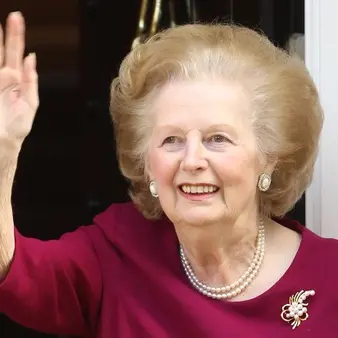
Edwina Currie is a British former politician, author, broadcaster, and media personality who has a net worth of $5 million.
Edwina Currie became one of Britain's most recognizable politicians during the 1980s, representing South Derbyshire in Parliament for 14 years and serving as a junior health minister under Margaret Thatcher. Her ministerial career ended abruptly in 1988 after comments about salmonella in British egg production caused egg sales to collapse, but leaving government did little to reduce her public profile. Currie remained in Parliament until 1997 while simultaneously building lucrative careers in publishing, journalism, broadcasting, and public speaking.
Her first novel, "A Parliamentary Affair," became a #1 hardcover bestseller and brought her a £100,000 publishing advance while she was still an MP. Television serialization rights were valued at £75,000 to £125,000, and Currie later wrote that she earned £150,000 during the 1995-96 tax year. Her political diaries produced another major payday: a £300,000 advance covering two volumes, plus £150,000 for newspaper serialization of the first book.
Those diaries also generated the biggest revelation of Currie's public life. In 2002, she disclosed that she had conducted a four-year affair with future Prime Minister John Major between 1984 and 1988, while both were married to other people. After leaving Parliament, Currie became a fixture of British radio and television, hosting "Late Night Currie" and appearing on programs including "Hell's Kitchen," "Strictly Come Dancing," "Celebrity Wife Swap," and "I'm a Celebrity…Get Me Out of Here!"
Early Life
Edwina Cohen was born on October 13, 1946, in Liverpool, England. She grew up in an Orthodox Jewish family and attended Liverpool Institute High School for Girls. Her father worked in business, and education was heavily emphasized in the household.
Currie won a scholarship to St Anne's College at Oxford University. She initially studied chemistry before switching to Philosophy, Politics and Economics and later earned a master's degree in economic history from the London School of Economics.
She married accountant Ray Currie in 1972. Currie later said that marrying outside the Jewish faith caused a serious rupture with her father and that they were never reconciled before his death in 1975.
Early Political Career
Before entering Parliament, Currie worked in business, teaching, and local government. She was elected to Birmingham City Council in 1975 and remained a councillor until 1986. She also chaired the Central Birmingham Health Authority, giving her substantial experience with the National Health Service before she entered government.
Currie won the newly created South Derbyshire constituency for the Conservative Party in the 1983 general election. That election also brought future Labour prime ministers Tony Blair and Gordon Brown into Parliament.
She quickly became one of the more media-friendly MPs in Westminster. Currie was outspoken, comfortable on television, and willing to comment on subjects other politicians often avoided, characteristics that helped her build an unusually large public profile for a backbench MP.
Health Minister
Currie served as parliamentary private secretary to Education Secretary Keith Joseph before Thatcher appointed her Parliamentary Under-Secretary of State for Health in September 1986.
Her responsibilities covered public health during a period dominated by the AIDS crisis, changes in disease prevention, women's health programs, and major debates over the National Health Service. Currie supported public-health campaigns that encouraged cervical-cancer screening and greater awareness of HIV/AIDS.
Her willingness to speak bluntly repeatedly generated headlines. By the late 1980s, Currie was one of the best-known junior ministers in Britain despite never serving in the Cabinet.
Salmonella Controversy
Currie's ministerial career ended in December 1988 after she said that most British egg production was affected by salmonella.
There was a genuine salmonella problem. In 1988, dozens of documented outbreaks involving roughly 1,000 people had been linked to eggs. However, Currie's wording was interpreted as meaning that most individual British eggs were contaminated, triggering a crisis for the poultry industry.
Egg sales fell sharply. Producers warned of massive losses, millions of unsold eggs, and widespread slaughter of laying hens. The government subsequently introduced an emergency compensation program for the industry.
Currie resigned as health minister on December 16, 1988. Thatcher accepted her resignation, ending Currie's government career after just over two years.
The episode remained attached to Currie for decades. She continued to argue that the underlying food-safety problem had been real, while acknowledging that the phrasing of her statement had been politically disastrous. Britain later introduced extensive salmonella-control measures, including vaccination programs for laying hens.

Getty
Backbench Career
Currie remained an MP for another eight years after resigning from the government. She was reelected in 1992 and continued speaking frequently on health, social policy, Europe, and gay rights.
She supported lowering the age of consent for gay men and often took socially liberal positions that did not fit neatly with the Conservative Party's traditional image. Currie also continued cultivating a career beyond Parliament through journalism, television, radio, publishing, and paid appearances.
By the mid-1990s, these outside activities were generating substantially more money than her parliamentary salary.
Publishing, Broadcasting, and Earnings
Currie's finances are unusually well documented for a former British politician, although she never released the kind of comprehensive personal financial disclosure used by some American political officials.
As an MP, Currie was subject to Parliament's Register of Members' Interests. That register was designed to reveal employment, payments, gifts, directorships, and other interests that might influence an MP's parliamentary work; it was not a statement of net worth and did not require MPs to publish a full list of their assets, debts, bank accounts, or property values.
Indeed, during a 1989 parliamentary debate, Currie said she had no financial interests to declare at that point and was not a paid consultant to a broadcaster.
Her financial situation changed dramatically as her publishing career developed. In 1994, Currie's parliamentary salary was £30,854. That same year, she received a £100,000 advance for her debut novel, "A Parliamentary Affair," while television serialization rights were valued at another £75,000 to £125,000. She was also a director of the family company Tower House (Findern) Ltd. and earned additional income from journalism and broadcasting.
"A Parliamentary Affair" became a #1 hardcover bestseller. Currie followed it with "A Woman's Place," "She's Leaving Home," "The Ambassador," "Chasing Men," and "This Honourable House."
Her own diaries record income of £150,000 during the 1995-96 tax year, nearly five times her MP salary. Currie's ability to turn political notoriety into publishing and broadcasting income became an increasingly important part of her finances during the final years of her parliamentary career.
Political Diaries
Currie's most financially and historically significant publishing project came after she left Parliament.
Little, Brown paid £300,000 for two volumes of her political diaries. The first, "Diaries 1987-1992," was published in 2002, with "The Times" paying £150,000 for serialization rights.
The newspaper serialization became valuable because Currie's diaries contained a genuine political bombshell: the revelation that she and John Major had conducted an affair while both were married.
Currie's second volume, "Diaries 1992-1997," was published in 2012 and covered the final years of her parliamentary career.
John Major Affair
Currie revealed in 2002 that she and John Major had been involved in a relationship from 1984 until 1988. At the beginning of the affair, both were relatively junior MPs; Major subsequently advanced rapidly through Thatcher's government and later became Chancellor of the Exchequer and Prime Minister.
The relationship ended before Major became prime minister. Currie kept it secret throughout his years at 10 Downing Street and for five years after he left office.
Major confirmed the affair following publication of Currie's diaries and said he was ashamed of it. Currie said the relationship had been emotionally significant to her and described Major as the love of her life.
The disclosure attracted additional attention because Major's government had promoted the "Back to Basics" political message during the 1990s while a series of Conservative politicians became embroiled in scandals involving their private lives.
Leaving Parliament
Currie lost her South Derbyshire seat to Labour candidate Mark Todd in the 1997 general election, bringing her 14-year parliamentary career to an end.
She had already created several alternative sources of income by then. Novels, newspaper columns, television appearances, broadcasting, speaking engagements, and other media work allowed her to transition from elected politics into a full-time public-media career.
In 2000, Currie also received £30,000 in libel damages plus legal costs from the "Daily Express" after the newspaper published an article calling her "the vilest lady in Britain."
Radio and Television
In 1998, Currie began hosting "Late Night Currie" on BBC Radio 5 Live. The weekend call-in and current-affairs program ran for five years and gave her a regular broadcasting career after Parliament.
She subsequently presented "Currie Night" and remained a frequent guest on news, politics, and discussion programs. Currie's ability to generate strong reactions made her a recurring choice for broadcasters looking for outspoken political commentary.
She also became a familiar reality-television personality. In 2004, she appeared on "Hell's Kitchen," where the celebrity contestants worked under Gordon Ramsay.
Other appearances included "Celebrity Wife Swap," "Come Dine with Me," "Celebrity Mastermind," "The Chase," and "Pointless Celebrities." Currie won "Celebrity Mastermind" twice.
In 2011, she competed on "Strictly Come Dancing" with professional dancer Vincent Simone. Three years later, she entered the Australian jungle for "I'm a Celebrity…Get Me Out of Here!" and finished fourth.
Jimmy Savile and Broadmoor
One episode from Currie's time at the Department of Health received renewed scrutiny decades later following revelations concerning Jimmy Savile.
In 1988, senior officials established a management task force at Broadmoor psychiatric hospital and gave Savile an influential role. Currie was briefed on the arrangements and met with Savile while serving as health minister.
Later independent reviews examined why Savile had been allowed to exercise such influence at the hospital. Those investigations found extensive sexual abuse by Savile at Broadmoor and elsewhere but did not establish that Currie knew about his sexual offending when she dealt with him in 1988.
Return to Politics
Currie remained active in Conservative politics after leaving Parliament and continued commenting frequently on British political affairs.
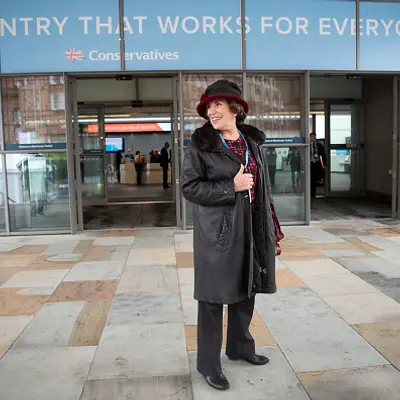
In 2021, at age 74, she stood for election to Derbyshire County Council in the Whaley Bridge division. Currie received 1,878 votes and finished second to Labour's Ruth George, who received 2,544.
It was her first attempt to win elected office since losing South Derbyshire in 1997.
Personal Life
Currie married Ray Currie in 1972. They had two daughters, Debbie and Susie, and separated in 1997 before divorcing in 2001.
In 1999, Currie met retired Metropolitan Police detective superintendent John Jones when he appeared as a guest on her radio program. They married in 2001 and remained together until Jones died from cancer in November 2020.
Currie has also been involved with charitable organizations and health campaigns. Following Russia's invasion of Ukraine in 2022, she hosted a Ukrainian refugee family in her home.
Real Estate
During Currie's years representing South Derbyshire, she and her family lived in a converted historic windmill in Findern, Derbyshire. The structure dates to the early 18th century and was one of the most distinctive residences associated with any British MP of the period.
The property was connected with Tower House (Findern) Ltd., a family business in which Currie served as a director. Contemporary financial profiles specifically identified the converted windmill as her family home while she was earning substantial outside income from writing and broadcasting.
After marrying John Jones, Currie spent several years living in Surrey before the couple moved to Whaley Bridge in the Peak District. The property became their long-term home, and Currie continued living there after Jones' death.