
/2017/03/charles-lindbergh-1.jpg)
/2014/05/chuck.jpg)
/2013/01/Buzz-Aldrin.jpg)
/2015/01/louis.jpg)
/2012/08/Neil-Armstrong.jpg)
/2015/07/Babe-Ruth-1.jpg)
/2009/09/Cristiano-Ronaldo.jpg)
/2020/06/taylor.png)
/2017/02/GettyImages-528215436.jpg)
/2009/09/Brad-Pitt.jpg)
:strip_exif()/2015/09/GettyImages-476575299.jpg)
/2019/11/GettyImages-1094653148.jpg)
/2019/10/denzel-washington-1.jpg)
:strip_exif()/2009/09/P-Diddy.jpg)
/2018/03/GettyImages-821622848.jpg)
/2019/04/rr.jpg)
/2020/02/Angelina-Jolie.png)
What Was Charles Lindbergh's Net Worth?
Charles Lindbergh was an American aviator, military officer, inventor, explorer, and author who had a net worth of $20 million at the time of his death in 1974. That's the same as around $155 million in today's dollars after adjusting for inflation.
At the age of 25, Charles Lindbergh made a nonstop flight from Long Island, New York, to Paris, France, in the Spirit of St. Louis, a monoplane. Lindbergh became the first person to accomplish a solo transatlantic flight and a nonstop flight between the American and the European mainland. He was given the Medal of Honor for his accomplishment. In 1927, Charles was named Time magazine's first-ever Man of the Year, and two years later, he was appointed to the National Advisory Committee for Aeronautics by President Herbert Hoover. In 1930, he was honored with the Congressional Gold Medal, and the following year, he began working with French surgeon Alexis Carrel on the creation of the first perfusion pump.
In 1932, Lindbergh's son Charles Jr. was kidnapped and murdered as a toddler in what was described as the "crime of the century." The tragic event led to the U.S. making kidnapping a federal crime. Lindbergh was involved in some controversy regarding his views, but flew fifty combat missions in World War II. Charles Lindbergh passed away on August 26, 1974, at the age of 72 from lymphoma.
Early Life
Charles Lindbergh was born Charles Augustus Lindbergh on February 4, 1902, in Detroit, Michigan. He was the son of Evangeline Lodge Land Lindbergh and Charles August Lindbergh. Charles Sr.'s birth name was Carl Månsson, and as an infant, he emigrated from Sweden to Minnesota with his family. Lindbergh grew up in Little Falls, Minnesota, and Washington, D.C., and he had three older half-sisters, Edith, Lillian, and Eva, from his father's previous marriage to Mary LaFond. From 1907 to 1917, Charles Sr. served as a U.S. Congressman; he was one of just a few congressmen to oppose the country entering World War I. Evangeline taught chemistry at Cass Technical High School in Detroit, followed by Little Falls High School. When Charles was seven years old, his parents split up. He attended over a dozen schools during his youth, and he graduated from Little Falls High School in 1918. After high school, Lindbergh enrolled at the University of Wisconsin–Madison's College of Engineering, but he dropped out during his sophomore year.

Getty
Career
After leaving college, Lindbergh attended the Nebraska Aircraft Corporation's flying school. He left Lincoln a few months later and worked as a parachutist, wing walker, and airplane mechanic to earn money and gain experience. His first solo flight took place in May 1923, followed soon after by his first solo cross-country flight. Charles later spent a year doing military flight training with the U.S. Army Air Service in San Antonio, Texas, and in March 1925, he graduated first in his class and received his Army pilot's wings. He was commissioned as a second lieutenant in the Air Service Reserve Corps, but the Army wasn't in need of additional active-duty pilots at the time. As a reserve officer, Lindbergh did part-time military flying with the 110th Observation Squadron, 35th Division, Missouri National Guard. He was promoted to first lieutenant in late 1925 and to captain during the summer of 1926. In October 1925, the Robertson Aircraft Corporation hired Charles to be the chief pilot for the new Contract Air Mail Route #2 (CAM-2), which provided service between St. Louis and Chicago. In April 1926, he took the United States Post Office Department's Oath of Mail Messengers, and in February 1927, he left his job to oversee the construction of his single-engine plane, the Spirit of St. Louis.
On May 20, 1927, Lindbergh embarked on a solo flight from Long Island, New York, to Paris, France, in the Spirit of St. Louis. He successfully reached his destination the following day, making him the first solo pilot to complete a nonstop transatlantic flight from Long Island to Paris. He won the Orteig Prize, a $25,000 reward that hotel owner Raymond Orteig offered to the first Allied aviator to fly that route nonstop. Charles became internationally famous and received numerous awards and honors for his accomplishments. Two months after landing in Paris, he released the autobiography "WE," which told the "story of his life and his transatlantic flight together with his views on the future of aviation." During World War II, Lindbergh flew 50 combat missions as a civilian in 1944. After the war ended, he was a consultant to the Chief of Staff of the United States Air Force, and in 1954, he was commissioned to be a brigadier general in the U.S. Air Force Reserve on the recommendation of President Dwight D. Eisenhower. That year, Charles also won the Pulitzer Prize for his book "The Spirit of St. Louis."
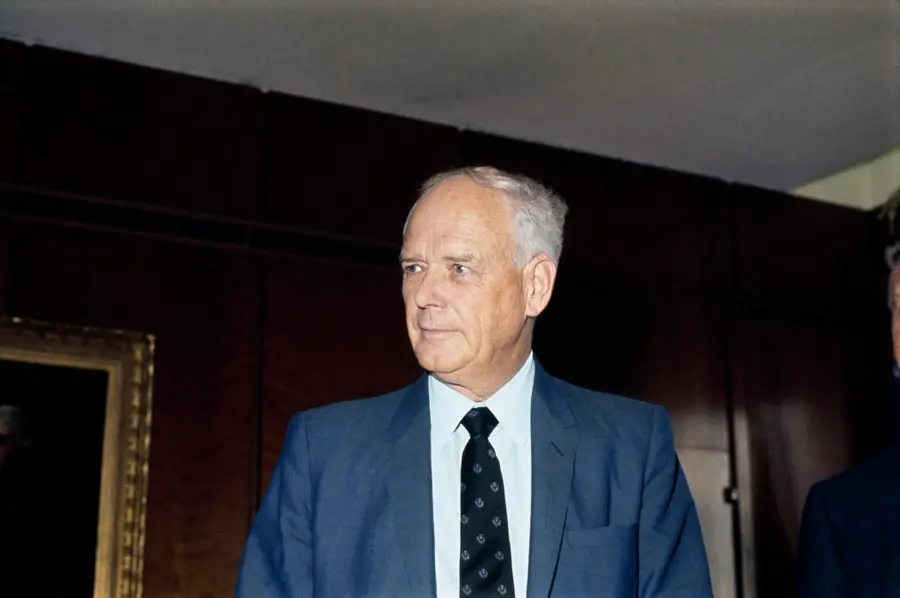
(Photo by UPI/Bettmann Archive/Getty Images)
Personal Life & Baby Kidnapping
Charles married Anne Morrow on May 27, 1929, and they welcomed six children together. On March 1, 1932, 20-month-old Charles Augustus Lindbergh Jr. was kidnapped from his crib. The kidnappers left a ransom note, and after they received several additional ransom notes, a $50,000 ransom was paid on April 2nd. On May 12th, a delivery truck driver discovered Charles Jr.'s decomposed body in a grove of trees. German carpenter Richard Hauptmann was arrested on September 19, 1934, and was later sentenced to death and electrocuted. Lindbergh became exasperated with the attention the tragedy brought his family, so they moved to Europe in late 1935. During his marriage to Anne (which lasted until his death), Charles fathered children with three other women. He had three children with hatmaker Brigitte Hesshaimer, who lived in Geretsried in Bavaria, Germany, and he had two children with Brigitte's sister Mariette, a painter living in Grimisuat, Switzerland. Lindbergh also had two children with a woman named Valeska, who served as his private secretary in Europe. All of these children were born between 1958 and 1967, and Charles' mistresses kept his identity a secret.
Nazi Sympathy Allegations
Though Lindbergh's writings and speeches caused some to suspect him of being a Nazi sympathizer, he stated that "no person with a sense of the dignity of mankind can condone the persecution of the Jewish race in Germany." However, President Franklin D. Roosevelt told Treasury Secretary Henry Morgenthau, "If I should die tomorrow, I want you to know this, I am absolutely convinced Lindbergh is a Nazi." Charles was a spokesman for the America First Committee, which opposed the U.S. entering World War II. After the end of the Holocaust, he toured a concentration camp and subsequently wrote in his diary, "Here was a place where men and life and death had reached the lowest form of degradation. How could any reward in national progress even faintly justify the establishment and operation of such a place?"
Death
Charles spent his later years on Maui. He was diagnosed with cancer in 1972, and he "sketched a simple design for his grave and coffin." He underwent radiation treatments and stayed at New York's Columbia-Presbyterian Medical Center for nearly a month, but he showed little improvement. On August 26, 1974, Lindbergh died of lymphoma at the age of 72, a week after returning to Maui. He was laid to rest at Palapala Ho'omau Church. The day of Charles' death, President Gerald Ford paid tribute to him, stating, "For a generation of Americans, and for millions of other people around the world, the 'Lone Eagle' represented all that was best in our country—honesty, courage, and the will to greatness."
Awards and Honors
In 1928, Lindbergh received the Boy Scouts of America's highest honor, the Silver Buffalo Award. The following month, a statue was dedicated to Charles at Paris–Le Bourget Airport in honor of his flight from New York to Paris. From 1928 to 2003, San Diego International Airport was called Lindbergh Field. In St. Louis County, Missouri, a highway, school district, and high school are named after Charles, and he received a star on the St. Louis Walk of Fame. In 1967, he was inducted into the National Aviation Hall of Fame, and in 1972, his image was on a medal in the Royal Air Force Museum's "The History of Man in Flight" medal set. In 2002, the Medical University of South Carolina established the Lindbergh-Carrel Prize, which is given to those who have contributed to the "development of perfusion and bioreactor technologies for organ preservation and growth." Charles also received the Orteig Prize (1927), Harmon Trophy (1927), Hubbard Medal (1927), New York State Medal for Valor (1927), Wright Brothers Memorial Trophy (1949), Daniel Guggenheim Medal (1953), and Pulitzer Prize (1954).
The U.S. government awarded Lindbergh the Medal of Honor (1927), the Distinguished Flying Cross (1927), the Smithsonian Institution's Langley Gold Medal (1927), and the Congressional Gold Medal (1930). Internationally, he was appointed a Commander of the Legion of Honor in France and was promoted to Commandeur in 1930. Charles was made a Knight of the Order of Leopold in Belgium (1927) and received Venezuela's Order of the Liberator, Commander (1928), Cuba's Order of Carlos Manuel de Céspedes, Grand Cross (1928), and Japan's Order of the Rising Sun, Third Class (1931). He was also honored with the U.K.'s Air Force Cross (1927), Colombia's Silver Cross of Boyacá (1928), the Philippines' Order of the Golden Heart (1971), the Fédération Aéronautique Internationale FAI Gold Medal (1927), the Royal Swedish Aero Clubs Gold plaque (1927), and the ICAO Edward Warner Award (1975).
Real Estate
The Lindbergh family built a home in East Amwell, New Jersey, in 1931. Charles Jr. was kidnapped while the family lived in the home, and after his body was found, they moved to Englewood, New Jersey, to live in Anne's family home. In mid-1933, Anne stated that the family was turning the home over to a board of trustees, and she gave it the name "Highfields." In 1952, the home became a New Jersey Department of Corrections juvenile rehabilitation center. In 1994, Highfields was added to the National Register of Historic Places.
/2017/03/charles-lindbergh-1.jpg)
/2015/07/Babe-Ruth-1.jpg)
/2014/05/chuck.jpg)
/2013/01/Buzz-Aldrin.jpg)
/2015/02/af1.jpg)
/2015/03/John-Glenn-1.jpg)
/2014/08/Elie-Wiesel-1.jpg)
/2014/08/GettyImages-104590424.jpg)