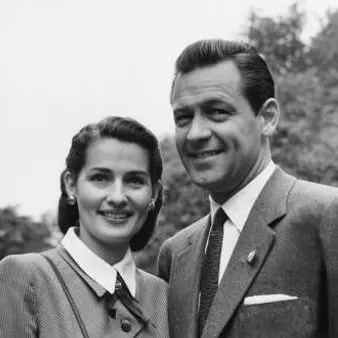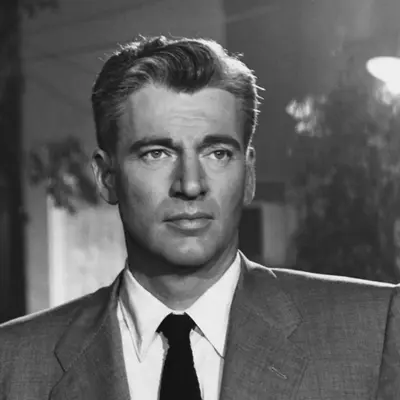












What was William Hopper's Net Worth?
William Hopper was an American actor who had a net worth equal to $4 million at the time of his death in 1970, in today's dollars.
William Hopper was best known for playing private investigator Paul Drake on the CBS courtroom drama "Perry Mason" from 1957 to 1966. Working alongside Raymond Burr as Mason and Barbara Hale as Della Street, he became a familiar television presence after years of smaller movie roles.
Hopper's career took him from Broadway and the Hollywood studio system to wartime service in the United States Navy, followed by a stretch selling automobiles. His return to acting produced roles in "The High and the Mighty," "Rebel Without a Cause," and "The Bad Seed" before "Perry Mason" brought him his signature part and a 1959 Emmy nomination. Although he was the son of actor DeWolf Hopper and Hollywood columnist Hedda Hopper, his most enduring success came from a character whose easygoing manner and investigative work made him an essential member of Mason's team.
Early Life and Theater
William DeWolf Hopper Jr. was born on January 26, 1915, in New York City. He was the only child of DeWolf and Hedda Hopper together. His father was a celebrated stage performer, while his mother worked as an actress before becoming one of Hollywood's most influential gossip columnists. William even appeared as a baby in the 1916 silent film "Sunshine Dad," which starred his father.
Hopper spent much of his youth in California and attended the Catalina Island School for Boys. He gained early performing experience in summer stock in Ogunquit, Maine, then worked on Broadway. In October 1934, he played Victor Neilson in "Order Please." Later that year, he joined the ensemble of "Romeo and Juliet," a production starring Katharine Cornell that continued into 1935. Those stage appearances preceded his adult film career and gave him experience beyond the Hollywood connections associated with his family.
Hollywood Beginnings
In 1936, Hopper secured a contract with Paramount Pictures. His early screen credits appeared under several variations of his name, including DeWolf Hopper and Bill Hopper. He subsequently worked at Warner Bros., where he had opportunities as a young leading man as well as a steady supply of smaller supporting parts.
"Public Wedding" gave him an important early showcase in 1937. Starring opposite Jane Wyman, Hopper played Tony Burke in a comedy about a publicity stunt involving a carnival performer and a supposed marriage. The American Film Institute identifies it as his first major screen role. That same year, he played college football star Ken Thomas in "Over the Goal," a comedy built around a big game, a promised inheritance, and a player who has been warned that another injury could endanger his health.
His other early films included "The Footloose Heiress" in 1937 and "Mystery House" in 1938. He also accumulated brief appearances in major productions, including "Stagecoach," "Knute Rockne, All American," "The Maltese Falcon," and "Yankee Doodle Dandy." These jobs kept him working, but they did not establish the screen identity he would find later on television.
Navy Service and a Return to Acting
During World War II, Hopper served in the Navy and volunteered for the Office of Strategic Services. An experienced swimmer and diver, he became a member of an underwater demolition team. His Pacific service included operations connected with Peleliu, Angaur, Ulithi, Leyte, and Lingayen Gulf. He received a Bronze Star with a combat "V" for valor.
After the war, Hopper stepped away from full-time acting and sold automobiles in Hollywood for eight years. He later spoke about the difficulty of establishing himself as an individual rather than simply being recognized as the son of famous parents. His family name opened doors, but it also created expectations that followed him through his early career.
Director William Wellman helped bring Hopper back to films with "The High and the Mighty" in 1954. He also appeared in Wellman's "Track of the Cat" that year and "Good-bye, My Lady" in 1956. The comeback put him in a succession of substantial character roles rather than the fleeting appearances that had filled much of his earlier film work.
In "Rebel Without a Cause," released in 1955, Hopper played the stern father of Natalie Wood's character, Judy. The next year, he portrayed Colonel Kenneth Penmark, the father of the young girl at the center of "The Bad Seed." He also took leading roles in two 1957 science-fiction films, "The Deadly Mantis" and "20 Million Miles to Earth."
"Perry Mason"
Hopper initially auditioned for the title role in "Perry Mason," but the production ultimately cast him as Paul Drake. The series premiered in 1957 and ran for nine seasons. Drake headed a detective agency and supplied the interviews, background checks, and discoveries that helped Mason defend his clients.
The role gave Hopper room for humor as well as action. Drake could investigate a dangerous lead, trade relaxed banter with Della Street, or arrive with a crucial piece of information. His informal manner balanced the intensity of Mason's courtroom work. In 1959, Hopper received a Primetime Emmy nomination for Best Supporting Actor (Continuing Character) in a Dramatic Series.
After "Perry Mason" ended in 1966, Hopper largely withdrew from screen acting. His final film appearance was a small, uncredited part in "Myra Breckinridge," released in 1970 after his death.
Personal Life and Death
Hopper married actress Jane Gilbert in 1940, and they had a daughter, Joan. The couple separated in 1962 and later divorced. He subsequently married Jeanette Juanita Ward, who remained his wife until his death.
In February 1970, Hopper suffered a stroke and was hospitalized in Palm Springs, California. He died of pneumonia on March 6, 1970, at the age of 55. He was buried at Rose Hills Memorial Park in Whittier, California.