
/2010/11/Tommy-Lee-Jones.jpg)
/2017/01/Leland-Orser.jpg)
/2014/10/Isiah-Whitlock.png)
/2020/01/Tobey-Maguire.jpg)
/2026/01/Michael-Vartan.png)
/2010/12/GettyImages-473950190.jpg)
/2020/01/lopez3.jpg)
/2009/09/Jennifer-Aniston.jpg)
/2020/06/taylor.png)
/2009/09/Brad-Pitt.jpg)
/2018/03/GettyImages-821622848.jpg)
/2019/11/GettyImages-1094653148.jpg)
:strip_exif()/2009/09/P-Diddy.jpg)
/2009/09/Cristiano-Ronaldo.jpg)
/2019/04/rr.jpg)
/2009/11/George-Clooney.jpg)
/2019/10/denzel-washington-1.jpg)
What is Tommy Lee Jones' Net Worth and Salary?
Tommy Lee Jones is an American actor who has a net worth of $100 million.
Tommy Lee Jones has built one of the most durable and respected careers in American film and television, distinguished by his commanding screen presence, sharp intelligence, and ability to balance authority with dry humor. After studying English at Harvard University, where he was roommates with future Vice President Al Gore, Jones began his acting career on the New York stage before transitioning to television in the early 1970s. He gained early visibility with a starring role on the soap opera "One Life to Live" and supporting work in films such as "Love Story."
Jones' career reached a turning point in the late 1980s and early 1990s, when he emerged as a reliable character actor capable of elevating both dramas and thrillers. His performance as Texas Ranger Woodrow F. Call in the television miniseries "Lonesome Dove" earned him an Emmy Award and established his reputation for portraying stoic, morally grounded figures. That image carried into his film work, most notably with his Academy Award-winning role as U.S. Marshal Samuel Gerard in "The Fugitive," a performance that combined relentless intensity with unexpected wit.
Throughout the 1990s, Jones became a fixture in high-profile studio films, starring in projects such as "JFK," "Under Siege," "Batman Forever," "Men in Black," and "U.S. Marshals." While often cast as authority figures, lawmen, or military leaders, he demonstrated versatility by leaning into comedy in the "Men in Black" franchise, where his deadpan delivery became central to the films' success.
In later years, Jones increasingly gravitated toward character-driven dramas and Westerns, including acclaimed performances in "No Country for Old Men," "In the Valley of Elah," "Lincoln," and "The Homesman," which he also directed. Across decades, Tommy Lee Jones has remained a consistent presence in American cinema, respected for his discipline, restraint, and refusal to chase trends, instead building a career defined by credibility and longevity.
Early Life & Education
Tommy Lee Jones was born on September 15, 1946, in San Saba, Texas, and raised primarily in West Texas towns shaped by ranching, oil, and small-town pragmatism. His father worked in the oil fields, and his mother was a police officer and schoolteacher, a background that exposed Jones early to discipline, self-reliance, and authority. Those formative influences would later surface repeatedly in the kinds of characters he portrayed onscreen.
Jones attended St. Mark's School of Texas in Dallas on a scholarship, where he distinguished himself academically and athletically. A standout football player, he earned a scholarship to Harvard University, where he played offensive guard for the Crimson. At Harvard, Jones studied English literature, developing a lifelong interest in classic texts, poetry, and language. He graduated cum laude in 1969, a rare academic credential among future Hollywood leading men.
While at Harvard, Jones was roommates with Al Gore, an association that would later become a piece of pop culture trivia but was largely incidental to Jones' early ambitions. More important was his exposure to theater and performance, which gradually redirected his interests away from athletics and toward acting. After graduating, Jones moved to New York City to pursue a career on the stage.
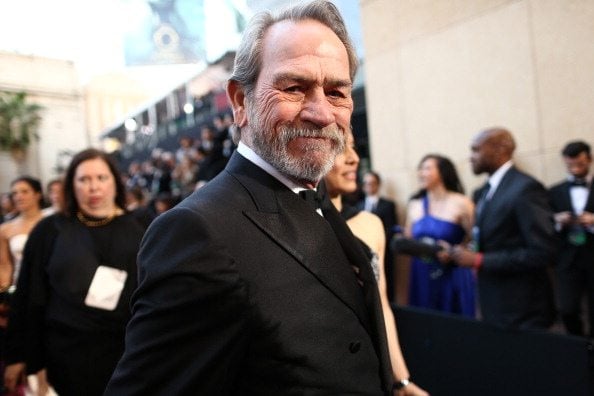
Christopher Polk/Getty Images
Early Career
Jones' professional acting career began in theater, where he worked in off-Broadway productions and Shakespearean roles. His classical training and disciplined approach quickly set him apart from peers who relied more heavily on charisma than technique. That grounding in live performance helped him develop a controlled, economical acting style that would become his trademark.
His first major screen appearance came with a supporting role in "Love Story" in 1970, one of the highest-grossing films of its era. Though his part was small, the exposure helped him secure steady television work throughout the early 1970s. Jones soon landed a starring role on the long-running daytime soap opera "One Life to Live," playing Dr. Mark Toland. The job provided financial stability and valuable on-camera experience, though Jones later described the period as professionally limiting.
Throughout the decade, Jones alternated between television movies, guest appearances, and modest film roles. Projects such as "Rolling Thunder," "Coal Miner's Daughter," and "Eyes of Laura Mars" showcased his ability to bring gravity to morally ambiguous characters. While he had not yet achieved stardom, he was steadily building a reputation as a serious actor capable of anchoring complex material.
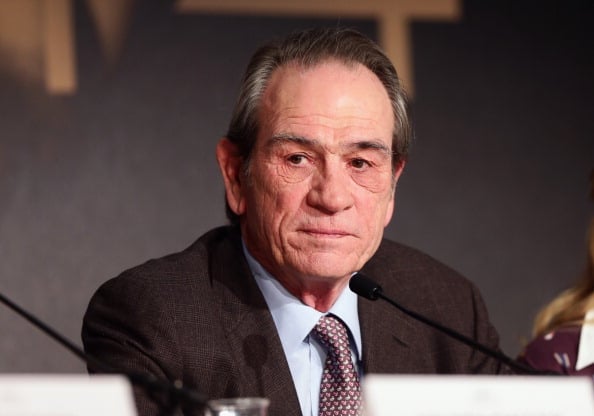
Getty
Breakthrough and Critical Recognition
The late 1980s marked a turning point in Jones' career. In 1989, he starred as Woodrow F. Call in the television miniseries "Lonesome Dove," adapted from Larry McMurtry's Pulitzer Prize-winning novel. The role required emotional restraint, physical endurance, and an understanding of frontier-era masculinity. Jones' performance earned him a Primetime Emmy Award and firmly established him as a leading dramatic actor.
"Lonesome Dove" also cemented Jones' association with Westerns and lawmen, archetypes that aligned naturally with his demeanor and upbringing. Unlike more flamboyant performers, Jones conveyed authority through stillness and understatement, allowing silence to carry emotional weight. This approach resonated with audiences and critics alike.
Following the success of "Lonesome Dove," Jones began receiving more substantial film offers. He appeared in Oliver Stone's "JFK," delivering a memorable performance as Clay Shaw, and continued to take on roles that emphasized intelligence and moral complexity.
Blockbuster Success
Jones' ascent to mainstream stardom arrived in 1993 with "The Fugitive." Cast as U.S. Marshal Samuel Gerard opposite Harrison Ford, Jones transformed what could have been a conventional antagonist into the film's most compelling presence. His clipped dialogue, dry humor, and relentless pursuit made the character instantly iconic. The performance earned Jones an Academy Award for Best Supporting Actor and elevated him into the top tier of Hollywood actors.
The success of "The Fugitive" opened the door to a string of high-profile studio projects throughout the 1990s. He reprised the Gerard role in "U.S. Marshals," starred in the action hit "Under Siege," and took on the role of Two-Face in "Batman Forever." While some of these films received mixed critical responses, Jones' performances were consistently regarded as anchors of credibility.
Perhaps the most commercially significant project of this period was "Men in Black," released in 1997. Paired with Will Smith, Jones played Agent K, a deadpan government operative tasked with policing extraterrestrial activity on Earth. The film's success spawned multiple sequels and revealed Jones' underrated comedic timing. His refusal to play for laughs, instead treating absurd situations with total seriousness, became central to the franchise's appeal.
Versatility and Genre Range
Despite his association with authority figures and lawmen, Jones repeatedly sought roles that challenged his established image. He appeared in thrillers, courtroom dramas, political films, and science fiction, often portraying men grappling with institutional power or personal regret.
Films such as "In the Valley of Elah" allowed Jones to explore grief and moral ambiguity, while "No Country for Old Men" showcased his ability to convey existential weariness with minimal dialogue. In that film, his portrayal of Sheriff Ed Tom Bell served as a quiet counterpoint to the violence and chaos surrounding him.
Jones also returned periodically to television and smaller-scale projects, favoring material that prioritized character over spectacle. His selective approach to roles helped preserve his credibility during an era when many contemporaries chased franchise exposure at the expense of depth.
Notable Salaries
Following his Oscar win for The Fugitive, his market value skyrocketed, allowing him to command eight-figure salaries for both blockbusters and prestigious dramas. While he is famously private regarding his finances, several high-profile contracts and legal filings have provided a window into his career earnings:
- Men in Black II (2002): Jones earned a reported $20 million base salary plus a lucrative back-end deal consisting of 12.5% of the film's profits, a pact that significantly boosted his take-home pay for the sequel.
- U.S. Marshals (1998): Reflecting his new status as a leading man after The Fugitive, he commanded a substantial $17 million salary to reprise his role as Samuel Gerard.
- Men in Black (1997): For the first film in the franchise, he earned a base salary of roughly $7–10 million, marking his definitive entry into the "high-salary" tier of Hollywood actors.
- The Hunted (2003): Even for non-franchise action films, his rate remained high, reportedly earning $10 million for this role.
- No Country for Old Men (2007): For this critical darling, Jones accepted a lower upfront "reduced fee" of $750,000, though he later pursued legal action regarding several million dollars in additional performance-based bonuses he felt were owed based on the film's success.
- Small Soldiers (1998): While exact figures are less publicized, his "voice-only" role as Major Chip Hazard was estimated to be in the multi-million dollar range, benefiting from the peak of his 90s star power.
Directing and Later Career
In the 2000s and beyond, Jones increasingly gravitated toward projects that allowed him creative control. He made his directorial debut with "The Three Burials of Melquiades Estrada," a modern Western that examined borders, morality, and responsibility. The film was well received and demonstrated Jones' ability to translate his restrained acting sensibility into a directorial voice.
He later directed and starred in "The Homesman," further cementing his interest in Western themes and frontier psychology. As an actor, Jones continued to appear in prestige projects such as "Lincoln," where he portrayed Thaddeus Stevens with sharp wit and ideological intensity.
Rather than slowing down, Jones transitioned into a phase of career longevity marked by selective appearances and supporting roles that benefited from his gravitas. He remained a sought-after presence for filmmakers seeking authenticity and authority.
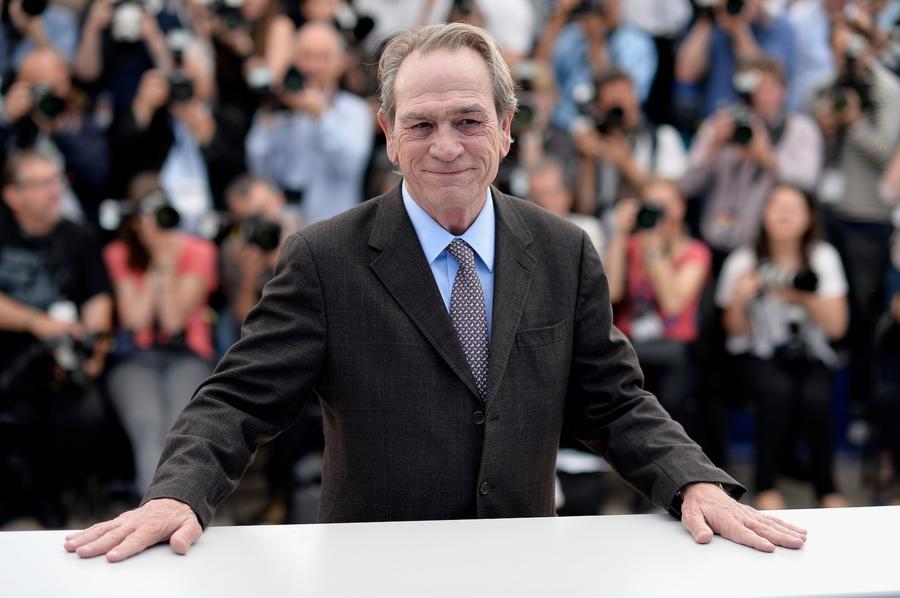
(Photo by Pascal Le Segretain/Getty Images)
Endorsements
Unlike many Hollywood stars of his stature, Tommy Lee Jones has largely avoided traditional celebrity endorsements in the United States, opting instead for a highly selective and unconventional approach. His most famous commercial work came through a long-running and lucrative relationship with the Japanese beverage company Suntory, for whom he appeared in a series of television advertisements beginning in the mid-2000s. In the commercials, Jones portrayed a deadpan, extraterrestrial observer sent to Earth to study human behavior, a character that leaned heavily into his stoic screen persona while embracing surreal humor.
The campaign became a pop culture phenomenon in Japan and ran for many years, making Jones one of the most recognizable foreign celebrities in Japanese advertising. Industry observers have long noted that the Suntory deal paid exceptionally well, with Jones earning tens of millions of dollars over the life of the campaign, all while maintaining a low public profile at home. Beyond Suntory, Jones has rarely attached his name to commercial products, reinforcing his reputation as an actor who prioritized craft and selectivity over broad brand exposure.

(via Brian Warner)
Personal Life
His first marriage was to Kate Lardner from 1971 to 1978. During his second marriage to Kimberlea Cloughley, he fathered two children. In 2001, he married Dawn Laurel, his third wife.
Jones is a fluent Spanish speaker. He also enjoys playing polo and is an avid supporter of the San Antonio Spurs. He endorsed his old roommate, Al Gore, at the 2000 Democratic National Convention.
Real Estate
In 2002, Tommy purchased separate parcels of land in Wellington, Florida, for $4.62. He then combined them into one massive estate spanning 50 acres with miles upon miles of horse trails. In addition, there's an 11,000-square-foot, 4-bedroom house on the property with all the amenities a major celebrity might need. The main house features a state-of-the-art kitchen, hardwood floors, and floor-to-ceiling windows on all sides. Tommy Lee Jones' house also comes with a regulation-sized polo field, where he often plays polo with his local team. There are also 48 stalls to accommodate the many horses that frequent the ranch for matches. Surrounding the main structure of Tommy Lee Jones' house, there are also multiple horse trails.
In 2013, Tommy put this estate on the market for $26.75 million. Six years later, he took a more realistic approach, relisting the property for a slashed price and eventually settling on a fee of $11.5 million. It was a far cry from the $26.75 million he was hoping for, but the real estate deal still represents an impressive profit margin for the veteran actor.
/2010/11/Tommy-Lee-Jones.jpg)
/2010/12/GettyImages-473950190.jpg)
/2020/05/2020-05-05.jpg)
/2022/01/tommy.jpg)
/2012/09/GettyImages-170352660.jpg)
/2017/01/Leland-Orser.jpg)
/2014/09/Clarke-Peters.jpg)
/2015/07/GettyImages-631269774.jpg)
/2017/02/GettyImages-528215436.jpg)
:strip_exif()/2015/09/GettyImages-476575299.jpg)