Category:
Richest CelebritiesActors
Net Worth:
$25 Million
Birthdate:
Jul 30, 1968 (58 years old)
Birthplace:
Flint
Gender:
Male
Height:
6 ft 3 in (1.91 m)
Profession:
American football player, Actor
Nationality:
United States of America
  1. What Is Terry Crews' Net Worth And Salary?
  2. Salary
  3. Early Life
  4. Football Career
  5. Early Acting Career
  6. Breakthrough On Television
  7. Film And Comedy Success
  8. Brooklyn Nine Nine And Hosting Career
  9. Commercials, Books, And Public Voice
  10. Personal Life
Last Updated: June 1, 2026

What is Terry Crews' Net Worth and Salary?

Terry Crews is an American actor and former NFL player who has a net worth of $25 million

After a brief NFL career, Crews reinvented himself in Hollywood, first gaining attention for his physically imposing but unexpectedly funny presence in films such as "Friday After Next," "White Chicks," "The Longest Yard," and "Idiocracy." He became a breakout television star as Julius Rock on "Everybody Hates Chris," then reached an even wider audience as Terry Jeffords on the ensemble comedy "Brooklyn Nine-Nine." Crews also became a familiar face through his high-energy Old Spice commercials, his action roles in "The Expendables" franchise, and his work as the host of "America's Got Talent." Known for combining strength, vulnerability, comedy, and candor, Crews has also become a public voice on masculinity, addiction, family, and abuse, giving his career a depth that extends beyond acting.

Salary

Terry Crews' salary for America's Got Talent is $1.5 million per season, which is about $68,000 per episode over a 22-episode season. For Brooklyn Nine-Nine, he made around $80,000 per episode.

Early Life

Terry Alan Crews was born on July 30, 1968, in Flint, Michigan. He grew up in a strict religious household and has spoken openly about the challenges of his childhood, including his father's abusive behavior and the instability that shaped his early life.

Crews found an outlet through art, academics, and athletics. He earned an art scholarship to the Interlochen Center for the Arts and later attended Western Michigan University, where he played football and studied art. At Western Michigan, he became a standout defensive end and helped the Broncos win a Mid-American Conference championship.

Although football became his first professional path, art remained an important part of his identity. Crews worked as a courtroom sketch artist and later used his drawing skills during the early stages of his entertainment career.

Football Career

Crews was selected by the Los Angeles Rams in the 11th round of the 1991 NFL Draft. Over the next several years, he spent time with multiple NFL teams, including the Rams, San Diego Chargers, Washington Redskins, and Philadelphia Eagles. He also played in NFL Europe with the Rhein Fire.

His football career was not glamorous. Crews later described the experience as financially unstable and emotionally difficult, with frequent roster changes and uncertainty. While he had reached the highest level of the sport, he was not a long-term NFL star. That reality eventually pushed him to rethink his future.

After retiring from football, Crews moved to Los Angeles and began pursuing work in entertainment. His size and athletic background helped him get attention, but his comedic timing and willingness to make fun of his own image quickly set him apart.

Early Acting Career

Crews' first major exposure came through the syndicated competition series "Battle Dome," where he appeared as the character T-Money. The show gave him experience on camera and helped him build confidence as a performer.

His film career began to take off in the early 2000s. He appeared in "The 6th Day," "Training Day," and "Friday After Next," gradually establishing himself as a memorable supporting actor. One of his most famous early performances came in the 2004 comedy "White Chicks," where he played Latrell Spencer. His over-the-top performance, including the now-famous scene built around Vanessa Carlton's "A Thousand Miles," became one of the film's most enduring moments.

Crews continued to build a reputation as an actor who could use his imposing physique for comedy rather than simply intimidation. That contrast became one of his defining strengths.

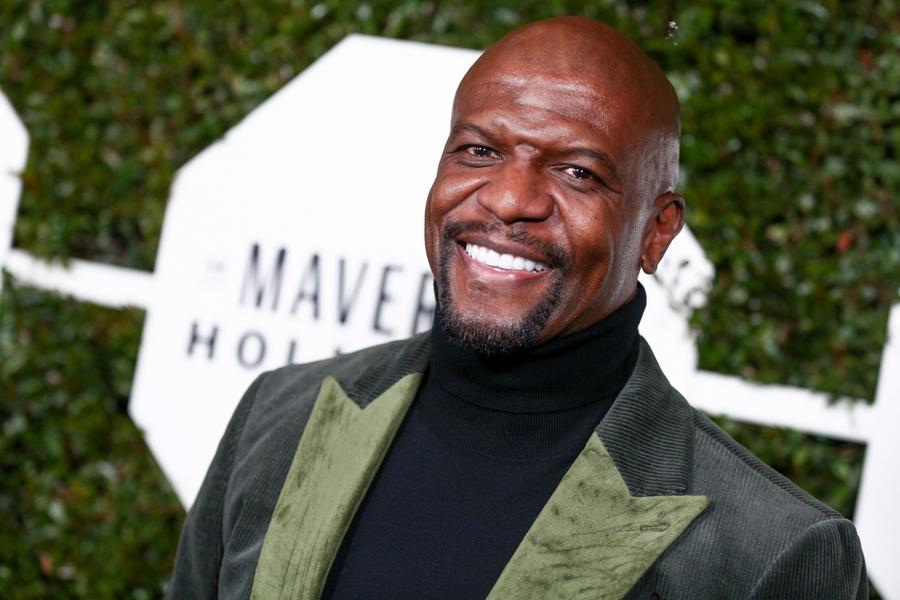
Rich Fury/Getty Images

Breakthrough on Television

In 2005, Crews landed one of his most important roles as Julius Rock on the sitcom "Everybody Hates Chris." Inspired by Chris Rock's childhood, the show featured Crews as the hardworking, frugal, and deeply practical father of the family. His performance was warm, funny, and grounded, and it helped show that he could carry emotional material as well as broad comedy.

The role made Crews a household name and gave him a major television platform. Julius became one of the show's most beloved characters, remembered for his obsessive attention to the cost of everything and his devotion to his family.

Film and Comedy Success

While building his television career, Crews continued appearing in films. He had roles in "The Longest Yard," "Click," "Idiocracy," "Norbit," "Balls of Fury," "Get Smart," and "Terminator Salvation." In "Idiocracy," he played President Dwayne Elizondo Mountain Dew Herbert Camacho, a ridiculous but unforgettable future president. The movie initially received a limited release but later became a cult classic, and Crews' performance became one of its most quoted elements.

Crews also joined the action ensemble franchise "The Expendables," appearing alongside Sylvester Stallone, Jason Statham, Jet Li, Dolph Lundgren, and other action stars. His role as Hale Caesar allowed him to lean into his action credentials while still bringing humor and energy to the series.

Brooklyn Nine-Nine and Hosting Career

In 2013, Crews began starring as Terry Jeffords on the NBC and Fox comedy series "Brooklyn Nine-Nine." The role became one of the defining parts of his acting career. As a muscular police sergeant with a soft heart, deep love for yogurt, and devotion to his wife and daughters, Crews found a perfect vehicle for his combination of strength and sensitivity.

"Brooklyn Nine-Nine" earned a devoted following and ran for eight seasons. Crews' character became central to the show's ensemble, and his performance helped reinforce his reputation as one of television's most likable comic actors.

Crews also became a successful host. He hosted "Who Wants to Be a Millionaire," "World's Funniest Fails," and later became the host of "America's Got Talent." His enthusiastic, emotional, and upbeat hosting style made him a natural fit for talent competitions and family-oriented television.

Commercials, Books, and Public Voice

Crews became a pop-culture fixture through his Old Spice commercials, which used his explosive physical comedy and exaggerated energy to memorable effect. The ads helped turn him into one of the most recognizable commercial performers of the era.

He has also written books, including "Manhood: How to Be a Better Man or Just Live with One" and "Tough: My Journey to True Power." In his writing and interviews, Crews has spoken candidly about marriage, pornography addiction, therapy, faith, childhood trauma, and the pressures placed on men to appear invulnerable.

In 2017, during the rise of the Me Too movement, Crews publicly said he had been sexually assaulted by a Hollywood executive. His decision to speak out made him one of the most prominent male voices in the conversation around abuse and accountability. He later testified before Congress in support of sexual assault survivors.

Personal Life

Crews married Rebecca King in 1989. The couple has raised a large family together and has spoken publicly about the challenges they faced in their marriage, including Crews' struggles with addiction and the work they did to rebuild trust.

Crews also became one of the most prominent male voices of the Me Too era after publicly revealing that he had been sexually assaulted by a powerful Hollywood executive. In 2017, Crews said that a high-level industry figure had groped him at a Hollywood party while Crews was standing with his wife. He later identified the executive as Adam Venit, then a senior agent at William Morris Endeavor.

Crews said he initially hesitated to speak out because he feared retaliation, disbelief, and damage to his career. His decision to come forward was especially notable because it challenged assumptions about masculinity, physical strength, and victimhood. Crews was a former NFL player with an imposing public image, but he used his platform to explain that power dynamics, professional pressure, and fear can silence victims regardless of size, fame, or gender.

He filed a police report and later sued Venit and WME. Venit was suspended by the agency, returned to work after the suspension, and later retired. Crews eventually settled his lawsuit. He also testified before the U.S. Senate Judiciary Committee in support of the Sexual Assault Survivors' Bill of Rights, describing his experience and arguing that survivors should not be shamed into silence. The episode became an important part of Crews' public identity, reinforcing his reputation as someone willing to speak openly about trauma, accountability, and the difficult work of redefining strength.

All net worths are calculated using data drawn from public sources. When provided, we also incorporate private tips and feedback received from the celebrities or their representatives. While we work diligently to ensure that our numbers are as accurate as possible, unless otherwise indicated they are only estimates. We welcome all corrections and feedback using the button below.
Did we make a mistake?
Submit a correction suggestion and help us fix it!
Submit a Correction