
/2012/10/Simon-Cowell.jpg)
/2009/10/leona-lewis.png)
/2010/01/Susan-Boyle-1.jpg)
/2023/03/Alesha-Dixon.jpg)
/2009/10/Simon-Fuller.jpg)
/2014/07/GettyImages-497891024.jpg)
/2009/11/George-Clooney.jpg)
/2009/09/Cristiano-Ronaldo.jpg)
/2019/04/rr.jpg)
/2019/11/GettyImages-1094653148.jpg)
/2020/04/Megan-Fox.jpg)
:strip_exif()/2009/09/P-Diddy.jpg)
/2017/02/GettyImages-528215436.jpg)
/2020/02/Angelina-Jolie.png)
/2009/09/Brad-Pitt.jpg)
/2018/03/GettyImages-821622848.jpg)
/2020/01/lopez3.jpg)
What is Simon Cowell's net worth?
Simon Cowell is a British music executive and television producer who has a net worth of $600 million. Love him or hate him, there is no denying that Simon Cowell seems to have the Midas Touch when it comes to churning out pop stars. The judge that helped put shows such as "Pop Idol," "American Idol," and "The X Factor" on the cultural map, Simon Cowell's snarky critiques and eerily accurate ability to put together massively successful pop groups has made him one of the most respected, and reviled, names in the music business.
This success has turned Simon Cowell into one of the highest-paid celebrities in the world, a category he has enjoyed for over two decades. In a typical year, he can earn $50 – $100 million from his various endeavors. The vast majority of his earnings come from judging and producing three shows; "America's Got Talent," "Britain's Got Talent," and "The X-Factor." Simon became a global superstar in 2002 with the launch of "American Idol." A year prior debuted as a judge on the original incarnation, "Pop Idol," which aired in England. Before becoming a reality TV star, Simon was a highly successful record executive.
Simon Cowell first made a name for himself, working at EMI Music Publishing, where his father was an executive. Simon eventually launched his publishing house, Syco. In addition to producing the various editions of "The X Factor," "America's Got Talent," and "Britain's Got Talent," Syco also has first dibs on the winners of the various shows. Simon has represented such artists as Leona Lewis, One Direction, Cher Lloyd, Olly Murs, Susan Boyle, Little Mix, Labrinth, Jackie Evancho, and Fifth Harmony.
Salary Highlights
When you total up all of Simon's various business venture incomes, his annual salary regularly exceeds $50 million and periodically approaches $100 million. His peak salary for American Idol was $33 million per season. Between June 2017 and June 2018, Simon earned $45 million. Between June 2018 and June 2019, he earned $41 million. In the following 12-month period, he earned another $50 million.

Getty
Early Life
Simon Phillip Cowell was born in Lambeth, London, England, on October 7, 1959. He was raised in Elstree, Hertfordshire. Cowell has a younger brother, three half-brothers, and a half-sister. Cowell attended Radlett Preparatory School and Dover College. He passed English Language and Literature and then attended Windsor Technical College.
Early Career
Simon Cowell worked a number of odd jobs in his youth, including working as a runner on Stanley Kubrick's 1980 horror film "The Shining." However, he had issues getting along with his colleagues and bosses. Eventually, Simon went to work for his father, Eric Philip Cowell, who was an executive at EMI Music Publishing.
Simon left EMI to form his own label in 1985. That label "Fanfare" was an absolute failure and shuttered completely by 1989. After the failure of Fanfare, Simon landed a job as a consultant at BMG. At BMG, Simon finally hit his professional stride. Within a few years, the acts that Simon signed and nurtured had sold over 150 million albums worldwide.
Cowell then formed another label of his own called S-Records.
Interestingly, Simon Cowell and S-Records' first major success did not come from music artists but from novelty releases based on popular television series such as "The Wiggles" and "Mighty Morphin Power Rangers." In 1995, he persuaded two actors, Robson Green and Jerome Flynn from the UK television drama series "Soldier Soldier," to sign with him and record the song "Unchained Melody," which they had performed on the show. The recording by the duo quickly reached number one in the U.K. It became the best-selling single of 1995, and the group's self-titled debut album, released later in the year, also became the best-selling album of 1995. According to Cowell, this is how he made his first million.

ANDREW COWIE/AFP/Getty Images
Pop & American Idol
In 2001, he was tapped to serve as a judge on a new reality competition series called "Pop Idol," which was being produced by a long-time friend, Simon Fuller. The show's format proved successful, and Simon was then invited to serve as a judge on the American version of the show, "American Idol," in 2002.
Cowell's fame grew thanks to his signature phrase, "I don't mean to be rude, but …." Cowell left "American Idol" in January 2010 when the show was still the most popular show on American television.
"American Idol" went on to become one of the most popular reality competition series ever, and Simon Cowell's acerbic comments and harsh criticism made him the judge everyone loved to hate. He remained with the show until 2010.
Syco Entertainment
The company operates a record label, Syco Music, and a television production arm, Syco TV, both of which have been instrumental in launching the careers of numerous successful artists and creating hit television formats.
Syco Music, the record label division, is renowned for its role in shaping the careers of artists discovered through television talent shows like "The X Factor" and "Britain's Got Talent," which are produced by Syco TV. Some of the most successful artists signed to Syco Music include One Direction, Little Mix, Susan Boyle, and Leona Lewis. These artists have achieved international success, selling millions of albums worldwide and topping charts with their music, thanks in part to the guidance and promotion provided by Syco.
In television, Syco TV has been a powerhouse in creating and producing reality talent shows. "The X Factor," which debuted in 2004, became a global phenomenon, with numerous international versions being produced. The show has been pivotal in discovering and showcasing new talents, many of whom have gone on to achieve global recognition. Similarly, "Britain's Got Talent" and its international spin-offs, "America's Got Talent" and "Got Talent" series in various other countries, have been highly successful in uncovering unique and diverse talents from across the globe.

Frederick M. Brown/Getty Images
America's Got Talent
In 2006, he launched "America's Got Talent," a reality competition show that featured a variety of acts. The program was an instant hit in the US, and in 2007, he added "Britain's Got Talent" to the roster. "Britain's Got Talent" surpassed the popularity of "America's Got Talent," and by its third season, one-third of the entire population of the UK was watching the program regularly. The "Got Talent" franchise has now expanded to 60 countries and is the most successful of his reality competition show entities.
The X-Factor
"The X Factor" is a groundbreaking television music competition franchise created by Simon Cowell, renowned for revolutionizing the genre of talent shows. Premiering in the UK in 2004, the show quickly became a cultural phenomenon, gaining popularity for its unique format and ability to launch the careers of aspiring singers. Its success led to numerous international versions, making "The X Factor" a global brand in entertainment.
The show's format involves contestants auditioning in front of a panel of judges, initially comprising Simon Cowell, Louis Walsh, and Sharon Osbourne, with many other music industry professionals joining in later series. Contestants are categorized by groups such as "Boys," "Girls," "Over 25s," and "Groups," and are mentored by the judges, who guide them through various stages of the competition. The format includes several rounds, from auditions and boot camps to judges' houses and live shows, where public voting determines the outcome.
"The X Factor" is noted for its dramatic, emotional narratives and the personal journeys of contestants. It has been a launchpad for numerous successful artists, including One Direction, Little Mix, and Leona Lewis, who have gone on to achieve international fame.
The show's impact extends beyond discovering musical talents; it has influenced pop culture and the music industry significantly. With its blend of entertainment, drama, and music, "The X Factor" has garnered a large and dedicated global fanbase, making it one of the most popular and enduring reality TV shows in the world.
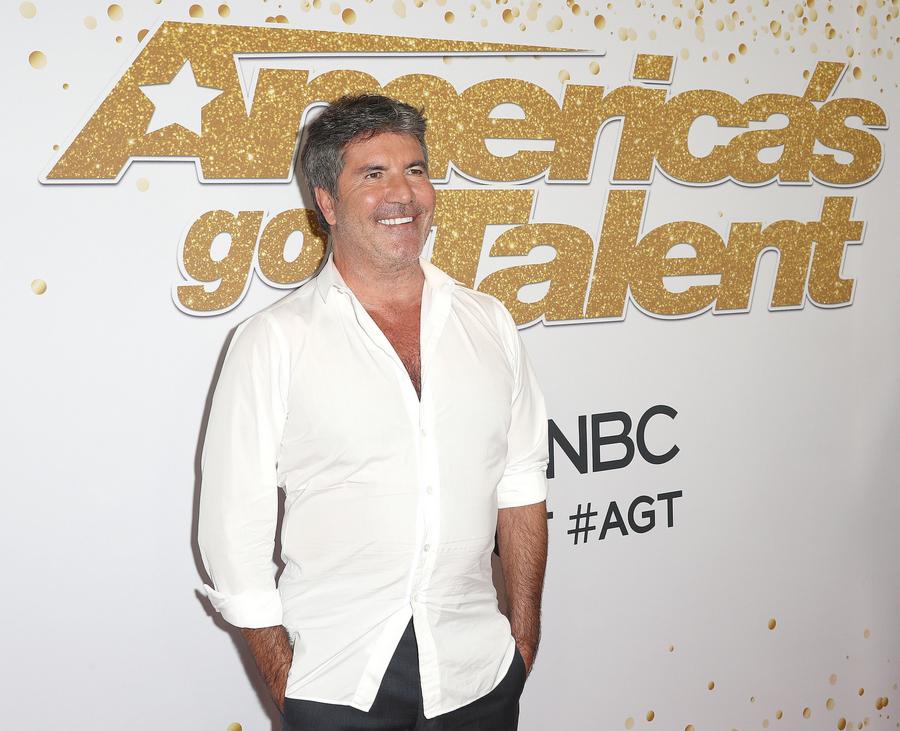
(Photo by Frederick M. Brown/Getty Images)
Personal Life
Cowell dated English television host Terri Seymour from 2002 to 2008. Cowell was engaged to make-up artist Mezhgan Hussainy from 2010 to 2011.
Cowell began dating American Lauren Silverman in 2013. At the time, she was married to Cowell's friend Andrew Silverman. Andrew quickly filed for divorce on the grounds of adultery, naming Cowell and his wife in the legal documents. Two weeks later, Cowell and Lauren confirmed they were expecting a baby. The divorce was settled out of court in August 2013. Silverman gave birth to Cowell's son on February 14, 2014. Cowell finally proposed to Lauren in January 2022 after dating for 13 years.
Cowell is a patron of Together for Short Lives, a UK charity for all children with life-threatening and life-limiting conditions. He also supports animal rights and has appeared in a video for PETA in which he reminds drivers of the cruelty to animals that can occur when their pets are locked in cars in the summer.
During the 2020 Coronavirus pandemic, Simon donated $1.5 million to Feeding America and Feeding Britain.
In August 2020, Simon broke his back while riding an electric bike at his Malibu property.
To raise money for the families of the victims of the Grenfell Tower fire in London in June 2017 and The London Community Foundation, Cowell arranged the recording and release of a charity single, "Bridge over Troubled Water." Cowell collaborated with a number of vocalists for the single, including Robbie Williams, Dua Lipa, Roger Daltrey, and Rita Ora, and the song reached number one on the U.K. Singles Chart.
Real Estate
In 2017, Simon Cowell paid $24 million for an oceanfront home on the Pacific Coast Highway in Malibu. The modern home sits on a private bluff at the end of a gated driveway. The seven-bedroom, 7.5-bathroom home offers ocean views from nearly every room, and the master suite is complete with a fireplace, two bathrooms, and even a spa/massage room. The pool, spa, barbecue, and lounge area are spread out on the stone courtyard; a tennis court, gym, and four-car garage are elsewhere on the 1.63-acre property.
Cowell also owns one other home in Beverly Hills, which he purchased for $15.5 million, a mansion in London's Holland Park, and a three-bedroom apartment on the Upper East Side of Manhattan.
In 2004, he paid $8 million for a mansion in Beverly Hills. He spent five years and untold millions renovating and upgrading the mansion. He sold this home in August 2020 for $25 million.
In August, Cowell purchased Leona Lewis' Hidden Hills home for $3.9 million. For whatever reason, he put it back on the market just ten days later for $3.7 million, and it sold in October for $3.6 million.
Car Collection
Simon Cowell is well-known for his prickly taste in vocalists, but his taste in cars must be equally stringent, considering his well-known taste for expensive luxury vehicles. The most expensive automobile in his collection (made up of several cars) is a black Bugatti Veyron, which has a base price of around $1.7 million. The Bugatti Veyron is one of the most popular cars among celebrity car collectors. With a top speed of 267 miles per hour, it's often listed as the second fastest car in the world.
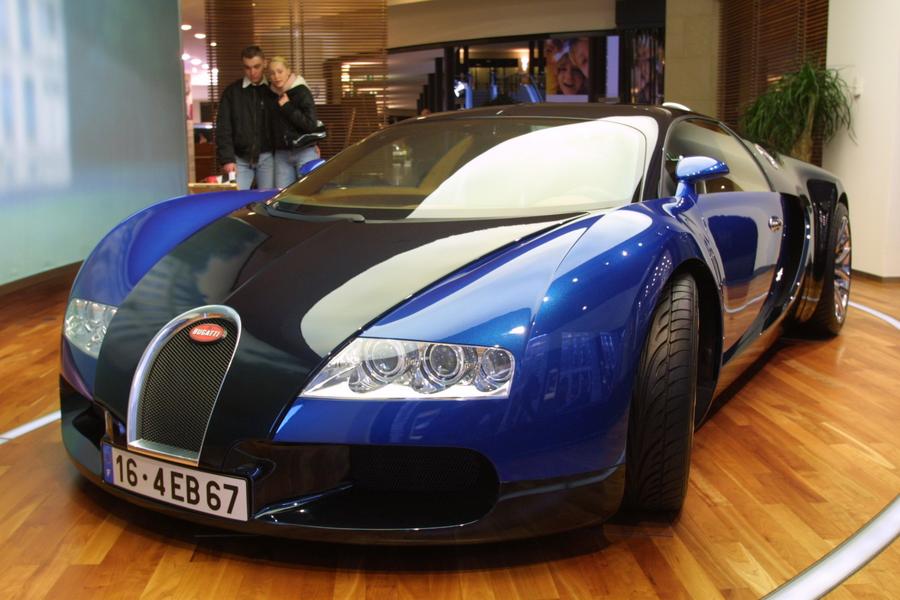
Sean Gallup/Getty Images
Simon also owns a Caterham 7 CSR. The Caterham 7 CSR is the latest and most advanced version of the Caterham. Though it still has the overall aesthetic that is associated with the Caterham line, the 7 CSR sports noticeable improvements to the strength of the body, suspension, acceleration, and aerodynamics. It also runs on a 2.3 liter inline four Ford Duratec engine that produces 260 bhp. Though the vehicle, which went into production in the early '60s, has long been lauded for its look and race-car quality performance, it has not fared well with regard to reviews about its level of comfort.
Other cars in his collection include a Ferrari 360, a Jaguar F-Type R Coupe, and a Rolls Royce Phantom Drophead Coupe.
/2012/10/Simon-Cowell.jpg)
/2014/07/GettyImages-497891024.jpg)
/2010/01/Susan-Boyle-1.jpg)
/2023/03/Alesha-Dixon.jpg)
/2009/10/leona-lewis.png)
/2023/03/David-Walliams.jpg)
/2011/12/mg.jpg)
/2011/01/Paul-Potts.jpg)
:strip_exif()/2015/09/GettyImages-476575299.jpg)
/2019/10/denzel-washington-1.jpg)
/2009/09/Jennifer-Aniston.jpg)