











What Was Sean Connery's Net Worth and Salary?
Sir Sean Connery was a Scottish actor and producer who had a net worth of $350 million at the time of his death in 2020.
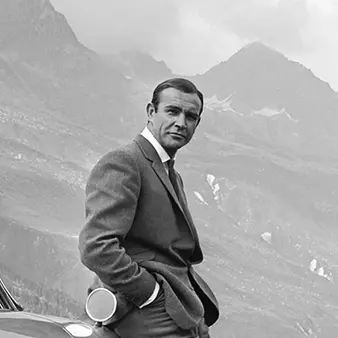
Sean Connery was one of the most successful and recognizable actors in Hollywood history, best known as the original cinematic James Bond. Between 1962 and 1983, he portrayed the British secret agent in seven films, establishing a character that became one of the most valuable franchises in entertainment history. His distinctive Scottish accent, imposing physical presence, and effortless charisma helped make him an international superstar.
Although Bond established his fame, Connery enjoyed an extraordinarily successful career beyond the franchise. He won the Academy Award for Best Supporting Actor for 1987's "The Untouchables" and starred in major commercial hits including "Indiana Jones and the Last Crusade," "The Hunt for Red October," "The Rock," and "Entrapment." By the 1990s, he was commanding eight-figure salaries and lucrative profit participation agreements. His business interests also included substantial European real estate investments, including a French château property that eventually became a luxury golf resort. Connery was knighted by Queen Elizabeth II in 2000 and retired from acting in the mid-2000s.
James Bond Salaries and Career Earnings
Connery's rise from a working-class Scottish background to multimillionaire Hollywood star was accompanied by increasingly lucrative movie contracts. For the original 1962 James Bond film, "Dr. No," he earned just $16,000. Although that was a respectable payment for a relatively unknown actor, it was modest compared with the extraordinary financial success the franchise would eventually achieve.
By the time he returned to play Bond in 1971's "Diamonds Are Forever," his negotiating power had increased dramatically. United Artists offered Connery a reported $1.25 million upfront, along with a 12.5% share of the film's gross revenue. The studio also agreed to finance two additional films of his choosing, giving him significant creative opportunities outside the Bond franchise. Connery used a substantial portion of his compensation to establish the Scottish International Education Trust, a charitable organization designed to provide educational opportunities for disadvantaged Scottish students.
When he returned for the independently produced 1983 Bond film "Never Say Never Again," contemporary trade publications reported a $3 million salary against 15% of the gross. Other industry estimates placed his compensation at $5 million plus a percentage of the film's receipts. His earning power continued growing during the 1990s, when he was routinely able to negotiate substantial upfront payments and valuable backend participation.
One of his most lucrative contracts came with the 1996 action blockbuster "The Rock." According to a contemporary "Los Angeles Times" report, Connery received $10 million upfront against a percentage of the film's gross revenue believed to exceed 10%. Industry sources expected his total compensation to reach approximately $15 million. The film, which also starred Nicolas Cage, grossed more than $335 million worldwide.
The $450 Million Lord of the Rings Mistake
One of the most remarkable financial decisions in Hollywood history involved Connery turning down the role of Gandalf in Peter Jackson's "The Lord of the Rings" trilogy. When New Line Cinema was preparing the three films in the late 1990s, the studio wanted an established international superstar to help justify the project's enormous $281 million production budget. Connery was among the filmmakers' preferred choices, and the producers were reportedly prepared to offer extraordinary financial incentives to secure his participation.
According to reports about the negotiations, Connery was offered as much as $10 million per film, plus a percentage of the trilogy's worldwide box-office gross that could have reached 15%. However, Connery rejected the offer because he could not understand the story. He later explained:
"I never understood it. I read the book. I read the script. I saw the movie. I still don't understand it. Ian McKellen I believe is marvellous in it."
The role ultimately went to Ian McKellen, whose performance became one of the defining elements of the trilogy. Released between 2001 and 2003, the three movies collectively grossed nearly $3 billion worldwide. Had Connery's contract provided an uncapped 15% share of worldwide ticket sales, that participation alone would have been worth approximately $450 million, before accounting for his proposed salaries. The calculation illustrates the potential value of the reported offer rather than a guaranteed payment he would necessarily have received.

Stephen Shugerman/Getty Images
Early Life
Thomas Sean Connery was born on August 25, 1930, in Fountainbridge, Edinburgh, Scotland. His mother, Euphemia, worked as a cleaning woman, while his father, Joseph, was a factory worker and truck driver. His younger brother, Neil, was born in 1938. The family lived in modest circumstances, and Connery left school at age 13 to help support the household.
He initially worked as a milkman, earning just 21 shillings a week, equivalent to £1.05, when he began working for an Edinburgh dairy in 1944. At 16, Connery joined the Royal Navy but was discharged several years later because of recurring stomach ulcers. After returning to Edinburgh, he worked various jobs, including bricklaying, coal delivery, coffin polishing, and posing as a model at an art school.
Connery also became enthusiastic about weightlifting and bodybuilding, competing in the 1953 Mr. Universe competition, where he placed third in the tall men's division. His athletic appearance eventually helped him secure a role in a touring production of the musical "South Pacific." The experience introduced him to professional acting and convinced him to pursue a career on stage and screen.
Early Acting Career
Connery spent much of the 1950s working in British theater and television while gradually securing film roles. His early television appearances included "Dixon of Dock Green," while his first substantial film roles came in "No Road Back" and "Another Time, Another Place." He gained further attention through the Disney adventure "Darby O'Gill and the Little People" in 1959.
His performance impressed producer Albert R. Broccoli, who was developing a film adaptation of Ian Fleming's James Bond novels with producing partner Harry Saltzman. Despite Fleming's initial reservations about Connery's working-class background and physical appearance, the producers believed his charisma and screen presence made him an ideal candidate.
James Bond
Connery made his debut as British secret agent James Bond in "Dr. No," released in October 1962. The film was produced on a budget of approximately $1.1 million and became an enormous international success, establishing a franchise that would continue for generations. Connery subsequently starred in "From Russia with Love" in 1963, "Goldfinger" in 1964, "Thunderball" in 1965, and "You Only Live Twice" in 1967.
His portrayal established many of the characteristics that became synonymous with Bond: elegant clothing, sophisticated wit, physical toughness, and the famous introduction, "Bond, James Bond." However, Connery grew increasingly frustrated with the demanding production schedules and what he considered insufficient compensation relative to the franchise's enormous profits. After "You Only Live Twice," he announced that he was leaving the role.
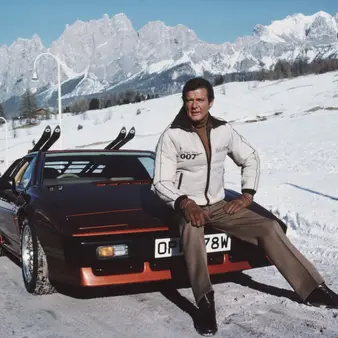
Australian actor George Lazenby replaced him for 1969's "On Her Majesty's Secret Service," but the producers persuaded Connery to return for "Diamonds Are Forever" in 1971. Following that film, Roger Moore became Bond in the official series. Connery made one final appearance as 007 in 1983's "Never Say Never Again," an independently produced remake of "Thunderball." He also provided Bond's voice for the 2005 video game adaptation of "From Russia with Love."

Photo by Michael Ochs Archives/Getty Images
Film Career Beyond James Bond
Connery was determined to establish himself as a serious actor rather than spend his entire career portraying James Bond. During the 1960s, he appeared in Alfred Hitchcock's psychological thriller "Marnie" and Sidney Lumet's military prison drama "The Hill." He subsequently starred in "Murder on the Orient Express," "The Wind and the Lion," and John Huston's "The Man Who Would Be King," opposite Michael Caine. The latter film, released in 1975, became one of Connery's most acclaimed non-Bond performances.
Other notable roles included "A Bridge Too Far," "The First Great Train Robbery," and the science fiction film "Outland." In 1986, he portrayed Brother William of Baskerville in "The Name of the Rose," earning the BAFTA Award for Best Actor. The following year, Connery played veteran Chicago police officer Jim Malone in Brian De Palma's "The Untouchables," starring alongside Kevin Costner and Robert De Niro. His performance earned him the Academy Award for Best Supporting Actor and a Golden Globe, marking one of the greatest critical achievements of his career.
Hollywood Superstar in the 1990s
Connery enjoyed another extraordinary period of commercial success during the late 1980s and 1990s. In 1989, he played Professor Henry Jones Sr., the father of Harrison Ford's Indiana Jones, in Steven Spielberg's "Indiana Jones and the Last Crusade." The film grossed more than $474 million worldwide and introduced Connery to another generation of moviegoers.
He followed with "The Hunt for Red October," portraying Soviet submarine commander Marko Ramius. The 1990 thriller became another major box-office success, while subsequent films included "Robin Hood: Prince of Thieves," "Rising Sun," "First Knight," "The Rock," "Entrapment," and "Finding Forrester."
For his brief appearance as King Richard in 1991's "Robin Hood: Prince of Thieves," Connery reportedly received $250,000, which he donated to charity. He also worked as a producer on several projects, including "Entrapment," the 1999 thriller starring Catherine Zeta-Jones. A contemporary "Los Angeles Times" report credited Connery's hands-on involvement with helping the production finish nearly $2 million under its original $68 million budget. By this stage, Connery had become one of Hollywood's most valuable stars, capable of commanding major salaries and favorable participation agreements well into his late 60s.
Retirement
Connery's final major live-action film was 2003's "The League of Extraordinary Gentlemen," in which he portrayed adventurer Allan Quatermain. The production was troubled, and the movie received largely negative reviews. Connery subsequently became disillusioned with the increasingly complicated business of large Hollywood productions and formally retired from acting in 2006.
In 2007, he declined an invitation to reprise his role as Henry Jones Sr. in "Indiana Jones and the Kingdom of the Crystal Skull," explaining that he preferred retirement. He made a limited return to voice acting in the 2012 animated film "Sir Billi," which he also helped produce.
Real Estate and Investments
Connery accumulated substantial real estate holdings throughout his career, particularly in France, Spain, Greece, and the Bahamas. One of his most important investments was Domaine de Terre Blanche, a château estate in Provence, France, which he acquired in 1979. He owned the property for approximately 20 years before selling it to German billionaire Dietmar Hopp, co-founder of software company SAP. Hopp subsequently transformed the estate into a sprawling luxury golf resort featuring championship golf courses, a five-star hotel, villas, and extensive recreational facilities.
Connery also owned an impressive Mediterranean villa in Nice, France, during the 1980s and 1990s. The approximately 10,000-square-foot Belle Époque residence featured eight bedrooms, two swimming pools, a wine cellar, and extensive gardens overlooking the Mediterranean. The former Connery property was listed for sale in 2020 for €30 million, equivalent to approximately $34 million at the time, although Connery no longer owned the property when it was marketed.
In Spain, Connery and his wife owned a luxury estate called Casa Malibú in Marbella, which they sold in the late 1990s for €6.4 million. The site was subsequently redeveloped into a large apartment complex, attracting scrutiny from Spanish authorities over alleged planning violations and tax fraud. The investigation became known as Operation Goldfinger.
In 2014, Spanish authorities dismissed the case against Connery after determining there was insufficient evidence of his involvement in unlawful transactions. His wife, Micheline, was subsequently charged in connection with the property development allegations in 2015, although she denied wrongdoing. During his later years, Connery spent much of his time at his residence in the Bahamas.
Personal Life
Connery married Australian actress Diane Cilento in 1962, and they welcomed their son, Jason Connery, in January 1963. Jason subsequently became an actor and director. The marriage deteriorated during the late 1960s, and the couple separated in 1971 before divorcing in 1973.
In 1975, Connery married French-Moroccan artist Micheline Roquebrune, whom he had met at a golf tournament in Morocco. They remained married until his death, and Connery became stepfather to Micheline's children from her previous relationships.
An enthusiastic golfer, Connery maintained a lifelong interest in the sport. He also practiced martial arts and earned a black belt in Kyokushin karate. He was a passionate supporter of Scottish independence and contributed financially to the Scottish National Party. Although he spent many years living outside Scotland, he remained closely connected to his homeland.
Awards and Honors
Connery received numerous major honors recognizing his contributions to international cinema. His performance in "The Untouchables" earned him the 1988 Academy Award for Best Supporting Actor. He also won three Golden Globe Awards, including the Cecil B. DeMille Award in 1996, and received a Kennedy Center Honor in 1999.
Queen Elizabeth II knighted Connery at Edinburgh's Holyrood Palace in July 2000 for his services to film and drama. He was named "People" magazine's Sexiest Man Alive in 1989 and Sexiest Man of the Century in 1999. He also received lifetime achievement honors from the American Film Institute, the European Film Awards, and other organizations.
Death
Sean Connery died peacefully in his sleep on October 31, 2020, at his home in the Bahamas. He was 90 years old. His wife later revealed that Connery had been experiencing dementia during the final years of his life. He was survived by his wife, Micheline, his son Jason, his stepsons, and his younger brother Neil.