
/2021/05/Sam-Elliott.jpg)
/2023/09/Katharine-Ross.png)
/2020/08/robert-redford-1.jpg)
/2010/11/Tommy-Lee-Jones.jpg)
/2011/09/Peter-Dinklage.jpg)
/2014/03/GettyImages-499672760.jpg)
/2020/04/Megan-Fox.jpg)
/2020/01/lopez3.jpg)
:strip_exif()/2009/09/P-Diddy.jpg)
/2017/02/GettyImages-528215436.jpg)
/2009/09/Cristiano-Ronaldo.jpg)
:strip_exif()/2015/09/GettyImages-476575299.jpg)
/2020/06/taylor.png)
/2019/04/rr.jpg)
/2009/09/Jennifer-Aniston.jpg)
/2020/02/Angelina-Jolie.png)
/2018/03/GettyImages-821622848.jpg)
What is Sam Elliott's net worth and salary?
Sam Elliott is an American actor who has a net worth of $20 million. Sam Elliott has built one of the most distinctive careers in American film and television through his commanding screen presence, resonant baritone voice, and embodiment of the iconic Western archetype. Breaking in during the late 1960s and early 1970s, he first appeared in small roles in films like "Butch Cassidy and the Sundance Kid" and on series such as "Mission: Impossible" and "Gunsmoke." His tall frame, rugged features, and calm intensity made him a natural fit for Westerns, and he quickly became associated with characters defined by stoicism, moral clarity, and frontier toughness.
Elliott gained broader recognition through TV movies and miniseries, including "Murder in Texas," "The Shadow Riders," and a celebrated portrayal of the title role in "The Yellow Rose." As his reputation grew, he began landing more prominent film roles, including memorable parts in "Mask," "Fatal Beauty," and the cult classic "Road House." By the 1990s, he was firmly established as both a character actor and a leading man, known for bringing emotional nuance and quiet strength to his performances. His role as The Stranger in "The Big Lebowski" introduced him to a new generation of fans.
In the 2000s, Elliott continued expanding his range with roles in "We Were Soldiers," "Hulk," "Thank You for Smoking," and "Tombstone," where his portrayal of Virgil Earp became one of the film's standout performances. He later earned acclaim for projects like "The Hero," "A Star Is Born," and the series "The Ranch," which showcased his ability to blend drama and dry humor.
Early Life
Sam Elliott was born on August 9, 1944, in Sacramento, California. His mother, Glynn Mamie, worked as a high school teacher and physical training instructor, while his father, Henry Nelson Elliott, was a predator control specialist with the Department of the Interior. When Elliott was 13, the family relocated to Portland, Oregon, where he attended David Douglas High School. After graduating in 1962, he enrolled at the University of Oregon to study English and psychology. He later transferred to Clark College in Vancouver, Washington, completing a two-year degree in 1965 and starring in the school's production of "Guys and Dolls."
Encouraged by positive reviews and drawn to performance, Elliott re-enrolled at the University of Oregon and joined the Sigma Alpha Epsilon fraternity. His plans changed abruptly after the death of his father, an event that deeply affected him. Rather than continue his academic path, Elliott made the decision to pursue acting full time, eventually moving to California to break into the entertainment industry.
Career Beginnings
Elliott's early work came in small television roles throughout the late 1960s. His first credited appearance was a 1969 episode of "Judd for the Defense." He soon booked additional roles on "Lancer" and made an uncredited appearance in "Butch Cassidy and the Sundance Kid." His tall frame, rugged features, and calm confidence quickly aligned him with Western characters, and casting directors began using him as a dependable supporting actor in frontier and law enforcement roles.
Rise Through Television and Film
Throughout the 1970s, Elliott built a steady career in television movies, miniseries, and guest roles. He appeared several times on "Gunsmoke," "Felony Squad," "Hawaii Five-O," and other network staples. He gained wider attention with starring roles in the TV film "I Will Fight No More Forever" in 1975 and the miniseries "Once an Eagle" in 1976.
His breakthrough came with the 1976 film "Lifeguard," which showcased his presence as a leading man. He followed it with major roles in the miniseries "Aspen" in 1977 and "The Sacketts" in 1979, sharing the screen with Tom Selleck. The pair reunited in 1982 for "The Shadow Riders." By the mid-1980s, Elliott was a recognizable figure in both Westerns and modern dramas, appearing in projects such as "A Death in California," "Mask," and the biographical TV movie "Gone to Texas," in which he portrayed Sam Houston.
1980s and 1990s Breakthrough Roles
In 1989, Elliott delivered one of his most enduring performances as Wade Garrett in the cult favorite "Road House." He then starred opposite Katharine Ross, who would later become his wife, in "Conagher" in 1991. He portrayed Union cavalry officer General John Buford in the Civil War epic "Gettysburg" in 1993 and appeared in the Western hit "Tombstone" that same year. Additional roles followed in "We Were Soldiers Once…And Young," "Hulk," and "The Big Lebowski," where he served as the film's narrator and played The Stranger, a role that became iconic for his voice and presence.
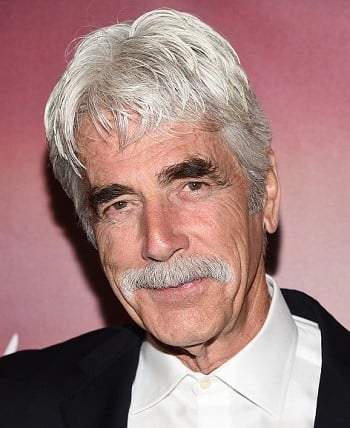
Getty Images
2000s Film Work and Expanded Range
Elliott continued to diversify his work in the 2000s. He appeared in "Thank You for Smoking," voiced characters in animated films such as "Barnyard" and "Marmaduke," and starred in "The Golden Compass." He had a supporting role in "Up in the Air" and made memorable guest appearances on "Parks and Recreation." Additional film credits from this era include "The Company You Keep" and "Draft Day."
Later Career and Critical Recognition
Elliott earned strong reviews for the 2015 films "Grandma" and "I'll See You in My Dreams." He joined the FX drama "Justified," winning a Critics' Choice Television Award for his performance. Later that year, he became a series regular on Netflix's "The Ranch," and appeared on "Grace and Frankie" in a recurring role.
His acclaimed performance in the 2017 film "The Hero" reminded audiences of his emotional depth. The momentum continued with "A Star Is Born" in 2018, earning him the National Board of Review Award for Best Supporting Actor and nominations from both the Screen Actors Guild and the Academy Awards.
Voice Work and Commercial Success
Elliott is widely recognized for his unmistakable baritone voice. He has narrated high-profile advertising campaigns for Dodge, IBM, Union Pacific, Ram Trucks, and the American Beef Council. He has provided the voice of Smokey Bear since 2008 and narrated team introductions during Super Bowl XLV. In 2020, he added a recurring voice role on "Family Guy," further expanding his presence in animated comedy.
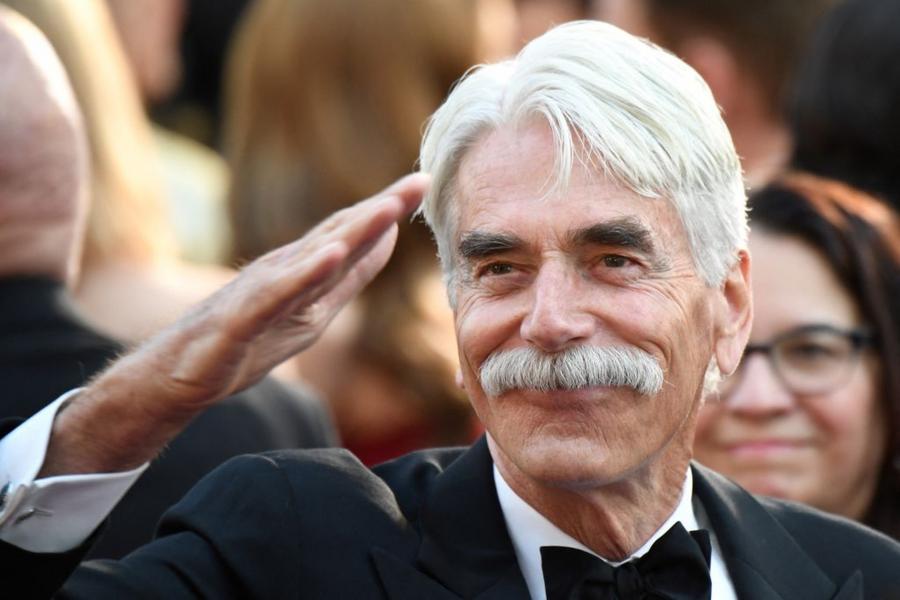
(Photo by ROBYN BECK/AFP via Getty Images)
Personal Life
In 1984, Elliott married actress Katharine Ross. The two had originally met on the set of "Butch Cassidy and the Sundance Kid," as they both had roles in the film, though not together. However, they were not reunited until 1978, when they began dating, after both starring in "The Legacy." The couple had a daughter, Cleo Rose, in 1984.
Real Estate
Sam and Katharine's primary residence is a 2.6-acre Malibu home that they purchased in the 1970s. Today, this home is likely worth $6-10 million. They also own a property in the Willamette Valley in Oregon, in addition to Elliott's childhood home in Portland, which Elliott took ownership of following his mother's death in 2012.
/2021/05/Sam-Elliott.jpg)
/2023/09/Katharine-Ross.png)
/2014/08/Craig-Sheffer.png)
/2011/09/Peter-Dinklage.jpg)
/2019/10/aaron-paul.png)
/2020/08/robert-redford-1.jpg)
/2020/11/Bruce-Dern.jpg)
/2009/11/George-Clooney.jpg)
/2019/10/denzel-washington-1.jpg)
/2019/11/GettyImages-1094653148.jpg)
/2009/09/Brad-Pitt.jpg)