
/2020/04/russell-crowe.png)
/2020/04/hj.jpg)
/2019/10/denzel-washington-1.jpg)
/2013/01/Meg-Ryan.jpg)
/2012/08/Guy-Pearce-1.jpg)
/2019/09/joaquin.jpg)
/2023/05/Gary-Numan.jpg)
/2020/10/neil-young.jpg)
/2014/09/Jarvis-Cocker.jpg)
/2021/01/Daryl-Hannah.jpg)
/2010/12/John-Fogerty.jpg)
/2022/03/Stephen-Stills.jpg)
/2018/01/jm2.jpg)
/2009/10/Jerry-Bruckheimer.jpg)
/2014/03/Deontay-Wilder-1.jpg)
/2019/07/ns2.jpg)
/2021/10/Ed-Orgeron.jpg)
What is Russell Crowe's Net Worth and Salary?
Russell Crowe is an actor, film producer, and musician who has a net worth of $120 million. Russell Crowe's career spans over 50 films, earning him numerous accolades, including a BAFTA, Golden Globe, and Screen Actors Guild Award and an Academy Award.
He began his career on television in his native New Zealand and then Australia. His film breakthrough came in the 1990s with acclaimed performances in "L.A. Confidential" and "The Insider," the latter earning his first Oscar nomination. He rose to international fame thanks to his Academy Award-winning role as Maximus Decimus Meridius in 2000's "Gladiator." He secured another nomination for "A Beautiful Mind" (2001), where he portrayed mathematician John Nash.
Other notable Russell Crowe films include "Master and Commander," "Cinderella Man," "American Gangster," and "Les Misérables." Crowe has maintained a steady presence in film, appearing in "Thor: Love and Thunder" and "The Pope's Exorcist." Beyond acting, he directed "The Water Diviner" (2014) and has fronted the band's 30 Odd Foot of Grunts and Indoor Garden Party. Since 2006, he has co-owned the South Sydney Rabbitohs, a National Rugby League team.
Early Life
Russell Crowe was born Russell Ira Crowe on April 7, 1964, in Wellington, New Zealand. His parents, Jocelyn and John, were film set caterers, and John was also a hotel manager. His maternal grandfather was a cinematographer, and Russell is also related to 3 cricket players, cousins Martin Crowe and Jeff Crowe, and uncle Dave Crowe. His family moved to Sydney, Australia, when Russell was 4, and he made his acting debut in an episode of "Spyforce" in 1972 (the show's producer was Jocelyn's godfather). Crowe attended Vaucluse Public School and Sydney Boys High School before the family moved back to New Zealand when he was 14. In New Zealand, he attended Auckland Grammar School with brother Terry and cousins Martin and Jeff, then moved on to Mount Roskill Grammar School, which he dropped out of at 16 to focus on acting.
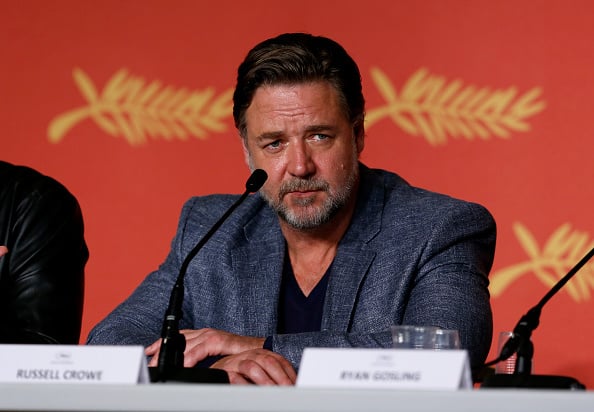
Getty
Acting Career
In 1986, Crowe booked his first professional theatre job, playing Eddie and Dr. Scott in a New Zealand production of "The Rocky Horror Picture Show." He appeared in this production for 2 years and reprised his roles in a touring Australian production. In 1988, Russell played Mickey in an Australian production of "Blood Brothers" and Johnny in "Bad Boy Johnny and the Prophets of Doom" the following year.
Russell appeared on four episodes of the popular Australian soap opera "Neighbours" in 1987 and was cast in his first film, The Crossing," in 1990. He was soon cast in "Blood Oath" (called "Prisoners of the Sun" in some countries), "Proof," "Spotswood," and "Romper Stomper," winning Australian Film Institute awards for both "Proof" and "Romper Stomper." Crowe began starring in American films in 1995, co-starring with Denzel Washington in "Virtuosity" and Sharon Stone, Gene Hackman, and Leonardo DiCaprio in "The Quick and the Dead." Russell earned Academy Award nominations for 1999's "The Insider," 2000's "Gladiator," and 2001's "A Beautiful Mind." He has appeared in more than 40 movies, including "Master and Commander: The Far Side of the World" (2003), "American Gangster" (2007), "Robin Hood" (2010), "Les Misérables" (2012), and "The Mummy" (2017). He returned to his television roots in 2019, playing disgraced Fox News executive Roger Ailes in the Showtime miniseries "The Loudest Voice."
Notable Salaries
Crowe earned $5 million for 2000's "Gladiator". That same year, he earned $7.5 million for "Proof of Life". In 2001, he earned $15 million for "A Beautiful Mind". In 2003, he was paid $20 million for "Master and Commander," which is the same as earning $28 million in today's dollars. In 2005, he earned $15 million for "Cinderella Man". In 2010, he earned another $20 million for "Robin Hood". During the peak 15-ish years of his career, from 2000 to 2015, Russell earned well over $150 million in base movie salaries.
Russell Crowe's Career Earnings Highlights
- Proof of Life – $7.5 million
- A Beautiful Mind – $15 million
- Cinderella Man – $15 million
- Master and Commander – $20 million
- Robin Hood – $20 million
Total = $77.5 Million
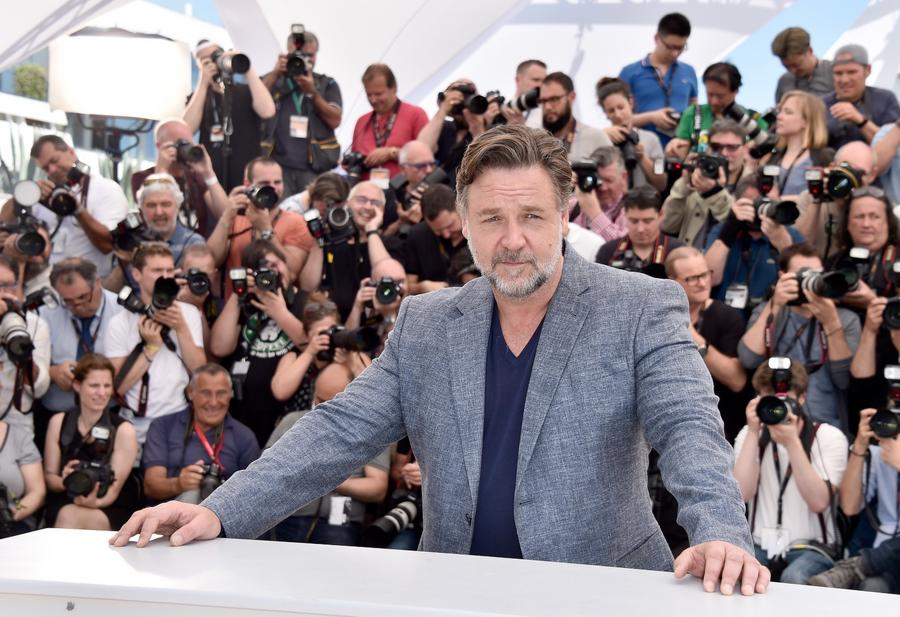
(Photo by Pascal Le Segretain/Getty Images)
Music Career
Russell began performing music in the early 1980s, using the stage name "Russ Le Roq." In 1984, he managed a music venue, Auckland's The Venue, and he released several singles in New Zealand, including "I Just Wanna Be Like Marlon Brando" and "Shattered Glass." Crowe started a band with friend Billy Dean Cochran in the 1980s; the band was originally called Roman Antix but came to be known as 30 Odd Foot of Grunts in 1992. The band released an EP, three full-length albums, and a live DVD before disbanding in 2005. Crowe began collaborating with Canadian musician Alan Doyle and formed the band Russell Crowe & The Ordinary Fear of God, which soon embarked on a sold-out U.S. tour. In 2017, Crowe and Doyle formed a new band called Indoor Garden Party, which features Russell's "Les Misérables" co-star Samantha Barks, actor Scott Grimes, and Swedish musician Carl Falk.
Personal Life
Crowe married Australian singer Danielle Spencer (his co-star in "The Crossing") on his 39th birthday, April 7, 2003. They had two sons together, Charles (born in December 2003) and Tennyson (born in July 2006), before separating in 2012. Their divorce was finalized in April 2018, and Russell held an auction called "The Art of Divorce," making $3.7 million off of items and memorabilia he accumulated during his marriage.
Crowe has been involved in several altercations and was arrested in 2005 after throwing a telephone at a concierge at the Mercer Hotel in New York City. He was charged with second-degree assault and fourth-degree criminal possession of a weapon (the phone); he didn't serve any jail time, but he was sued by the concierge.
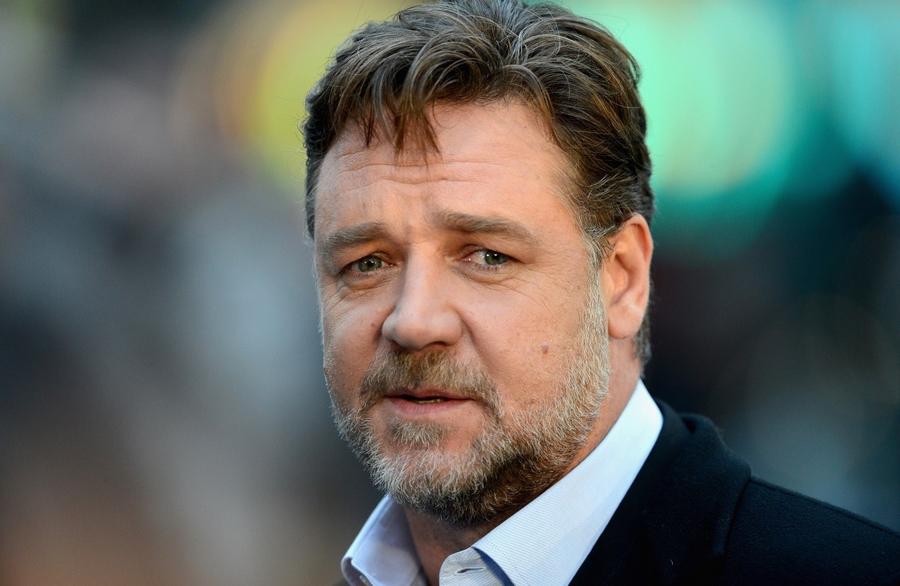
Dave J Hogan/Getty Images
Philanthropy
While filming "Cinderella Man" in Canada, Russell donated money to a Jewish elementary school after its library was damaged in an anti-Semitic firebombing. He also donated $200,000 to an Australian primary school in order to help them build a swimming pool and raised $400,000 for the New South Wales Rural Fire Service during Australia's 2019 bushfires.
Awards and Honors
Crowe has won several awards, including an Academy Award, 4 Australian Academy of Cinema and Television Arts Awards, 2 Golden Globe Awards, and a Screen Actors Guild Award. In 2009, Australia Post released commemorative "Legends of the Screen" postage stamps, and Russell appeared as himself and as his character from "Gladiator." He received a star on the Hollywood Walk of Fame in 2010.
Real Estate
In 2001, Russell paid $9.2 million for a waterfront home in Sydney. He sold this property for $11.5 million in 2013. In 2011, he paid $10 million for a mansion in the Sydney suburb of Rose Bay. He transferred this home to his ex-wife, Danielle Spencer in their divorce. Crowe also owns property in New South Wales, which was scorched by Australian bushfires in 2019.
Sydney Penthouse
In 2003, he paid $14.35 million for a spectacular harbourside penthouse in Sydney. In November 2024, it was reported that Russell had quietly listed the penthouse off-market for $50 million. He reportedly turned down a $25 million offer for the penthouse in 2017. The apartment is technically four combined units. There are 11 bedrooms and a private marina berth.
/2020/04/russell-crowe.png)
/2019/09/joaquin.jpg)
/2014/10/Samantha-Barks.jpg)
/2011/01/GettyImages-462446064.jpg)
/2020/04/hj.jpg)
/2016/03/GettyImages-480232163.jpg)
/2012/08/Guy-Pearce-1.jpg)
/2014/06/Rachel-Griffiths.jpg)