













What Is Robert Wagner's Net Worth?
Robert Wagner is an American actor who has a net worth of $20 million. That is a combined net worth with his wife of more than three decades, actress Jill St. John.
Robert Wagner is best known for starring in the television series "It Takes a Thief," "Switch," and "Hart to Hart," as well as playing Number Two in the "Austin Powers" film trilogy.
Wagner began his career as a contract player at Twentieth Century Fox in the early 1950s, appearing in films such as "With a Song in My Heart," "Prince Valiant," "A Kiss Before Dying," and "The Pink Panther." He successfully transitioned to television in the late 1960s and became one of the medium's most recognizable leading men, earning four Golden Globe nominations for his portrayal of millionaire detective Jonathan Hart in "Hart to Hart." He later enjoyed renewed popularity through appearances in "Seinfeld," "Two and a Half Men," and "NCIS."
Wagner's personal life has attracted almost as much attention as his acting career. He was married twice to actress Natalie Wood, whose mysterious drowning in 1981 became one of Hollywood's most enduring unsolved tragedies. He married Jill St. John in 1990, and the couple have spent their later years primarily in Aspen, Colorado. Beyond acting, Wagner has produced television films, written three books about his life and Hollywood, and made substantial investments in real estate.
Early Life
Robert Wagner was born Robert John Wagner Jr. on February 10, 1930, in Detroit, Michigan. His mother, Hazel, was a telephone operator. His father, Robert Sr., was a traveling salesman who made a small fortune selling paint to the automotive industry and lacquer to Ford, which was used on the company's dashboards.
When Wagner was seven, the family moved to Los Angeles. His father had earned enough money to retire in Southern California, and the family custom-built a home in Bel Air overlooking the Bel Air Country Club, a project that took more than a year to complete.
Robert Jr. was actually sent to California ahead of his family. He traveled alone by train to attend the Hollywood Military Academy. He subsequently attended four different military schools in Southern California, where many of his classmates were children of famous actors. Wagner graduated from Saint Monica Catholic School in 1949.
Growing up in Bel Air provided Wagner with an early introduction to Hollywood. He frequently saw celebrities playing golf at the nearby country club, including Cary Grant, Fred Astaire, and Clark Gable. These encounters helped inspire his ambition to become an actor.

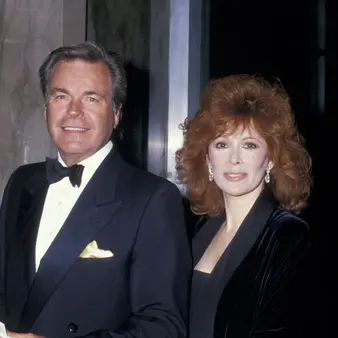
(Photo by Ron Galella/Ron Galella Collection via Getty Images)
Early Film Career
In the 1950s, Robert began working as an extra. His film debut was an uncredited role in 1950's "The Happy Years." He signed with Twentieth Century Fox when he was just 20 years old, and his first film for the studio was "Halls of Montezuma," a 1951 World War II drama starring Richard Widmark. Wagner played another supporting role alongside Widmark later that year in "The Frogmen."
Robert first gained significant attention when he played a small but memorable role as a shell-shocked soldier in 1952's "With a Song in My Heart," starring Susan Hayward. Although his appearance lasted less than a minute, the performance generated considerable attention and encouraged Fox executives to give him more substantial roles.
By 1953, Wagner was taking on leading parts, including "Beneath the 12-Mile Reef" and "Titanic." He starred in "Prince Valiant" and the Western "Broken Lance" in 1954. The latter paired him with Spencer Tracy, who was so impressed by Wagner that he later requested him for another film.
In 1956, Wagner starred in the psychological thriller "A Kiss Before Dying," earning critical acclaim for his performance as a calculating young man willing to commit murder for money. That same year, he appeared opposite Spencer Tracy in "The Mountain," playing Tracy's younger brother.
Back at Fox, Wagner starred in "Between Heaven and Hell" and played the title role in Nicholas Ray's "The True Story of Jesse James" (1957). Both films were box-office disappointments. Robert attempted to revive his career by starring alongside his then-wife Natalie Wood in the 1960 drama "All the Fine Young Cannibals."
European Films and Career Transition
In January 1961, Wagner and Wood formed their own production company, Rona Productions, taking the name from the first two letters of their first names. The company arranged a three-picture deal with Columbia Pictures for Wagner's services.
Wagner subsequently starred in "The War Lover" (1962) alongside Steve McQueen, with filming taking place in England. After his separation from Wood, he relocated to Europe for several years, appearing in productions including "The Longest Day" (1962), "The Condemned of Altona" (1962), and Blake Edwards' "The Pink Panther" (1963).
"The Pink Panther" became a substantial international hit, featuring Wagner alongside David Niven and Peter Sellers. Although the film was successful, Wagner struggled to regain his earlier leading-man status. He appeared in additional productions throughout the decade, including "Harper" (1966), starring Paul Newman, and "Banning" (1967).
His eventual move into television would prove enormously successful.

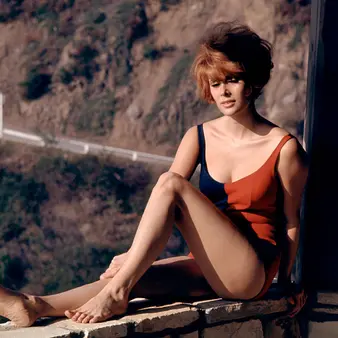
(Photo by Pictorial Parade/Archive Photos/Getty Images)
"It Takes a Thief" and "Switch"
In 1968, Wagner landed the first of three television roles that would make him a household name. He played Alexander Mundy, a sophisticated cat burglar recruited by the American government, in ABC's "It Takes a Thief." The series ran from 1968 to 1970 and also featured Fred Astaire as Mundy's father.
The show marked a major career comeback for Wagner and earned him a Primetime Emmy nomination for Outstanding Lead Actor in a Drama Series in 1970, along with a Golden Globe nomination.
During the 1970s, Wagner continued appearing in movies, including the disaster blockbuster "The Towering Inferno" (1974) and the war film "Midway" (1976). He also worked with Laurence Olivier and Natalie Wood in a television adaptation of "Cat on a Hot Tin Roof."
In 1975, Wagner returned to series television with "Switch," playing Pete Ryan, a former con artist who becomes a private detective. The show co-starred Eddie Albert and Sharon Gless and ran on CBS for three seasons, ending in 1978.
"Hart to Hart"
In 1979, Wagner began starring in what would become his most recognizable television role: Jonathan Hart, a wealthy businessman and amateur detective in ABC's "Hart to Hart." The series co-starred Stefanie Powers as his wife Jennifer and Lionel Stander as their loyal butler, Max.
Created by Sidney Sheldon and developed for television by Tom Mankiewicz, the show followed the glamorous couple as they traveled the world, solved murders, and became entangled in elaborate mysteries. It ran for five seasons from 1979 to 1984 and became one of the most popular television dramas of its era.
Wagner received four Golden Globe nominations for Best Actor in a Television Drama for his performance. His chemistry with Powers became central to the series' appeal, and the two developed a close friendship that continued long after the show ended.
Wagner also had an ownership and production role through Rona II Productions, which participated in the original series. He later served as executive producer on eight "Hart to Hart" television movies released between 1993 and 1996, reuniting him with Powers. The movies included "Hart to Hart Returns," "Hart to Hart: Home Is Where the Hart Is," and "Hart to Hart: Till Death Do Us Hart."
"Austin Powers" and Later Career
In the 1990s, Wagner enjoyed another career resurgence when he was cast as Number Two, the eye-patch-wearing associate of Dr. Evil, in the comedy "Austin Powers: International Man of Mystery" (1997). He reprised the role in "Austin Powers: The Spy Who Shagged Me" (1999) and "Austin Powers in Goldmember" (2002), introducing himself to an entirely new generation of moviegoers.
He also appeared in the films "Dragon: The Bruce Lee Story" (1993), "Crazy in Alabama" (1999), and "Hollywood Homicide" (2003). His television credits included guest appearances on "Seinfeld," "Boston Legal," "Two and a Half Men," and "Hustle."
One of his most notable later roles was Anthony DiNozzo Sr., the charming but sometimes troublesome father of Michael Weatherly's character on "NCIS." Wagner appeared periodically on the series between 2010 and 2019.
His later work also included voice acting and guest appearances, although he gradually reduced his professional commitments. By the mid-2020s, Wagner had largely stepped away from acting and was living a private life in Aspen with Jill St. John, while occasionally sharing family updates and memories from his Hollywood career.
Career Earnings
Wagner began his Hollywood career during the studio contract era, when actors were typically paid a fixed weekly salary rather than negotiating enormous individual film contracts.
In a 1999 interview with the "Los Angeles Times," Wagner recalled that his first contract with Twentieth Century Fox paid him just $75 per week, of which he took home $55.
As his career progressed, his compensation increased substantially. Published salary records list a $75,000 paycheck for "All the Fine Young Cannibals" (1960) and $60,000 for "The Towering Inferno" (1974).
His later television success provided additional earnings through starring roles in long-running series and his executive-producing work on the "Hart to Hart" reunion movies. The financial terms of those television agreements have not been publicly disclosed.
Books
Wagner has written three books about his experiences in Hollywood, all in collaboration with author Scott Eyman.
His first memoir, "Pieces of My Heart: A Life," was published in 2008 and became a New York Times bestseller. The book explored his rise to fame, his friendships with Hollywood legends, his marriages, and the tragic death of Natalie Wood.
In 2014, he published "You Must Remember This: Life and Style in Hollywood's Golden Age," which examined the culture and personalities of classic Hollywood. His third book, "I Loved Her in the Movies: Memories of Hollywood's Legendary Actresses," followed in 2016 and offered personal reflections on the actresses he had known throughout his career.
Personal Life
Wagner has been romantically linked to numerous Hollywood celebrities. In his memoirs, he discussed relationships with several famous actresses, including Joan Crawford, Elizabeth Taylor, and Joan Collins.
He married actress Natalie Wood in December 1957, but the couple divorced in 1962. Wagner married actress Marion Marshall in July 1963, and they had a daughter, Katie, born in 1964. The marriage ended in divorce in 1971.
Wagner was engaged to Tina Sinatra, daughter of Frank Sinatra, between 1970 and 1972. After their engagement ended, he rekindled his relationship with Wood, and the two remarried on July 16, 1972. They welcomed their daughter Courtney in March 1974.
Following Wood's death in 1981, Wagner continued raising Courtney and became the guardian of Wood's daughter Natasha Gregson Wagner, whose biological father was producer Richard Gregson. Natasha has maintained a close relationship with Wagner throughout her life and considers him one of her two fathers.
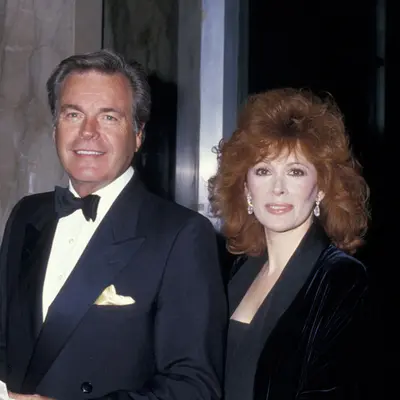
In 1982, Wagner began dating actress Jill St. John, whom he had known since their early years working at Twentieth Century Fox. After eight years together, they married on May 26, 1990, in a private ceremony at Wagner's home in Pacific Palisades.
The couple have appeared together in several film and television projects and have shared a long-standing interest in skiing and the outdoors. They eventually made Aspen, Colorado, their primary residence.

Frazer Harrison /Getty Images
Natalie Wood's Death
Natalie Wood died on November 29, 1981, after drowning in the waters near Catalina Island, California. She had been spending the Thanksgiving weekend aboard the yacht "Splendour" with Wagner, actor Christopher Walken, and the vessel's captain, Dennis Davern.
The circumstances surrounding Wood's disappearance have remained the subject of intense speculation. Wagner has acknowledged that he and Wood argued during the evening, but accounts of exactly what happened before she disappeared have differed over the years.
Wood's body was discovered floating in the water the following morning. Her autopsy revealed bruises on her body and abrasions on her face, along with a blood alcohol concentration of 0.14%. Investigators also identified medication in her system.
The Los Angeles County coroner initially ruled her death an accidental drowning, concluding that she may have fallen into the water while attempting to secure or board the yacht's dinghy. However, questions persisted about the circumstances, particularly because Wood was known to be afraid of deep water.
In his 2008 memoir "Pieces of My Heart," Wagner discussed the events leading up to her death and expressed his grief over losing his wife. Two witnesses from a nearby boat had also reported hearing a woman calling for help during the night.
The case was reopened in November 2011 after Davern publicly changed his account of the events. He alleged that Wood and Wagner had argued that evening and accused Wagner of delaying efforts to locate her after she disappeared. Davern also claimed that Wagner had been jealous of Wood's interactions with Walken. Wagner has consistently denied any involvement in Wood's death.
In 2012, the Los Angeles County coroner amended Wood's death certificate, changing the manner of death from accidental to undetermined and listing the cause as "drowning and other undetermined factors." A subsequent review raised questions about whether some of her injuries occurred before she entered the water.
In February 2018, Los Angeles County sheriff's investigators publicly identified Wagner as a person of interest, explaining that they wanted to question him further about the events of that night. Investigators said they could not determine whether Wood's death had been accidental or the result of a crime.
By 2022, authorities had exhausted the available investigative leads and Wagner was no longer considered a person of interest. No criminal charges were ever filed against him, and the circumstances surrounding Wood's death remain unresolved.
Real Estate
In 1983, Robert paid $220,000 for a property in the Brentwood neighborhood of Los Angeles that had been designed by pioneering California architect Cliff May. The house was originally constructed in the late 1930s as one of May's earliest examples of the California ranch style and was used as a model home for his Riviera Ranch development.
At some point, Wagner acquired the property next door, creating a 1.6-acre compound with a large main house, guesthouse, tennis courts, and horse stables. Wagner also contacted May and hired him to oversee a major renovation and expansion in the mid-1980s.
In August 2007, Wagner and St. John sold the property for a reported $14 million, realizing an enormous increase over Wagner's original purchase price. The buyer was Rita Kogan, daughter of Michael Kogan, the founder of Japanese video game company Taito, which created "Space Invaders." Rita was married to Richard Edlund, an Academy Award-winning visual effects cinematographer known for his work on "Star Wars."
Kogan acquired multiple neighboring properties in the Brentwood area, and the former Wagner estate reportedly sat largely unused for more than a decade. Following her death in 2019, her estate began selling off various real estate holdings.
The historic Cliff May property was eventually marketed for just under $10 million and sold in December 2021 for $7.2 million. The sale attracted attention because of the home's architectural significance, and efforts were underway to secure historic landmark protection for the property.
After selling their Brentwood estate, Robert and Jill relocated full-time to Aspen, Colorado, where they had owned a home since 1995. The couple also maintained a condominium in Los Angeles for several years before selling it in 2015.