












What Is Robbie Rist's Net Worth?
Robbie Rist is an American actor, voice actor, musician, and record producer who has a net worth of $400 thousand.
Robbie Rist has enjoyed one of the more unusual careers in Hollywood, moving from memorable 1970s child actor to prolific voice performer and longtime fixture of the Los Angeles music scene. He is still instantly recognizable to generations of television fans as Cousin Oliver, the bespectacled blond youngster introduced during the final six episodes of "The Brady Bunch." Although the role lasted only a matter of weeks, it became so famous that "Cousin Oliver Syndrome" entered television vocabulary as shorthand for introducing a cute young character late in a show's run.
Rist subsequently built a much longer career away from the Brady house. He voiced Michelangelo in all three original live-action "Teenage Mutant Ninja Turtles" movies, played Choji Akimichi in the English-language versions of "Naruto" and "Naruto: Shippuden," and voiced Stuffy on Disney Junior's "Doc McStuffins." He has also spent decades writing, performing, recording, and producing music, including co-writing "(The Ballad of) Sharknado" and other songs used throughout the "Sharknado" franchise.
Early Life
Robert Anthony Rist was born on April 4, 1964, in La Mirada, California, and grew up in Southern California. Music entered his life extremely early; he began playing piano and violin at age three and eventually learned guitar, bass, drums, and several other instruments.
Rist's original interest in acting came from his fascination with the Universal monster movies of the 1930s and 1940s. As a young child, he repeatedly told his parents that he wanted to appear in a monster movie. They eventually agreed to take him to an audition, expecting the experience to discourage him, but Robbie landed work instead.
He began acting professionally at age six and made his television debut on "Love, American Style" in 1972. Rist subsequently appeared in more than 100 commercials as a child while steadily booking television roles.
"The Brady Bunch" and Cousin Oliver
Rist was nine years old when he joined "The Brady Bunch" in 1974 as Oliver Tyler, the young cousin of Carol Brady. By then, the original Brady children were becoming teenagers and young adults, and the producers introduced Oliver in an attempt to restore some of the cute-child energy that had helped define the show's earlier seasons.
Rist appeared in the final six episodes alongside cast members including Robert Reed, Florence Henderson, Barry Williams, and Maureen McCormick. Oliver even delivered the final spoken line of the series finale.
Over the years, Oliver acquired a strange place in television history. Writers and fans began using the phrase "Cousin Oliver Syndrome" for the practice of introducing a younger character when the children on an aging sitcom had grown up. The idea is often described as a desperate attempt to save "The Brady Bunch," although the show's cancellation was already effectively in motion by the time Rist joined the cast.
Rist has generally treated the notoriety with humor. When some of the original Brady actors jokingly described Oliver as the moment the series "jumped the shark" decades later, Robbie pointed out that he was simply a nine-year-old actor who had shown up for a job and said he had enjoyed working with the cast.

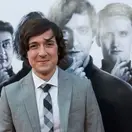
(Photo by Michael Buckner/Penske Media via Getty Images)
Child Acting Career
Unlike many child actors who disappeared after one famous role, Rist continued working regularly throughout the 1970s. Soon after "The Brady Bunch," he played Glendon Farrell on the drama "Lucas Tanner" and appeared as Martin on "Grady," the short-lived "Sanford and Son" spinoff starring Whitman Mayo.
He also played David Baxter, the adopted son of Ted and Georgette Baxter, on several episodes of "The Mary Tyler Moore Show." Other television appearances included "The Bionic Woman," "CHiPs," and a recurring role as Dr. Zee on "Galactica 1980."
From 1976 to 1977, Rist starred as Little John Martin in the NBC Saturday-morning series "Big John, Little John." The unusual premise followed a middle-aged science teacher who periodically transformed into a 12-year-old boy, with Herb Edelman playing the adult John and Robbie playing his younger form.
Rist continued acting into his teenage years but increasingly found that music and voice-over work interested him more than pursuing conventional on-camera stardom.
"Kidd Video" and "Iron Eagle"
One of Rist's most unusual 1980s projects was "Kidd Video," an NBC Saturday-morning series combining live action, animation, and pop music. From 1984 to 1986, he played Whiz, a member of a rock band transported into an animated world called the Flipside. The actors appeared both as themselves in live-action sequences and as animated versions of their characters.
In 1986, Rist made his feature-film debut in the action movie "Iron Eagle," starring Louis Gossett Jr. and Jason Gedrick. Robbie played Milo Bazen, one of the teenagers helping organize a covert mission to rescue a captured Air Force pilot. The movie earned $24.2 million domestically and developed a strong following through cable television and home video.
By this point, however, voice acting was becoming Rist's primary source of acting work. He later explained that the flexibility and character-driven nature of voice-over suited him particularly well.
"Teenage Mutant Ninja Turtles"
Rist's most famous voice role arrived when he auditioned to play Michelangelo in 1990's live-action "Teenage Mutant Ninja Turtles."
The film used elaborate full-body costumes and animatronic heads created by Jim Henson's Creature Shop. Michelan Sisti physically performed Michelangelo on set, while Rist provided the character's voice in post-production.
The laid-back, surfer-style voice came naturally to Robbie. He graduated from high school in Southern California in 1982 and later explained that Michelangelo's vocabulary and cadence sounded like the surfers and Valley teenagers he had grown up around.
"Teenage Mutant Ninja Turtles" became a massive surprise hit. Produced for $13.5 million, the film earned $202 million worldwide and was one of the most successful independent movies ever released at that point.
Rist returned as Michelangelo in 1991's "Teenage Mutant Ninja Turtles II: The Secret of the Ooze" and 1993's "Teenage Mutant Ninja Turtles III." He was the only actor to provide the same Turtle's voice across all three films.
Robbie also contributed creatively beyond simply reading the scripts. He has said he came up with Michelangelo's line "God, I love being a turtle!" and was asked to help punch up dialogue for the third movie.
The role remained important to Rist decades later. He returned to voice Michelangelo in the 2011 fan film "Casey Jones" and later voiced Mondo Gecko in Nickelodeon's 2012 "Teenage Mutant Ninja Turtles" animated series.
Voice Acting Career
Rist developed an extensive career in animation, anime, commercials, movies, and video games. In 1995, he voiced Star, one of the sled dogs, in the animated movie "Balto."
His other animated television work has included "Batman: The Animated Series," "The Weekenders," "Godzilla: The Series," "Sonic Boom," "Mighty Magiswords," "Transformers: Robots in Disguise," and "The Adventures of Puss in Boots."
Rist also became particularly well known among anime fans as the English-language voice of Choji Akimichi in "Naruto." He continued voicing Choji through "Naruto: Shippuden," feature films, video games, and "Boruto: Naruto Next Generations."
His video-game credits include Maroda in "Final Fantasy X" and "Final Fantasy X-2," Griffin in "Terminator Salvation," and additional voice work in the "Final Fantasy" franchise.
"Doc McStuffins"
A new generation of children became familiar with Rist's voice when Disney cast him as Stuffy in "Doc McStuffins."
The Disney Junior series premiered in 2012 and centered on a young girl who could communicate with and repair her toys. Stuffy was a blue stuffed dragon who considered himself brave and ferocious despite frequently being frightened or clumsy.
Rist remained one of the show's principal voice actors throughout its long run. "Doc McStuffins" became an international children's television success and developed a particularly strong reputation for helping young viewers feel less anxious about doctors and medical care.
The part gave Rist another enduring role more than 40 years after he had first entered the entertainment business.
Music Career
Although the general public primarily knows Rist as an actor, music has occupied much of his professional life. He sings and plays guitar, bass, drums, piano, and other instruments and has performed with a long list of Los Angeles power-pop, punk, and rock bands.
Rist fronted the band Wonderboy and became a guitarist and singer in the Andersons, a power-pop group he formed with musicians including Derrick Anderson. He has also performed with Cockeyed Ghost, Nice Guy Eddie, KingsizeMaybe, Your Favorite Trainwreck, Steve Barton and the Oblivion Click, and numerous other projects.
His work has frequently taken place on the production side as well. Robbie has engineered and produced recordings for acts including the Rubinoos, Suzy & Los Quattro, the Mockers, Steve Barton, Jeff Caudill, and several other independent artists.
For Rist, the music career has never been merely a celebrity side project. He began writing songs as a teenager, played clubs while still young, and has spent decades working in studios even during periods when audiences primarily associated him with acting.
"Sharknado"
Rist became part of another unlikely pop-culture phenomenon in 2013 through "Sharknado." He appeared briefly on screen as a bus driver in the original Syfy movie, starring Tara Reid and Ian Ziering, but his much larger contribution occurred behind the scenes.
Robbie and director Anthony C. Ferrante wrote and produced several songs for the film, including "(The Ballad of) Sharknado." The pair recorded under the band name Quint, a reference to the shark hunter played by Robert Shaw in "Jaws."
As "Sharknado" expanded into a six-film franchise, Rist and Ferrante continued supplying new songs and variations on the theme. Robbie served as musician, arranger, producer, and recording engineer on material throughout the series, making the franchise another example of his acting and music careers unexpectedly intersecting.
Personal Life
Rist has maintained a relatively low-key personal life compared with many former child actors. He married Ali Riseling in 2019, and the couple lives in Los Angeles.
He has continued appearing at fan conventions, where different groups of fans recognize him for completely different periods of his career. Older television viewers approach him about Cousin Oliver, "Teenage Mutant Ninja Turtles" fans know his Michelangelo voice immediately, anime fans recognize him as Choji, while younger families know him through "Doc McStuffins."
That unusual longevity has become the defining feature of Rist's career. A six-episode sitcom role he played at age nine remains famous more than half a century later, but it ultimately represents only a tiny portion of a professional life encompassing child acting, voice-over, animation, anime, movies, commercials, songwriting, record production, and live music.